

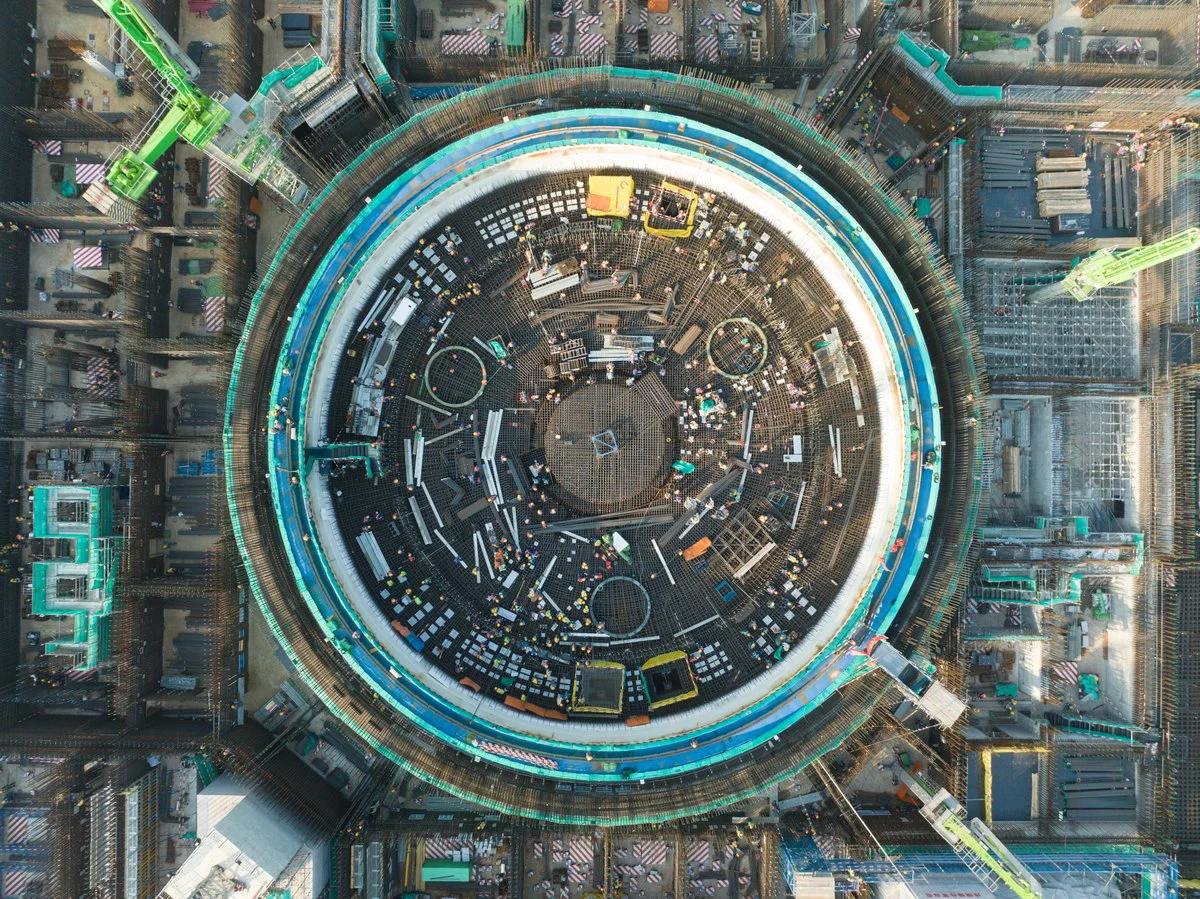
NuScale Power (NYSE: SMR) stands at a critical juncture, poised to potentially commence construction on what could become the world’s largest small modular reactor (SMR) nuclear facility. This ambitious project, central to the company’s immediate future and the broader validation of SMR technology, is awaiting a binding financial agreement expected by late 2026 or early 2027, a deadline that analysts and investors are watching with intense scrutiny. The outcome of this impending agreement will largely determine the trajectory of NuScale, a pioneer in the SMR space, and could significantly influence the adoption of this next-generation nuclear technology globally.
Small Modular Reactors represent a significant evolution in nuclear power generation. Unlike their conventional, gigawatt-scale predecessors, SMRs are advanced nuclear reactors that have a power output typically ranging from 20 MWe to 300 MWe per unit. NuScale’s flagship design, the NuScale Power Module, is an integral pressurized water reactor capable of generating 77 MWe. These reactors are designed to be factory-fabricated and transported to a site for assembly, offering inherent advantages over traditional nuclear power plants. Among these benefits are generally quicker construction times, lower upfront capital costs, and enhanced flexibility due to their modular nature, allowing for incremental capacity additions as energy demand evolves.
The NuScale Advantage: Regulatory Leadership and Market Potential
NuScale Power holds a unique position in the U.S. nuclear landscape as the first and, currently, the only company to have its SMR design certified by the U.S. Nuclear Regulatory Commission (NRC). This regulatory stamp of approval, granted in 2020 and updated in 2023 for its 77 MWe design, is a crucial differentiator, signaling to potential customers and investors that NuScale’s technology meets stringent safety and operational standards. This regulatory lead gives NuScale a significant head start in a burgeoning market.
The appeal of SMRs extends beyond their construction and cost efficiencies. Their smaller footprint and passive safety features make them suitable for a wider range of applications and locations, including remote communities, industrial complexes, and increasingly, as a reliable, carbon-free power source for energy-intensive industries. Notably, the burgeoning artificial intelligence (AI) sector, characterized by its rapidly escalating demand for stable and substantial power supply for data centers, views SMRs as a highly attractive solution. As AI infrastructure scales, the need for dispatchable, clean energy that can be deployed relatively quickly becomes paramount, and SMRs are well-positioned to fill this void.
A Critical Juncture: The Carbon Free Power Project (CFPP)
The project in question, intended to be the world’s largest SMR facility, is the Carbon Free Power Project (CFPP) located at the Idaho National Laboratory (INL). This project, developed in partnership with Utah Associated Municipal Power Systems (UAMPS), initially envisioned a 12-module NuScale VOYGR-12 power plant with a total generating capacity of 924 MWe (based on the original 77 MWe per module design). It was seen as a flagship demonstration of NuScale’s technology and a blueprint for future deployments.
However, the journey of the CFPP has been marked by significant challenges and adjustments, contributing to the volatility of NuScale’s stock performance. In late 2023, the project faced a major setback when UAMPS, citing rising costs and customer withdrawals, decided to terminate its engineering, procurement, and construction (EPC) contract with NuScale. The estimated Levelized Cost of Electricity (LCOE) for the project had reportedly increased substantially, leading some of UAMPS’s member utilities to opt out. This development sent shockwaves through the SMR industry and contributed to a roughly 75% decline in NuScale’s stock value over the past 12 months, highlighting the inherent risks and financial hurdles associated with pioneering new energy infrastructure.
Despite this major setback, NuScale and UAMPS have continued to pursue a modified version of the CFPP, focusing on a smaller configuration – likely a six-module VOYGR-6 plant with a capacity of 462 MWe. This revised scope aims to address some of the cost concerns and secure renewed commitment from participating utilities. The proposed construction start date for the CFPP, contingent upon regulatory approvals and the financial close, is an eagerly anticipated milestone.
The Impending Catalyst: A Binding Financial Agreement
The immediate future of NuScale Power, and by extension the CFPP, hinges on the execution of a binding financial agreement. NuScale’s Chief Financial Officer communicated to investors earlier this year that such an agreement is targeted for completion by the end of 2026, though the timeline could potentially extend into early 2027. This agreement is not merely a procedural step; it represents the ultimate validation of NuScale’s business model and the commercial viability of its SMR technology.
Should a binding financial agreement be secured, it would provide the necessary capital and contractual certainty to move forward with the CFPP. This would likely instill significant investor confidence, potentially reversing the recent downward trend in NuScale’s stock and opening doors for other projects. It would demonstrate that despite initial cost challenges, the economic and operational advantages of SMRs can be realized at scale. Conversely, if a deal cannot be finalized due to ongoing cost concerns, insufficient customer commitments, or other unforeseen obstacles, the investment thesis for NuScale could face severe pressure, potentially collapsing and casting a long shadow over the future of the company and the broader SMR market.
Broader Context: SMRs in the Global Energy Landscape
The development of SMRs is occurring within a larger global context of urgent decarbonization efforts and increasing energy demand. Traditional large-scale nuclear power plants, while providing reliable, carbon-free baseload power, have historically been plagued by multi-billion-dollar cost overruns and protracted construction delays, exemplified by projects like Vogtle Units 3 and 4 in the U.S. and Olkiluoto 3 in Finland. These experiences have made investors and utilities wary of committing to new large-scale nuclear builds.
SMRs are designed to mitigate these risks. Their modularity allows for mass production, potentially leading to economies of scale and standardized designs that reduce construction complexity and project timelines. The smaller financial commitment per module also lowers the barrier to entry for utilities and private investors. Globally, over 80 SMR projects are reportedly in various stages of development, reflecting widespread interest from countries seeking to diversify their energy mix, enhance energy security, and meet climate targets. Countries like Canada, the UK, France, and South Korea are actively investing in SMR research, development, and deployment. Russia and China have already deployed experimental or pilot SMRs, demonstrating the global race to commercialize this technology.
Despite the hype, the SMR industry is still in its nascent stages of commercial deployment. Historically, more SMR projects have failed than succeeded, often due to funding issues, regulatory hurdles, or an inability to achieve competitive economics. The financial challenges and cost trends observed in the initial CFPP negotiations serve as a stark reminder that even with advanced technology and regulatory approval, the successful commercialization of SMRs is not guaranteed. Industry analysts have consistently warned that while specific project challenges exist, the underlying financial and cost trends are pervasive across the SMR landscape.
Implications for Investors and the Energy Transition
For investors, NuScale Power represents a high-risk, high-reward proposition. The potential for NuScale to be a first-mover in a transformative energy technology is significant, but the company’s financial health and future growth are inextricably linked to the successful commercialization of its reactors. The upcoming binding financial agreement for the CFPP is not merely a contractual detail; it is a bellwether for NuScale’s ability to transition from a design and certification company to a commercial deployer of nuclear technology.
A successful CFPP agreement would not only validate NuScale but also provide a much-needed boost to the entire SMR industry. It would demonstrate that SMRs can indeed move beyond the drawing board and into construction, attracting further investment and accelerating global deployment. This would be a crucial step towards meeting ambitious climate goals, as SMRs offer a firm, dispatchable, and carbon-free power source that can complement intermittent renewables.
Conversely, a failure to secure the agreement could lead to renewed skepticism about the economic viability of SMRs, potentially slowing down investment and development across the sector. This would be a setback for the broader energy transition, as reliable nuclear power is considered a vital component in achieving deep decarbonization, especially for industrial heat and grid stability.
Beyond the CFPP: NuScale’s Future Pipeline and Global Reach
While the CFPP remains the most immediate and significant catalyst, NuScale Power is actively pursuing other opportunities both domestically and internationally. The company has signed Memoranda of Understanding (MOUs) and engaged in discussions with potential customers in various countries, including Romania, Poland, and Ukraine, exploring the deployment of its VOYGR power plants. These international ventures underscore the global demand for advanced nuclear solutions and NuScale’s ambition to become a leading SMR provider worldwide. However, these discussions are preliminary and also hinge on similar financial commitments and regulatory frameworks in their respective regions.
The long-term success of NuScale and the SMR industry will depend on several factors: the ability to bring down costs through standardization and economies of scale, streamlined regulatory processes, robust supply chains, and strong government support through incentives and financing mechanisms. The U.S. Department of Energy, for instance, has been a key supporter of SMR development through various programs and funding initiatives, recognizing their strategic importance for national energy security and climate objectives.
In conclusion, NuScale Power stands at a pivotal moment. The pending binding financial agreement for the Carbon Free Power Project is more than just a corporate transaction; it is a defining test for the company and a significant indicator for the future of Small Modular Reactor technology. Its outcome will reverberate through the energy sector, influencing investment decisions, policy directions, and the pace of the global energy transition toward a cleaner, more sustainable future. Investors, industry observers, and environmental advocates alike will be closely watching as 2026 draws closer, awaiting clarity on whether NuScale’s vision for a modular nuclear future will materialize into concrete construction.
