

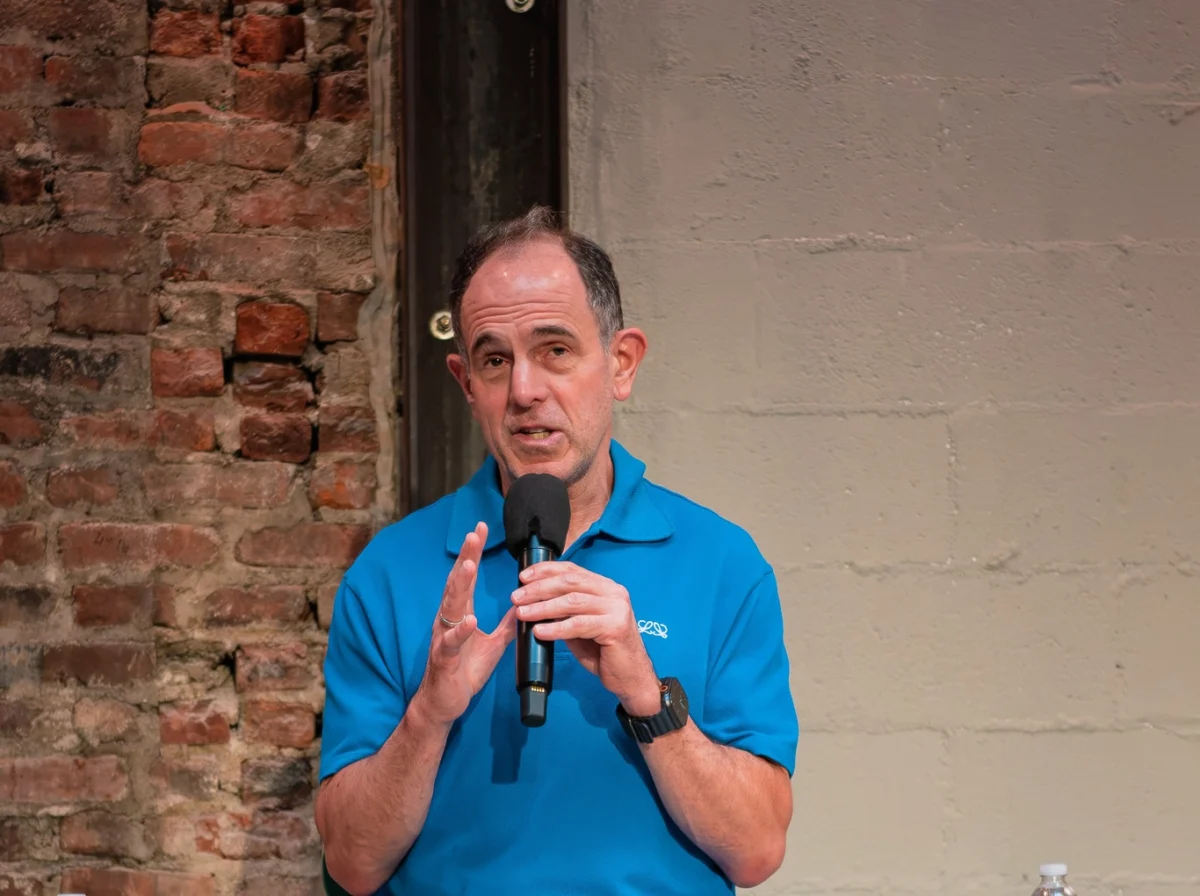
The venture capital landscape, long anchored to the storied offices of Sand Hill Road in Menlo Park, is undergoing a significant geographical recalibration as one of its most prominent firms prepares to establish a permanent foothold on the East Coast. Keith Rabois, a managing director at Khosla Ventures and a central figure in the technology industry for over two decades, announced on Thursday evening that the firm is opening its first-ever office outside its traditional California headquarters. Speaking at TechCrunch’s StrictlyVC event in Manhattan’s West Village, Rabois confirmed that Khosla Ventures has secured a space on 14th Street in New York City, with an anticipated opening date scheduled for this fall.
The decision marks a historic departure for Khosla Ventures, a firm founded in 2004 by Sun Microsystems co-founder Vinod Khosla. For twenty years, the firm has operated with a lean, centralized structure, eschewing the trend of global expansion favored by some of its peers. Rabois emphasized the magnitude of the move by noting that the firm does not even maintain a satellite office in San Francisco, despite its proximity to their Menlo Park base. The expansion into New York is not merely a logistical update but a strategic pivot intended to capitalize on the city’s unique concentration of corporate power and its burgeoning ecosystem of technical talent.
The Strategic Blueprint of the 14th Street Outpost
The new New York office is designed to be more than just a workspace for a handful of relocating partners. While Rabois and several other investors will be based out of the 14th Street location, the centerpiece of the facility will be what Rabois described as an "executive briefing center." This specialized environment is intended to serve as a bridge between the firm’s portfolio of high-growth startups and the established titans of the Fortune 500.
According to Rabois, the briefing center will host cohorts of 10 to 12 portfolio companies at a time, facilitating direct engagement with corporate executives four days a week. The objective is to accelerate the "go-to-market" phase for startups by providing them with immediate access to potential enterprise customers and pilot program opportunities. "The portfolio companies love this," Rabois told the audience, noting that the proximity to corporate decision-makers in New York’s finance, media, and healthcare sectors provides a competitive advantage that is difficult to replicate in the more insular environment of Northern California.
The choice of 14th Street as a location is also telling. Situated at the intersection of several key neighborhoods including Chelsea, the Meatpacking District, and Union Square, the area has become a secondary tech corridor in Manhattan. It sits within walking distance of Google’s massive New York campus and the various venture-backed firms that have populated the "Silicon Alley" district.
A Personal and Professional Relocation
The announcement of the new office follows Rabois’s own personal move to the East Coast earlier this year. Rabois, a member of the "PayPal Mafia" who has held senior roles at LinkedIn and Square and founded OpenDoor, has long been a vocal critic of the political and social climate in San Francisco. However, his recent move was driven primarily by family considerations. His husband, Jacob Helberg, serves as the Under Secretary of State for Economic Growth, Energy, and the Environment, and is currently based in Washington, D.C. with their children.
Rabois’s transition to the East Coast has allowed him to observe the New York tech ecosystem with a fresh perspective. His assessment of the city’s talent pool is nuanced, distinguishing between the capabilities of junior developers and the availability of seasoned executive leadership.
"Individual contributor level, right out of school, absolutely," Rabois said when asked if New York could match the talent density of the Bay Area. He cited Ramp, the unicorn fintech company in which he is a major investor, as the primary case study for New York’s success. He noted that Ramp has successfully built a "critical density" of talent by aggressively recruiting from top-tier university graduating classes and nurturing them through internal internship programs.
The Challenge of Senior Talent and the Commuter Culture
Despite his optimism regarding the younger workforce, Rabois expressed skepticism about New York’s ability to provide senior-level technical architects and C-suite executives. He argued that the geographic and lifestyle constraints of the New York metropolitan area create friction for high-level recruitment that does not exist to the same degree in Silicon Valley.
Rabois pointed out that many senior professionals with families opt for suburban life in Connecticut, New Jersey, or Westchester County. For companies that maintain a strict in-office culture—a philosophy Rabois staunchly supports—the "painful" commute can be a dealbreaker for top-tier talent. "If you need a CFO, an SVP of sales, someone who’s got a lot of gravitas and experience, it’s really hard to have them in the office five days a week," he explained, noting that the cost of living in Manhattan makes it difficult for even well-compensated executives to raise families within the city limits.
To circumvent this, Rabois noted that companies like Ramp have adopted a "ground-up" strategy, preferring to promote from within rather than hiring expensive external executives. This "grow-your-own" talent model has become a cornerstone of his investment thesis for East Coast startups, allowing them to bypass the competitive and often stagnant market for senior leadership.
Historical Context: The Rise of Silicon Alley
Khosla Ventures is entering a New York market that has spent the last decade evolving from a fintech hub into a broad-based technology powerhouse. Historically, New York’s tech scene, often dubbed "Silicon Alley," was dominated by advertising technology and media companies. However, the post-2010 era saw a surge in enterprise software, consumer tech, and real estate technology.
The firm joins a small but elite group of Bay Area stalwarts that have established a New York presence. Sequoia Capital opened a New York office in recent years to better track the city’s burgeoning startup scene, and Andreessen Horowitz (a16z) has expanded its footprint beyond California as well. These moves suggest a broader industry recognition that the "center of gravity" for technology is no longer exclusive to a 30-mile radius around Stanford University.
Data Analysis: New York vs. San Francisco
The timing of Khosla’s expansion aligns with recent data suggesting a shift in the national tech labor market. A report released in August 2024 by CBRE, a leading commercial real estate services firm, found that New York has narrowly overtaken the San Francisco Bay Area in total tech talent headcount for the first time in the 13 years the data has been tracked.
According to the CBRE "Scoring Tech Talent" report, the New York metropolitan area now boasts a larger absolute number of tech workers than the Bay Area. This shift has been attributed to several factors:
- Financial Sector AI Integration: Large investment banks and hedge funds in New York have been hiring AI researchers and data scientists at a pace that rivals traditional tech firms.
- Bay Area Contraction: Massive layoffs at "Big Tech" firms in Silicon Valley over the past 24 months have reduced the total headcount in the region.
- The "Finance-Tech" Convergence: The rise of sophisticated fintech platforms has blurred the lines between Wall Street and Silicon Valley, making New York a natural home for engineers interested in the intersection of code and capital.
However, the CBRE report also noted that the Bay Area remains the leader in "tech talent density" (the percentage of the total workforce employed in tech) and continues to attract the lion’s share of venture capital dollars. Despite New York’s growth, some attendees at the StrictlyVC event remained skeptical of the data, reflecting a lingering sentiment that while New York is a massive market, it has yet to replicate the unique "founder-led" culture that defines Silicon Valley.
Broader Implications for Venture Capital
The expansion of Khosla Ventures into New York is an indicator of a larger trend: the decentralization of venture capital. For decades, the "Sand Hill Road" model required founders to fly to California to pitch their ideas. The COVID-19 pandemic shattered the necessity of physical proximity for deal-making, but the subsequent return to "in-person" work has created a hybrid reality.
Venture firms are finding that while they can discover deals over Zoom, winning those deals and supporting those companies requires a physical presence in the cities where the founders live. By establishing an office on 14th Street, Khosla Ventures is positioning itself to be more than just a source of capital; it is becoming a physical node in the New York ecosystem.
The "executive briefing center" model specifically addresses one of the most common criticisms of venture capital: that firms provide money but little practical help in scaling. By leveraging New York’s status as the world’s corporate capital, Khosla is offering a value proposition that is uniquely "New York"—access to the boardrooms of the global economy.
Chronology of Khosla Ventures’ Expansion
- 2004: Vinod Khosla founds Khosla Ventures in Menlo Park, focusing on "Black Swan" events and high-impact technology.
- 2019-2023: Keith Rabois and other partners begin vocalizing concerns about the business environment in the Bay Area.
- Early 2024: Keith Rabois officially relocates to the East Coast, sparking rumors of a Khosla Ventures expansion.
- August 2024: CBRE report confirms New York has overtaken the Bay Area in total tech headcount.
- September 2024: Rabois confirms the 14th Street office and the fall opening timeline at StrictlyVC.
As the fall opening approaches, the industry will be watching to see if Khosla’s move triggers a "second wave" of West Coast firms establishing major hubs in New York. While the construction timelines for the 14th Street office remain, in Rabois’s words, "vague," the strategic intent is crystal clear: the future of venture capital is no longer a one-city story. For Khosla Ventures, the path to the next generation of "Black Swan" startups now runs directly through the heart of Manhattan.
