

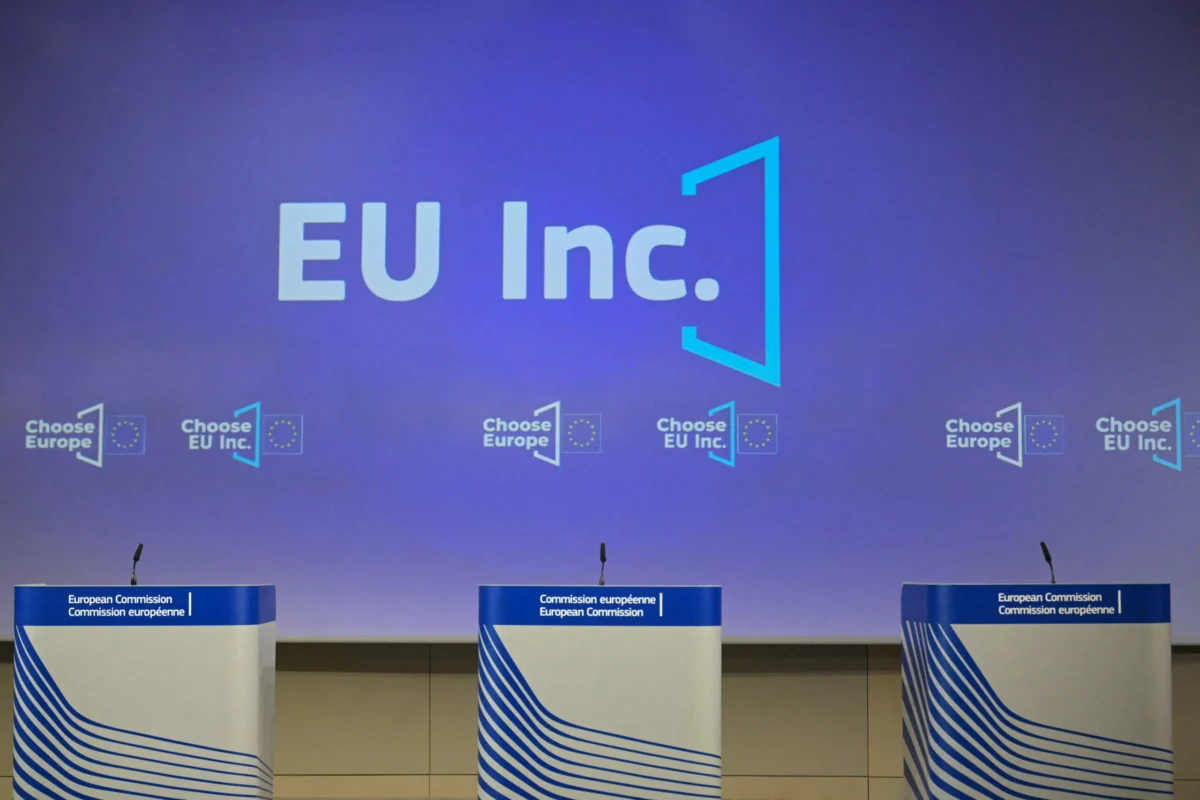
A coalition of Europe’s most prominent technology entrepreneurs and venture capitalists has issued an urgent open letter to European Union policymakers, demanding that the proposed "EU Inc" corporate statute remains robust and effective as it moves through the final stages of the legislative process. The letter, released on Thursday, marks a critical escalation in the campaign to create a unified legal framework for startups across the 27-member bloc, an initiative designed to mirror the efficiency and simplicity of the Delaware C Corporation in the United States. While the proposal has gained significant political momentum in recent months, advocates are now expressing grave concerns that the central features of the legislation could be compromised by national interests and bureaucratic friction, rendering the final statute "unusable" for the very companies it is intended to serve.
The "EU Inc" movement, led by a dedicated advocacy group of the same name, seeks to establish a 28th corporate regime—a pan-European legal status that would coexist alongside national company laws. This framework would allow startups to incorporate once and operate seamlessly across all EU borders without the need to navigate the divergent and often contradictory legal, tax, and administrative requirements of individual member states. However, as the European Parliament and the Council of the European Union enter the final stages of negotiation, the movement warns that the potential for "watering down" the proposal poses a direct threat to the future of European innovation and competitiveness.
The Push for a Unified European Corporate Identity
The primary objective of the EU Inc campaign is to solve the fragmentation that has historically hindered the growth of European technology companies. Currently, a startup founded in Paris that wishes to expand into Berlin or Madrid must navigate entirely different legal systems, employment laws, and tax codes. This fragmentation creates significant "friction" and "deadweight costs," forcing young companies to spend precious capital on legal fees rather than product development.
By creating a standardized "EU Inc" status, proponents argue that Europe can finally create a level playing field with the United States. In the U.S., the Delaware C Corporation has become the de facto standard for startups, providing a predictable legal environment that is understood by investors globally. The absence of such a standard in Europe has frequently led to "brain drain," where high-potential European startups relocate their headquarters to the United States to satisfy the requirements of international investors and to simplify their scaling process.
The open letter emphasizes that the current window of opportunity is narrow. With approximately 100 days remaining before the European institutions pause for the winter recess, the signatories are urging lawmakers to prioritize the proposal’s core tenets. They argue that a weakened version of the statute would fail to attract the necessary venture capital and would do little to stop the exodus of European talent to more favorable jurisdictions.
Critical Features and Technical Hurdles
The advocates of the EU Inc statute have identified several non-negotiable features that they believe are essential for the framework’s success. Chief among these is the establishment of a single, centralized digital registry. Currently, corporate registries in Europe are fragmented by nation and, in some cases, by region. A central registry would allow for the instantaneous verification of corporate status, ownership, and governance across the entire union, drastically reducing the administrative burden of cross-border operations.
Another cornerstone of the proposal concerns the taxation of employee stock options. In many European jurisdictions, employees are taxed on the "paper gains" of their stock options at the time of exercise, rather than when they actually sell the shares for cash. This "dry tax" creates a significant financial burden for employees and makes it difficult for startups to use equity as a tool to attract and retain world-class talent. The EU Inc letter insists that a unified statute must ensure that employees are only taxed when they dispose of their stock, aligning European practices with those of Silicon Valley.
These requirements, while technical, are viewed by the tech community as the difference between a transformative policy and a symbolic gesture. Martin Mignot, a partner at Index Ventures and a vocal supporter of the campaign, has previously noted that "the devil is in the details." He warned that if the final legislation includes carve-outs for national registries or fails to address the tax treatment of equity, founders will likely ignore the new status in favor of traditional national structures or U.S. incorporation.
Opposition and National Lobbies
The path to a harmonized European company law is fraught with political and institutional resistance. As negotiations intensify, various national professional associations have begun to voice their opposition. Most notably, the German Federal Chamber of Notaries (Bundesnotarkammer) has criticized aspects of the European Commission’s proposal. In Germany and several other civil law jurisdictions, notaries play a mandatory and lucrative role in the incorporation and administration of companies.
The German notaries have raised concerns regarding legal certainty and the potential for money laundering if a centralized, digital-first registry is implemented without their traditional oversight. They argue that the current system provides a high level of security and that bypassing local legal protocols could expose the European market to fraud.
Proponents of EU Inc, however, view these objections as protectionist measures designed to preserve the status quo. They argue that modern cryptographic tools and digital identity frameworks can provide superior security to traditional paper-based notary systems while offering the speed required by the modern digital economy. The clash between traditional legal structures and the needs of the "new economy" represents one of the most significant hurdles for the European Commission to clear.
A Who’s Who of Signatories
The gravity of the situation is reflected in the high-profile list of signatories attached to the open letter. On the investment side, the movement has secured the backing of some of the most influential figures in global venture capital. This includes Sonali De Rycker of Accel, Michael Moritz of Sequoia Capital, and Niklas Zennström, the founder of Skype and Atomico. These investors collectively manage tens of billions of dollars and have been responsible for some of Europe’s most successful exits.
The entrepreneur side is equally well-represented, with founders of European "unicorns" (startups valued at over $1 billion) lending their names to the cause. Endorsements have come from the leadership of Mistral AI, the French artificial intelligence powerhouse; ElevenLabs, the AI voice synthesis leader; and other major players such as Alan, Lovable, and Synthesia.
The involvement of companies like Mistral and ElevenLabs is particularly symbolic. These firms represent the cutting edge of European technology but often face immense pressure to move their headquarters to the U.S. to access deeper capital markets. By signing the letter, these founders are sending a clear message to Brussels: they want to stay in Europe, but the current regulatory environment makes it unnecessarily difficult to do so.
Economic Implications and the "Draghi Report" Context
The push for EU Inc comes at a time when European leaders are increasingly concerned about the continent’s lagging productivity and competitiveness. A recent report by Mario Draghi, the former President of the European Central Bank, highlighted a staggering "investment gap" and warned that Europe faces an existential challenge if it cannot modernize its economy and foster a more vibrant tech sector.
According to data from various industry reports, European startups raise significantly less growth-stage capital than their American counterparts. While Europe is excellent at creating early-stage companies, it often struggles to "scale" them into global giants. The fragmentation of the European market is cited as a primary reason for this "scale-up gap." Advocates of EU Inc argue that a unified corporate statute is a low-cost, high-impact reform that would immediately make Europe more attractive to global institutional investors, including pension funds and sovereign wealth funds, who are currently deterred by the complexity of 27 different legal regimes.
Chronology of the EU Inc Movement
The movement toward a pan-European startup status has evolved rapidly over the past two years:
- Early 2024: The EU Inc campaign began as a grassroots petition among founders and VCs, quickly gaining thousands of signatures and the attention of the European Commission.
- Mid-2024: High-level endorsements were secured from top EU authorities, including Ursula von der Leyen’s Commission, which signaled a willingness to explore a "28th regime" for startups.
- Late 2024: The European Commission released its initial proposal for a harmonized corporate legal regime. This was met with cautious optimism but also immediate pushback from national professional lobbies.
- November 2024: The release of the open letter by the "who’s who" of the European tech scene, aimed at influencing the final trilogue negotiations between the Commission, Parliament, and Council.
The Path Forward
As the European institutions head toward the winter recess, the pressure on lawmakers is at an all-time high. The success or failure of the EU Inc initiative will likely be seen as a litmus test for Europe’s ability to enact meaningful pro-growth reforms.
If the advocates succeed in preserving a "clean" version of the statute—complete with a central registry and favorable stock option rules—it could trigger a new wave of entrepreneurship and investment across the continent. It would provide a clear signal to the global market that Europe is "open for business" and capable of overcoming its internal divisions to support its most innovative companies.
Conversely, if the legislation is burdened with national exemptions and administrative complexities, it risks becoming another failed attempt at harmonization, joining previous efforts that were ignored by the market. For the founders and investors who signed Thursday’s letter, the stakes could not be higher. They believe that without a true "European Delaware," the continent will continue to export its best ideas and brightest talent to the United States, further widening the economic gap between the two sides of the Atlantic.
