

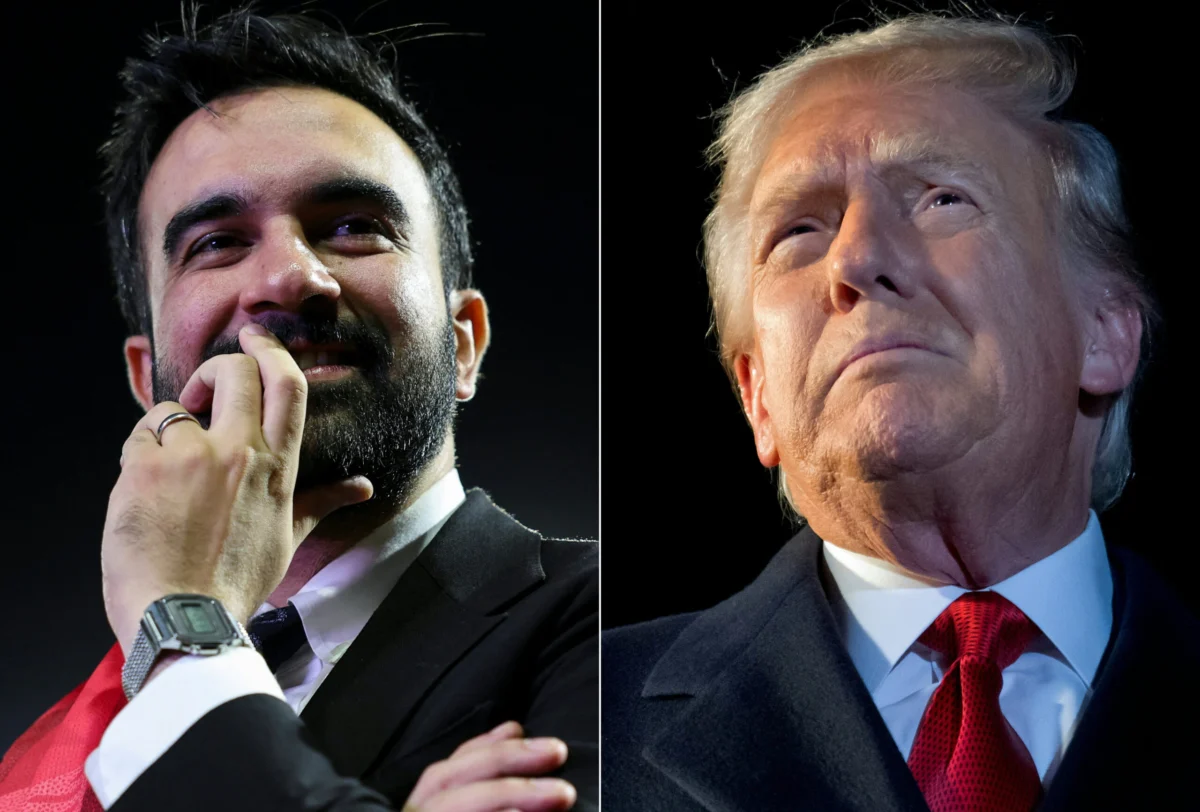
President Donald Trump on Tuesday issued a stark warning, decrying New York City’s newly enacted pied-à-terre tax as a "disaster" and declaring his intention to explore federal intervention to halt its implementation. The controversial levy, championed by Democratic Socialist Mayor Zohran Mamdani and passed by the New York State legislature in late May 2026, targets non-primary residences valued at over $1 million, with progressively higher rates for more expensive properties. Trump’s fiery remarks, delivered via his Truth Social platform, ignited a fresh political and legal firestorm, coming just one day after a Staten Island judge temporarily blocked the policy’s rollout, a decision the city swiftly moved to appeal.
The former president, a native New Yorker who famously relocated his primary residence to Florida in 2019, asserted that the tax "doesn’t work in America, and must be stopped, NOW!" He added that it was difficult for him as president "to sit back and watch it happen, especially to a place I once loved," referring to his long-standing ties to the city where his real estate empire began. This personal connection, coupled with his administration’s broader anti-tax stance, underscores the intensity of his opposition. The immediate impact on Trump or his immediate family’s holdings in New York City remains unclear, but his substantial real estate interests in the city undoubtedly inform his strong reaction.
A Taxing Battle: Chronology of a Controversial Policy
The journey of New York City’s pied-à-terre tax has been marked by ambition, legislative hurdles, and swift legal challenges. Mayor Zohran Mamdani, who took office with a mandate to address wealth inequality and bolster public services, first unveiled the proposal on Tax Day 2026. His administration positioned the tax as a crucial revenue stream, designed to compel the city’s wealthiest to contribute more to public coffers, thereby funding vital services like safer streets, stronger schools, and essential infrastructure.
- Spring 2026: Mayor Mamdani, a prominent voice in the democratic socialist movement within the Democratic Party, begins actively campaigning for the pied-à-terre tax, framing it as a matter of economic justice. The proposal gains traction amidst ongoing debates about affordable housing and fiscal responsibility in New York City.
- Late May 2026: Following intense lobbying and debate, the New York State legislature, with the backing of Governor Kathy Hochul, passes the bill into law. The legislation mandates a progressive tax on secondary residences valued at $1 million or more, with higher valuation tiers incurring greater rates. The Mayor’s office projects the tax will generate approximately $500 million annually.
- Early June 2026: Doubts emerge regarding the revenue projections. NYC Comptroller Mark Levine releases an updated estimate, suggesting the actual revenue could fall between $340 million and $380 million, citing complexities in implementation and potential behavioral responses from property owners.
- Late June 2026: The city initiates the rollout process by distributing a list containing the names, addresses, and property values of hundreds of thousands of New York City homeowners. Simultaneously, approximately 17,000 specific notices are mailed to individuals identified as potentially subject to the new tax.
- Early July 2026: A lawsuit is filed in New York Supreme Court by three New York City residents, challenging the city’s methodology for identifying and notifying potential taxpayers. The suit alleges that the city arbitrarily shifted the burden of proof onto homeowners to demonstrate their exemption, rather than proactively determining tax liability.
- Monday, July 7, 2026: Staten Island Judge Wayne Ozzi issues a temporary injunction, blocking the city from "taking any further action" related to the controversial list or the mailed notices. This ruling effectively pauses the tax’s implementation.
- Later on Monday, July 7, 2026: Attorneys for New York City government promptly file a motion seeking permission to appeal Judge Ozzi’s ruling. This action triggers an "automatic stay" of all proceedings related to enforcing the judge’s order, temporarily reinstating the city’s ability to proceed with the tax while the appeal is considered.
- Tuesday, July 8, 2026: President Donald Trump issues his strong condemnation of the tax via Truth Social, promising to explore federal legal avenues to intervene and avert what he terms a "disaster."
The Core of the Debate: What is a Pied-à-Terre Tax?
A pied-à-terre, French for "foot on the ground," traditionally refers to a secondary residence, often a small apartment, kept for occasional use in a city. The term has evolved, particularly in global urban centers like New York, to encompass luxurious secondary homes owned by wealthy individuals who may spend only a fraction of the year in the city. These properties often sit vacant for extended periods, contributing to the city’s housing shortage and raising questions about equitable resource distribution.
New York City’s version of the tax is specifically designed to target these high-value, non-primary residences. While the precise rate structure is complex, it generally involves a progressive surcharge:
- Properties valued at $1 million or more would face an initial levy.
- The tax rate would increase significantly for properties exceeding $5 million, and potentially further for those above $10 million or $20 million, mirroring a tiered system common in progressive taxation models.
Proponents argue that such a tax serves multiple critical purposes:
- Revenue Generation: Provides much-needed funds for public services, alleviating pressure on the city’s general budget.
- Wealth Redistribution: Addresses growing wealth inequality by requiring those with substantial secondary assets to contribute a larger share to the community.
- Housing Equity: While not directly creating affordable housing, it could disincentivize holding luxury properties vacant purely as investments, potentially freeing up some supply or encouraging more efficient use of urban space.
Opponents, however, raise concerns about its potential to drive away high-net-worth individuals, depress the luxury real estate market, and ultimately harm the city’s economy.
Legal Labyrinth: The Lawsuit and the Automatic Stay
The lawsuit filed by three New York City residents represents a critical challenge not only to the tax itself but, more immediately, to its administrative execution. The plaintiffs argue that the city’s process of mailing notices to 17,000 potential taxpayers and distributing a broader list of hundreds of thousands of homeowners was "arbitrary and capricious." Their core contention is that the city improperly placed the burden on residents to prove they are not subject to the tax, rather than the city first establishing clear criteria and verifying which properties meet the definition of a taxable pied-à-terre.
Judge Wayne Ozzi’s temporary blocking order on Monday underscored the legal merits of these procedural concerns. However, the city’s immediate motion to appeal introduces a crucial legal mechanism: the "automatic stay." In many jurisdictions, including New York, filing an appeal can automatically suspend the enforcement of the lower court’s ruling until the appellate court has reviewed the case. This means that, for the time being, the city may technically be able to continue with its original implementation plans, pending a higher court’s decision. This legal maneuver highlights the city’s determination to push forward with the tax, despite the judicial hurdle.

Mayor Mamdani’s office, in response to CNBC’s inquiry regarding Trump’s threat, reiterated confidence in its legal standing. At a Monday press conference, Mamdani affirmed, "We look forward to vigorously defend our city’s position in court. We are confident in our position, and that is a confidence coming from both the legality of the City’s actions as well as the importance of a surcharge on secondary homes worth more than $5 million, a surcharge that will help fund safer streets, that will help fund stronger schools, and it will help fund the city that New Yorkers deserve."
Political Fallout and Economic Reverberations
President Trump’s intervention elevates the local tax dispute to a national political stage. His promise to explore federal legal rights to "avert this disaster" suggests a potential clash over states’ rights and municipal autonomy in fiscal policy. While the federal government rarely directly intervenes in local tax matters, Trump’s history of challenging policies he deems detrimental to business or property owners, combined with his unique relationship with New York City, makes his threat noteworthy. Legal scholars suggest that direct federal intervention to nullify a state-approved municipal tax would face significant constitutional hurdles, but the threat itself serves as a potent political weapon.
The Mayor’s office has remained steadfast, emphasizing the social benefits of the tax. Mamdani’s progressive platform, which includes a focus on taxing the wealthy to fund public services, resonated with a significant portion of the New York City electorate. The pied-à-terre tax is a cornerstone of his broader vision for a more equitable city.
The debate over the tax has also brought forth prominent voices from the business community. Citadel CEO Ken Griffin, for instance, previously threatened to relocate his business to Miami after Mamdani’s initial proposal featured an image of Griffin’s ultraluxury Manhattan penthouse. Griffin’s potential move, and the broader narrative of high-tax states losing wealthy residents and businesses, is a recurring theme in American fiscal policy debates. However, this narrative is not universally accepted. Vornado CEO Steven Roth, a major player in New York City real estate, later suggested that Griffin was not abandoning plans for a significant redevelopment of a Park Avenue building, indicating that the immediate economic flight might be exaggerated or complex.
The "Millionaire Flight" Debate: Fact or Fiction?
Trump’s assertion that the levy will cause "thousands of people to flee to more tax-friendly regions, canceling out any revenue" echoes a long-standing debate. New York already boasts some of the nation’s highest income tax rates, and concerns about capital flight are perennial.
- Studies Supporting Flight: Some analyses, such as those from the Citizens Budget Commission (CBCNY), suggest that New York’s share of millionaires has indeed declined in recent years, potentially linking this to high tax burdens. These studies often highlight the mobility of high-net-worth individuals and their ability to choose residencies based on tax environments.
- Studies Disputing Flight: Conversely, research from institutions like the Tax Policy Center often disputes the idea that the rich consistently flee high state taxes en masse. These studies frequently point to other factors, such as job opportunities, cultural amenities, family ties, and the inherent value of living in global cities like New York, as stronger determinants of residency than tax rates alone. For many ultra-wealthy individuals, the benefits of maintaining a presence in New York City, despite higher taxes, often outweigh the financial savings of relocating to a lower-tax state.
The pied-à-terre tax is particularly contentious because it targets a specific asset class rather than general income. While a primary residence exemption protects most New Yorkers, the imposition on secondary homes touches a segment of the population highly sensitive to investment returns and property costs. The luxury real estate market, already susceptible to economic fluctuations, could see a cooling effect, though the overall impact on the broader housing market remains speculative.
Broader Implications: A National Precedent?
The outcome of New York City’s pied-à-terre tax saga carries implications far beyond the five boroughs. If successfully implemented and upheld through legal challenges, it could serve as a model for other high-cost-of-living cities struggling with fiscal pressures and wealth disparities. Cities like San Francisco, Los Angeles, and even London have, at various times, explored similar wealth-based taxes.
Conversely, if the tax is ultimately struck down or proves to be economically detrimental, it could deter other municipalities from pursuing similar progressive taxation measures. The legal battle, particularly the question of the city’s administrative procedures, could set precedents for how local governments are required to implement and justify new tax policies.
The clash between Mayor Mamdani’s progressive vision and President Trump’s staunch opposition encapsulates a broader national debate about economic fairness, the role of government in wealth redistribution, and the balance between revenue generation and economic competitiveness. As the legal appeals unfold and political rhetoric intensifies, New York City finds itself at the epicenter of a pivotal policy experiment, watched closely by cities and politicians across the nation. The ultimate fate of the pied-à-terre tax will not only shape New York City’s fiscal future but could also influence the trajectory of urban progressive policies for years to come.
