

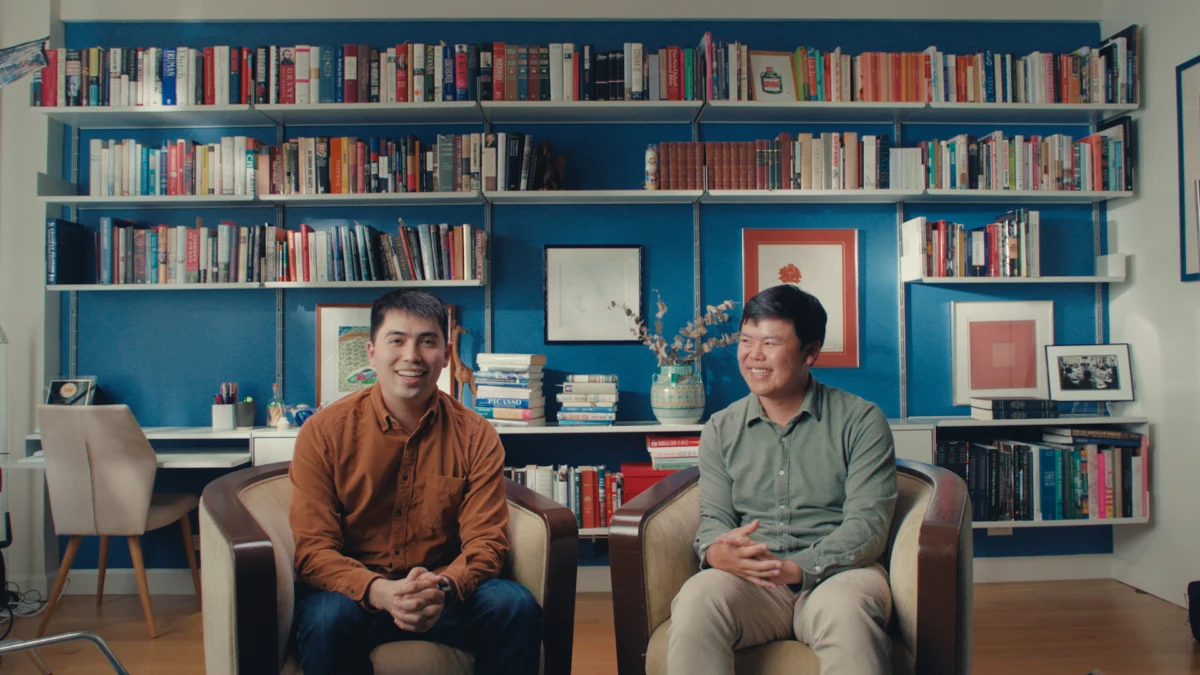
The digital landscape is currently navigating a profound crisis of authenticity as generative artificial intelligence transitions from a niche technological curiosity to a ubiquitous force in content production. As social media feeds, professional platforms, and communication channels become saturated with synthetic media—often referred to as "AI slop"—the fundamental trust that underpins online interaction is eroding. In response to this systemic challenge, a new sector of the cybersecurity and data integrity industry is emerging, aimed at establishing a "trust layer" for the internet. Leading this charge is Pangram, a startup that recently secured $9 million in funding to scale its AI detection capabilities and expand its footprint across major digital platforms.
The urgency for such technology has never been higher. AI-generated text, images, and video are no longer confined to experimental forums; they have permeated critical sectors including recruitment, financial services, and journalism. From fabricated job applications that overwhelm human resources departments to sophisticated insurance fraud involving AI-altered imagery, the risks of undetected synthetic content are transitioning from theoretical concerns to multi-billion-dollar liabilities. Pangram’s recent capital infusion and its high-profile partnership with the newsletter platform Substack signal a pivotal shift in how digital platforms intend to manage the deluge of non-human content.
The Rise of the Trust Layer: Pangram’s Strategic Funding and Expansion
The $9 million funding round represents a significant milestone for Pangram, positioning the company as a primary contender in the competitive AI detection market. The investment reflects a growing consensus among venture capitalists that the "detection economy" will be as essential to the next decade of the internet as the "creation economy" was to the last. Max Spero, Pangram’s co-founder and CEO, has articulated a vision where detection tools act not as censors, but as providers of transparency, allowing users to make informed decisions about the media they consume.
Pangram’s technology utilizes advanced machine learning models designed to identify the "fingerprints" left by large language models (LLMs) and image generators. Unlike early, rudimentary detectors that relied on simple keyword frequency, Pangram’s system analyzes structural patterns, semantic consistency, and pixel-level anomalies that are often invisible to the human eye. This sophisticated approach is necessary because as AI models like GPT-4, Claude, and Midjourney become more refined, the gap between human and machine output continues to narrow.
The capital will be deployed to enhance the company’s multi-modal detection capabilities. While text detection remains a core focus, the rapid proliferation of high-fidelity AI imagery has necessitated the launch of Pangram’s new AI image detection tool. This tool is designed to combat the rise of deepfakes and manipulated visual evidence, which have become increasingly prevalent in misinformation campaigns and digital identity theft.
Case Study: The Substack Partnership and Content Transparency
One of the most significant applications of Pangram’s technology to date is its integration with Substack. As a platform built on the direct relationship between writers and their audiences, Substack relies heavily on the perceived authenticity of its creators. The introduction of a tool that identifies AI-assisted or AI-generated newsletters is a proactive move to preserve that trust.
Under this partnership, Substack authors can provide—and readers can view—disclosures regarding the use of AI in the creative process. Pangram’s backend technology provides the verification necessary to back these claims. This initiative addresses a growing tension in the creative world: the distinction between AI-assisted work (where AI is used for brainstorming or editing) and AI-generated work (where the machine produces the bulk of the content). By providing a clear "labeling" system, Substack and Pangram are setting a precedent for how platforms might handle synthetic content without outright banning it.
The move has been met with mixed reactions from the creator community. Some writers view it as a necessary defense against "content farms" that use AI to churn out low-quality newsletters to game subscription models. Others express concern that detection tools might produce false positives, potentially unfairly flagging non-native English speakers or writers with highly structured styles. Spero, in his recent appearance on TechCrunch’s Equity podcast, acknowledged these challenges, emphasizing that Pangram’s goal is to provide a "probability score" rather than a definitive binary judgment, allowing for human oversight in the final determination.
A Timeline of the AI Trust Crisis
The emergence of companies like Pangram is the result of a rapid technological escalation over the past several years. Understanding the current state of AI detection requires a look at the timeline of generative AI’s integration into the public sphere:
- Late 2022: The public release of ChatGPT triggers a global surge in AI-generated text. Educational institutions are the first to sound the alarm over academic integrity.
- Early 2023: Image generators like Midjourney and DALL-E 3 reach a level of realism that makes "photographic" deepfakes indistinguishable from reality for the average user.
- Late 2023: Reports emerge of AI being used to automate job applications on a massive scale, with "ghost" candidates using AI to pass initial screenings and technical assessments.
- 2024-2025: Insurance companies report a spike in claims involving AI-generated photos of car accidents and property damage. The concept of "AI slop"—low-effort, AI-generated content designed to capture ad revenue—becomes a recognized phenomenon on social media.
- 2026: Major platforms begin institutionalizing detection layers. Pangram’s $9 million raise and Substack partnership mark the transition of detection technology from an experimental tool to a standard piece of digital infrastructure.
The Technological Challenge: AI-Assisted vs. AI-Generated
One of the most complex issues facing Pangram and its competitors is defining the boundary between human and machine. In the modern workflow, the line is rarely black and white. A journalist might use AI to transcribe an interview, a developer might use it to debug a snippet of code, or a novelist might use it to brainstorm character names. These are examples of "AI-assisted" work that most consider ethical and productive.
However, "AI-generated" content—where the core logic, sentiment, and structure are produced by an algorithm—poses a different set of risks. In the context of product reviews, for instance, AI-generated testimonials can be used to artificially inflate a product’s rating, deceiving consumers. In the context of insurance, an AI-generated image of a broken window is a fraudulent attempt to extract funds.
Pangram’s CEO Max Spero has noted that the company’s research focuses on identifying the "stochastic" nature of AI. Because LLMs predict the next most likely word or pixel based on a probability distribution, their output often lacks the "burstiness" and idiosyncratic irregularities of human creativity. By identifying these patterns of high probability, Pangram can flag content that is likely to have originated from a model rather than a mind.
Broader Implications for Employment and Insurance
The implications of Pangram’s technology extend far beyond social media and newsletters. Two of the most impacted sectors are the labor market and the insurance industry.
In recruitment, the "arms race" between applicants using AI to write resumes and companies using AI to screen them has created a bottleneck. HR departments are increasingly finding that traditional filters are useless against AI-optimized applications. By integrating Pangram’s detection layer, recruitment platforms can prioritize candidates who demonstrate original thought and authentic communication, potentially restoring a sense of meritocracy to the hiring process.
In the insurance sector, the stakes are even higher. The "democratization" of deepfake technology means that any individual with a smartphone can generate convincing visual evidence of a claim. Industry analysts suggest that undetected AI fraud could cost insurers billions annually, leading to higher premiums for all consumers. The adoption of robust image detection tools is becoming a matter of fiscal necessity for major carriers, who view "trust layers" as an essential component of their digital transformation.
The Competitive Landscape and the Future of Verification
Pangram is not alone in its mission. The "trust layer" market includes a variety of players, from academic spin-offs to established cybersecurity firms. However, the market is currently fragmented. Some companies focus exclusively on "watermarking"—a proactive approach where AI creators embed invisible signals into their output—while others, like Pangram, focus on "passive detection," which is necessary for identifying content from models that do not use watermarks.
The future of the verified internet likely involves a combination of both. Experts suggest that we are moving toward a "zero-trust" digital environment where content is considered synthetic until proven otherwise. This could lead to the widespread adoption of "Content Credentials," a digital nutrition label that tracks the provenance of a file from its creation through every edit.
Conclusion: Navigating a Synthetic Future
As Pangram scales its operations with its new funding, the company faces a continuous "cat-and-mouse" game. As detection tools improve, so too do the generative models designed to evade them. This cycle of innovation and counter-innovation will likely define the next era of the internet.
The success of Pangram and its partnership with platforms like Substack suggests that while we may never fully purge the internet of AI-generated content, we can develop the tools to navigate it safely. The goal is not to eliminate the machine, but to ensure that when we interact with a piece of text or an image, we know whether we are engaging with a human soul or a sophisticated set of probabilities. In the age of AI, transparency is becoming the most valuable currency on the web.
