

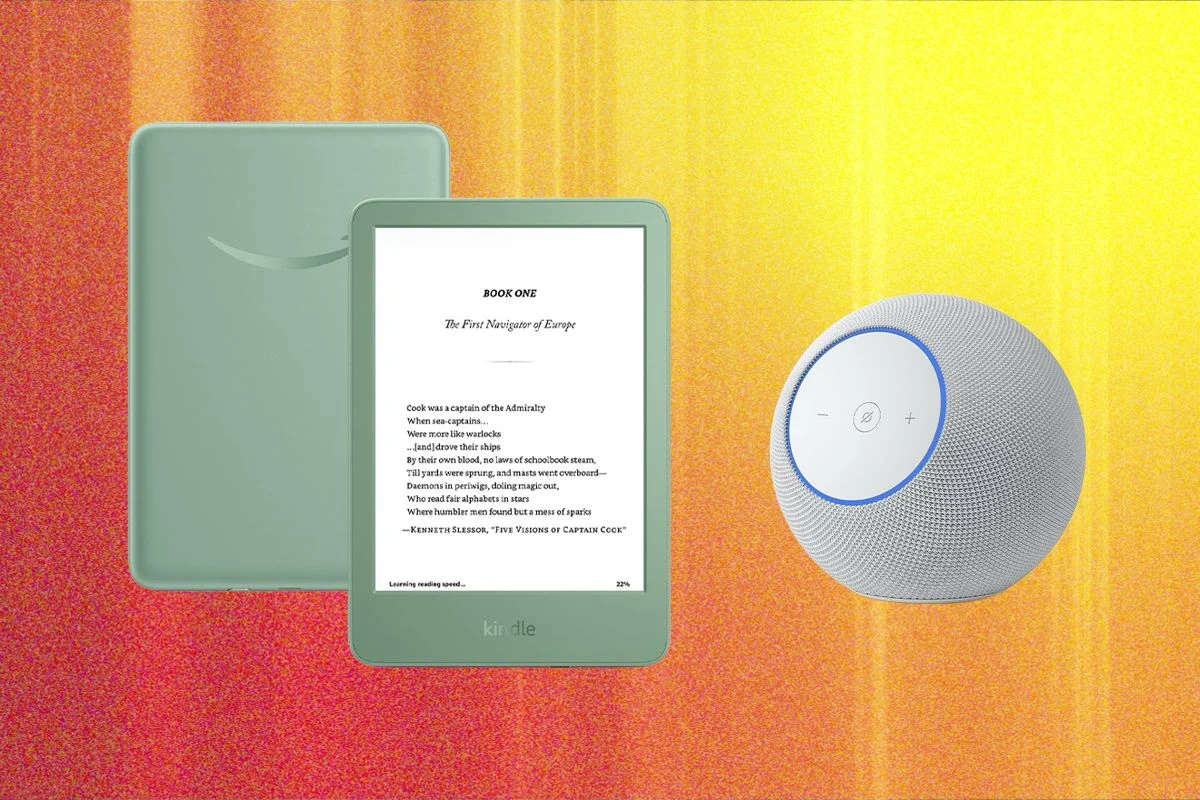
Amazon has implemented a series of significant price increases across its entire consumer electronics portfolio, marking a departure from its long-standing strategy of aggressive hardware discounting. Over the past week, consumers have noted price adjustments ranging from $20 to $100 on popular devices, including Kindle e-readers, Echo smart speakers, Eero mesh routers, and Fire TV streaming sticks. This move follows similar pricing adjustments by competitors such as Apple and Kobo, signaling a broader industry trend toward higher hardware margins in the face of rising component costs and shifting corporate priorities. While Amazon has historically utilized its hardware as a "loss leader" to drive ecosystem lock-in and service subscriptions, the recent hikes suggest a new phase in the company’s approach to its Devices and Services division.
The Scope of the Price Adjustments
The price increases have permeated nearly every corner of Amazon’s proprietary hardware ecosystem. In the e-reader category, the Kindle lineup has seen a base price increase of approximately $30 across most standard models. The Kindle Paperwhite and the entry-level Kindle, which have traditionally been positioned as affordable gateways to the Kindle Store, now reflect these higher MSRPs. Interestingly, the Kindle Scribe line—Amazon’s premium digital notebook and e-reader—has remained largely unaffected, despite containing more complex hardware components.
The Echo smart speaker family has experienced some of the most dramatic shifts. The Echo Show series, which incorporates touchscreen displays, has seen increases of up to $100 on high-end models. Even the ubiquitous Echo Dot, a staple of Amazon’s entry-level smart home strategy, has seen its base price creep upward. Network infrastructure has not been spared either; the Eero 7 and Eero Pro 7 mesh Wi-Fi systems have seen their retail prices adjusted, though the older Eero 6 models have maintained their previous price points for the time being.
In the streaming segment, the Fire TV Stick 4K and 4K Max have seen their list prices rise. While these devices remain competitive against rivals like Roku and Google’s Chromecast (now Google TV Streamer), the price gap that once defined Amazon’s value proposition has narrowed significantly.

Economic Drivers and Component Costs
Amazon’s justification for these increases centers on the rising costs of raw materials and specialized components. In a statement provided to industry analysts, an Amazon spokesperson attributed the price shifts to the escalating costs of memory (DRAM) and storage (NAND flash) components. This phenomenon, colloquially referred to in the tech industry as "Ramageddon," has impacted manufacturers globally.
Market data from the first half of 2024 supports this claim. Contract prices for both DRAM and NAND flash have seen double-digit percentage increases as manufacturers like Samsung, SK Hynix, and Micron have curtailed production to stabilize the market following a post-pandemic glut. For a company like Amazon, which manufactures millions of devices annually, even a marginal increase in the bill of materials (BOM) can translate into hundreds of millions of dollars in additional costs.
Beyond component costs, broader inflationary pressures on logistics, labor, and energy have likely contributed to the decision. Shipping hardware from manufacturing hubs in Asia to global distribution centers has become more expensive due to geopolitical tensions affecting maritime routes and rising fuel costs.
Chronology of the Pricing Shift
The timeline of these increases suggests a calculated rollout ahead of the crucial fourth-quarter shopping window.
- Early Summer 2024: Competitors Apple and Kobo quietly raised prices on select tablets and e-readers, citing supply chain constraints.
- August 20, 2024: Internal price tracking data indicated that devices like the Echo Dot and Fire TV Stick were still holding at their 2023 MSRPs, often accompanied by "back-to-school" promotional discounts.
- Late August 2024: Amazon began updating product pages across its global storefronts. The MSRPs for the Kindle Paperwhite and Echo Show 10 were adjusted upward by $20 and $50, respectively.
- September 2024: The new pricing became the "standard" across the site. Simultaneously, Amazon launched early Labor Day promotions, which featured "sale" prices that closely mirrored the original MSRPs from just weeks prior.
This chronology points toward a strategy of re-baselining prices before major sales events like Prime Day in October and Black Friday in November. By raising the MSRP now, Amazon can offer "deep discounts" during the holidays that actually bring the price back down to what was considered the standard retail price in early 2024.
%2520comparison%2520hero%2520Reviewer%2520Photo%2520SOURCE%2520Nena%2520Farrell.jpg)
The Strategic Pivot of the Devices and Services Division
To understand why Amazon is raising prices now, one must look at the internal pressures facing its Devices and Services division. For over a decade, the division—which oversees Alexa and Echo—operated under a philosophy of "selling at cost." The goal was not to make money on the hardware, but to monetize the user through voice-based shopping, Amazon Music subscriptions, and Prime memberships.
However, recent financial reports suggest that the Alexa division has struggled to meet profitability targets. Internal documents leaked in late 2023 and early 2024 indicated that the division was facing multi-billion dollar annual losses. Under the leadership of CEO Andy Jassy, Amazon has been undergoing a company-wide effort to streamline operations and eliminate "money-losing" projects.
Raising hardware prices is a clear signal that the company is no longer willing to subsidize the smart home at the same level. By moving toward a more traditional hardware-profit model, Amazon is attempting to make the Devices division self-sustaining. This pivot also includes the rumored development of a "Premium Alexa" subscription tier, further indicating that the era of "free" or "at-cost" smart home technology from Amazon is coming to an end.
Psychological Pricing and Consumer Impact
The timing of these hikes—just weeks before the holiday shopping season—raises questions about the ethics of "perceived value." In the retail industry, the practice of raising prices only to "discount" them later is a well-documented psychological tactic. For the average consumer, a $100 Echo Show marked down 30% to $70 feels like a better bargain than a device that simply costs $70 year-round.
Current market observations show this tactic in action. For instance, the Echo Dot is currently listed with a "deal" price of $55. However, historical price tracking shows that the device was sold for $50 as a standard price as recently as mid-August. Similarly, the Echo Dot Max is being marketed as "on sale" for $95, despite having a $100 price tag just weeks ago. For the uninformed shopper, these look like legitimate savings, but for those tracking the market, they represent a net increase in the cost of ownership.

Broader Industry Implications
Amazon’s move is likely to have a ripple effect across the consumer electronics industry. As the market leader in smart speakers and e-readers, Amazon’s pricing often sets the ceiling for what other companies can charge. If Amazon can successfully raise prices without a significant drop in volume, it provides "cover" for smaller competitors to do the same.
Furthermore, this shift may drive consumers toward alternative ecosystems. For example, users looking for mesh Wi-Fi may now find more value in systems from TP-Link or Asus if the Eero price hikes make them less competitive. In the streaming space, the increased cost of Fire TV sticks may push budget-conscious buyers toward Roku’s lower-tier models, which have yet to see similar price increases.
The e-reader market is perhaps the most insulated, as Amazon’s Kindle holds a near-monopoly in the United States. With Kobo also raising prices, consumers have few places to turn if they want a high-quality E-ink experience, allowing Amazon to exercise significant pricing power.
Conclusion and Market Outlook
The recent price hikes across Amazon’s hardware lineup represent a fundamental shift in the company’s retail philosophy. Driven by a combination of rising component costs, a corporate mandate for profitability, and a strategic desire to reset consumer expectations ahead of the holiday season, these changes mark the end of the hyper-subsidized smart home era.
While certain products like the Echo Studio and the Kindle Scribe have maintained their original pricing—likely due to higher existing margins—the bulk of Amazon’s "mass-market" devices are now more expensive. As the holiday shopping season approaches, consumers are advised to use price-tracking tools and historical data to verify the legitimacy of "deals." What appears to be a significant discount on Prime Day or Black Friday may simply be a return to the pricing reality of six months ago.

Moving forward, the industry will be watching closely to see if this strategy pays off in Amazon’s quarterly earnings. If the Devices and Services division can narrow its losses through higher hardware margins, this could become the permanent "new normal" for Amazon’s ecosystem. If, however, sales volume drops significantly, the company may be forced to return to its high-discount roots, though given the current global economic climate, that remains unlikely in the short term.
