

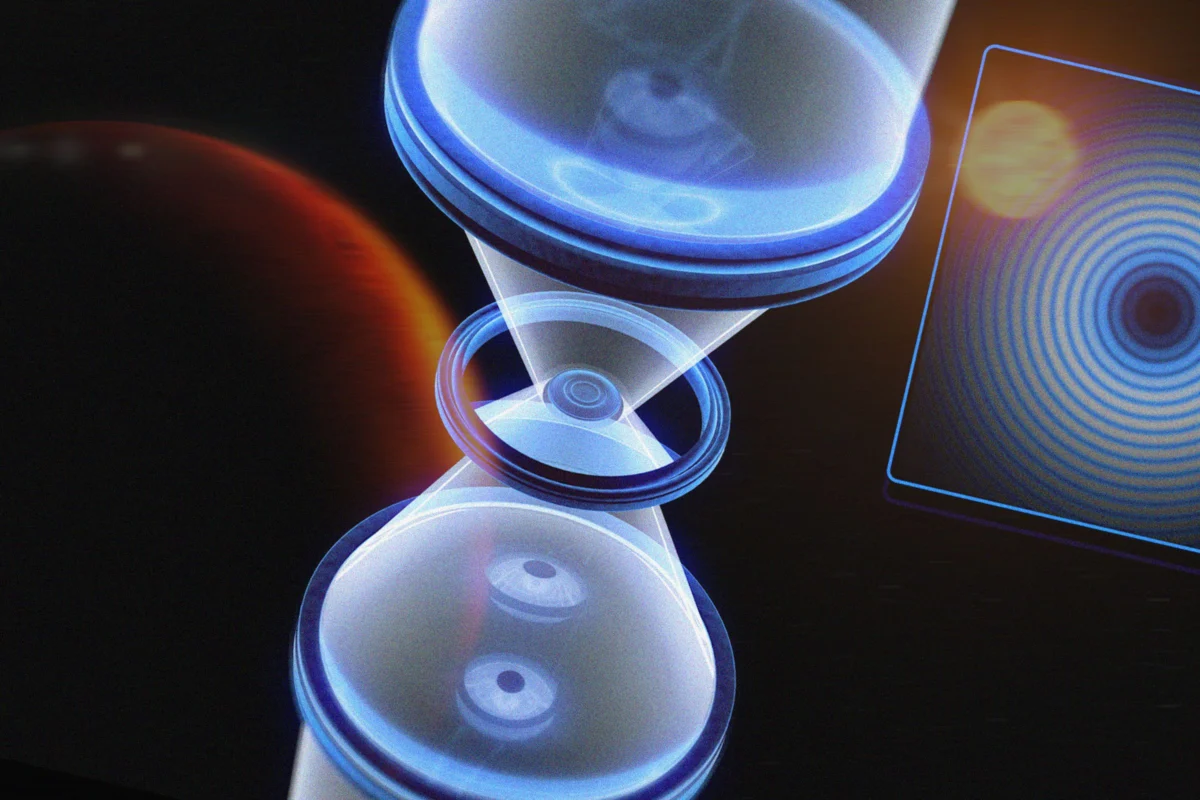
The launch window for NASA’s Nancy Grace Roman Space Telescope is rapidly approaching, marking a pivotal moment in the history of astrophysics and the search for habitable worlds beyond our solar system. Central to this mission are two mirrors, each small enough to fit in the palm of a hand, which are engineered to fundamentally alter our understanding of the cosmos. While the telescope’s primary Wide Field Instrument is designed to survey the sky with a field of view 100 times greater than that of the Hubble Space Telescope, it is a secondary, experimental apparatus—the Roman Coronagraph Instrument—that represents one of the most significant technological leaps in modern space exploration. This specialized instrument will attempt to directly capture starlight reflected off the surfaces of distant planets for the first time, a feat that has remained elusive due to the overwhelming glare of host stars.
NASA’s objective with the Roman Coronagraph is not merely to observe planets, but to prove a concept that will serve as the foundation for future missions. The ultimate goal is the development of a space telescope capable of imaging an Earth-like planet orbiting a sun-like star, a discovery that would revolutionize our place in the universe. Current engineering limits make such a task impossible today, which is why the Roman mission is serving as a critical testing ground. Vanessa Bailey, an astrophysicist at NASA’s Jet Propulsion Laboratory (JPL) and the instrument scientist for the coronagraph, emphasizes that this is a pioneering effort to test these technologies in the harsh environment of space to identify the remaining hurdles in the quest for "Earth 2.0."
The Evolution of the Coronagraph: From Brute Force to Precision
At its most basic level, a coronagraph is a scientific sunshade. By blocking the blinding light of a central star, the instrument allows the much fainter light of orbiting objects—such as planets or debris disks—to become visible. This concept is not new; coronagraphs have been utilized for decades, and both the Hubble and James Webb Space Telescopes (JWST) carry them. However, the Roman Coronagraph is orders of magnitude more sophisticated than its predecessors.
The primary challenge in exoplanet imaging is the contrast ratio. NASA frequently uses the analogy of trying to photograph a firefly perched next to a high-intensity floodlight from a distance equivalent to the width of the United States. In the case of an Earth-like planet and a sun-like star, the star is roughly 10 billion times brighter than the planet in visible light. Previous coronagraphs, such as those on Hubble, used what astronomers describe as "brute force" methods—essentially simple metal masks that physically blocked the star’s light. While effective for seeing large, hot, young planets that emit their own infrared glow, these masks lack the precision required to see older, cooler planets that only shine by reflecting their star’s light.
The Roman Coronagraph overcomes this by employing advanced "adaptive optics," a technology that has long been a staple of ground-based observatories but has never been deployed in space at this level of complexity. Margaret Turnbull, an exoplanet scientist at the SETI Institute who leads a Roman coronagraph science team, notes that even the smallest amount of stray starlight can ruin an image. The Roman system is designed to detect and cancel out these minute distortions with unprecedented accuracy.
Adaptive Optics and the Power of 2,300 Actuators
On Earth, adaptive optics are used to counteract the "twinkling" effect caused by the atmosphere. Ground-based telescopes like the Keck Observatory in Hawaii or the Very Large Telescope (VLT) in Chile use sensors to monitor atmospheric turbulence and then rapidly deform a flexible mirror to sharpen the image. Space telescopes are positioned above the atmosphere, so they do not face this specific problem. However, they face internal challenges: the telescope’s own structure can flex due to temperature changes or mechanical vibrations, creating tiny imperfections in the light path.
For the Roman Space Telescope, the solution lies in its two palm-sized, deformable mirrors. Each mirror is equipped with approximately 2,300 tiny actuators. These actuators respond to small electrical jolts by expanding or contracting, infinitesimally reshaping the mirror’s surface to counteract any interference. This is the first time NASA will fly active deformable mirrors in space, representing a transition from static telescope designs to dynamic, "living" optical systems.
These mirrors work in tandem with supersensitive detectors called Electron-Multiplying Charge-Coupled Devices (EMCCDs). These detectors are so sensitive they can count individual photons. This is a necessity because the coronagraph will only catch a handful of photons from a distant planet over the course of hours of observation. Without the ability to amplify these signals while maintaining a low level of noise, the planet would remain invisible against the background of space.
Mission Chronology and Development
The journey toward the Nancy Grace Roman Space Telescope began over a decade ago. Originally known as the Wide Field Infrared Survey Telescope (WFIRST), the mission was the top priority of the 2010 Astronomy and Astrophysics Decadal Survey. Over the years, the mission’s scope expanded to include the coronagraph as a "technology demonstrator."
- 2010: WFIRST is ranked as the highest priority for large-scale space missions by the National Academies of Sciences.
- 2016: NASA officially begins the development of the mission.
- 2020: The telescope is renamed in honor of Nancy Grace Roman, NASA’s first Chief of Astronomy, often referred to as the "Mother of Hubble" for her role in planning the Hubble Space Telescope.
- 2021-2023: The Coronagraph Instrument undergoes rigorous testing at JPL, including "vacuum chamber" tests that simulate the cold, airless environment of space.
- 2024: Final integration of the telescope’s primary components and preparation for transport to the launch site.
- 2026/2027: The anticipated launch window, where Roman will be sent to the second Lagrange point (L2), approximately one million miles from Earth.
Scientific Objectives and Performance Benchmarks
During its initial operations, the Roman Coronagraph will undergo a series of tests to evaluate its performance. Unlike the Wide Field Instrument, which will spend years surveying billions of galaxies, the coronagraph is a "directed" instrument. Scientists will first point the telescope at known exoplanetary systems where large, bright planets have already been confirmed by other methods.
"If we go through the whole thing and we don’t see them, then we know something is wrong with the coronagraph, because those planets are there," says Turnbull. Once the technology is validated, the team will turn their attention to more mysterious targets. One primary area of interest is the study of debris disks—vast clouds of dust and gas surrounding young stars. By imaging these disks in high resolution, scientists can look for gaps or ripples caused by the gravitational pull of hidden planets.
Furthermore, the coronagraph will help astronomers understand the "clutter" of other solar systems. By measuring the amount of "zodiacal dust" (dust left over from comet tails and asteroid collisions) in other systems, NASA can determine how typical our own solar system is. This data is vital for future missions; if other solar systems are significantly "dustier" than ours, it may make finding small, Earth-like planets even more difficult than currently anticipated.
Implications for the Future of Astronomy
The Roman Space Telescope is a bridge to the future. The data gathered by its coronagraph will directly inform the design of the Habitable Worlds Observatory (HWO), a mission proposed for the late 2030s or early 2040s. The HWO will require a coronagraph that is up to 100 times more effective than Roman’s, capable of suppressing starlight to a factor of one part in 10 billion.
The impact of this technology extends beyond NASA’s internal projects. The private sector and independent research institutions are also leveraging these advancements. The Lazuli Space Observatory, a project backed by ex-Google CEO Eric Schmidt’s research institution, plans to fly a coronagraph with adaptive optics similar to Roman’s. This indicates a growing consensus in the scientific community that direct imaging is the next great frontier in exoplanet research.
Beyond the search for alien worlds, coronagraphic technology has broader applications in astrophysics. It could allow astronomers to study binary star systems with greater clarity, observe the environments surrounding bright quasars, and investigate the dynamics of star formation in unprecedented detail.
Julie McEnery, a senior project scientist for Roman at NASA’s Goddard Space Flight Center, highlights that the scientific success of the mission is the best way to prove the technology. "Obviously, the best way of demonstrating that something works is to do something interesting scientifically," she notes. As the launch window nears, the global scientific community waits with anticipation. The two small mirrors tucked inside the Roman Space Telescope carry the weight of a monumental question: Are we alone? While Roman may not provide the final answer, it is providing the eyes we need to finally start looking in the right places.
