

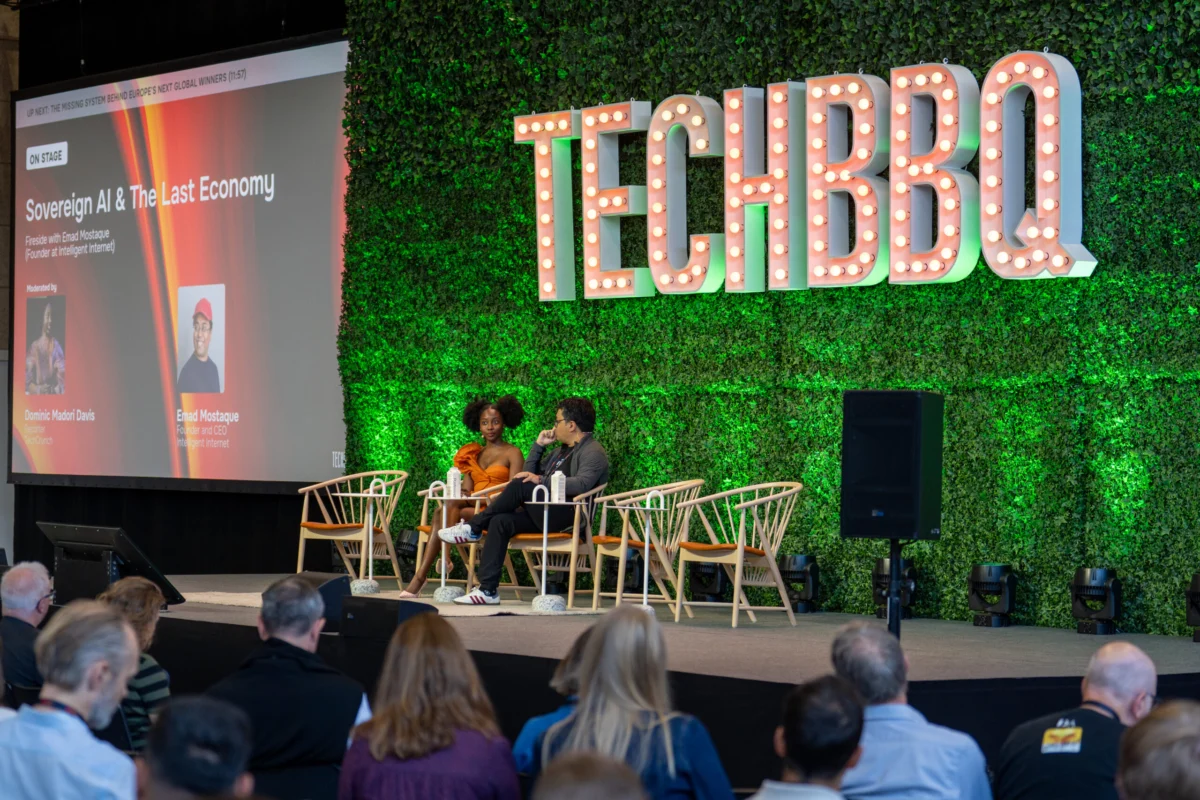
The annual TechBBQ conference in Copenhagen has long served as a focal point for the Nordic startup ecosystem, but the 2024 summit marked a significant shift in discourse, moving beyond technical capabilities to the more fundamental questions of power, ownership, and human agency. As thousands of investors, founders, and operators gathered in the Danish capital, the prevailing sentiment was one of urgency regarding Europe’s reliance on foreign technology. The conversation, which permeated every stage and networking event from August 27 to 28, centered on how the continent can secure "technological sovereignty"—a term that has moved from the fringes of policy debate to the center of the entrepreneurial spirit in the North.
This year’s theme, "Emerging from Agency," proved particularly prescient. It arrived at a moment when the European tech sector is grappling with the practical implications of its dependence on American and Chinese infrastructure. The catalyst for much of this anxiety was the recent unavailability of Anthropic’s advanced AI models, Mythos and Fable, to users outside Europe. This incident served as a wake-up call for many developers and software teams who found their workflows disrupted by decisions made thousands of miles away. The event highlighted the precariousness of "renting" intelligence from geopolitical rivals rather than owning the underlying models and the hardware that powers them.
The Push for European AI Sovereignty
The debate over sovereignty at TechBBQ was not merely academic; it was rooted in the operational realities of modern software development. When Anthropic’s models became inaccessible, it underscored a vulnerability that European leaders have warned about for years. While some startup executives at the conference dismissed the disruption as a minor hurdle, others viewed it as a harbinger of a future where Europe’s digital economy is subject to the whims of foreign corporate interests and regulatory shifts in Washington or Beijing.
Ellen de Brever, an angel investor and head of partnerships at the Novo Nordisk Foundation Cellerator, noted that the conversation has matured. According to de Brever, the focus is no longer just on what AI can achieve, but on what humans are willing to delegate to it. She argued that the age of AI agents is less about machines gaining autonomy and more about humans consciously deciding which aspects of their agency they are prepared to surrender. This philosophical shift reflects a broader European desire to remain "in the driver’s seat" of the technological revolution, ensuring that human judgment remains the final arbiter in critical decision-making processes.
To understand the stakes, one must look at the current investment landscape. While Europe has a robust ecosystem of early-stage startups, it has historically struggled with a "growth capital gap." Data from 2023 and early 2024 suggests that while European AI startups are attracting record levels of seed and Series A funding, the massive capital requirements for training Large Language Models (LLMs) often force them to look toward U.S. venture capital or cloud providers for support. This creates a cycle of dependency that the participants at TechBBQ are eager to break.
Privacy, Data, and the Surveillance Apparatus
One of the most attended sessions featured Signal President Meredith Whittaker, who addressed the inherent tensions between artificial intelligence and personal privacy. Whittaker, a prominent critic of the current AI trajectory, argued that the industry is effectively building a "data collection apparatus" under the guise of innovation. She specifically targeted the integration of AI assistants into core operating systems, such as the partnership between OpenAI and Apple to integrate ChatGPT into iMessage and iOS.
Whittaker’s critique centered on the "collateral consequences" of massive data acquisition. She posited that AI labs use sophisticated marketing to distract the public from the reality that these systems require total surveillance to function optimally. However, she also identified a significant market opportunity within this crisis. As sovereignty concerns grow, there is an increasing demand for privacy-centric technologies. Whittaker suggested that Europe, with its stringent General Data Protection Regulation (GDPR) and the newly enacted AI Act, is uniquely positioned to lead the market in "sovereign" and private AI solutions.
The sentiment was echoed by Emad Mostaque, co-founder of Stability AI and Intelligent Internet. Mostaque defined sovereignty as the ability to resist external power. He warned that the concentration of AI power in a handful of global labs poses a direct threat to national autonomy. "Inevitably, every country will be run by AI," Mostaque remarked during a panel discussion, adding that "the person that controls the AI controls the country." This perspective frames AI not just as a tool for economic growth, but as a critical component of national security and democratic integrity.
Economic Participation and the Future of Work
The implications of an "agentic" workforce—one where AI agents perform complex cognitive tasks—were also a primary focus of the summit. Mia Negru, advocacy and engagement director for the nonprofit Life With Artificials, highlighted the potential for a paradigm shift that exceeds the impact of previous industrial revolutions. Negru argued that if intelligent agents take over cognitive labor while robots handle physical work, society must fundamentally rethink concepts of ownership, work, and even the nature of democracy.
The concern is that without localized control over these technologies, European citizens could be marginalized in an economy dominated by foreign-owned automated systems. This leads to questions of economic participation: if the value generated by AI flows primarily to overseas shareholders, how can European social models be sustained? The consensus among many speakers was that Europe must foster its own "AI champions"—companies like Mistral in France or Aleph Alpha in Germany—while also supporting the broader ecosystem of specialized, industry-specific AI applications.
Cross-Continental Collaboration: The Nordic-Africa Summit
A notable addition to this year’s TechBBQ was the Nordic-Africa Startup Summit, which explored how these two distinct ecosystems can collaborate on innovation. The summit highlighted a shared interest in avoiding technological dependency. For African nations, AI offers a chance to "leapfrog" traditional infrastructure, much as mobile banking did a decade ago. However, the risks of "digital colonialism" are equally prevalent there.
By fostering direct ties between Nordic investors and African founders, the conference aimed to create a more decentralized global tech landscape. Discussions focused on how growth capital can be directed toward sustainable innovation in sectors like fintech, agritech, and healthcare. This cross-continental dialogue reinforces the idea that sovereignty is not about isolationism, but about building diverse, resilient networks that are not dependent on a single geographic or corporate power center.
The Social Fabric of Innovation
Despite the heavy geopolitical and philosophical themes, TechBBQ remained a celebration of the "human element" that drives the tech industry. The event featured a variety of networking opportunities, from rooftop barbecues hosted by industry giants like Nvidia, OpenAI, and AWS Startups, to intimate gatherings at Copenhagen’s cocktail bars.
At these events, the conversation often turned toward specific sectors of innovation. For instance, discussions at a gathering hosted by Ada Ventures highlighted the surge in women’s health technology, particularly in the realm of brain health. These interactions underscored Ellen de Brever’s point that while the conference was full of talk about machines, the most valuable outcomes were the face-to-face relationships and the exchange of ideas that technology cannot replicate.
The "Spotify Mafia" and other successful European founder networks were cited as models for how the region can scale its influence. By reinvesting capital and mentorship back into the local ecosystem, these networks provide the foundation for the "agency" the conference sought to promote. The speakers’ dinner, held on an island in the heart of Copenhagen featuring fire dancers and international press, served as a reminder that the tech ecosystem is as much about cultural identity and community as it is about code.
Chronology and the Path Forward
The timing of TechBBQ 2024 is critical. It follows the final approval of the European Union’s AI Act, the world’s first comprehensive framework for AI regulation. As the act moves toward full implementation over the next two years, the European tech community is at a crossroads.
- Late 2023 – Early 2024: Major AI labs begin face-to-face negotiations with EU regulators, leading to some models being withheld from the European market due to compliance uncertainty.
- August 2024: TechBBQ convenes in Copenhagen, shifting the narrative from "compliance" to "sovereignty and agency."
- 2025-2026 (Projected): The emergence of "Sovereign AI" initiatives across EU member states, involving state-backed computing clusters and localized LLMs.
The broader impact of the discussions at TechBBQ suggests a Europe that is becoming more assertive. The goal is no longer just to be a "regulatory superpower" that sets the rules for others to follow, but to become a "productive superpower" that builds the tools of the future. The transition from "renting" power to "owning" it will require massive investment in hardware—specifically GPU clusters—and a continued focus on high-quality, ethically sourced data.
As the conference wrapped up, the message was clear: the path to European agency in the age of AI is through a combination of bold investment, uncompromising privacy standards, and the preservation of human judgment. By focusing on these pillars, the Nordic and broader European ecosystems hope to ensure that the "driver’s seat" of the next technological era remains occupied by humans who are accountable to their own societies, rather than by algorithms controlled from afar.
