

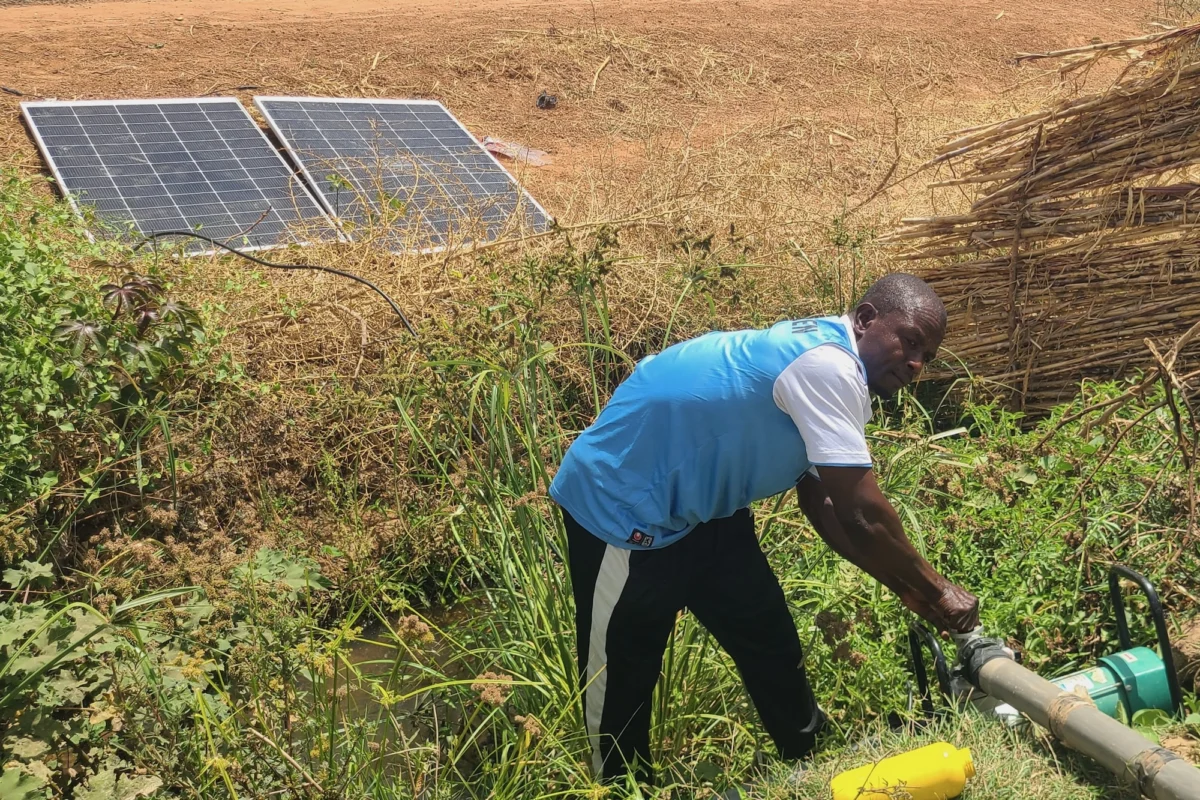
In the sprawling agricultural heartlands of Kano State, northwest Nigeria, the traditional rhythmic chug of diesel-powered water pumps is increasingly being replaced by the silent, efficient operation of solar-powered irrigation systems. For smallholder farmers like 55-year-old Alhaji Bashir Sule, this technological shift represents more than just a modernization of equipment; it is a critical survival strategy in an economy besieged by record-high fuel prices and a climate that has become increasingly unpredictable. As Nigeria grapples with a multifaceted food security crisis, the transition to renewable energy in the agricultural sector is emerging as a cornerstone for rural resilience and economic stability.

The Economic Catalyst: From Subsidies to Scarcity
The shift toward solar energy was accelerated by a seismic change in Nigeria’s fiscal policy. In May 2023, the federal government announced the immediate removal of the national fuel subsidy, a move intended to stabilize the macro-economy but one that sent shockwaves through the country’s production and supply chains. Within months, the price of petrol tripled, and by mid-2024, fuel costs had reached all-time highs. For the nation’s 140 million people living below the poverty line—roughly 63 percent of the population—the impact was immediate and devastating.
In the agricultural sector, where irrigation is the lifeblood of dry-season farming, the rising cost of fuel became a barrier to entry. In the Bauje farming community of Kano, many fields lay fallow during the 2023-2024 dry season because farmers simply could not afford the overhead. Alhaji Bashir Sule recalls spending approximately ₦12,000 (roughly US$8.70) every three days on petrol to irrigate his five-hectare farm. "This is why most of my neighbors didn’t use their lands," Sule noted. Today, after switching to a solar-powered system, his daily operational cost has plummeted to ₦2,500 (US$1.80), allowing his rice farm to remain consistently irrigated despite the harsh heat.

A Chronology of Agricultural Transformation
The adoption of solar technology in Nigerian agriculture has followed a distinct timeline, driven by both necessity and the intervention of non-governmental organizations.
- Pre-2023: Solar irrigation remained a niche technology, utilized primarily by large-scale commercial farms or pilot projects. Most smallholders relied on inexpensive, subsidized petrol.
- May 2023: The removal of the fuel subsidy created an immediate energy crisis for rural farmers.
- Late 2023 – Early 2024: Organizations such as Horti Nigeria and the YELF Climate Trust Foundation began scaling up distribution and training programs.
- Mid-2024: The National Economic Council (NEC) officially directed the Ministry of Budget and Economic Planning to prioritize the funding and distribution of solar pumps, signaling a federal commitment to the transition.
In states like Kebbi, the results of this timeline are quantifiable. A study by the YELF Climate Trust Foundation involving 10,000 smallholder farmers revealed that over 70 percent reported significant income increases. By reducing operational costs and extending the growing season into the traditional "hungry gap" of the dry months, farmers were able to achieve a level of financial stability previously unattainable under the fossil-fuel regime.

Boosting Yields and Enhancing Food Security
The benefits of solar irrigation extend beyond the balance sheet; they are visible in the quality and quantity of the harvests. In Sauki Dabula, 39-year-old Saidu Abba observed a marked difference in his cucumber and maize crops. Under the old petrol-powered system, financial constraints often forced him to cut irrigation cycles short, leading to stunted, low-value produce. With the sun providing free energy, Abba can now ensure his crops receive the precise amount of water needed for optimal growth.
Similarly, Ibrahim Badamasi, an onion farmer in the same region, saw his harvest nearly double. "I usually get three or four large sacks of onions from the farm each season," Badamasi explained. "This year, as a result of proper irrigation, I made six similar sacks from the same farm." This increase in productivity is vital for Nigeria, where agriculture accounts for 22 percent of the Gross Domestic Product (GDP) and employs more than a third of the workforce. Domestic production of staples like onions, maize, and rice is the primary defense against the global food price fluctuations that have pushed millions of Nigerians toward hunger.

Environmental Impact and the Public Health Crisis
The transition to solar energy is also addressing a silent killer in rural Nigeria: air pollution. Nigeria’s agricultural sector generates nearly 86 million tons of carbon-equivalent emissions annually—three times the emissions of the commercial hub of Lagos. Much of this is attributed to the thousands of small, inefficient diesel and petrol generators used across the country.
The federal government has recently declared a public health emergency over diseases linked to greenhouse gas emissions, citing respiratory issues and cardiovascular problems in rural communities. For residents living near farms, the change is palpable. Haruna Muhammad, a neighbor to Saidu Abba, noted that the air around the farm was once "discomforting" due to the constant fumes. Since the installation of solar panels, the air quality has improved significantly. For the farmers themselves, the health benefits are personal. Alhaji Bashir Sule described the air around his petrol pump as "sickening," noting that he can now spend hours in his fields without the headache and fatigue associated with exhaust inhalation.

Institutional Support and the Path to Scalability
Recognizing the potential of this technology, the Nigerian National Economic Council has taken a proactive stance. The Council’s directive to fund the production and distribution of solar pumps is a major step toward making the technology accessible to the masses. Furthermore, international partnerships are playing a crucial role. Horti Nigeria, a Dutch-funded initiative, has already provided systems to over 2,000 farmers across Ogun, Oyo, Kaduna, and Kano states.
Another innovative model is being spearheaded by Women In Mechanized Agriculture (WIMA). Because the upfront cost of a solar system—often exceeding ₦500,000 (US$360)—is prohibitive for most smallholders, WIMA offers rental services. This model not only provides immediate access to male farmers like Sule but also generates revenue to fund agricultural programs specifically for women in Northern Nigeria, where cultural norms often restrict women’s access to machinery and land ownership.

Barriers to Entry: Cost, Security, and Technical Support
Despite the clear advantages, the road to universal solar adoption is fraught with challenges. John Olaoye, a professor of agricultural and biosystems engineering at the University of Ilorin, emphasizes that "access remains the primary hurdle." While operational costs are low, the initial capital investment is out of reach for the average farmer without significant subsidies or flexible financing.
Security is another pressing concern. In regions where banditry and petty theft are common, leaving expensive solar panels in remote fields overnight is a significant risk. Alhaji Bashir Sule learned this the hard way when he attempted to transport his panels back and forth on a motorcycle, resulting in a broken panel and an expensive repair. Many farmers are now forced to hire local security guards, an additional expense that eats into the savings provided by the solar transition.

Furthermore, there is a critical shortage of local technicians capable of repairing malfunctioning solar equipment. Muhammad Hamza Abubakar, a sustainable agriculture strategist, warns that without a robust "after-sales" ecosystem and a trained workforce of rural technicians, the longevity of these systems—and the farmers’ investments—is at risk.
Implications for a Resilient Future
The shift to solar-powered irrigation in Nigeria serves as a blueprint for a "just transition" in emerging economies. It demonstrates that green technology, when properly implemented, is not a luxury for the wealthy but a necessity for the poor. If solar-powered pumps were adopted across all of Nigeria’s irrigated maize fields alone, it would eliminate an estimated 4 million tons of carbon emissions annually while simultaneously bolstering the national food supply.

For farmers like Saidu Abba and Alhaji Bashir Sule, the sun has become a reliable partner in an otherwise volatile world. As the climate continues to change and fossil fuel markets remain unstable, the integration of renewable energy into the bedrock of Nigerian agriculture offers a path toward a more food-secure and environmentally sustainable future. The success of this transition will ultimately depend on the government’s ability to bridge the gap between high-level policy and the practical, daily needs of the smallholder farmers who feed the nation.
