

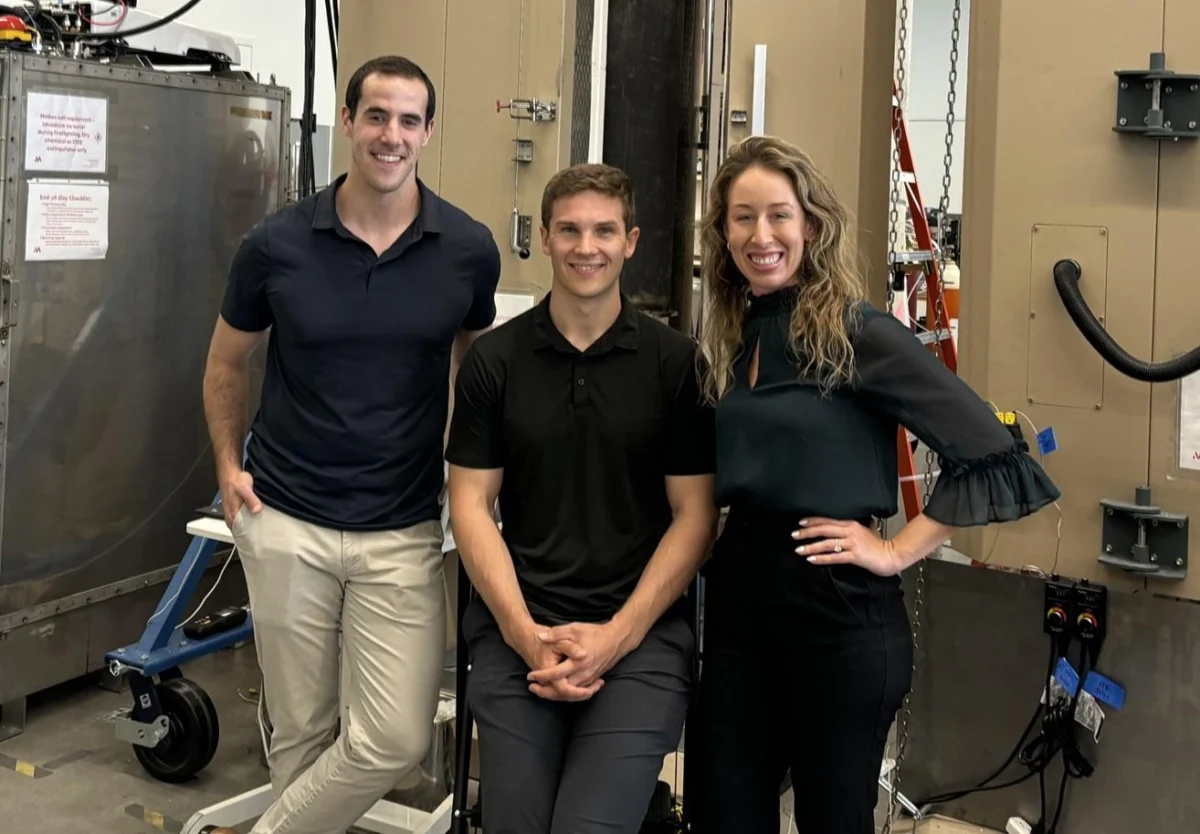
The landscape of industrial decarbonization shifted significantly this week as Mantel, a Cambridge-based carbon capture innovator, announced the successful closure of an $18 million funding round. This latest injection of capital, which includes strategic investments from Constellation Technology Ventures (CTV)—the venture capital arm of Constellation Energy—and Azimut Investments, is earmarked for the commercial deployment of Mantel’s high-temperature, liquid-phase carbon capture technology. This technology is specifically designed to tackle the emissions of heavy industrial sectors, which have long been considered the most difficult and expensive to abate.
Founded in 2022 as a spin-out from the Massachusetts Institute of Technology (MIT) Department of Chemical Engineering, Mantel has rapidly ascended in the climate tech space by offering a radical departure from traditional carbon capture methods. The company’s proprietary system utilizes a molten-borate salt loop that operates at the extreme temperatures common in industrial furnaces, kilns, and boilers. By integrating directly into these high-heat environments, Mantel claims to reduce energy losses by a staggering 97% compared to conventional amine-based solvent systems. This efficiency translates to an operational cost that is reportedly less than half the current industry average per ton of CO2 captured.
The Evolution of Carbon Capture: From MIT to Industrial Scale
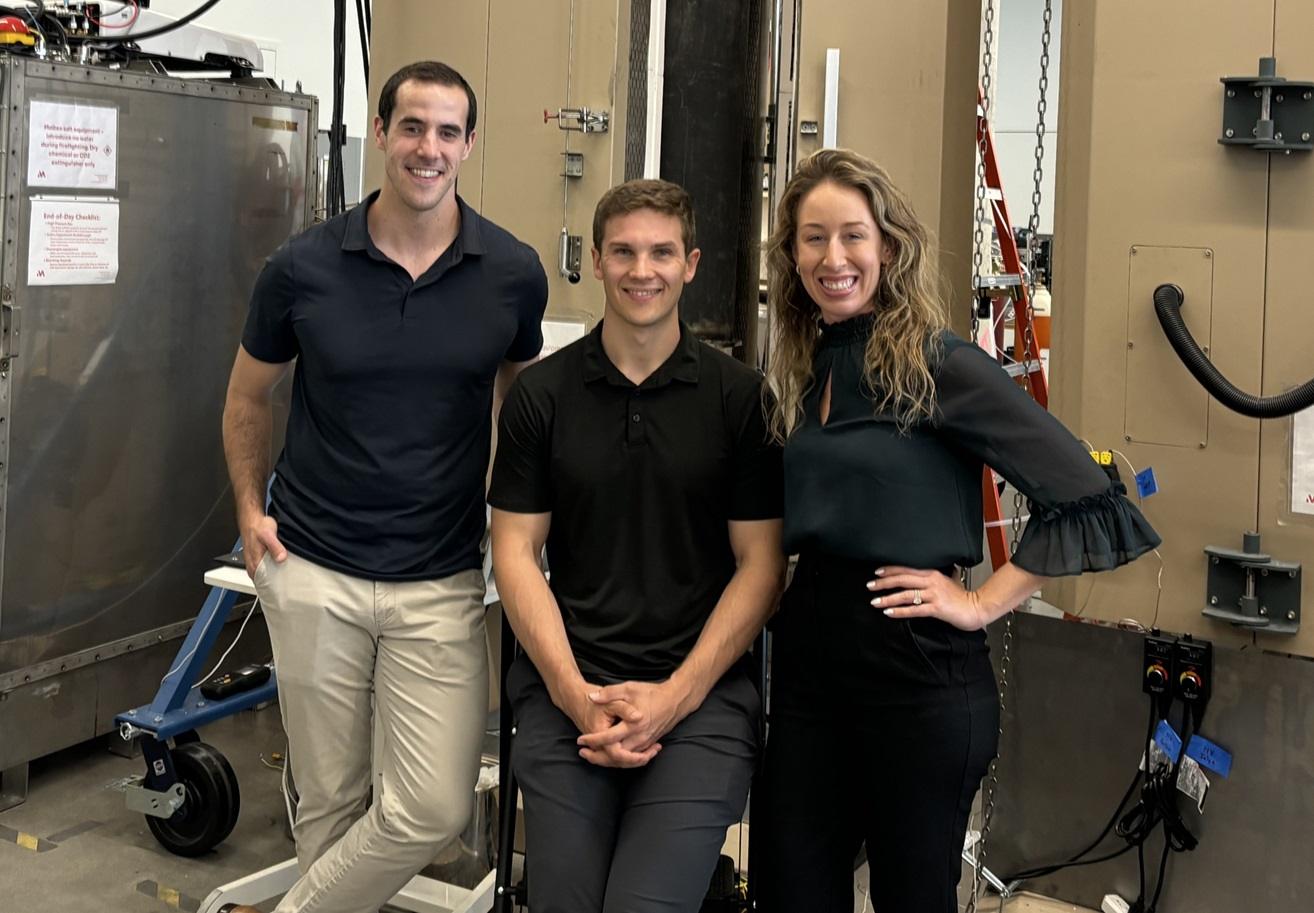
The journey of Mantel began within the research labs of MIT, where founders Cameron Halliday, Danielle Rapson, and Sean Robertson sought to solve the fundamental thermodynamic flaw in first-generation carbon capture. Traditional carbon capture systems typically use liquid amines to absorb CO2 at low temperatures. However, because industrial exhaust is usually very hot, these systems require the exhaust to be cooled down significantly before capture, only for the capture medium to be heated up again to release the CO2. This "parasitic load" consumes a massive portion of the plant’s total energy output, often making carbon capture economically unviable without heavy subsidies.
Mantel’s approach flips this paradigm. By using molten salts that remain stable at temperatures exceeding 600 degrees Celsius, the system captures CO2 while it is still hot. Instead of wasting heat, the Mantel process recovers and reuses thermal energy as high-pressure steam, which can be fed back into the industrial process or used to generate additional electricity. This "thermally integrated" loop is what allows the company to boast near-zero energy loss, a claim that has caught the attention of major utility providers and heavy industrial operators alike.
Since its inception in 2022, Mantel has moved with notable speed. The company initially secured seed funding to prove the chemistry of the molten-borate salt loop at a bench scale. With the new $18 million round, the company’s total capital raised now stands at $50 million, providing a robust runway to transition from laboratory success to field-deployed commercial units.
Strategic Investment and Industry Validation
The participation of Constellation Technology Ventures is a significant nod of approval from one of the largest carbon-free energy producers in the United States. Constellation Energy, which operates the nation’s largest fleet of nuclear power plants, is a central player in the transition to a clean grid. By backing Mantel, Constellation is positioning itself at the forefront of "behind-the-meter" carbon capture solutions that could eventually be applied to natural gas peaking plants or hydrogen production facilities.
Kate Norman, Senior Vice President of Commercialization and Market Development at Constellation, emphasized that the investment aligns with a broader strategy of balancing sustainability with reliability. "Constellation remains committed to supporting new technologies that will help drive the U.S. transition to a clean energy future," Norman stated. "Our investment in Mantel’s technology exemplifies our interest in practical, clean-energy solutions, while balancing sustainability and reliability."
Azimut Investments, an international asset management firm, also joined the round, highlighting the growing appetite among institutional investors for "hard-tech" climate solutions. Unlike software-based climate plays, Mantel represents a capital-intensive but high-impact hardware solution that addresses the core of the global emissions problem: heavy industry.
A Growing Portfolio of Commercial Deployments
The $18 million in new capital is not merely for research and development; it is strictly focused on execution. Mantel has already secured several high-profile partnerships that will serve as the proving grounds for its technology across different sectors.
One of the most ambitious projects is Mantel’s selection as the carbon capture technology provider for the TerraSpark Energy Campus in West Virginia. This 1.6-gigawatt facility is designed to be a model for the future of the American power grid, integrating large-scale energy generation with cutting-edge emission controls. In a region traditionally dominated by coal, the TerraSpark project represents a pivot toward low-carbon baseload power, with Mantel’s technology serving as the critical link in ensuring the facility meets stringent environmental standards.
In the industrial sector, Mantel is deploying its system at Kruger’s Wayagamack Mill in Québec, Canada. The pulp and paper industry is a prime candidate for Mantel’s technology due to its high-temperature steam requirements and significant CO2 footprint. By integrating the molten-borate salt loop into the mill’s existing infrastructure, Kruger aims to demonstrate that even centuries-old industrial processes can be retrofitted for the net-zero era.
Furthermore, Mantel is collaborating with one of Canada’s largest oil and gas producers. While the specific name of the producer remains confidential, the project focuses on capturing emissions from steam-assisted gravity drainage (SAGD) operations—a process notorious for its high energy intensity. If Mantel can successfully lower the cost of carbon capture in the oil sands, it could fundamentally alter the ESG (Environmental, Social, and Governance) profile of North American hydrocarbon production.
Economic Implications and the 45Q Incentive Landscape
The economic argument for Mantel’s technology is bolstered by shifting regulatory landscapes, particularly in the United States. The Inflation Reduction Act (IRA) significantly enhanced the 45Q tax credit, which provides a financial incentive for every ton of CO2 captured and permanently stored. Under the current law, industrial facilities can receive up to $85 per ton for CO2 stored in saline aquifers and up to $60 per ton for CO2 used in enhanced oil recovery.
For many industrial players, traditional carbon capture has remained out of reach because the cost of capture—often ranging from $70 to $120 per ton—exceeded the value of the tax credit. By claiming to operate at less than half the industry-average cost, Mantel effectively brings the cost of capture well below the $85 threshold. This creates a "profit-on-capture" scenario, transforming carbon sequestration from a regulatory burden into a potential revenue stream or, at the very least, a cost-neutral compliance strategy.
Cameron Halliday, CEO of Mantel, underscored the urgency of this commercial phase. "This moment is about execution and how fast we can build," Halliday said. "This round brings in partners who understand large-scale energy infrastructure as we move at the speed this transition demands."

Technical Analysis: Why Molten Borates?
To understand why Mantel’s $18 million raise is significant, one must look at the chemistry. Most carbon capture research over the last two decades has focused on "cold" capture. Amines (nitrogen-based organic compounds) are effective at binding with CO2 at roughly 40°C. However, releasing that CO2 requires heating the amine solution to about 120°C. This constant cycling of heating and cooling a massive volume of water and chemicals is the source of the high energy penalty.
Mantel’s use of molten borates changes the thermodynamic equation. Borates are salts that melt into a liquid state at high temperatures. In this liquid phase, they have a high affinity for CO2. Because the absorption happens at 600°C, the heat generated by the chemical reaction is "high-grade" heat. In the world of thermodynamics, high-grade heat is valuable because it can be used to create high-pressure steam.
In a Mantel-equipped plant, the carbon capture unit acts almost like a secondary boiler. It takes the waste heat from the flue gas and the heat from the chemical reaction to produce steam that can drive a turbine. This integration is what allows for the claimed 97% reduction in energy loss. It is not just about capturing carbon; it is about managing the energy of an industrial site with far greater precision than was previously possible.
Challenges and the Path Forward
Despite the promising technology and significant funding, Mantel faces the "valley of death" common to all industrial hardware startups. Scaling a chemical process from a laboratory to a gigawatt-scale power plant involves immense engineering challenges. Issues such as material corrosion—molten salts can be highly corrosive to standard steel—and the longevity of the proprietary salt mixture will be tested in the upcoming commercial deployments.
Furthermore, the success of Mantel is inextricably linked to the development of carbon transport and storage infrastructure. Capturing the CO2 is only half the battle; the gas must then be compressed, transported via pipeline, and injected into geological formations. While Mantel focuses on the "capture" part of CCUS (Carbon Capture, Utilization, and Storage), its commercial viability depends on the broader industry’s ability to build out the "storage" part.
However, the modular and systems-engineering-led approach mentioned by the company suggests a strategy designed to mitigate these risks. By creating modular units that can be integrated into existing infrastructure without requiring a total plant overhaul, Mantel aims to reduce capital intensity and speed up the adoption curve.
Conclusion: A New Standard for Heavy Industry
The $18 million investment in Mantel represents more than just a successful funding round for a startup; it represents a strategic bet on the next generation of industrial technology. As the global community moves toward the 2050 net-zero targets, the "low-hanging fruit" of renewable energy—wind and solar—is already being harvested. The next, more difficult phase of the energy transition involves decarbonizing the steel, cement, and chemical plants that form the backbone of the modern economy.
If Mantel can deliver on its promise of high-efficiency, low-cost carbon capture, it could provide the missing piece of the decarbonization puzzle. With the backing of industry giants like Constellation and a pipeline of projects spanning the North American continent, Mantel is well-positioned to prove that heavy industry can have a future in a carbon-constrained world. The coming years of execution at the TerraSpark campus and the Wayagamack Mill will be the ultimate test of whether molten-borate technology can scale to meet the monumental challenge of global climate change.
