

The residential swimming pool industry is currently undergoing a significant technological transformation, shifting away from manual labor and mechanical hydraulic systems toward sophisticated, AI-driven autonomous robotics. For decades, pool maintenance remained a grueling chore, particularly in high-temperature climates such as the American Sunbelt, where debris accumulation and algae growth are accelerated. However, recent advancements in lithium-ion battery density, computer vision, and wireless charging have birthed a new generation of robotic cleaners that operate independently of a pool’s primary filtration system. This shift represents a broader trend in home automation, where "smart yard" technologies are becoming as prevalent as indoor smart home ecosystems.
The Evolution of Pool Cleaning Technology: A Chronology
The history of automated pool cleaning is defined by three distinct technological eras. Understanding this chronology is essential for consumers navigating a market that still offers legacy systems alongside cutting-edge robotics.

- The Suction-Side Era (1950s–1970s): The first automated cleaners were developed by inventors like Ferdinand Chauvier. These devices attached to the pool’s skimmer or dedicated suction line, using the main pump’s vacuum to move and collect debris. While affordable, they increased the load on the pool’s filter and were prone to clogging.
- The Pressure-Side Era (1980s–2000s): Popularized by brands like Polaris, these cleaners used water pressure—often from a secondary "booster pump"—to create a venturi effect, sucking debris into a dedicated bag. These systems were more powerful than suction cleaners but required significant plumbing and high energy consumption.
- The Robotic and Cordless Era (2010s–Present): The current market is dominated by electronic cleaners that operate on low-voltage electricity. Initially, these were "tethered" by long power cords. Within the last five years, however, the industry has pivoted toward battery-powered, cordless robots that utilize onboard processors to map pool surfaces and optimize cleaning paths.
Market Leaders and High-Performance Benchmarks
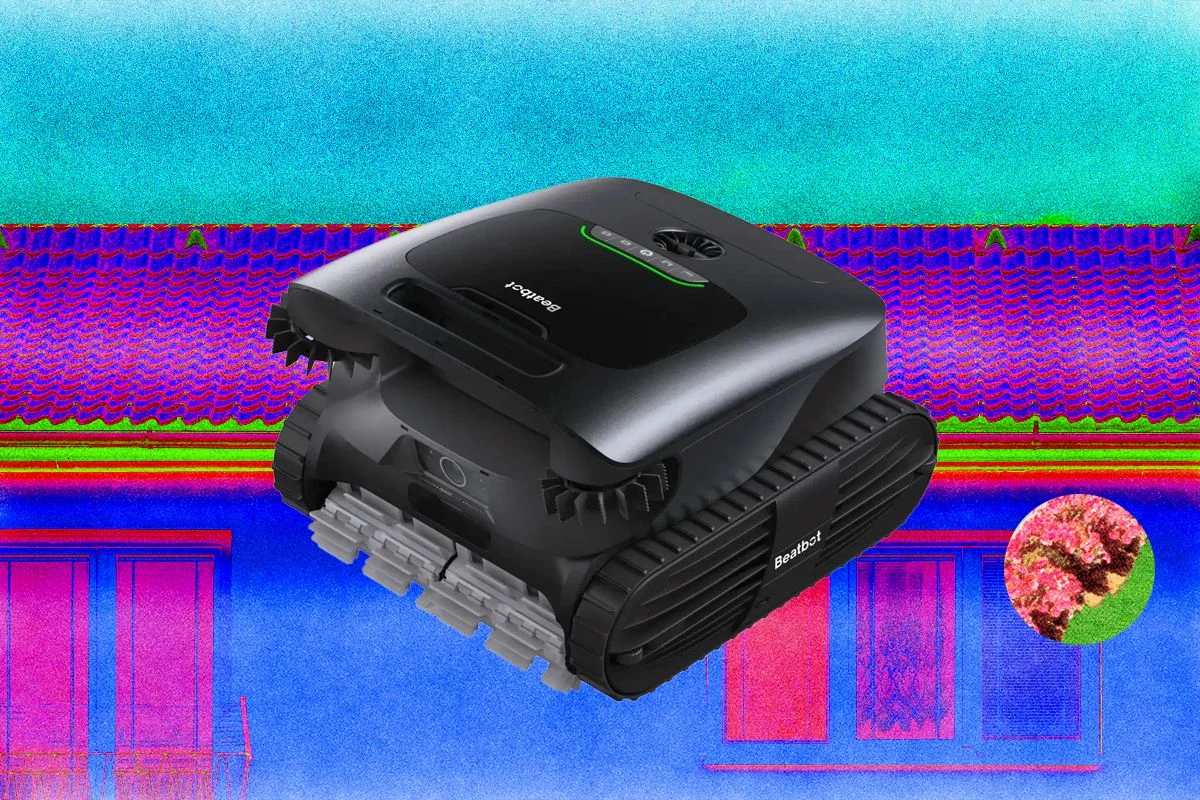
In the current landscape, the Beatbot AquaSense 2 Ultra has emerged as a benchmark for high-end residential pool maintenance. Priced at approximately $3,000, this unit represents the premium tier of the market, integrating multiple functions that previously required separate devices.
The AquaSense 2 Ultra is distinguished by its comprehensive cleaning capabilities, addressing the floor, walls, and the critical waterline. The waterline is often the most difficult area to maintain manually, as organic oils and debris frequently create a "scum line" on tiles. The robot utilizes AI-powered debris detection to identify and target areas of high concentration, a significant departure from the random-path algorithms used by older models. Furthermore, it features a surface-skimming mode, allowing it to collect floating debris before it sinks and decays.
Despite its performance, industry analysts note that the unit’s 29-pound chassis presents a logistical challenge for some users. The weight, combined with the water retained in the device upon retrieval, requires significant physical effort, highlighting a current trade-off in the industry between powerful hardware and user maneuverability.

Advancements in Battery Life and AI Navigation
As the industry moves away from corded models, battery capacity has become a primary metric for consumer evaluation. Supporting data from recent product testing indicates a wide variance in operational longevity across the sector.
The iGarden M1-AI series has set a new standard for endurance with its 12,500 mAh battery. This allows for up to nine hours of continuous operation in floor-only mode. For large residential pools exceeding 40 feet in length, this endurance is critical. Traditional robots often fail to complete a full cleaning cycle on a single charge, requiring multiple deployments that defeat the purpose of automation.
The integration of AI navigation has also solved the "dead zone" problem. Historically, L-shaped or freeform pools posed navigation hurdles for robots, which would often become trapped in corners or shallow sun shelves. Modern units now utilize S-shaped pathing and visual sensors to ensure 100% surface coverage. For instance, the iGarden M1-AI 90 uses an algorithm to hunt for missed debris after its initial programmed run, effectively mimicking the thoroughness of a manual operator.

The Budget Landscape: Balancing Cost and Capability
While premium models command high prices, the entry-level and mid-range segments have seen aggressive price corrections in 2024. This democratization of technology allows homeowners with smaller pools or tighter budgets to access robotic maintenance.
- The Dreame Z1 Pro: Originally listed at $1,499, this model has seen market pricing drop as low as $499. It features magnetic charging, which prevents the corrosion issues often associated with traditional plug-in ports. While it lacks the scrubbing power of $3,000 models, its ability to map a pool graphically via a mobile app provides a level of transparency previously unavailable at this price point.
- The Beatbot AquaSense 2: At a $799 price point, this unit targets the "sweet spot" of the market. It provides essential floor and wall cleaning without the expensive surface-skimming or self-emptying features of its "Ultra" counterpart.
- The Poolease X1: Representing the ultra-budget tier at $110, this 9-pound unit illustrates the limitations of low-cost robotics. Lacking advanced sensors, it relies on random movement and is largely ineffective against sand or fine silt, serving primarily as a tool for collecting large leaves in small, above-ground pools.
Specialized Solutions: Surface Skimming and Chemical Management
A notable sub-sector of the market involves specialized robots designed for tasks beyond floor scrubbing. Surface skimmers and smart dispensers are becoming popular additions to the modern pool owner’s arsenal.
The Beatbot iSkim Ultra, priced at $649, addresses the issue of floating debris. Most robotic cleaners are designed for the pool floor, but once debris sinks, it begins to decompose and affect water chemistry. Surface skimmers are typically solar-powered, allowing them to remain in the water indefinitely. The iSkim Ultra utilizes front-mounted sensors to avoid collisions with pool tiles, a common failure point in cheaper, "dumb" skimmers that frequently damage their own hulls through constant impact.

However, the specialized market still faces reliability hurdles. The SunnyWhale FinWhale, a smart chlorine dispenser priced at $799, was designed to monitor pH levels and dispense chemicals automatically. Reports from field testing indicate that solar charging reliability remains a challenge for these smaller devices, often requiring frequent manual wall charging, which undermines the "set-and-forget" value proposition.
Comparative Analysis: Corded vs. Battery-Powered Systems
A significant debate remains among pool professionals regarding the superiority of corded versus cordless units.
Corded Advantages:

- Unlimited Runtime: Ideal for commercial pools or residential pools with heavy "bather loads."
- Lower Cost: Generally 20-30% cheaper than battery equivalents due to the absence of expensive lithium-ion cells.
- Consistency: Units like the Polaris VRX iQ+ ($1,649) offer consistent power delivery that does not diminish as a battery drains.
Battery-Powered Advantages:
- Maneuverability: No risk of the "cable tangle" that often strands corded robots in the middle of a pool.
- Aesthetics: Leaves the pool deck and water clear of unsightly and potentially hazardous tripping cables.
- Safety: While some concerns exist regarding lithium-ion batteries in water, manufacturers argue they pose no greater risk than other modern electronics, provided they are charged and stored according to specifications.
Industry Impact and Future Implications
The proliferation of robotic pool cleaners is having a measurable impact on the professional pool service industry. While robots cannot yet perform complex tasks like filter backwashing or equipment repair, they are reducing the frequency of required professional visits. Homeowners are increasingly opting for "chemical-only" service plans, handling the physical debris removal themselves via automation.
Furthermore, the environmental impact of these devices is noteworthy. Traditional pressure-side cleaners require high-horsepower booster pumps that can consume significant electricity. In contrast, robotic cleaners operate on low-voltage DC power, often costing less than $10 in electricity for an entire year of operation.

Looking forward, the industry is moving toward fully autonomous "docking stations." The Beatbot AquaSense X, for example, features a base station that handles both charging and debris evacuation. This mimics the evolution of indoor robotic vacuums, which transitioned from simple sweepers to self-emptying, self-charging appliances. As battery technology continues to improve and AI navigation becomes more precise, the total automation of residential pool maintenance appears to be an achievable reality within the next decade. For the consumer, the choice now depends less on whether the technology works, and more on matching the specific dimensions and debris profile of their pool to the right tier of robotic capability.
