

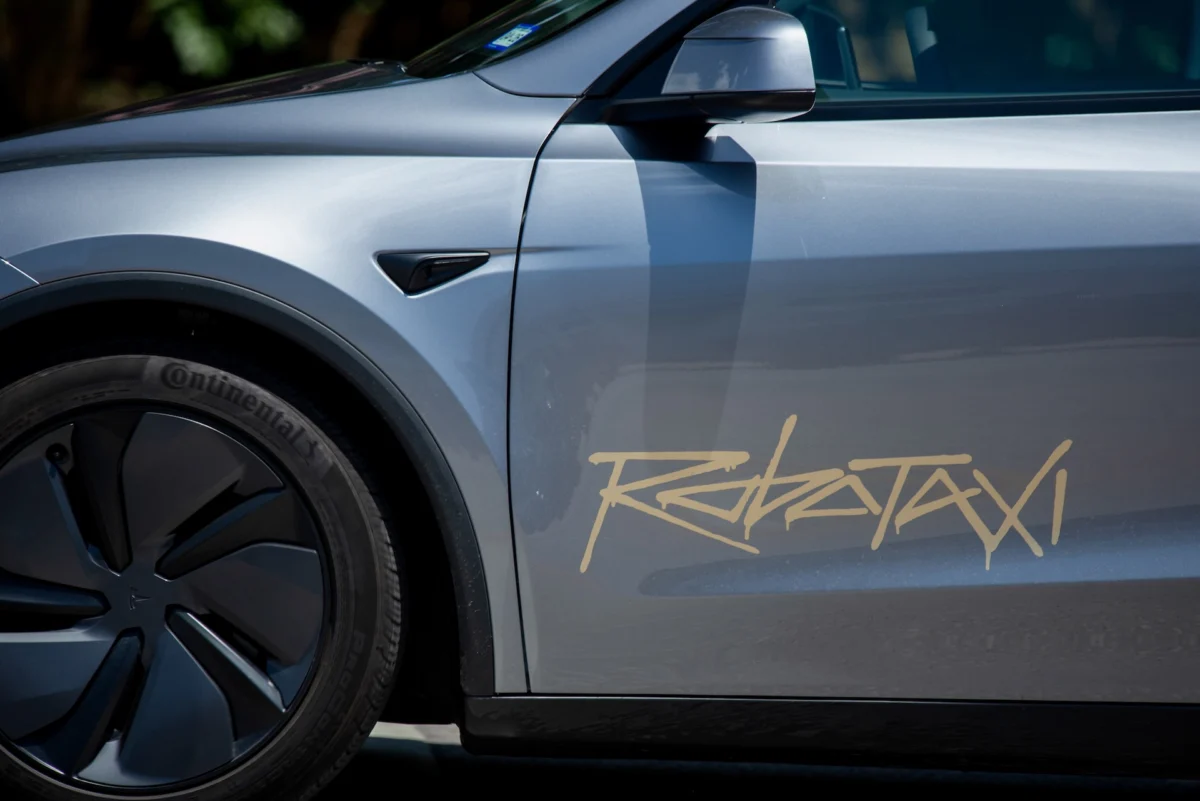
The landscape of urban transportation in Southern Nevada underwent a seismic shift this week as the Nevada Transportation Authority (NTA) issued a series of landmark approvals that will see thousands of autonomous vehicles (AVs) integrated into the commercial fabric of Clark County. In a unanimous vote on Thursday, the NTA granted commercial permits to three of the industry’s most prominent players—Tesla, Uber, and Waymo—authorizing a combined deployment of up to 8,000 robotaxis over the next 12 months. This decision positions Las Vegas and its surrounding municipalities as the premier global testing ground for large-scale, driverless ride-hailing services, marking the most significant expansion of autonomous mobility since the technology’s inception.
Under the newly approved regulatory framework, Tesla has been granted the largest share of the deployment, with authorization to operate up to 5,000 autonomous vehicles. Waymo, the Alphabet-owned subsidiary that already operates commercial services in Phoenix, San Francisco, and Los Angeles, received a permit for 1,000 vehicles. Uber, which has pivoted from developing its own hardware to acting as a platform for autonomous fleets, was also cleared for 1,000 vehicles. Uber’s operations will be facilitated through strategic partnerships with Motional—a joint venture between Hyundai and Aptiv—and Zoox, the Amazon-owned autonomous vehicle company. Notably, Zoox already possesses an independent permit allowing for the operation of 100 specialized robotaxis in the region.
The Scaling Challenge: Ambition Versus Reality
While the permits allow for a massive influx of technology, industry leaders have signaled that the actual rollout may be more gradual than the 8,000-vehicle ceiling suggests. During the NTA hearing, representatives from the participating companies expressed a cautious approach to scaling. Eric Early, Tesla’s Cybercab chief engineer, clarified that the 5,000-vehicle figure represents a maximum capacity rather than a definitive deployment target for the coming year.
Early noted that while the technology continues to advance, the logistical hurdles of launching a fleet of that magnitude are significant. He indicated that Tesla would likely aim for a more conservative figure, stating that the company would consider a deployment of 2,500 vehicles a successful milestone within the first twelve-month period. This discrepancy between authorized capacity and projected deployment reflects the complexities of fleet management, including the establishment of charging infrastructure, maintenance hubs, and the continuous calibration of software to handle the unique traffic patterns of the Las Vegas Strip.
Geography of the Rollout: The Battle for the Golden Triangle
The deployment will be concentrated in Clark County’s high-traffic corridors, specifically the "Golden Triangle"—the lucrative and densely packed area encompassing Harry Reid International Airport, the Las Vegas Boulevard (The Strip), and the surrounding resort corridors. This region is the lifeblood of Nevada’s tourism economy, facilitating millions of trips annually for visitors traveling between the airport and major casinos.
To date, much of the autonomous testing in Nevada has been localized to this area. Motional has been particularly active, conducting extensive trials not only in the resort corridor but also in the downtown Las Vegas district and the Town Square shopping center. The concentration of robotaxis in these areas is expected to create a hyper-competitive environment where Tesla’s FSD (Full Self-Driving) technology, Waymo’s sensor-heavy Driver system, and the bespoke designs of Zoox will compete for the same pool of tourists and residents.
Historical Context: Nevada’s Path to Autonomous Leadership
Nevada’s move to embrace robotaxis is the culmination of more than a decade of pro-technology legislation. In 2011, Nevada became the first state in the U.S. to pass laws authorizing the operation of autonomous vehicles on public roads. The state’s regulatory environment has historically been designed to attract Silicon Valley innovation, offering a more flexible framework than neighboring California.
The timeline of autonomous integration in Nevada has moved through several distinct phases:
- 2011–2015: Early legislative frameworks and the issuance of the first autonomous testing licenses.
- 2016–2020: The introduction of public pilot programs, most notably the autonomous shuttle in downtown Las Vegas and Motional’s partnership with Lyft to provide semi-autonomous rides on the Strip.
- 2021–2023: The expansion of testing to include fully driverless operations (no human safety driver) by companies like Zoox and Motional.
- 2024: The transition from experimental testing to large-scale commercial permits for Tesla, Waymo, and Uber.
This latest approval marks the final step in the transition from "test phase" to "market phase," treating autonomous fleets as a standard component of the state’s transportation infrastructure.
Economic Implications and Workforce Disruption
The NTA’s decision has sparked a fierce debate regarding the future of work in Nevada. On one side, proponents of the AV industry argue that the shift will catalyze a new economic sector. These companies will require a domestic workforce to handle vehicle cleaning, technical maintenance, remote monitoring, and complex charging logistics. They argue that these "support" jobs will be more stable and safer than traditional driving roles.
However, the opposition is vocal and well-organized. The Livery Operators Association and various local taxi companies have raised formal objections, characterizing the NTA’s decision as an existential threat to the thousands of human drivers who currently power the city’s transit system. Beyond the loss of jobs, labor advocates and industry incumbents warn of "oversaturation."
Kimberly Maxson-Rushton, a legal representative for the Livery Operators Association, argued during the hearing that the sheer volume of vehicles could lead to catastrophic congestion. The concern is that if thousands of robotaxis are added to the existing fleet of taxis and human-led rideshare vehicles, the "Golden Triangle" could become permanently gridlocked, negatively impacting the tourist experience and increasing the carbon footprint of the city despite the electric nature of many AVs.
Uber’s Hybrid Strategy and Regulatory Lobbying
In an effort to bridge the gap between human labor and automation, Uber has emerged as a proponent of a "hybrid" model. Unlike Tesla and Waymo, which lean toward a future of pure autonomy, Uber’s business model depends on maintaining a vast network of human contractors. During the NTA proceedings, Uber advocated for a system that integrates robotaxis into existing ride-hailing networks rather than allowing them to operate as entirely separate entities.
Uber has previously lobbied for regulations that would require autonomous operators to utilize platforms that also employ human drivers. This strategy serves two purposes: it ensures that Uber remains the dominant platform regardless of who owns the vehicles, and it provides a "buffer" for the city. Uber argues that human drivers are necessary to handle "peak demand" periods—such as the end of a major concert or a sporting event—where autonomous fleets might be overwhelmed or unable to navigate complex, temporary traffic redirections.
Safety and Technical Oversight
The rapid deployment of up to 8,000 vehicles brings the issue of safety to the forefront. While autonomous vehicles are designed to eliminate human error—which accounts for the vast majority of traffic accidents—the technology is not without its failures. High-profile incidents in other states, including stalled vehicles blocking emergency services and low-speed collisions, have led to increased scrutiny.
The NTA’s approval comes with the caveat that these companies must adhere to strict reporting requirements. In Nevada, the Department of Motor Vehicles (DMV) and the NTA share oversight. Companies must report any collision involving an AV within 10 days, and the state maintains the authority to suspend permits if a fleet is deemed a public safety hazard. The data collected over the next 12 months in Clark County will likely inform federal safety standards currently being debated by the National Highway Traffic Safety Administration (NHTSA).
Analysis: The Future of the "Smart City"
The decision by the Nevada Transportation Authority is more than just a regulatory update; it is a high-stakes social and economic experiment. By allowing up to 8,000 robotaxis to enter the market, Nevada is betting that technology can solve the "last mile" transportation problem in one of the world’s most visited cities.
If successful, Las Vegas could see a reduction in traffic accidents, lower transportation costs for tourists, and a streamlined transit system that operates 24/7 without the constraints of driver fatigue. If the rollout falters, however, the city faces the risk of increased congestion, public backlash from displaced workers, and potential safety incidents that could set the autonomous vehicle industry back by years.
As the 12-month clock begins, the eyes of the global tech and transportation industries will be fixed on Clark County. The "Battle for the Strip" between Tesla, Waymo, and Uber will likely determine the trajectory of autonomous mobility for the rest of the decade, proving whether the world is truly ready for a driverless future.
