

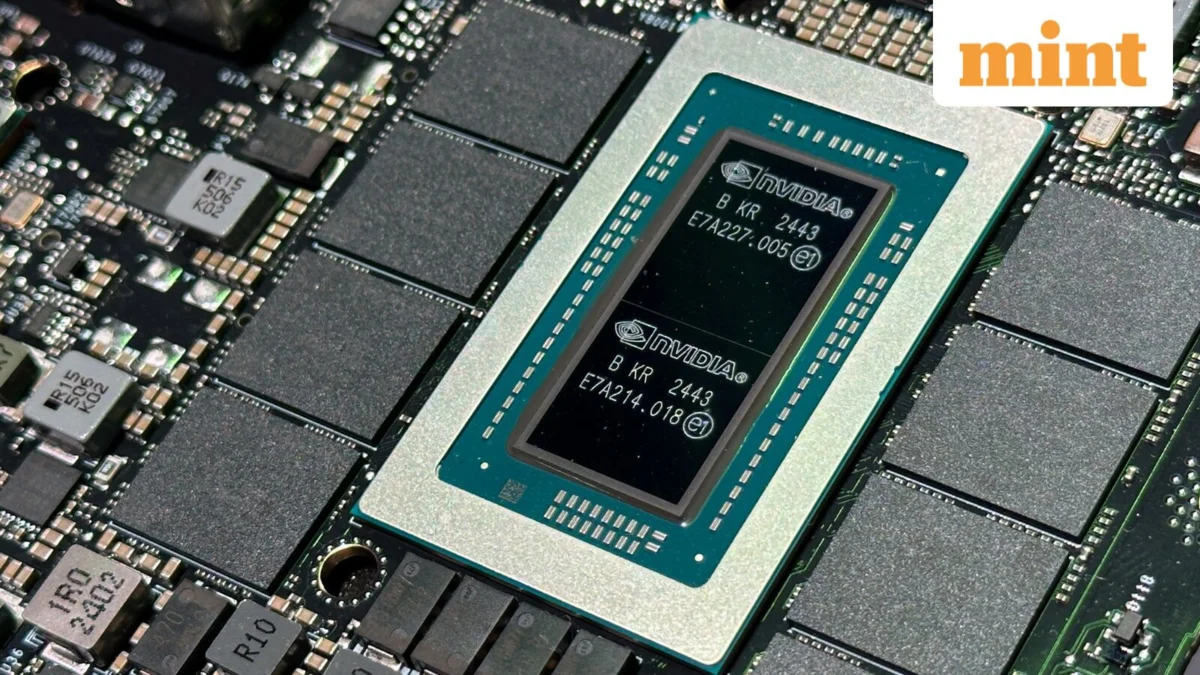
The global financial landscape is witnessing a significant recovery in artificial intelligence-related equities, marking a decisive end to a two-month period of volatility characterized by investor anxiety over persistent inflation and the potential of a bursting AI valuation bubble. According to the latest market data and reporting from Bloomberg, the resurgence is being driven by a fundamental shift in how investors perceive the infrastructure requirements of the next generation of digital intelligence. This rally is particularly pronounced in Asian markets, where the semiconductor and hardware sectors form the backbone of national indices, signaling a renewed confidence in the long-term profitability of the AI hardware supply chain.
On Friday, the momentum reached a fever pitch as Japanese and South Korean equities recorded some of their most substantial weekly gains in recent history. The Nikkei 225 Stock Average, a chip-heavy benchmark for the Japanese economy, advanced by 4.7% over the week. Simultaneously, the Topix index extended its record-breaking run, reflecting a broad-based appetite for industrial and technological exposure. In South Korea, the KOSPI index registered a remarkable 22% jump over a ten-day period, a move almost entirely attributed to the intensifying rally in the AI semiconductor space.
This market behavior represents a sharp reversal from the bearish sentiment that dominated the sector since July. During the summer months, major technology conglomerates released earnings reports that, while profitable, revealed massive capital expenditure budgets dedicated to AI. Investors initially reacted with skepticism, fearing that these "hyperscaler" investments—billions of dollars poured into data centers and hardware—might not yield immediate or certain returns. However, the narrative has shifted from questioning the spending to analyzing the beneficiaries of that expenditure.
The Shift from Compute to Memory as the Primary Bottleneck
A critical component of this renewed investor confidence stems from an evolving understanding of AI’s technical limitations. For the past two years, the primary focus of the AI boom has been on "compute"—the raw processing power provided by Graphics Processing Units (GPUs), dominated by firms like NVIDIA. However, industry leaders and technical visionaries are now pointing toward a different "rate limiter": memory and storage.
This shift in focus was highlighted by a recent discourse on the social media platform X, involving billionaire entrepreneur Elon Musk and Peter Diamandis. Diamandis posited that "Memory, not compute, is the rate limiter of the Agentic Era." Musk’s concise agreement—stating, "Few realize this"—underscored a growing realization within the tech community. As AI evolves from simple large language models that respond to prompts into "agentic" systems—AI agents capable of autonomous reasoning, multi-step task execution, and long-term interaction—the demand for high-speed, high-capacity memory (HBM) is projected to skyrocket.
Unlike traditional AI tasks that are transactional, agentic AI requires the system to maintain a vast "context window" and store intermediate states of reasoning. This necessitates a massive leap in memory bandwidth and capacity. Consequently, the hardware companies that produce these specialized chips, including SK Hynix, Samsung, Micron, and SanDisk, have become the primary targets for investors looking to capitalize on the next phase of the AI evolution.
Record Investments and the End of the Semiconductor Cycle
The financial scale of the current AI build-out is unprecedented. Hitoshi Asaoka, the chief strategist at Asset Management One, noted that a "huge amount of hyperscaler money is flowing into hardware," which is translating into "extremely strong sales and profit growth" for companies positioned within the supply chain. This is not merely speculative; it is backed by the balance sheets of the world’s largest corporations.
A cumulative debt of nearly $350 billion has been added by tech giants including Oracle, Microsoft, Meta, Amazon, and Alphabet (Google) specifically to fund the construction of data centers and the acquisition of AI hardware. This aggressive capital allocation suggests that the "Big Tech" firms view the AI race as an existential necessity rather than an experimental venture.
The optimism is echoed by leadership within the semiconductor industry. SK Hynix, which recently made history with the largest public listing by a foreign company in the United States stock market, has stated that the AI boom has "redefined the memory chip business for good." Traditionally, the semiconductor industry has been notoriously cyclical, plagued by periods of oversupply (gluts) followed by painful price corrections. However, SK Hynix CEO Kwak Noh-Jung believes the current era is different. In statements to Bloomberg, Kwak indicated that customers are increasingly seeking long-term supply agreements to secure their pipelines, a behavior that suggests the current shortage could extend well beyond 2030.
Kwak drew a parallel between the current AI build-out and the development of the internet infrastructure. "We spent almost 30 years finishing the completion of the internet infrastructure," he noted. "When it comes to AI, I believe that the AI industry size is much, much larger than the internet."
Chronology of the AI Market Volatility (2024)
To understand the significance of the current rally, it is essential to trace the market’s trajectory throughout the year:
- Q1 – Q2 2024: Unbridled optimism. AI stocks reach record highs as NVIDIA and others post blowout earnings. The term "Magnificent Seven" dominates financial discourse.
- July 2024: The "Correction Phase." Quarterly earnings from Meta and Alphabet reveal staggering AI-related costs. Investors begin to fear a "bubble" similar to the dot-com era of 2000, questioning when the multi-billion dollar investments will turn into consumer-facing revenue.
- August 2024: Macroeconomic pressure. US inflation data and fears of a cooling labor market lead to a broader sell-off. Tech stocks, seen as high-risk, bear the brunt of the volatility.
- September 2024: The Resurgence. News of supply bottlenecks in memory chips and the emergence of "Agentic AI" as a viable next step lead to a pivot. Investors move back into hardware, specifically targeting Asian chipmakers.
- Present: Consolidation of the rally. Japanese and South Korean markets lead the global recovery, fueled by the realization that AI infrastructure demand is a structural, rather than cyclical, shift.
Strategic Implications and Supply Chain Bottlenecks
While the demand outlook remains robust, the industry faces a significant physical challenge: supply capacity. Qian Zhang, an emerging markets equities investment specialist at Baillie Gifford, highlighted that the primary risk to the sector is no longer a lack of demand, but an inability to produce enough hardware.
"Because of AI agents and physical AI, memory demand has exploded, but we entered into this with a quite limited supply capacity," Zhang stated. She described this as a "real physical bottleneck" that only a handful of companies globally—primarily based in East Asia—possess the technical expertise and infrastructure to resolve. This scarcity gives these companies immense pricing power, which in turn fuels their stock valuations.
Furthermore, the road to Artificial General Intelligence (AGI)—the theoretical point at which AI systems surpass human intelligence across all domains—is viewed as a multi-decade journey. SK Group Chairman Chey Tae-won has suggested that the demand for specialized chips will likely outpace supply until AGI is achieved. If this timeline holds, the "AI rally" may not be a short-term spike but the beginning of a long-term re-rating of the global technology sector.
Geopolitical and Competitive Considerations
The resurgence of AI stocks also takes place against a backdrop of intensifying geopolitical competition. The United States continues to implement export controls intended to limit China’s access to high-end AI semiconductors. While this creates hurdles for global trade, it has also solidified the dominance of firms in "friendly" jurisdictions like South Korea and Japan.
Chinese competition remains a factor, as Beijing pours subsidies into its domestic chip industry to achieve self-sufficiency. However, for the near-term, the technical lead held by companies like SK Hynix in High Bandwidth Memory (HBM) and Samsung in advanced node manufacturing appears secure. The "limited supply" identified by analysts is a moat that protects the current leaders from rapid disruption by new entrants.
Analysis: A Market Maturing Beyond Hype
The current market movement suggests a maturation of the AI investment thesis. The initial phase of the boom was characterized by "buying the promise" of AI. The second phase, which we are entering now, is about "buying the plumbing." Investors are no longer just looking for the next viral chatbot; they are looking for the companies that provide the essential components—specifically memory and hardware—that make those systems functional at scale.
The massive debt accumulation by hyperscalers like Microsoft and Amazon is a double-edged sword. While it indicates a total commitment to the technology, it also raises the stakes for the eventual rollout of profitable AI services. If the "Agentic Era" fails to materialize as quickly as Musk and others predict, the market could face another period of "investor wariness." However, as long as the hardware sales continue to show "extremely strong profit growth," the floor for these stocks remains significantly higher than it was during the summer slump.
In conclusion, the global surge in AI stocks reflects a strategic pivot toward the physical realities of the "Agentic Era." By identifying memory as the critical bottleneck, the market has found a new catalyst for growth. While supply chain constraints and macroeconomic pressures remain, the sheer scale of investment from the world’s largest tech entities suggests that the AI hardware rally is far from over. As the infrastructure for the next thirty years of digital evolution is laid, the semiconductor giants of Asia and the hyperscalers of the West are tethered together in a multi-trillion dollar race toward the future of intelligence.
