

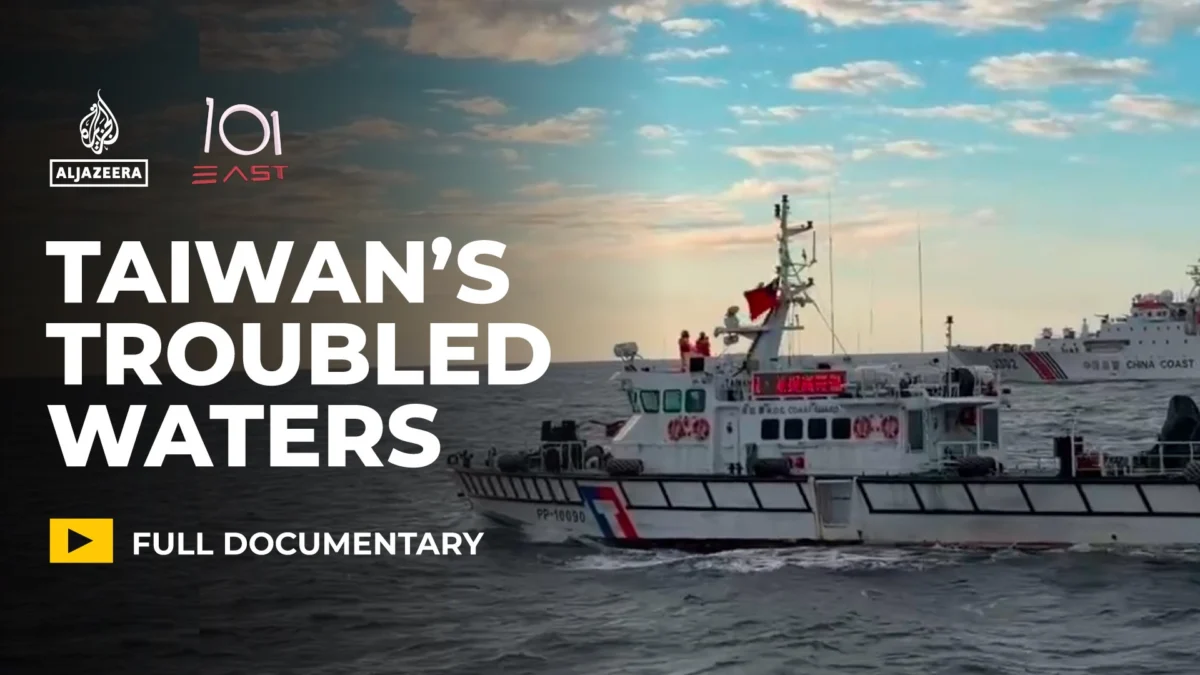
The geopolitical landscape of the Indo-Pacific is undergoing a fundamental transformation as Taiwan reassesses its national security framework in the shadow of ongoing conflicts in Eastern Europe and the Middle East. For decades, the primary concern for the self-governed island was a full-scale amphibious invasion by the People’s Republic of China. However, recent military maneuvers in the Taiwan Strait, coupled with the strategic tactics observed in the Russia-Ukraine war and Iran’s historical leverage over the Strait of Hormuz, have shifted the focus toward a more immediate and perhaps more insidious threat: a comprehensive maritime blockade. As Beijing continues to assert that Taiwan is an inseparable part of its territory, the international community is watching closely, recognizing that any disruption to the status quo would trigger a global economic catastrophe centered on the world’s most advanced semiconductor supply chains.
The Evolution of the Threat: From Invasion to Isolation
Historically, Taiwan’s defense planning focused on "decisive victory in the coastal zone" and "destruction of the enemy at the landing beach." This traditional approach assumed that the People’s Liberation Army (PLA) would attempt a Normandy-style invasion across the 180-kilometer-wide Taiwan Strait. However, military analysts now suggest that China may prefer a strategy of "constriction" rather than "collision." By implementing a blockade, Beijing could theoretically force Taipei to the negotiating table without firing a single shot on the mainland, thereby minimizing the risk of a direct kinetic confrontation with the United States.
The precedent for this concern has been amplified by Iran’s frequent threats to close the Strait of Hormuz, a vital artery for global energy. Military strategists in Taipei and Washington are concerned that China could emulate these tactics, using its increasingly sophisticated navy and coast guard to intercept commercial shipping, declare "no-fly" zones, and cut undersea internet cables. The goal would be to demonstrate total control over the waters surrounding Taiwan, effectively turning the island into an isolated enclave.
A Chronology of Escalating Tensions
The current state of high-alertness in Taiwan is the result of a multi-year escalation in military activity. To understand the present urgency, one must look at the timeline of events that have reshaped the region:
- 1995–1996 (Third Taiwan Strait Crisis): China conducted a series of missile tests in the waters surrounding Taiwan to signal its displeasure with then-President Lee Teng-hui’s visit to the United States. The U.S. responded by deploying two aircraft carrier battle groups to the region.
- August 2022: Following the visit of U.S. House Speaker Nancy Pelosi to Taipei, the PLA conducted unprecedented live-fire exercises in six zones surrounding Taiwan. These exercises effectively simulated a blockade, with some drill zones encroaching upon Taiwan’s territorial waters.
- April 2023: In response to President Tsai Ing-wen’s meeting with House Speaker Kevin McCarthy in California, China launched "Operation Joint Sword," which specifically practiced "seizing control of the sea, air, and information."
- 2024 General Elections: Following the election of President Lai Ching-te, whom Beijing labels a "dangerous separatist," the frequency of "gray zone" tactics—including incursions by balloons, drones, and naval vessels—has reached record highs.
The Economic Stakes: The Semiconductor Shield
The primary reason a blockade of Taiwan is a global concern rather than a regional one lies in the island’s dominance of the semiconductor industry. Taiwan produces approximately 60% of the world’s semiconductors and over 90% of the most advanced microchips, primarily through the Taiwan Semiconductor Manufacturing Company (TSMC).
A blockade would not only halt the export of these chips but also prevent the import of raw materials and energy necessary to keep the foundries running. Data from Bloomberg Economics suggests that a full-scale conflict or blockade involving Taiwan could result in a 10% drop in global GDP, amounting to roughly $10 trillion in losses. This would surpass the economic damage caused by the COVID-19 pandemic and the 2008 financial crisis.
Furthermore, the Taiwan Strait is one of the world’s busiest shipping lanes. Approximately half of the world’s container fleet and nearly 90% of the world’s largest ships by tonnage pass through the strait annually. A closure of this route would force global shipping to reroute around the Philippines, adding significant time and fuel costs to international trade, further fueling global inflation.
Reimagining Defense: The Porcupine Strategy
In response to the evolving threat, Taiwan has accelerated its adoption of the "Porcupine Strategy." This concept, championed by both domestic and American military advisors, emphasizes the use of asymmetric capabilities to make the island "too painful to swallow." Rather than matching China ship-for-ship or plane-for-plane, Taiwan is investing in large numbers of small, mobile, and lethal weapon systems.
Key components of this strategy include:
- Mobile Coastal Defense: The deployment of land-based Harpoon and Hsiung Feng anti-ship missiles that can be hidden in tunnels or urban environments, making them difficult for the PLA to target.
- Sea Mines and Drones: Drawing lessons from Ukraine’s success in the Black Sea, Taiwan is prioritizing the development of sea mines and unmanned surface vessels to deny the PLA access to its coastal waters.
- Undersea Warfare: Taiwan recently launched its first domestically built submarine, the Haikun, as part of a plan to build a fleet capable of disrupting Chinese naval operations in the deep waters off Taiwan’s east coast.
Civil Defense and National Resilience
Beyond military hardware, the focus has shifted toward "whole-of-society" resilience. The residents of Taiwan, observing the civilian resistance in Ukraine, have begun to organize more formally. Organizations such as the Kuma Academy have seen a surge in enrollment, teaching citizens basic first aid, radio communication, and how to identify disinformation.
"The goal is not to turn every citizen into a soldier, but to ensure that the society does not collapse under the psychological pressure of a blockade," says a spokesperson for a local civil defense initiative. This psychological warfare is a key component of Beijing’s strategy. By saturating Taiwanese social media with narratives of U.S. abandonment and the futility of resistance, the CCP hopes to erode the public’s will to defend their democratic system.
International Response and the Role of the United States
The United States maintains a policy of "strategic ambiguity" regarding whether it would intervene militarily if Taiwan were attacked. However, the Taiwan Relations Act of 1979 mandates that the U.S. provide the island with the means to defend itself.
Recent statements from Washington have trended toward "strategic clarity." President Joe Biden has stated on multiple occasions that U.S. forces would defend Taiwan in the event of an "unprecedented attack." However, the ongoing wars in Ukraine and Gaza have raised concerns in Taipei about "strategic overstretch." There is a lingering fear that if the U.S. is bogged down in multiple theaters, its capacity or political will to engage in a high-intensity conflict in the Pacific may be diminished.
Regional allies are also recalibrating. Japan has significantly increased its defense budget and described the stability of Taiwan as "essential" to its own national security. The Philippines has granted the U.S. expanded access to military bases, some of which are located just a few hundred miles south of Taiwan, providing a strategic staging ground for potential relief efforts during a blockade.
Analysis of Implications: The "New Normal"
The current situation in the Taiwan Strait has settled into a "new normal" characterized by constant tension and the erosion of previous maritime boundaries. The "median line" of the Taiwan Strait, which once served as an unofficial buffer, is now routinely crossed by PLA aircraft.
A maritime blockade presents a unique challenge for international law. Unlike a kinetic invasion, a "quarantine" or "legal blockade" enforced by the Chinese Coast Guard rather than the Navy could be framed as a domestic law enforcement action. This would complicate the international community’s response, as it would blur the lines between a military act of war and a sovereign regulatory action.
For Taiwan, the challenge is twofold: maintaining a robust military deterrent while ensuring the economy remains resilient enough to withstand periods of isolation. The government has begun stockpiling food, medical supplies, and energy reserves, aiming to extend the island’s self-sufficiency from weeks to months.
Conclusion
The threat of a maritime blockade has forced Taiwan to look inward and outward with renewed urgency. By learning from the tactics used in the Strait of Hormuz and the resilience shown on the battlefields of Ukraine, Taiwan is attempting to build a multi-layered defense that goes beyond traditional military strength. The stakes extend far beyond the sovereignty of the island; they involve the stability of the global economy and the future of the rules-based international order. As the shadow of conflict looms, the determination of Taiwan’s 23 million residents and the strategic calculations of the world’s superpowers will determine whether the Taiwan Strait remains a corridor of commerce or becomes a theater of war.
