

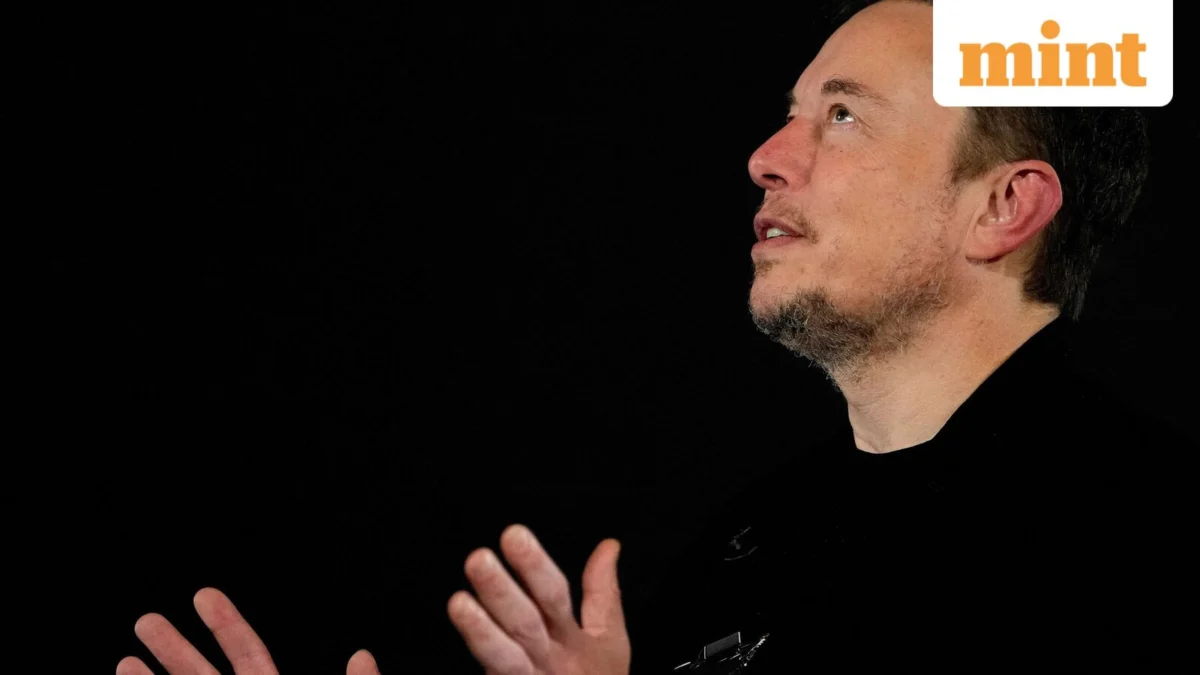
The landscape of private aerospace and artificial intelligence has shifted dramatically as recent regulatory filings reveal the staggering financial success of early backers and the entry of new semiconductor giants into the SpaceX ecosystem. Alphabet Inc., the parent company of Google, has seen its initial $900 million investment in Elon Musk’s SpaceX grow more than 100-fold, reaching a valuation of approximately $94 billion. Simultaneously, Nvidia Corp., the world’s leading AI chipmaker, has disclosed a significant $21 billion stake in the company. These revelations underscore a fundamental transformation at SpaceX: the company is no longer merely a launch provider but is rapidly evolving into a cornerstone of global AI infrastructure.
The Alphabet Windfall: A Decade of Strategic Patience
Alphabet’s involvement with SpaceX dates back to 2015, a period when the rocket company was still proving the viability of its reusable Falcon 9 boosters and the Starlink satellite constellation was little more than a blueprint. At the time, Alphabet and Fidelity led a $1 billion funding round, with Alphabet contributing roughly $900 million. The strategic intent was to support a space-based internet system that could expand the reach of Google’s digital services.
According to recent filings for the period ending June 30, Alphabet held 551.2 million shares of SpaceX. At the prevailing share price of $170.86, this position is valued at $94.2 billion. This represents a return on investment exceeding 10,000%, positioning it as one of the most successful corporate venture capital bets in history. For Alphabet, this stake provides not only a massive cushion on its balance sheet but also a primary partnership in the burgeoning field of space-based cloud computing.
Nvidia’s Entry via the xAI Integration
While Alphabet represents the "old guard" of SpaceX investors, Nvidia’s $21 billion stake represents the new frontier of Musk’s industrial empire. The disclosure, made in a regulatory filing on Friday, shows Nvidia holding approximately 122.8 million shares as of the end of the second quarter.
The path to this investment was non-traditional. Nvidia’s exposure to SpaceX originated through its investment in xAI, Elon Musk’s dedicated artificial intelligence startup. In 2025, Nvidia invested approximately $2 billion in xAI through a combination of equity and debt. Following a strategic restructuring, xAI was merged into SpaceX ahead of its anticipated transition toward a broader public profile. This merger effectively converted Nvidia’s AI-focused capital into a direct stake in the world’s most valuable private aerospace firm, aligning the interests of the world’s premier AI hardware provider with the world’s most expansive satellite network operator.
Institutional and Founder Holdings: A Concentrated Power Structure
The recent disclosures have also shed light on the broader ownership structure of SpaceX, revealing a mix of academic endowments and concentrated founder control. Harvard Management Co., which oversees Harvard University’s $50 billion endowment, revealed a $2.2 billion stake in SpaceX. In its latest 13F filing, Harvard noted that SpaceX has become its largest individual stock holding, representing a significant portion of its $4.3 billion US equity portfolio.
Dominating the cap table, however, is Elon Musk himself. Filings indicate that as of June 30, Musk maintains a 48.4% stake in the company. At current market valuations, his holding is worth more than $900 billion, a figure that accounts for the lion’s share of his personal wealth and grants him absolute strategic control over the company’s direction. This concentration of power allows SpaceX to make aggressive, long-term capital expenditures without the quarterly pressure typically faced by public companies.
The AI Pivot: Revenue Growth and Infrastructure Spending
The primary driver behind these soaring valuations is SpaceX’s explosive growth in the AI sector. In the second quarter of the current fiscal year, SpaceX reported a 247% year-over-year revenue increase in its AI segment. This growth is largely attributed to lucrative cloud services deals with major tech players, including Alphabet and the AI research firm Anthropic.
SpaceX is leveraging its Starlink constellation—which now consists of thousands of satellites in low-Earth orbit (LEO)—to offer "Compute in Orbit." By placing AI processing power directly on satellites, SpaceX can reduce latency for global data processing and provide secure, off-grid AI services to government and enterprise clients.

To support this ambition, SpaceX’s infrastructure spending has entered a hyper-growth phase:
- 2025 Spending: The company invested $13 billion in AI-related infrastructure.
- 2026 Outlook: Capital expenditures in the first half of 2026 have already surpassed the total for 2025.
- Future Projections: Morgan Stanley analysts project that SpaceX’s AI-related investment could reach $110 billion by 2028, suggesting an annual doubling of capital intensity.
Technical Synergy: The Nvidia Partnership and Starmind AI1
The partnership between Nvidia and SpaceX extends beyond mere shareholding. During a recent earnings call, Musk detailed plans to integrate Nvidia’s "Vera Rubin" NVL723 AI systems into SpaceX’s operations. These systems, which represent the cutting edge of Nvidia’s Blackwell architecture, will be deployed both in terrestrial data centers and integrated into future satellite hardware.
A key component of this collaboration is the development of the Starmind AI1 satellite computing system. This initiative aims to create a standardized AI "brain" for satellites, allowing for real-time geospatial processing and autonomous flight analytics.
Sidharth Sogani, CEO of Blue Aster Capital and CREBACO Global, noted the significance of this shift: “The traditional model of satellite technology involves capturing data in space and sending it to Earth for processing. By putting Nvidia’s high-performance systems in orbit for real-time processing, SpaceX opens up an entirely new deployment environment. This reduces the ‘data bottleneck’ and allows for instantaneous decision-making in everything from defense to environmental monitoring.”
SpaceX as a Hyperscale Competitor
The scale of SpaceX’s capital expenditure is beginning to mirror that of the "Hyperscalers"—the elite group of tech companies comprising Alphabet, Amazon, Meta, Microsoft, and Oracle. Goldman Sachs estimates that these five companies will spend a combined $800 billion on AI infrastructure by 2026.
While SpaceX’s current spending is a fraction of that total, its growth trajectory suggests it will soon join this group. Unlike traditional hyperscalers who rely on terrestrial fiber optics and land-based data centers, SpaceX offers a vertically integrated stack: it builds the rockets, launches the satellites, designs the AI hardware in partnership with Nvidia, and controls the global distribution network. This vertical integration provides a competitive moat that terrestrial-bound companies may find difficult to breach.
Market Implications and the Road to an IPO
The disclosure of these massive stakes and the company’s pivot toward AI infrastructure has fueled intense speculation regarding a potential Initial Public Offering (IPO). While Musk has historically stated that Starlink would only go public once its cash flows were predictable, the integration of xAI and the surge in AI service revenue may accelerate this timeline.
For investors in Alphabet and Nvidia, these disclosures provide a rare look at "hidden" value. Alphabet’s $94 billion stake represents a significant portion of its own market capitalization, yet it is often overlooked by analysts focusing solely on Google’s advertising revenue. For Nvidia, the $21 billion stake serves as both a strategic hedge and a proof-of-concept for its hardware in the most demanding environment possible—outer space.
Conclusion: A New Era of Space-Based Intelligence
The transition of SpaceX from a launch-services provider to an AI infrastructure giant marks a new era in the digital economy. With Alphabet’s 100x return validating the long-term potential of the sector and Nvidia’s multi-billion dollar entry signaling the technological convergence of AI and aerospace, the stakes have never been higher.
As SpaceX continues to outpace traditional aerospace competitors and begins to challenge the dominance of terrestrial cloud providers, its role in the global economy is being redefined. The company is no longer just aiming for the stars; it is building the neural network that will connect and process the data of the world from above. For Elon Musk, the massive investments from the world’s most powerful tech entities are a validation of a singular vision: that the future of intelligence is not just global, but orbital.
