

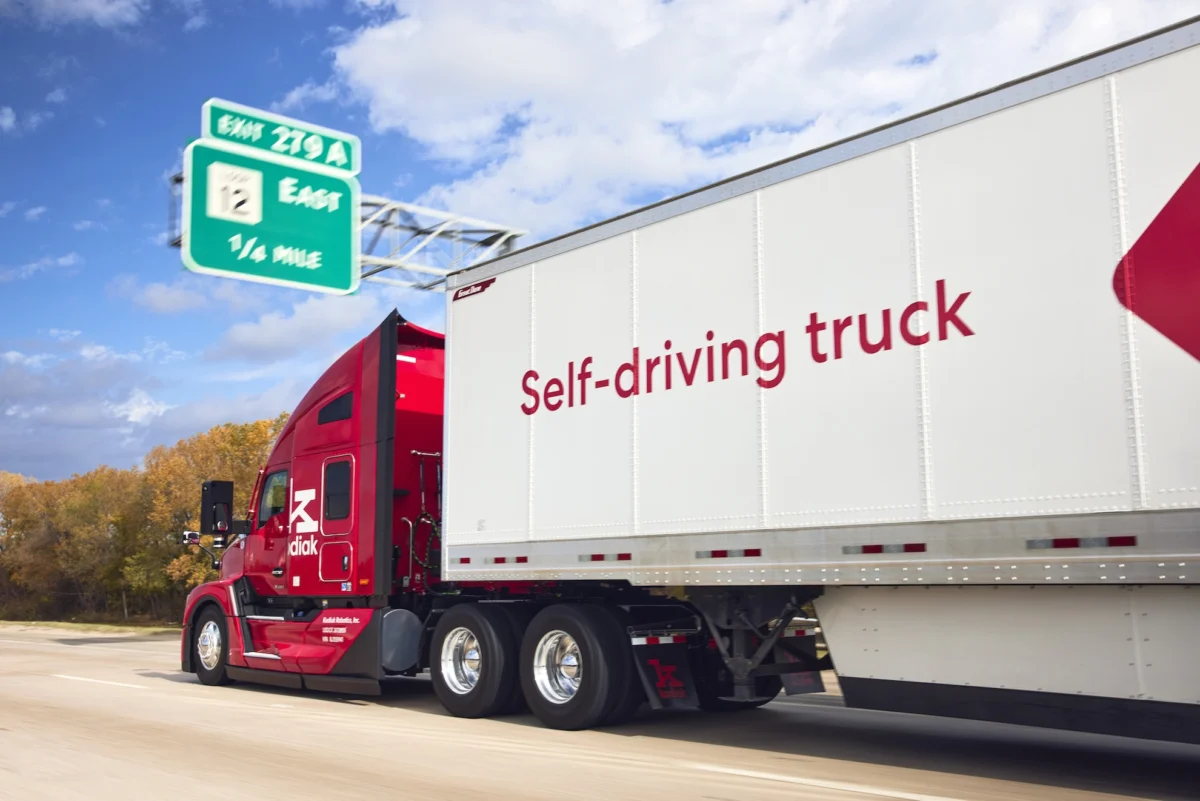
In a landmark decision that signals a new era for the logistics and transportation industry in the United States, the California Department of Motor Vehicles (DMV) has officially granted permits to Aurora Innovation and Kodiak AI, allowing both firms to begin testing autonomous heavy-duty trucks on public roads. This regulatory greenlight represents a pivotal shift for California, which has long maintained a conservative stance regarding the testing of self-driving vehicles weighing over 10,000 pounds. While Aurora is preparing its deployment strategy, Kodiak AI has already mobilized, initiating test runs with a specialized fleet of trucks centered around its Mountain View headquarters.
The permits arrived following a comprehensive review process mandated by updated regulatory frameworks that went into effect on April 28. These new rules effectively lifted a long-standing prohibition on the testing of autonomous heavy-duty vehicles, such as Class 8 tractor-trailers, on California’s public highways. By providing a structured regulatory pathway, the DMV has opened the door for companies to move beyond simulation and private track testing, allowing them to gather real-world data in one of the most complex and high-traffic environments in the world.
The Regulatory Framework and Safety Mandates
The approval of these permits was not a foregone conclusion but rather the result of the companies meeting stringent criteria established by the DMV. According to the agency, both Aurora and Kodiak satisfied rigorous requirements concerning vehicle registration, insurance coverage, and safety protocols. A critical component of these permits is the requirement for a human safety operator to remain behind the wheel at all times during the testing phase. These operators must meet specific qualification standards, ensuring they are capable of taking immediate manual control of the vehicle should the autonomous system encounter a scenario it cannot navigate safely.
Furthermore, the DMV has imposed specific operational constraints to mitigate risks to the public. Autonomous trucks are currently prohibited from operating on surface streets where the posted speed limit is 25 miles per hour or less. An exception is made only when the vehicle is on a "direct route" between its primary destination and a highway on-ramp or off-ramp. These restrictions are designed to keep heavy autonomous hardware on high-capacity corridors where traffic patterns are more predictable than in dense residential or school zones.
Background: The Shift from Texas to California
For years, the autonomous trucking industry viewed California as a "no-go" zone for heavy-duty deployment due to the state’s restrictive laws. This led both Aurora and Kodiak—despite being headquartered in the Silicon Valley area—to focus their primary testing and commercial efforts in Texas. Texas has historically offered a more permissive regulatory environment, governed by laws such as Senate Bill 2205, which explicitly allows for the operation of autonomous vehicles without a human driver, provided they comply with federal safety standards.
Aurora Innovation has been particularly active in the Lone Star State. In May 2025, the company launched a commercial self-driving truck service in Texas, initially focusing on the high-demand Dallas-to-Houston corridor. Since then, Aurora has aggressively expanded its network, adding routes that connect Fort Worth to El Paso, El Paso to Phoenix, and Laredo to Dallas. These routes serve as the backbone of Aurora’s "Aurora Driver" system, which utilizes a suite of high-resolution LiDAR, radar, and camera sensors to navigate long-haul freight corridors.
Kodiak AI followed a similar trajectory, though its commercial entry took a slightly different path. In January 2025, Kodiak began driverless operations in the remote Permian Basin of West Texas. This off-road environment provided a unique testing ground for the "Kodiak Driver," the company’s autonomous stack. Following the success of these operations, Kodiak expanded to on-highway commercial routes, including the vital Dallas-to-Houston link. The move back into California represents a homecoming for these companies, allowing them to test their technology in the varied topography and heavy congestion of the West Coast.
The Legal and Labor Backlash: Teamsters vs. DMV
The expansion of autonomous trucking into California has not occurred without significant friction. Organized labor, led by Teamsters California, has emerged as a vocal and litigious opponent of the DMV’s new rules. Recently, the Teamsters filed a lawsuit against the DMV in the Superior Court of California in Alameda County. The lawsuit alleges that the agency circumvented state laws that require a thorough study and public disclosure of the economic impacts of automation.
The Teamsters argue that the introduction of self-driving trucks poses an existential threat to hundreds of thousands of trucking jobs in California. Beyond the economic concerns, the union’s legal challenge accuses the DMV of failing to adequately consider the safety risks that 80,000-pound autonomous vehicles pose to ordinary motorists. This legal battle follows a series of political skirmishes, including the 2023 veto by Governor Gavin Newsom of Assembly Bill 316, which would have mandated human drivers in all heavy-duty autonomous trucks. Newsom’s veto was seen as a win for the tech industry but has left a lingering rift between the state government and labor organizations.
A Chronology of Autonomous Trucking Milestones
The path to the current permits has been a decade in the making, marked by technical breakthroughs and shifting political tides:
- 2012-2015: Early experimentation with passenger car autonomy begins in California, but heavy trucks remain largely ignored in the regulatory space.
- 2017: Texas passes SB 2205, establishing itself as the national hub for autonomous trucking.
- 2020-2022: Aurora and Kodiak establish major operational hubs in the "Texas Triangle" (Dallas, Houston, San Antonio).
- January 2025: Kodiak launches the first commercial driverless deliveries in West Texas for Atlas Energy, proving the viability of the technology in industrial settings.
- April 28, 2025: The California DMV officially updates its rules to allow heavy-duty autonomous vehicle testing, ending a multi-year ban.
- May 2025: Aurora launches its Dallas-to-Houston commercial service, marking a major milestone for the industry.
- Present Day: The DMV issues the first heavy-duty testing permits to Aurora and Kodiak, bringing the technology back to the state where many of the systems were originally designed.
Technical Implications and Data Requirements
The testing phase in California is expected to provide invaluable data that cannot be replicated in the Texas desert. California’s highways offer diverse challenges, including the steep grades of the Grapevine, the coastal fog of the Bay Area, and the extreme traffic density of the Los Angeles Basin.
Aurora’s technology relies heavily on its proprietary FirstLight LiDAR, which allows the system to "see" more than 400 meters ahead, providing the stopping distance required for a fully loaded Class 8 truck traveling at highway speeds. Kodiak’s approach emphasizes a modular hardware system called "SensorPods," which can be easily swapped or serviced, reducing the downtime that has traditionally plagued complex autonomous systems.
Under the terms of the DMV permits, both companies must report any collisions to the agency within ten days. Furthermore, they are required to submit annual reports detailing every instance where the autonomous system disengaged and the human safety driver had to take control. This data will eventually form the basis of the DMV’s decision on whether to grant "deployment" permits, which would allow for fully driverless operations without a human safety operator.
Economic and Industry Analysis
The long-term implications of autonomous trucking in California are profound. California is home to the nation’s busiest port complex—the Ports of Los Angeles and Long Beach. The ability to move freight autonomously from these ports to inland distribution centers could drastically reduce shipping costs and improve supply chain efficiency.
However, the industry faces a "chicken and egg" problem. For autonomous trucking to be economically viable, companies need to remove the human safety driver to save on labor costs. But to remove the driver, they need to prove millions of miles of safe operation to skeptical regulators and a wary public. The California testing permits are the first step in building that track record of safety.
Industry analysts suggest that the "hub-to-hub" model will be the first widespread application of this technology. In this scenario, autonomous trucks handle the long, monotonous stretches of highway between specialized terminals, while human drivers take over for the "last mile" delivery through complex city streets. This hybrid approach could potentially mitigate some of the job loss concerns raised by the Teamsters while still capturing the efficiency gains of automation.
Looking Ahead: The Road to Full Deployment
As Kodiak’s trucks begin their circuits around Mountain View and Aurora prepares its California fleet, the industry will be watching closely. The success or failure of these tests will likely dictate the regulatory landscape for the rest of the decade. If the testing proceeds without major safety incidents, it will put pressure on other states to follow California’s lead in updating their own heavy-duty vehicle regulations.
For now, the focus remains on the human-machine collaboration. The presence of safety drivers serves as a necessary bridge between the human-centric past of the trucking industry and a future that is increasingly defined by artificial intelligence. While the legal challenges from labor unions remain a significant hurdle, the momentum of technological advancement suggests that the sight of autonomous rigs on the I-5 and US-101 will soon become a common reality rather than a futuristic novelty.
