

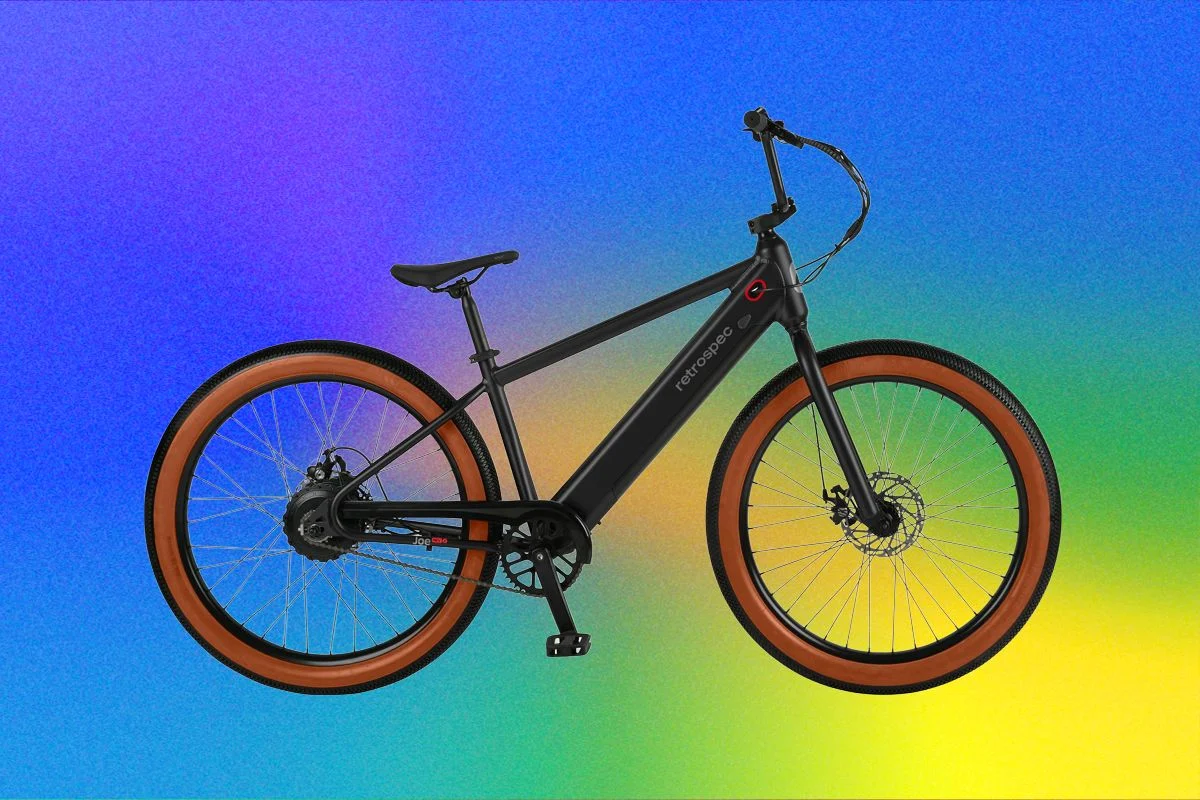
The Retrospec Joe Rev 2 arrives in a burgeoning electric bicycle market as a calculated rebellion against the industry’s trend toward over-engineered, app-integrated, and high-maintenance machines. By adhering to a design philosophy the company describes as "no cream, no sugar," the Joe Rev 2 prioritizes a raw, analog-inspired riding experience that draws heavily from the aesthetic and structural heritage of 1980s BMX culture. This second iteration of the Joe Rev series seeks to balance the simplicity of a single-speed drivetrain with the robust power of a 750-watt motor, targeting a demographic that values utility and style over digital gimmicks and complex mechanical configurations.
The Core Philosophy: Minimalism in a Digital Age
In the current e-bike landscape, manufacturers frequently compete on the complexity of their software suites, offering integrated GPS, Bluetooth connectivity, and proprietary mobile applications that track everything from caloric burn to carbon offset. The Joe Rev 2 intentionally diverges from this path. The frame, a full-sized, BMX-inspired geometry, is devoid of integrated lighting systems, suspension forks, or rear shocks. This "stripped-back" approach is not merely a cost-saving measure but a specific engineering choice aimed at reducing the bike’s overall weight and long-term maintenance requirements.
The Joe Rev 2 weighs approximately 56 pounds, a figure that places it on the lighter end of the spectrum for utility-focused e-bikes, which often exceed 70 or 80 pounds. By eliminating the weight of a multi-gear derailleur system and heavy suspension components, Retrospec has created a vehicle that remains manageable even when the battery is depleted. The minimalist doctrine is physically manifested on the bike’s chain stays, where the phrase "No cream, no sugar" is printed—a reminder to the rider that the machine is designed for the fundamental joy of the ride rather than the management of technical peripherals.
Technical Specifications and Performance Metrics
At the heart of the Joe Rev 2 is a 750-watt rear-hub motor, a significant power plant for a bike of this size. This motor provides five distinct levels of pedal assist and a thumb-actuated throttle, allowing the bike to function as a Class 2 e-bike with a maximum assisted speed of 20 mph. The choice of a single-speed drivetrain is perhaps the bike’s most defining mechanical feature. While this limits the rider’s ability to "gear down" for steep inclines, the 750-watt motor is engineered to provide the necessary torque to compensate for the lack of mechanical advantage.

The power is supplied by a 48V, 500 Wh (Watt-hour) lithium-ion battery. This is a notable upgrade from the original Joe Rev, which featured a smaller battery capacity. According to manufacturer specifications, the Joe Rev 2 boasts an estimated range of up to 60 miles per charge under ideal conditions. However, real-world testing suggests that this range is highly variable. Factors such as rider weight, terrain gradient, and the degree of throttle usage significantly impact battery longevity. In high-intensity scenarios—such as navigating steep hills using only the throttle—the range can drop to approximately 20 to 25 miles.
Key Hardware Specifications:
- Motor: 750W Brushless Rear Hub Motor.
- Battery: 500Wh Removable Internal Battery.
- Tires: 26-inch x 3-inch tan wall balloon tires.
- Drivetrain: Single-speed.
- Weight: 56 lbs.
- Display: 2×2.5-inch LCD (Speed, Battery, Power Level).
- Brakes: Mechanical Disc Brakes.
Chronology of Development: From the Original Joe Rev to Rev 2
The development of the Joe Rev 2 follows a period of rapid growth for Retrospec, a company that initially gained traction in the "fixie" and affordable commuter bike markets before pivoting toward electric mobility. The original Joe Rev was launched as an entry-level solution for riders seeking a BMX aesthetic with electric assistance. While popular, the first generation was limited by a basic LED hub interface and a smaller battery that capped the range at 48 miles.
The transition to the Joe Rev 2 represents a "mid-cycle refresh" that addresses the primary critiques of the original model. The introduction of a dedicated 2-by-2.5-inch LCD screen on the left handlebar provides riders with essential data—speed, battery life, and assist level—without requiring a smartphone connection. Additionally, the battery integration was refined; the power pack can now be locked and unlocked from the bottom of the frame with a key, allowing for secure charging either on or off the bike. The charging cycle from empty to full typically spans several hours, indicated by a transition from a red to a green LED on the charger.
User Experience and Real-World Testing
The Joe Rev 2 is positioned as a "fun" bike, a categorization supported by its 3-inch tan wall balloon tires. These tires serve a dual purpose: they provide the signature "vintage" look associated with 1970s and 80s cruisers, and they act as a form of pneumatic suspension. In the absence of mechanical shocks, the high volume of air in the tires absorbs vibrations from cracked pavement and gravel, providing a smoother ride than a traditional thin-tired road bike.
However, the bike’s performance is heavily dictated by its environment. During field testing in hilly urban environments, the single-speed drivetrain becomes the primary point of consideration. Without the ability to shift into a lower gear, the rider is almost entirely dependent on the motor’s torque to summit steep grades. For a rider weighing approximately 145 pounds, the 750-watt motor proves sufficient, though it places a heavy drain on the battery. For heavier riders or those in mountainous regions, the Joe Rev 2 may be better suited as a "neighborhood cruiser" rather than a primary commuting tool for varied terrain.

The Regulatory Landscape and Safety Considerations
A curious aspect of the Joe Rev 2 is the presence of an "ominous" warning sticker on the frame stating that no one under the age of 16 should operate the bicycle. This warning highlights the complex and often contradictory regulatory environment surrounding electric bicycles in the United States.
The Joe Rev 2 is technically a Class 2 e-bike because it possesses both pedals and a throttle, with a top speed limited to 20 mph. Under the three-class system adopted by many states (including California), Class 1 and Class 2 e-bikes are often treated similarly to traditional bicycles, with no specific age requirements for operation in many jurisdictions. However, as e-bike popularity has surged among teenagers, several municipalities have begun considering or implementing age restrictions and mandatory safety training. Retrospec’s inclusion of the 16+ warning sticker is likely a proactive measure to mitigate liability and align with the strictest possible interpretations of local ordinances.
Market Analysis and Economic Implications
The Joe Rev 2 enters the market at a competitive price point, often retailing around $1,500 (with the original model occasionally discounted to $1,200). This pricing strategy positions Retrospec as a "value" brand, undercutting premium competitors whose BMX-style e-bikes can often exceed $3,000.
The e-bike market is currently experiencing a period of correction following the massive surge in demand during the 2020-2022 period. Industry analysts note that consumers are increasingly looking for "simplified" products. The high cost of repairing proprietary electronic systems in premium e-bikes has led a segment of the market back toward simpler, mechanical-heavy designs like the Joe Rev 2. By using standardized components—such as a rear-hub motor and mechanical disc brakes—Retrospec ensures that the bike can be serviced by most local bike shops, a significant advantage over "smart" bikes that require specialized technicians.
Broader Impact on Urban Transportation
The rise of bikes like the Joe Rev 2 reflects a broader shift in how urban dwellers perceive short-distance transportation. The "BMX-inspired" frame is not just a stylistic choice; it represents a move toward "active" commuting. Unlike a scooter, which requires a static standing position, the Joe Rev 2 encourages pedaling, even if the motor is doing the heavy lifting.

Furthermore, the Joe Rev 2 addresses the "last-mile" problem in a way that heavier, more cumbersome e-bikes cannot. Its 56-pound weight and 18-inch removable battery make it feasible for apartment dwellers who may need to carry the bike up stairs or store it in tight spaces. The lack of integrated lights and apps, while seen by some as a disadvantage, appeals to a growing demographic of "tech-fatigued" consumers who want a vehicle that functions independently of their digital ecosystem.
Conclusion: The Future of the Minimalist Doctrine
The Retrospec Joe Rev 2 is a testament to the idea that more is not always better. By focusing on a high-output motor, a larger battery, and a classic aesthetic, Retrospec has produced a vehicle that fulfills the basic requirements of urban mobility while maintaining a distinct personality. It is a bike designed for the "purist" who wants the assistance of electricity without the baggage of modern software.
As cities continue to expand their cycling infrastructure, the demand for accessible, low-maintenance e-bikes is expected to grow. The Joe Rev 2 serves as a blueprint for this future: a machine that is easy to understand, fun to ride, and simple to maintain. While it may not be the ideal choice for a cross-country trek or a high-speed highway commute, it excels in its intended role as a robust, stylish, and unapologetically simple neighborhood cruiser. The "no cream, no sugar" philosophy may well become the standard for a new generation of riders looking to reclaim the simplicity of the bicycle in an increasingly complex world.
