

The launch comes at a critical juncture for the global corporate sector. As of mid-2026, the regulatory environment has shifted from voluntary participation to mandatory compliance across major economies. Frameworks such as the Task Force on Climate-related Financial Disclosures (TCFD), the Corporate Sustainability Reporting Directive (CSRD) in the European Union, and the Business Responsibility and Sustainability Reporting (BRSR) mandates in India have fundamentally altered the expectations for corporate transparency. Updapt’s new module addresses these requirements by providing a structured, data-driven approach to understanding both physical and transition risks, ensuring that companies can move beyond mere "checkbox" compliance toward genuine operational resilience.
A New Paradigm in Climate Intelligence
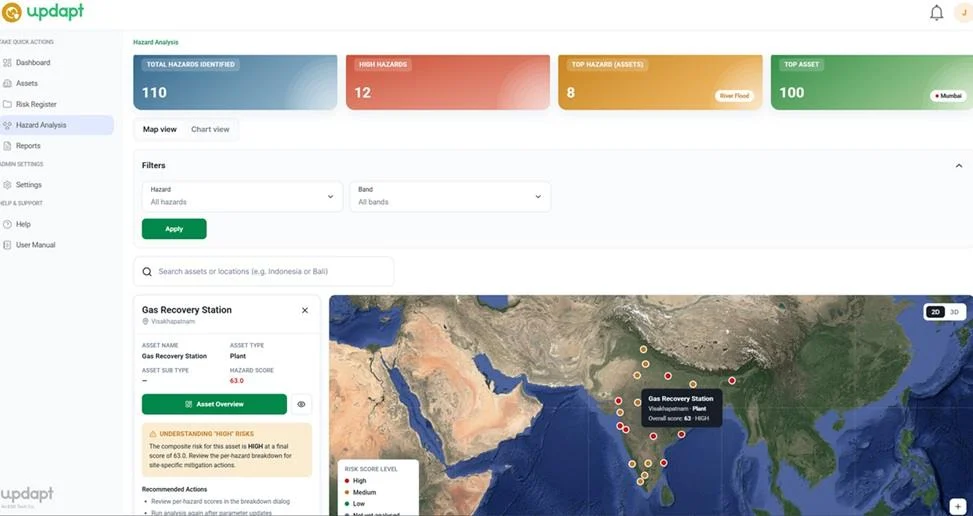
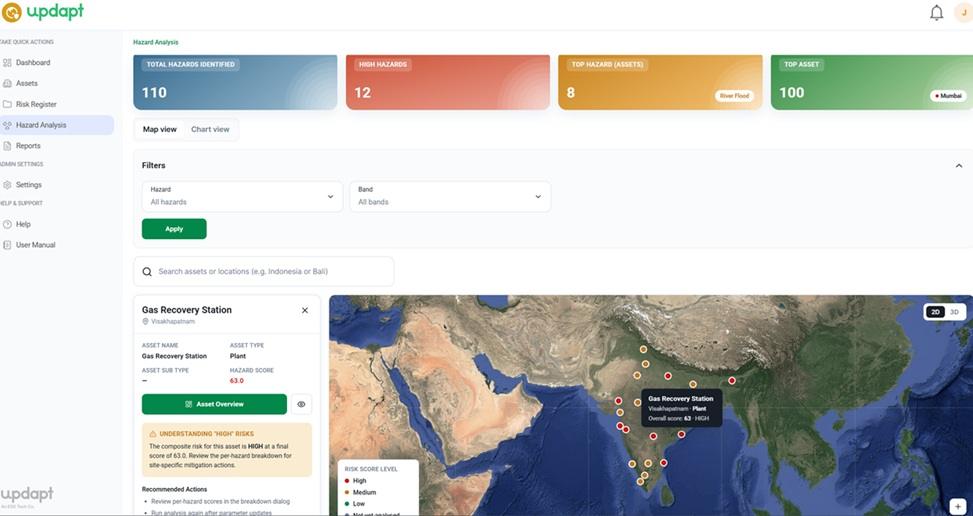
The Climate Risk Management module is designed to integrate seamlessly into the existing Updapt ecosystem, allowing for a holistic view of an organization’s environmental, social, and governance (ESG) performance. By leveraging advanced analytics and geospatial data, the tool enables sustainability officers and financial controllers to pinpoint exactly where their assets—ranging from manufacturing plants to data centers—are most vulnerable to the changing climate.
Key capabilities of the module include a comprehensive assessment of climate-related risks across specific geographies. This allows for the identification of exposure to "Physical Risks," such as extreme weather events, sea-level rise, and chronic heat stress. Simultaneously, the platform evaluates "Transition Risks," which include the potential financial impacts of policy changes, carbon pricing, shifting market preferences, and technological disruptions. By quantifying these risks, the solution supports management teams in prioritizing capital expenditures and operational adjustments to mitigate long-term threats.
Mithun Suvarna, Co-Founder and CEO of Updapt, emphasized the strategic necessity of this tool during the launch. "Climate risk is no longer a disclosure checkbox—it’s a board-level business question," Suvarna stated. "With this module, we wanted to give sustainability and finance teams a practical way to understand where their exposure sits, across assets and geographies, and act on it. For our enterprise clients, that connection between risk intelligence and reporting is what makes ESG management truly operational."
The Regulatory Driving Force: CSRD, BRSR, and TCFD
The demand for integrated climate risk tools has been accelerated by a tightening web of global regulations. The European Union’s CSRD, which began its phased implementation earlier in the decade, now requires thousands of companies to report on their "double materiality"—how climate change affects their business and how their business affects the planet. This requires a granular level of data that manual spreadsheets can no longer provide.
In India, the Securities and Exchange Board of India (SEBI) has continually refined the BRSR framework, making it one of the most comprehensive reporting standards in the Asia-Pacific region. For Indian enterprises with global supply chains, the ability to report climate risks in a format compatible with international standards is now a prerequisite for maintaining access to global capital markets.
Furthermore, the influence of the International Sustainability Standards Board (ISSB) has unified many of these disparate requirements under the S1 and S2 standards. These standards explicitly require companies to disclose the resilience of their strategy to climate-related changes. Updapt’s new module directly serves this need by providing the quantitative backing for qualitative climate resilience statements.
Understanding Physical vs. Transition Risks
To understand the value of Updapt’s new module, one must distinguish between the two primary categories of climate risk it addresses.
Physical Risks
Physical risks are the direct result of a changing climate. They are categorized as "acute"—event-driven risks like hurricanes, floods, and wildfires—or "chronic"—longer-term shifts such as rising average temperatures or permanent sea-level rise. For a global enterprise, these risks can lead to asset damage, supply chain interruptions, and increased insurance premiums. Updapt’s module uses historical data and forward-looking climate models to predict how these factors might impact specific GPS coordinates of a company’s physical infrastructure.
Transition Risks
Transitioning to a lower-carbon economy involves extensive policy, legal, technology, and market changes. These "Transition Risks" can be just as financially devastating as physical ones. For instance, the sudden implementation of a carbon tax in a key operating region could render a previously profitable factory obsolete. Similarly, a shift in consumer demand toward sustainable products could leave companies with "stranded assets." The Updapt module provides the analytical tools to stress-test business models against various "Net Zero" scenarios, helping leadership teams navigate the economic shift.
Integration and Operational Efficiency
One of the primary challenges facing ESG teams today is "data silos." Often, environmental data is held by operations, financial data by accounting, and risk data by legal teams. Updapt’s platform seeks to bridge these gaps. By integrating the Climate Risk Management module with broader ESG reporting workflows, the software ensures that risk data flows directly into the final sustainability reports.
This integration reduces the administrative burden on teams and minimizes the risk of human error. It also allows for "real-time" risk monitoring. If a new climate model suggests an increased risk of drought in a specific region, the system can automatically update the risk profile of assets located there, alerting stakeholders to the need for water-conservation strategies or alternative sourcing.
The Broader Impact on the Financial Sector
The launch of this module is likely to be welcomed not just by corporate sustainability teams, but also by the investment and insurance communities. Institutional investors are increasingly using climate risk data as a primary metric for capital allocation. A company that can demonstrate a sophisticated understanding of its climate vulnerabilities—and a plan to address them—is viewed as a more stable, long-term investment.

Insurance companies are also recalibrating their models. As climate-related losses mount globally, insurers are demanding higher levels of transparency from their clients. Tools like Updapt’s allow companies to provide the granular data necessary to negotiate better coverage terms by proving that they have implemented robust resilience measures.
Chronology of the ESG Software Evolution
The release of this module follows a clear timeline of technological and regulatory progression:
- 2015-2020: The rise of voluntary frameworks like the GRI (Global Reporting Initiative) and the initial recommendations of the TCFD. ESG software was largely used for basic data aggregation.
- 2021-2023: Major economies announce mandatory reporting. The "Alphabet Soup" of standards begins to consolidate under the ISSB.
- 2024-2025: The "Data Quality" era. Companies realize that high-level estimates are insufficient for auditors. Demand for site-specific, granular data spikes.
- 2026 (Present): The "Risk Intelligence" era. Reporting is no longer the end goal; the goal is strategic adaptation. Updapt’s Climate Risk Management module represents the pinnacle of this current phase.
Expert Analysis: The Shift from Reporting to Strategy
Industry analysts suggest that the move by Updapt reflects a broader trend in the SaaS (Software as a Service) sector. "We are seeing a shift from ‘passive reporting’ to ‘active management,’" says an industry consultant specializing in GreenTech. "Software providers are no longer just digital filing cabinets for carbon footprints. They are becoming diagnostic tools that help CEOs decide where to build their next plant or which suppliers to phase out."
The business case for such tools is bolstered by the increasing cost of inaction. Studies from global financial institutions suggest that companies failing to manage climate risks could see their valuations drop by as much as 20% over the next decade due to higher costs of capital and physical asset degradation. By providing a clear roadmap for mitigation, Updapt is positioning itself as a vital partner in value preservation.
Future Outlook
Looking ahead, Updapt is expected to continue refining its module with the integration of Artificial Intelligence and Machine Learning. These technologies could potentially provide predictive maintenance alerts for assets at risk of climate-induced failure or optimize supply chain routes in real-time based on emerging weather patterns.
As the 2020s progress, the boundary between "business strategy" and "climate strategy" continues to blur. With the launch of its Climate Risk Management module, Updapt has provided a bridge for enterprises to cross that divide, ensuring that they remain not only compliant with the law but also competitive in a world defined by environmental volatility. The message from the market is clear: the ability to quantify and manage climate risk is no longer a luxury—it is a fundamental requirement for the modern enterprise.
