

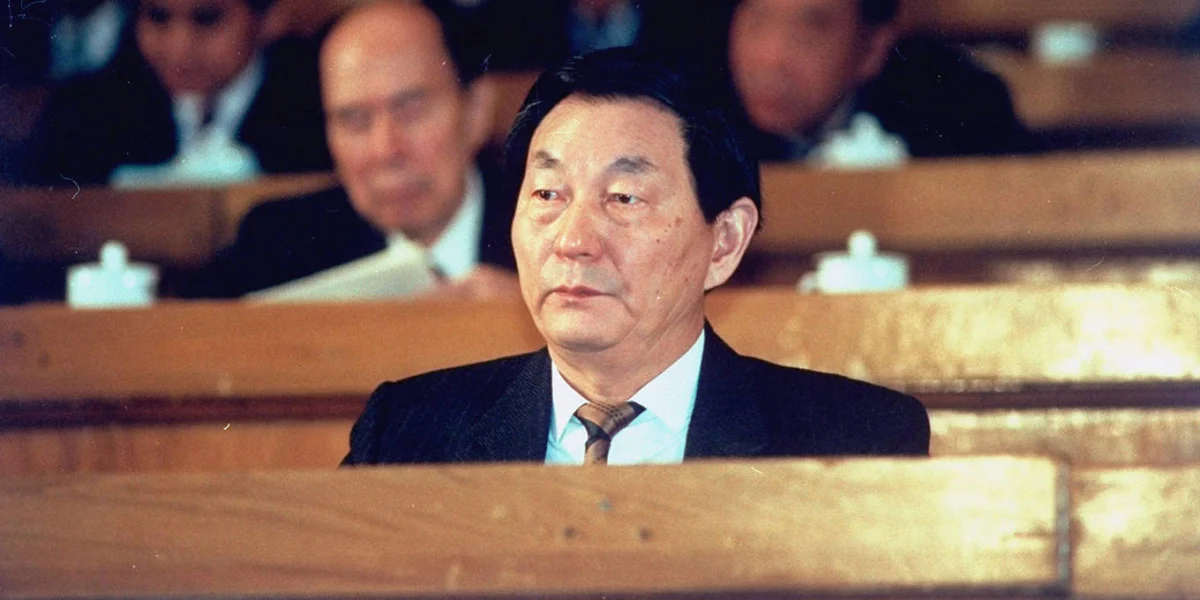
The People’s Republic of China has witnessed eight premiers since its founding nearly 77 years ago, yet the pantheon of those who truly steered the nation toward its extraordinary economic ascent is notably small. While Deng Xiaoping laid the ideological groundwork for "reform and opening up" in the 1980s, it was Zhao Ziyang who initially translated this vision into concrete policy. However, it was Zhu Rongji, who recently passed away at the age of 97, who in the subsequent decade solidified China’s trajectory as an economic powerhouse, earning him a place among the country’s most revered senior leaders. His personal history and the political landscape he navigated made his eventual rise to the apex of Chinese politics seem improbable, yet once there, he implemented a suite of reforms that irrevocably transformed the nation’s economic destiny.
The Unlikely Ascent of a Reformer
Zhu Rongji’s path to becoming a pivotal figure in China’s economic modernization was far from conventional. Born in 1928 in Changsha, Hunan province, Zhu’s early life was shaped by the tumultuous years of war and revolution. He graduated from Tsinghua University in 1951 with a degree in electrical engineering, a testament to his early aptitude for technical and analytical pursuits. Unlike many of his political contemporaries who emerged from the ranks of the military or the traditional party apparatus, Zhu’s early career was primarily rooted in economic planning and administration.
His early career saw him working in various industrial and planning roles, gaining practical experience in managing state-owned enterprises. However, his career trajectory was significantly impacted by the political purges of the Cultural Revolution (1966-1976). Labeled as a "rightist" for his intellectual leanings and perceived bourgeois tendencies, Zhu endured periods of hardship and denunciation. This experience, while personally devastating, is believed by many observers to have imbued him with a pragmatic, results-oriented approach to governance, a deep understanding of the inefficiencies within the state-controlled system, and a cautious yet determined resolve to foster genuine reform.
Following the end of the Cultural Revolution and the rise of Deng Xiaoping, Zhu’s fortunes began to turn. His technical expertise and proven administrative capabilities were recognized, and he was gradually rehabilitated and appointed to increasingly influential positions. He served as vice minister of the State Economic Commission and later as the mayor of Shanghai in the late 1980s. His tenure in Shanghai proved to be a crucial proving ground.
Shanghai: A Crucible of Reform
As mayor of Shanghai from 1987 to 1991, Zhu Rongji was tasked with revitalizing China’s largest and historically most significant economic hub. Shanghai had languished for decades, a shadow of its former global prominence. Zhu embraced this challenge with characteristic vigor. He recognized the need to attract foreign investment, modernize infrastructure, and streamline bureaucratic processes. His approach was pragmatic and often bold, characterized by a willingness to experiment and adapt.
During his time in Shanghai, Zhu spearheaded ambitious urban development projects, including the Pudong New Area development. This visionary project aimed to transform a relatively undeveloped tract of land across the Huangpu River into a modern financial and commercial center. It involved significant infrastructure investments, tax incentives for foreign companies, and the establishment of special economic zones designed to attract international capital and expertise. The success of Pudong, which has since become a global financial powerhouse, is widely attributed to Zhu’s strategic vision and determined execution.
His leadership in Shanghai was marked by a reputation for directness, an intolerance for corruption, and a deep understanding of market mechanisms. He was known for his ability to engage with international business leaders and to articulate China’s reform agenda with clarity and conviction. These qualities, honed during his Shanghai years, would prove invaluable as he ascended to national leadership.
The National Stage: Tackling Systemic Challenges
In 1991, Zhu Rongji was appointed Vice Premier, and by 1998, he had ascended to the position of Premier of the State Council, a role he held until 2003. This period was critical for China’s economic development, marked by significant challenges and opportunities. The Asian Financial Crisis of 1997-98 posed a severe threat to China’s export-driven growth model. Many of China’s neighbors experienced severe economic downturns, and there was considerable pressure on Beijing to devalue its currency.
Zhu Rongji played a decisive role in advocating for a strong yuan policy, resisting calls for devaluation. This stance, while difficult to maintain, ultimately bolstered international confidence in China’s economic stability and demonstrated the country’s commitment to responsible global economic stewardship. Furthermore, his government implemented stringent fiscal and monetary policies to contain inflation and manage the fallout from the crisis.
Beyond immediate crisis management, Zhu’s premiership was defined by a series of deep-seated structural reforms aimed at modernizing China’s economy and preparing it for accession to the World Trade Organization (WTO).
Key Reform Initiatives Under Zhu Rongji:
- State-Owned Enterprise (SOE) Reform: For decades, China’s massive state-owned enterprises had been a drain on the economy, characterized by inefficiency, overstaffing, and mounting debt. Zhu launched a sweeping reform program to restructure, privatize, and consolidate these enterprises. This often involved significant layoffs and social dislocation, but it was deemed necessary to create a more competitive and market-oriented industrial sector. The goal was to transform SOEs from monolithic state entities into more agile, profit-driven corporations.
- Supporting Data: During the 1990s, the number of large and medium-sized state-owned industrial enterprises decreased significantly. While precise figures vary depending on the scope of the reforms, it is estimated that millions of workers were displaced from SOEs during this period as part of the restructuring.
- Financial Sector Overhaul: China’s banking system was plagued by non-performing loans and inefficiency. Zhu initiated a comprehensive reform of the banking sector, including the recapitalization of major state-owned banks, the establishment of asset management companies to absorb bad debts, and the introduction of more stringent regulatory frameworks. This was crucial for ensuring the stability of the financial system and supporting future economic growth.
- Supporting Data: By the early 2000s, China had established four major asset management companies (AMCs) to resolve the non-performing loan (NPL) problem in its state-owned commercial banks. These AMCs took on trillions of yuan in NPLs, a crucial step in cleaning up the banking sector.
- Taxation System Reform: The tax system was reformed to create a more unified and efficient national tax administration, reducing regional disparities and increasing central government revenue. This provided the fiscal resources needed for national development projects and social programs.
- Housing Reform: In a significant departure from the socialist era where housing was allocated by employers, Zhu’s government initiated housing reform, leading to the privatization of state-owned housing and the development of a commercial housing market. This created a new engine for economic growth and provided citizens with greater housing choice.
- WTO Accession: Perhaps Zhu Rongji’s most enduring legacy was his tireless effort to bring China into the World Trade Organization. He personally led the arduous negotiations, making significant concessions and undertaking substantial domestic reforms to meet the stringent requirements of WTO membership. China officially joined the WTO in December 2001.
- Supporting Data: Following WTO accession, China’s foreign trade volume surged. In 2000, its total trade volume was approximately $500 billion. By 2008, it had more than quadrupled to over $2.5 trillion, solidifying China’s position as a global trading powerhouse.
The Premier’s Persona: Directness and Pragmatism
Zhu Rongji was known for his distinctive leadership style. Unlike many Chinese leaders who spoke in carefully modulated, often opaque language, Zhu was renowned for his directness, his sharp wit, and his ability to articulate complex economic issues in accessible terms. He was often described as a "man of action" who disliked bureaucratic inertia and corruption.
His public pronouncements, while always within the bounds of party discipline, often carried a sense of urgency and a no-nonsense approach. He was not afraid to acknowledge challenges or to express frustration with inefficiencies. This directness, coupled with his evident intellect and mastery of economic detail, earned him a degree of public respect that transcended typical political deference.
During international forums, Zhu was a compelling advocate for China’s economic opening. He engaged directly with global leaders and business executives, building trust and facilitating investment. His fluent English further aided his ability to connect with international audiences.
Legacy and Enduring Impact
Zhu Rongji’s premiership is widely regarded as a turning point in China’s economic history. The reforms he championed laid the foundation for the country’s unprecedented economic growth in the following decades. He successfully navigated China through the Asian Financial Crisis, modernized key sectors of the economy, and integrated China into the global trading system.
His legacy is inextricably linked to China’s transformation from a relatively closed, centrally planned economy to a dynamic, globally integrated market economy. The economic powerhouse that China has become owes a significant debt to the bold and often difficult reforms implemented under his leadership.
However, the reforms also had their share of criticisms and unintended consequences. The restructuring of SOEs led to widespread unemployment and social dislocation for many workers. The rapid growth also exacerbated environmental problems and income inequality. While Zhu’s government attempted to address these issues, they remained significant challenges for his successors.
Broader Implications and Analysis
Zhu Rongji’s tenure represented a critical juncture where China shifted from experimental reforms to systemic overhauls. His success in pushing through difficult measures stemmed from a combination of Deng Xiaoping’s strategic direction, his own personal conviction and political capital, and the evolving economic realities that demanded change. His ability to balance the need for market liberalization with the imperative of maintaining social stability and state control was a defining characteristic of his leadership.
The successful accession to the WTO, a goal fiercely pursued by Zhu, was a watershed moment. It signaled China’s irreversible commitment to global economic integration and opened the floodgates for foreign investment and technology transfer. This, in turn, fueled China’s manufacturing boom and its rise as the "world’s factory."
The legacy of Zhu Rongji’s reforms continues to be debated. Proponents point to the unparalleled economic prosperity and poverty reduction achieved under his and subsequent administrations. Critics highlight the social costs, the rise of corruption, and the lingering issues of state intervention in the economy. Regardless of perspective, Zhu Rongji stands as a towering figure whose strategic vision and determined execution profoundly reshaped China and its place in the world. His passing marks the end of an era for a leader who, against considerable odds, played an instrumental role in forging modern China’s economic destiny.
