

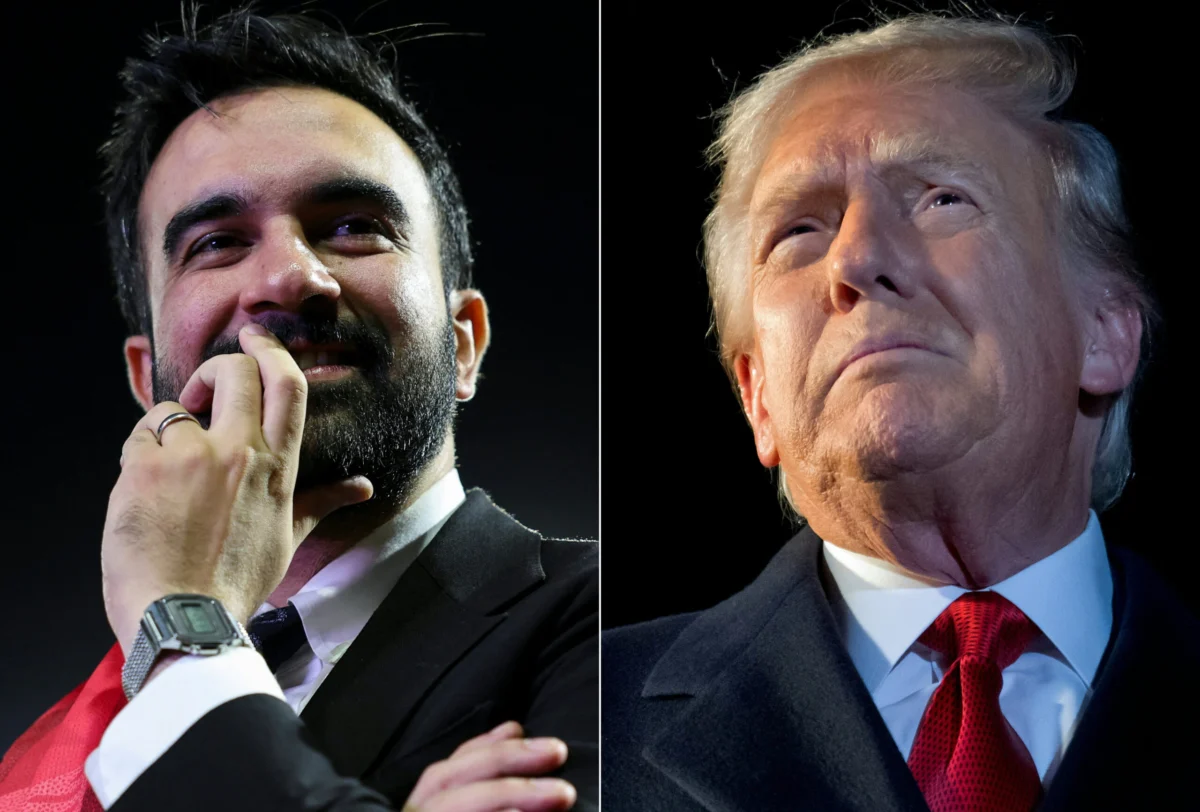
In a dramatic escalation of the ongoing fiscal and political debate gripping New York City, former President Donald Trump on Tuesday vociferously condemned the city’s newly enacted pied-à-terre tax, signaling a potential, albeit legally complex, federal intervention. The tax, designed to levy charges on non-primary residences of affluent owners, has quickly become a flashpoint, pitting progressive city leadership against a segment of the wealthy elite and now, a former commander-in-chief with deep roots in New York’s real estate landscape. Trump’s pronouncement comes as the controversial policy faces immediate legal challenges, including a temporary block by a Staten Island judge, which the city is actively working to overturn.
A Tax Sparking National Controversy
The pied-à-terre tax, spearheaded by New York City Mayor Zohran Mamdani – a prominent democratic socialist figure – and subsequently passed by the New York State legislature in late May, targets secondary homes valued at $1 million or more, with progressively higher rates for more valuable properties. Proponents argue it’s a vital mechanism to generate revenue for critical public services and address wealth inequality in one of the world’s most expensive cities. Mayor Mamdani has consistently framed the surcharge as a necessary step to fund "safer streets, stronger schools, and the city that New Yorkers deserve."
However, critics, including President Trump, have branded the tax as a "dangerous political ‘experiment’" that threatens to undermine New York’s economic vitality. In a post on his Truth Social platform, Trump declared that such a tax "doesn’t work in America, and must be stopped, NOW!" He further expressed his personal anguish, stating it was "hard for him as president to sit back and watch it happen, especially to a place I once loved," referring to his native New York, where he resided in Trump Tower before moving his primary residence to Mar-a-Lago, Florida, in 2019. The specifics of whether Trump or his immediate family would be directly subject to the NYC tax remain unclear, adding a layer of personal interest to his public stance.
Legal Scrutiny and Immediate Repercussions
The implementation of the pied-à-terre tax has been anything but smooth, immediately encountering robust legal opposition. Just one day prior to Trump’s federal intervention threat, a Staten Island judge issued a temporary injunction, effectively halting the new policy. This judicial action followed a lawsuit filed by three New York City residents last week, challenging the city’s method of identifying and notifying potential taxpayers.
The lawsuit specifically targets the city’s distribution of a comprehensive list containing the names, addresses, and property values of hundreds of thousands of NYC homeowners. Furthermore, it takes aim at the written notices mailed to approximately 17,000 individuals on that list, informing them of their potential liability under the new tax. The plaintiffs argue that these actions "arbitrarily and capriciously foisted onto New York City residents the burden of proving they are not subject" to the tax, contending that the onus should instead be on the city to definitively determine which properties fall under its purview before issuing such notices. On Monday, Judge Wayne Ozzi temporarily blocked the city from "taking any further action" related to this list or the mailed notices.
However, the legal battle quickly intensified. Hours after Judge Ozzi’s ruling, attorneys representing Mayor Mamdani’s office filed a motion seeking permission to appeal the decision. This maneuver, a common procedural step in New York law, triggers an "automatic stay" of all proceedings to enforce Ozzi’s order, effectively placing the temporary block on hold for the time being. This means the city can continue its efforts related to the tax while the appeal process unfolds.
Mayor Mamdani’s office, while not directly responding to CNBC’s request for comment on Trump’s specific threat, referred to the Mayor’s earlier assurances regarding the ongoing lawsuit. At a Monday press conference, Mamdani affirmed, "We look forward to vigorously defend our city’s position in court." He reiterated his "confidence in our position," citing both "the legality of the City’s actions" and "the importance of a surcharge on secondary homes worth more than $5 million." This staunch defense underscores the city’s commitment to implementing a policy it views as crucial for its fiscal health and social equity goals.
The Genesis of the Pied-à-Terre Tax: Addressing Inequality and Fiscal Needs
The concept of a pied-à-terre tax is not unique to New York City, with variations existing in global cities like Paris, London, and Vancouver, often targeting vacant properties or those not serving as primary residences. In New York, the debate around such a tax has simmered for years, fueled by escalating housing costs, a persistent homelessness crisis, and a widening wealth gap. Mayor Mamdani, elected on a platform promising progressive reforms and a redistribution of wealth, made the pied-à-terre tax a cornerstone of his agenda.

A pied-à-terre, French for "foot on the ground," traditionally refers to a secondary residence, often a small apartment, used by individuals who primarily live elsewhere but require a temporary dwelling in the city for business or leisure. The tax is fundamentally different from standard property taxes, which are levied on all real estate based on assessed value. Instead, the pied-à-terre tax specifically targets the usage or ownership structure of luxury secondary homes, aiming to capture revenue from owners who benefit from the city’s amenities without necessarily contributing to its primary tax base in the same way full-time residents do.
The specific rates proposed by Mamdani and passed by the legislature are tiered, meaning properties above the $1 million threshold face increasing percentages based on their market value. While the initial revenue estimate from Mamdani’s office was $500 million, NYC Comptroller Mark Levine later provided a more conservative estimate, suggesting the actual revenue might fall between $340 million and $380 million. This discrepancy highlights the inherent uncertainties in forecasting the behavioral responses of luxury homeowners to such a tax. The revenue, regardless of the exact figure, is earmarked for crucial public services, including transit improvements, housing initiatives, and educational programs, reflecting the Mayor’s broader vision for a more equitable city.
The Exodus Debate: Capital Flight vs. Fiscal Responsibility
A central argument against the pied-à-terre tax, echoed by President Trump, is the potential for it to trigger an exodus of wealthy individuals and businesses, thereby negating any intended revenue gains and potentially harming the city’s overall economy. Trump asserted that the levy on second homes is already "spurring thousands of people to flee to more tax-friendly regions," a claim that resonates with long-standing anxieties within the real estate and financial sectors.
This concern found a prominent voice in Citadel CEO Ken Griffin, who publicly threatened to relocate his business from New York to Miami following Mamdani’s unveiling of the tax. The Mayor’s promotional video for the tax even featured Griffin’s ultraluxury Manhattan penthouse, a direct challenge that drew national attention. Griffin also hinted that Citadel might reconsider its substantial redevelopment plans for a Park Avenue building. However, Vornado CEO Steven Roth, a major player in NYC real estate, later downplayed these fears, stating in an earnings call that Griffin was "not abandoning" his plans for the New York City building, suggesting that some threats of departure might be more rhetorical than actual.
The debate over whether high taxes on the wealthy lead to significant capital flight is complex and ongoing. While some studies, such as those by the Citizens Budget Commission of New York, indicate a decline in New York’s share of millionaires in recent years, other analyses, including those from the Tax Policy Center, dispute the notion that the rich consistently flee high state taxes. Factors such as access to talent, cultural amenities, business networks, and family ties often weigh heavily in residency decisions, mitigating the sole impact of tax rates. New York already boasts some of the nation’s highest income tax rates, yet it continues to be a global financial and cultural hub, suggesting a certain inelasticity among its wealthiest residents.
Broader Implications: Federalism, Precedent, and Political Will
President Trump’s vow to explore the federal government’s "legal right to avert this disaster" introduces a significant constitutional dimension to the local tax dispute. The U.S. system of federalism generally grants states and their municipalities broad authority over local taxation. Federal intervention in such matters is exceedingly rare and typically limited to instances where state or local taxes violate federal law, the U.S. Constitution (e.g., the Commerce Clause), or specifically passed federal statutes. It is highly improbable that the federal government possesses a direct legal mechanism to unilaterally "stop" a state-approved local tax, especially one that does not discriminate against interstate commerce or infringe upon fundamental rights.
Trump’s statement, therefore, is more likely a political declaration designed to galvanize opposition and align himself with business interests critical of progressive taxation. His intervention positions him as a champion for property owners and a critic of what he perceives as overreaching government policies, playing into his broader political narrative.
For Mayor Mamdani and Governor Kathy Hochul, who supported the tax’s passage, the challenge is not just legal but also political. Successfully defending the tax in court and demonstrating its fiscal benefits could serve as a powerful validation of their progressive agenda, potentially inspiring similar initiatives in other high-cost cities grappling with inequality and infrastructure needs. Conversely, a sustained legal defeat or a significant economic backlash could undermine their political capital and provide ammunition for opponents.
The outcome of this multi-faceted conflict will likely set precedents for future tax policy debates in New York and beyond. It will test the legal boundaries of local taxing authority, the economic realities of wealth redistribution, and the political will of leaders to implement policies aimed at reshaping urban economies. As the legal appeals process unfolds and the political rhetoric continues, New York City remains at the epicenter of a national conversation about wealth, taxation, and the future of its urban landscape. The resolution of this dispute will undoubtedly have lasting implications for the city’s residents, its economy, and the broader American political discourse.
