

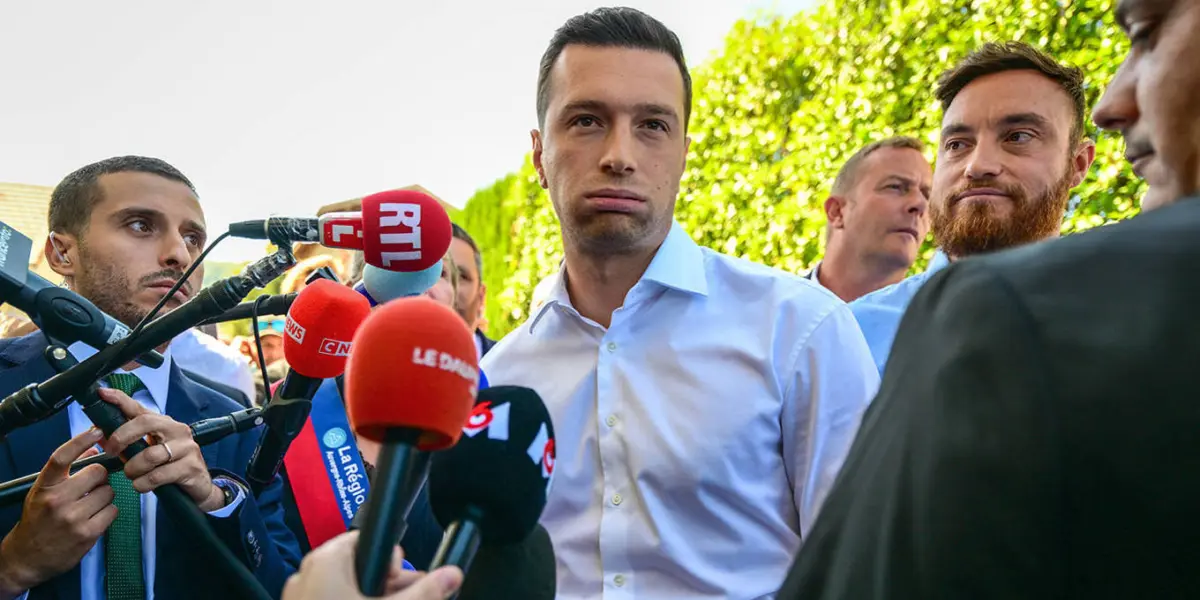
The political landscape of France is currently dominated by a brewing scandal surrounding Jordan Bardella, the young and charismatic leader of the far-right National Rally (RN). While Marine Le Pen, the party’s perennial presidential candidate, has consistently signaled her intention to appoint Bardella as her Prime Minister should she win the 2027 presidential election, a recent controversy involving alleged antisemitic remarks has cast a shadow over this succession plan. The implications of this scandal are multifaceted, potentially impacting Bardella’s immediate political future, Le Pen’s electoral prospects, and the broader trajectory of the National Rally. While one scenario suggests the controversy might fade, allowing Le Pen to proceed with her plans, two other plausible outcomes present significant challenges for Bardella.
Background to the Controversy
Jordan Bardella, who became president of the National Rally in 2022 at the remarkably young age of 27, has rapidly ascended the ranks of French far-right politics. His youthful image and articulate communication style have made him a popular figure, particularly among younger voters, and a key asset in the RN’s strategy to broaden its appeal and shed its more extreme perceptions. Le Pen has repeatedly championed Bardella as her chosen successor for the role of Prime Minister, a move that would signify a generational shift within the party and solidify its position as a mainstream political force.
However, the current controversy centers on allegations of antisemitic comments attributed to Bardella. While the precise nature and context of these remarks are still being debated and scrutinized, reports suggest they have touched upon sensitive historical and contemporary issues related to the Jewish community in France. The details of these allegations, though not fully elaborated in the initial reporting, have been sufficient to ignite a firestorm of criticism from political opponents, anti-racism organizations, and segments of the public.
The Presidential Election Landscape
France is gearing up for its next presidential election, scheduled for the spring of 2027. Current polling data, as indicated by a recent IFOP survey, suggests that Marine Le Pen is increasingly likely to emerge victorious. This growing probability has amplified the significance of her stated intention to appoint Bardella as her Prime Minister. The role of Prime Minister in France, while appointed by the President, is a crucial position, leading the government and implementing policy. Le Pen’s endorsement of Bardella for this role is a clear signal of her confidence in his abilities and her vision for the future of the RN government.
Potential Scenarios and Their Implications
The current scandal presents a critical juncture for Bardella and the National Rally. Three primary scenarios are being considered by political analysts:
Scenario 1: The Scandal Fades
The most immediate and perhaps most convenient outcome for the National Rally would be for the controversy surrounding Bardella’s alleged antisemitic comments to dissipate relatively quickly. In this scenario, the news cycle might move on, public attention could shift to other pressing issues, and the RN could effectively manage the fallout. If this occurs, Marine Le Pen would likely feel emboldened to stick to her original plan. Bardella would remain her preferred choice for Prime Minister, allowing her to present a united front and a clear succession strategy to the electorate. This outcome would reinforce Bardella’s position within the party and solidify his image as a future leader, albeit one who has weathered a significant public relations challenge. The RN’s campaign would likely continue to focus on its core platform of national sovereignty, immigration control, and economic populism, with Bardella playing a central role in communicating these messages.
Scenario 2: Bardella Faces a Direct Political Repercussion
A less favorable scenario for Bardella would involve direct and significant political consequences stemming from the scandal. This could manifest in several ways. Firstly, the pressure from within the party and from external critics could force Le Pen to reconsider her endorsement of Bardella for Prime Minister. While Le Pen is known for her loyalty to her allies, the severity of antisemitic allegations in France is a particularly sensitive issue with deep historical roots. If the controversy escalates and proves difficult to contain, Le Pen might feel compelled to distance herself from Bardella to protect her own electoral chances. This could involve appointing a different figure as Prime Minister, thereby sidelining Bardella and potentially damaging his reputation and future prospects within the RN.
Alternatively, even if Le Pen maintains her support, the scandal could erode Bardella’s own standing among a broader segment of the electorate. If voters perceive him as genuinely antisemitic, his ability to appeal to moderate voters and those outside the RN’s core base would be severely compromised. This could translate into a weaker performance in any potential future elections he might contest or a diminished role in a Le Pen administration, even if he retains a ministerial position. The RN’s strategy of mainstreaming the party could be jeopardized if its public face is perceived as harboring prejudiced views.
Scenario 3: The Scandal Becomes a Defining Issue for the RN
The most damaging scenario for Bardella and the National Rally would be for the antisemitic controversy to become a central and defining issue in the lead-up to the 2027 presidential election. In this case, the allegations would not simply fade but would be relentlessly pursued by political opponents and media outlets. The RN’s attempts to downplay or dismiss the remarks would be met with skepticism, and the party would find itself on the defensive.
This prolonged focus on the scandal could have several profound implications. Firstly, it could galvanize opposition to the National Rally, potentially uniting disparate political forces against them. Secondly, it could alienate potential allies and moderate voters who might otherwise have been open to the RN’s platform. The party’s efforts to present itself as a modern, inclusive force could be undermined, reinforcing older perceptions of extremism and intolerance.
For Jordan Bardella personally, this scenario would be particularly perilous. He could become a pariah figure, his political career significantly hampered. The RN itself might face a severe electoral setback, potentially losing ground to other parties and struggling to recover its momentum. This scenario would also present a significant challenge for Marine Le Pen, forcing her to confront the possibility that her chosen successor could become a liability that jeopardizes her lifelong ambition of leading France.
Supporting Data and Context
The National Rally has a complex history with allegations of antisemitism. While the party has made efforts to distance itself from its more overtly anti-Semitic past, particularly under Jean-Marie Le Pen, instances of controversial statements by party members have periodically surfaced. These controversies have often led to intense public debate and have been exploited by political opponents to question the RN’s commitment to republican values.
In France, antisemitism remains a significant societal concern, with reported incidents of anti-Semitic acts and hate speech remaining a persistent issue. The country has a substantial Jewish population, and any perceived threat to their safety or dignity is met with strong public and political condemnation. Therefore, allegations of antisemitism against a prominent political figure like Jordan Bardella carry considerable weight and are likely to be taken very seriously by a wide range of stakeholders.
Official Responses and Reactions
While specific official statements from all parties involved in response to the initial reporting of the scandal are not detailed in the provided text, it is logical to infer that:
- The National Rally: Would likely attempt to minimize the severity of Bardella’s alleged remarks, perhaps by framing them as misinterpretations, taken out of context, or as part of a broader political critique rather than expressions of genuine prejudice. They might also launch a counter-offensive, accusing their opponents of smear tactics and political opportunism.
- Political Opponents: Would seize upon the allegations as evidence of the National Rally’s enduring extremist tendencies, aiming to mobilize voters against them and highlight the perceived unsuitability of Bardella for high office.
- Anti-Racism Organizations: Would likely issue strong condemnations of any antisemitic remarks and call for accountability, urging political parties to take a firm stance against all forms of hate speech.
- Jewish Community Representatives: Would express deep concern and demand clear explanations and assurances from the National Rally regarding its commitment to combating antisemitism and protecting the rights of Jewish citizens.
Broader Impact and Implications
The outcome of this scandal has far-reaching implications for French politics. If Bardella weathers the storm and is eventually appointed Prime Minister, it would signify a significant consolidation of power for the National Rally and a generational shift in French leadership. It could also embolden other far-right movements across Europe.
Conversely, if Bardella is sidelined or his political future is significantly damaged, it could lead to internal turmoil within the National Rally and a re-evaluation of its leadership and strategy. It might also open up opportunities for other political forces to gain traction, potentially altering the predicted outcome of the 2027 presidential election.
Ultimately, the scandal surrounding Jordan Bardella’s alleged antisemitic comments serves as a stark reminder of the delicate balance that political parties must strike between broadening their appeal and maintaining their core values. The coming months will be crucial in determining how this controversy unfolds and what its lasting impact will be on the National Rally and the future political direction of France. The ability of the RN to navigate this crisis effectively will be a key test of its maturity and its commitment to democratic principles.
