

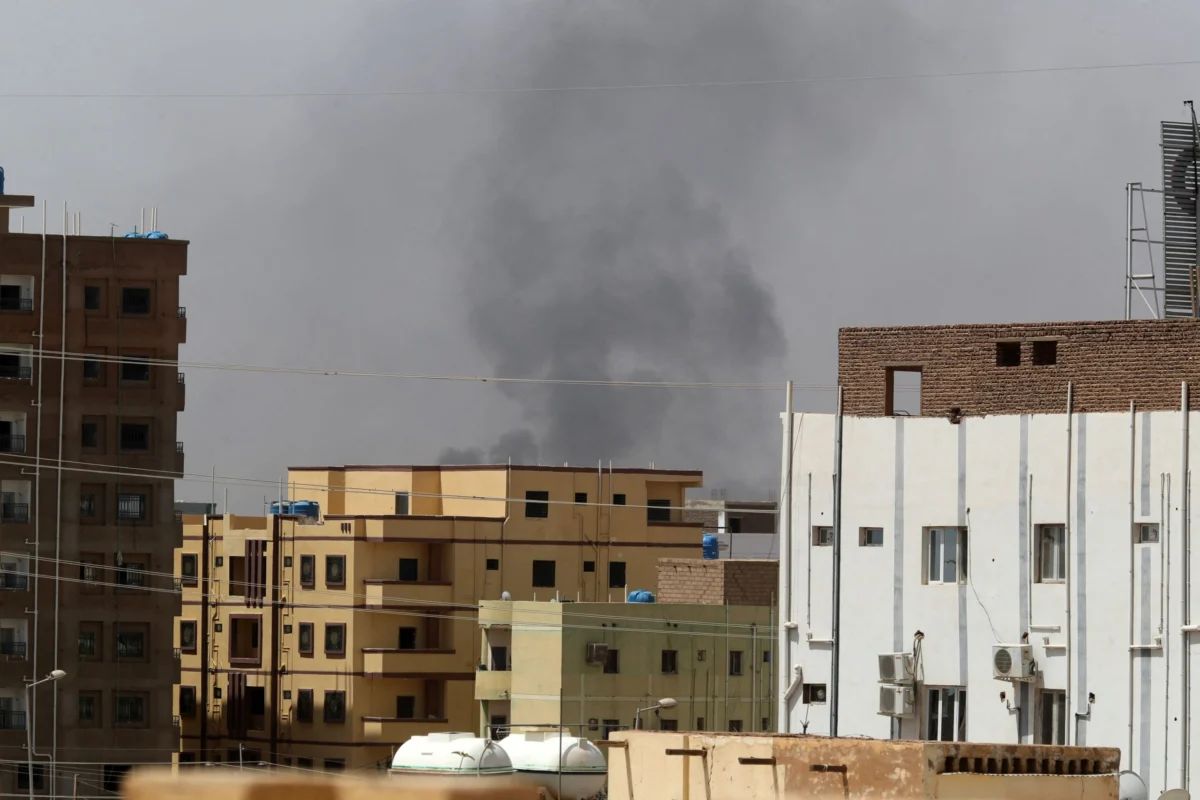
Sporadic fighting between Sudan’s warring military factions continued to reverberate across the capital city of Khartoum on Sunday, even as residents and the international community looked toward a newly signed, week-long ceasefire agreement. The deal, brokered by the United Kingdom and Saudi Arabia after intensive negotiations in the city of Jeddah, represents the most significant diplomatic effort to date to pause a conflict that has ravaged the East African nation for over five weeks. While the agreement is scheduled to take effect on Monday evening, the sounds of heavy artillery and small arms fire in central and southern Khartoum served as a grim reminder of the challenges inherent in implementing a truce between two deeply entrenched rivals.
The conflict, which erupted on April 15, pits the Sudanese Armed Forces (SAF), led by General Abdel Fattah al-Burhan, against the paramilitary Rapid Support Forces (RSF), commanded by Mohamed Hamdan Dagalo, widely known as Hemedti. The Jeddah agreement marks a departure from previous, unilaterally declared truces that were violated almost immediately. For the first time, both sides have formally signed a document outlining a short-term ceasefire and humanitarian arrangements. Crucially, the deal includes an internationally supported monitoring mechanism, involving representatives from Saudi Arabia and the United States, intended to hold the warring parties accountable for breaches.
The Jeddah Agreement and the Mechanics of the Truce
The primary objective of the seven-day ceasefire is to facilitate the delivery of desperately needed humanitarian aid and to restore essential services, such as water and electricity, which have been severed in many parts of the country. According to the joint statement released by the mediators, the agreement requires both the SAF and the RSF to refrain from seeking new territorial gains, occupying new positions, or conducting offensive operations. Furthermore, the factions committed to the removal of forces from hospitals and essential public facilities, a point of contention as the RSF has been accused of using residential areas and medical centers as shields against the SAF’s superior air power.
Despite the formal signing, skepticism remains high among political analysts and the Sudanese populace. Neither General al-Burhan nor Hemedti traveled to Jeddah to sign the document personally, instead sending high-ranking delegations. This distance has led to questions regarding whether the leadership on both sides possesses the absolute command and control necessary to enforce a cessation of hostilities among their rank-and-file soldiers on the ground. Both generals have previously maintained that they are seeking a total military victory, leaving little room for the political compromises necessary for a permanent peace.
A Chronology of the Descent into Chaos
The roots of the current war can be traced back to the fragile transition following the 2019 popular uprising that toppled the long-time autocrat Omar al-Bashir. Following Bashir’s ouster, the SAF and RSF entered into an uneasy power-sharing agreement with civilian pro-democracy groups. However, this transition was derailed in October 2021 when Burhan and Hemedti jointly orchestrated a military coup, dissolving the civilian-led government and seizing full control of the state.
Tensions between the two military leaders began to simmer over the proposed integration of the RSF into the regular army—a key requirement for returning to civilian rule under a new framework agreement. Disagreements over the timeline of this integration and the chain of command eventually reached a breaking point. On the morning of April 15, 2023, the first shots were fired in Khartoum, quickly spreading to other strategic locations across the country, including the volatile Darfur region. What began as a localized power struggle between two generals has since evolved into a full-scale civil war that threatens the stability of the entire Horn of Africa.
The Humanitarian Toll and Mass Displacement
The human cost of the five-week conflict is staggering. According to data provided by the World Health Organization (WHO), at least 705 people have been confirmed killed and more than 5,287 injured. However, health officials and local activists warn that these figures are likely a significant undercount, as many bodies remain uncollected in the streets of Khartoum and other conflict zones, and many deaths in remote areas go unreported.
The displacement crisis has reached alarming proportions. The International Organization for Migration (IOM) and the United Nations High Commissioner for Refugees (UNHCR) report that approximately 1.1 million people have been forced to flee their homes. Of these, more than 840,000 are internally displaced within Sudan, while over 250,000 have crossed international borders into neighboring countries such as Egypt, Chad, South Sudan, and Ethiopia. Many of those fleeing to Egypt have faced grueling journeys through the desert, while those entering Chad find themselves in one of the poorest regions of the world, further straining local resources.
Inside Khartoum, the situation for those unable to leave is dire. The city is currently characterized by mass looting of homes and businesses, a near-total collapse of the healthcare system, and severe shortages of food, fuel, and clean water. Witnesses have described the capital as a "ghost city" where the remaining residents live in a state of constant fear, trapped between SAF airstrikes and RSF ground incursions.
Voices from the Ground: Survival in Khartoum
For the millions of civilians caught in the crossfire, the Jeddah ceasefire represents a final lifeline. Safaa Ibrahim, a 35-year-old resident of Khartoum, expressed the exhaustion felt by many. "We’re tired of this war," she told reporters. "We’ve been chased away from our homes, and the family has scattered between towns in Sudan and Egypt. We want to return to normal life and safety. Al-Burhan and Hemedti have to respect people’s desire for life."
The sentiment is echoed by Mohamed Hamed, an activist remaining in the capital, who emphasized the urgency of the medical crisis. "The people of Khartoum are waiting for the truce and the opening of humanitarian corridors," Hamed said. "The health situation is getting worse day after day. Most hospitals are out of service, and those that are open lack the basic supplies to treat chronic illnesses, let alone war injuries."
The conflict has also prompted controversial calls for civilian mobilization. Senior army general Yassir al-Atta recently appeared on Sudan state television, defending the army’s tactics and addressing the issue of arming the populace. While he stated that a formal mass mobilization was not currently required, he argued that residents being attacked in their homes have a "natural right" to arm themselves for self-defense. This rhetoric has raised concerns among international observers about the potential for the conflict to devolve into sectarian or communal violence, particularly in regions with existing ethnic tensions.
Regional Instability and the Darfur Front
While Khartoum remains the primary theater of war, the conflict has reignited old wounds in the western region of Darfur. The RSF, which grew out of the Janjaweed militias accused of atrocities in Darfur in the early 2000s, has been heavily involved in renewed clashes in cities like El Geneina. Reports from the region indicate that the power vacuum created by the war has allowed for the resumption of ethnic-based killings and the burning of displacement camps.
The destabilization of Sudan has profound implications for its neighbors. Sudan sits at a geopolitical crossroads, bordering seven countries and the Red Sea. A prolonged conflict could lead to a total state collapse, creating a haven for extremist groups and disrupting vital trade routes. Furthermore, the influx of refugees into neighboring countries—many of which are already grappling with their own internal crises—threatens to trigger a regional humanitarian catastrophe.
Analysis of the Road Ahead
The success of the Jeddah agreement hinges on the effectiveness of the monitoring mechanism. Unlike previous truces, which relied on the "good faith" of the combatants, this agreement involves a technical committee that will track violations and report them to the mediating parties. However, the international community has limited leverage to enforce the truce if either side decides that military gains outweigh the benefits of a pause in fighting.
Moreover, the Jeddah talks have so far focused primarily on humanitarian concerns rather than a political settlement. Mediators have acknowledged that even if this ceasefire holds, subsequent rounds of negotiations will be required to address the fundamental issues: the withdrawal of military forces from urban centers, the integration of the RSF into the SAF, and the eventual transition to a civilian-led government.
The role of regional actors remains complex. While Saudi Arabia has taken a lead role in mediation, other regional powers have historical ties to the opposing generals, complicating the unified diplomatic front needed to pressure the factions toward peace. The United States has signaled that it is prepared to use targeted sanctions against those who undermine the peace process, but the effectiveness of such measures in a country already crippled by economic sanctions remains to be seen.
As Monday evening approaches, the world watches Khartoum with bated breath. For the people of Sudan, the Jeddah agreement is not merely a diplomatic document; it is a desperate hope for a pause in the violence that has dismantled their lives. Whether the generals will choose the path of humanitarian relief or continue their pursuit of total dominance will determine the fate of millions and the future of the nation for decades to come.
