

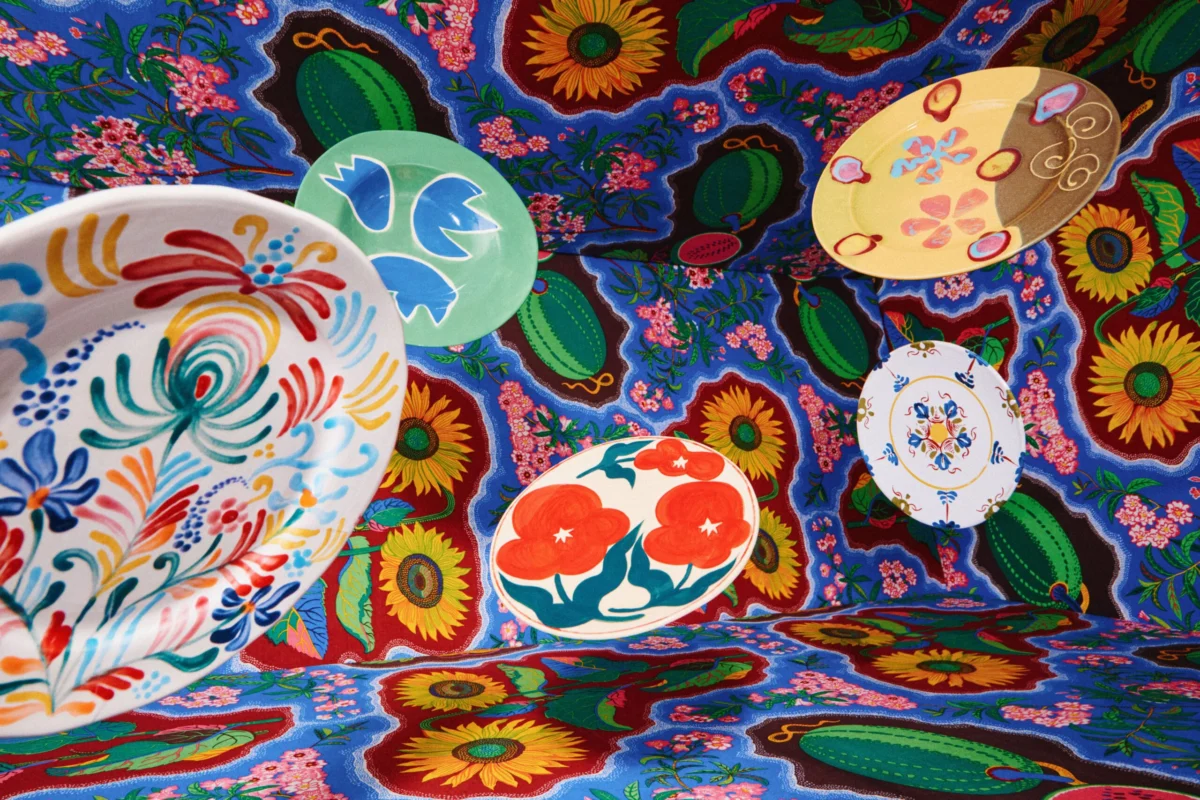
The landscape of modern interior design is undergoing a tectonic shift as the era of sterile minimalism gives way to a vibrant, eclectic movement frequently described as the "New Bohemian Age." This aesthetic resurgence is most visible on the dining table, where a new generation of statement plates is redefining the art of entertaining. Moving beyond the monochrome palettes that dominated the last decade, designers are now embracing bold florals, psychedelic hues, and intricate patterns that draw inspiration from the 1960s and 70s, as well as traditional global craftsmanship. This trend reflects a broader cultural pivot toward "dopamine decor"—the practice of using bright colors and whimsical patterns to enhance mood and personal expression within the home.

The Rise of the Statement Plate: A New Aesthetic Movement
The current demand for high-impact dinnerware is led by a diverse group of designers and heritage brands. Among the standout pieces in this new movement is the Elsie floral dessert plate by Greenrow, which exemplifies the trend’s penchant for dense, lush botanical motifs. Similarly, the collaboration between Carolina Irving & Daughters and Williamsburg has produced the Virginia dinner plate, a piece that marries historical archival patterns with a contemporary bohemian sensibility.
The market for these artisanal goods is expanding as consumers increasingly prioritize unique, "story-driven" objects over mass-produced items. According to recent retail trend reports, the luxury tabletop segment has seen a 15% increase in demand for patterned and hand-painted ceramics over the past two fiscal years. This shift is further evidenced by the popularity of designers like Rebekah Miles, whose morning glory party plates offer a painterly, organic feel, and Botosani Design, whose flower plates for Svenskt Tenn bridge the gap between mid-century modernism and contemporary trippy aesthetics.

The technical execution of these plates often involves traditional methods that appeal to the modern "slow living" movement. For instance, the tulips slipware dinner plate by Fitch & McAndrew, available through Abask, utilizes historic slip-trailing techniques to create tactile, raised patterns. Zsuzsanna Nyul’s "Joy" dinner plate and Skye Chamberlain’s Rose Vine plate further emphasize this handcrafted appeal, often utilizing backgrounds of high-end textiles like Soane Britain’s Mabille cotton or Décors Barbares’ Koubla cotton to create a layered, maximalist table setting.
The 130-Year Evolution of the Louis Vuitton Monogram
While new designers are carving out a space in the bohemian revival, established luxury houses are celebrating the longevity of their own iconic patterns. Louis Vuitton’s signature Monogram, a design that has become a global benchmark for luxury, is currently marking its 130th anniversary. The history of this motif serves as a masterclass in brand protection and cultural adaptation.

The Monogram was born in 1896, created by Georges Vuitton, the son of the company’s founder. In a move that mirrors contemporary battles against "dupes" and knockoffs, Georges developed the repeating pattern of intertwined L’s and V’s to distinguish the brand’s lightweight, stackable, and waterproof trunks from a growing number of imitators. The design was not merely a logo but a complex tapestry of cultural references. It integrated floral symbols inspired by the architectural details of Gothic cathedrals and the minimalist elegance of Japanese mon (family insignias), which were highly fashionable in late 19th-century Paris during the height of the Japonisme movement.
Chronology of the Monogram’s Development:
- 1854: Louis Vuitton opens his first shop in Paris, specializing in trunk-making.
- 1896: Georges Vuitton creates the Monogram canvas to thwart counterfeiters.
- 1905: The trademark is officially registered, cementing its legal status.
- 1910: The "Malles de Commerce" catalog showcases the pattern’s application across a wider range of travel goods.
- 1996: For the Monogram’s centenary, Louis Vuitton invites avant-garde designers like Helmut Lang to reinterpret the canvas, resulting in iconic pieces like the DJ box.
- 2024: The brand introduces "Monogram Emblème," a new jacquard material that honors the motif’s 130-year legacy.
Pierre-Louis Vuitton, the brand’s head of savoir-faire and a sixth-generation family member, notes that the Monogram’s strength lies in its versatility. "The Monogram established a potent identity that only strengthened as fashion became integral to Louis Vuitton’s world," he stated. Today, the pattern appears across high jewelry, horology, and ready-to-wear, proving that a well-designed motif can transcend its original medium.

Artistic Reimagination and the Future of Luxury Icons
The endurance of the Louis Vuitton Monogram is also attributed to the brand’s willingness to allow contemporary artists to warp and weave their own visions into the pattern. This strategy has kept the 19th-century design relevant in the 21st-century digital age. Collaborative efforts have included:
- Takashi Murakami: His "Multicolore" iteration replaced the traditional brown and gold with a vibrant rainbow palette, a move that defined the "it-bag" era of the early 2000s.
- Yayoi Kusama: The artist overlaid the Monogram with her signature infinity dots, blending the brand’s heritage with her own obsessive, repetitive aesthetic.
- Urs Fischer: His red-and-black and white-and-black versions of the Monogram utilized a hand-drawn, distorted effect that challenged the precision of the original design.
For the 130th anniversary, the house has returned to the pattern’s roots with the introduction of the Monogram Emblème. This new material is a woven organic cotton-linen blend that utilizes a jacquard technique to create a subtle, three-dimensional tactile effect. This evolution demonstrates a shift toward more sustainable materials while maintaining the "savoir-faire" that Pierre-Louis Vuitton identifies as the foundation of the brand’s heritage.

Loro Piana: From Wool Merchant to Home Decor Innovator
In a parallel development within the luxury sector, the Italian house Loro Piana is expanding its reach from high-end textiles and ready-to-wear into the realm of custom home decor. During Milan Design Week in April 2024, the brand unveiled "Studies, Chapter I: On the Plaid," a collection that reimagines the humble woolen wrap as a sophisticated artistic medium.
The term "plaid" originates from the Gaelic word for a blanket or wrap, traditionally worn for warmth in the Scottish Highlands. Loro Piana has elevated this functional item into a display of extreme technical skill. The new collection features 24 distinct fabrics that serve as templates for custom-ordered throws, pillows, and wall tapestries.

The technical specifications of these pieces are staggering. The "Sherazade Notte," an elaborate paisley design, is constructed from three layers of hand-trimmed cashmere appliqué, glass beads, and silk cords. The production of a single piece requires approximately 1,850 hours of meticulous hand-embroidery. Another standout, the "Gara d’Inverno," uses a complex screen-printing process to depict a 1920s-era alpine road race in the Piedmont region—a nod to the brand’s founding in 1924.
This move into decorative textiles represents a broader trend of "Quiet Luxury" extending into the home. Consumers who appreciate Loro Piana’s signature materials, such as vicuña and ultrafine wool, are now seeking to integrate those same tactile experiences into their living spaces. The "Danza di Fibre" piece, which utilizes needlework and crochet techniques, further emphasizes the brand’s transformation from a 19th-century wool merchant into a contemporary lifestyle juggernaut.

The Final Touch: Tory Burch and the Artisanal Table
The "New Bohemian" trend is being rounded out by fashion designers who are bringing a sense of whimsy and global heritage to table linens. Tory Burch, a designer long associated with a sophisticated bohemian lifestyle, has recently released a collection of cherry-embroidered linens that highlight the importance of artisanal collaboration.
Produced in partnership with Marasim, a global collective founded by Nidhi Garg Allen that supports artisans in New Delhi, the collection features delicate stitching on raw linen. This collaboration reflects a growing industry standard where luxury brands provide a platform for traditional craftsmanship, ensuring that ancient techniques survive in a modern commercial context.

Burch’s choice of cherry motifs and espresso-brown or crisp white linens suggests a move away from the overly formal tablescapes of the past toward a more relaxed, "lived-in" elegance. "I have always loved embroidered linens," Burch noted, citing the way the fabric becomes softer and more beautiful with time. This sentiment captures the essence of the New Bohemian Age: a preference for objects that possess character, history, and a touch of hand-wrought imperfection.
Conclusion: The Broader Impact of the Bohemian Revival
The convergence of bold new dinnerware, the celebration of century-old monograms, and the elevation of traditional textiles points toward a significant change in consumer values. As the global luxury home decor market is projected to reach over $800 billion by 2030, the emphasis is shifting from mere status symbols to objects that offer emotional resonance and artisanal integrity.

The "New Bohemian Age" is more than a trend in floral patterns or trippy colors; it is a rejection of the mass-produced and the sterile. Whether through a 1,850-hour hand-embroidered plaid from Loro Piana, a 130-year-old jacquard monogram from Louis Vuitton, or a whimsical cherry-embroidered napkin from Tory Burch, the focus is squarely on the "savoir-faire." In this new era, the most coveted homes are those that tell a story through bold patterns, rich textures, and a fearless embrace of color.
