

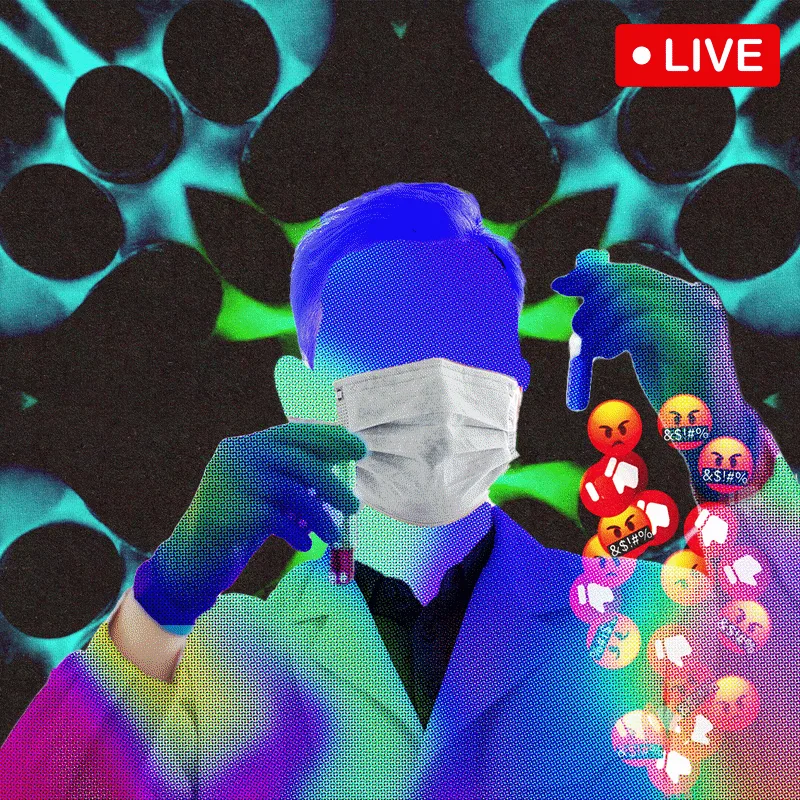
On Halloween 2024, a masked figure known to the internet as William “Willy” Myco uploaded what he described as the most significant video of his career to his Patreon subscribers. The tutorial, which Myco claimed was a world-first, provided a step-by-step guide to synthesizing 100 percent pure lysergic acid diethylamide, more commonly known as LSD. Dressed in a hoodie emblazoned with the slogan “Love My Country But Fuck The Government,” Myco presented the three-day chemical process as a triumph of scientific democratization. However, the release of this video triggered a cascade of events that highlighted the growing tension between the underground psychedelic community, mainstream digital platforms, and the scientific establishment.
The Architect of Underground Education
William Myco, a 38-year-old native of Boston currently residing in Puerto Rico, has spent more than a decade building a digital empire centered on the cultivation and synthesis of psychoactive substances. Despite his pseudonym—short for mycologist—Myco is not a traditional academic. While he claims a background in microbiology and prior experience working for a pharmaceutical company in Boston, his true laboratory is the internet.
Myco’s journey into the world of psychedelics began in 2002, following a transformative experience with dimethyltryptamine (DMT), which he claims to have extracted himself using published scientific methods. This event, occurring during a period of personal grief and depression, set him on a path to become a prominent figure in psychedelic history. By 2009, he was an active member of digital drug forums such as the Shroomery and Mycotopia. Finding these communities cliquish and unwelcoming to novices, Myco sought to create a more accessible platform for sharing knowledge.
In 2014, he posted his first video to YouTube, wearing a gas mask to hide his identity while explaining the nuances of growing psilocybin mushrooms. The channel, “Willy’s World,” eventually amassed over 96,000 subscribers, while his Patreon grew to include more than 14,500 followers, with 2,500 paying for premium access to his more controversial tutorials.
The Synthesis Tutorials and International Logistics
The LSD video was the culmination of a long-term plan to translate complex chemical schematics—often viewed by the layperson as "hieroglyphics"—into actionable instructions. To circumvent strict domestic laws and the potential for federal prosecution, Myco claims he conducted his synthesis projects in a university laboratory in Pakistan. According to Myco, this facility had secured government approval to produce psychedelics for scientific research purposes.
The scope of Myco’s content extends far beyond LSD. His catalog of over 120 videos includes:
- Psilocybin Cultivation: Detailed guides on growing "magic mushrooms" at home.
- Mescaline Extraction: Methods for deriving the psychoactive alkaloid from cacti like San Pedro or Peyote.
- DMT Production: Instructions for creating vape cartridges containing the potent hallucinogen.
- MDMA and 2C-B: Recent videos allegedly showing the synthesis of "Ecstasy" and the psychedelic phenethylamine 2C-B, often referred to as "tripstasy."
Each of these productions is a high-stakes endeavor, with Myco claiming that some videos cost tens of thousands of dollars to produce. His stated mission is harm reduction and the promotion of "radical self-sufficiency," arguing that individuals should have the right to explore their own consciousness without the interference of regulators or expensive clinical gatekeepers.
Scientific Skepticism and the Blue Liquid Mystery
While Myco’s followers view him as a "Robin Hood" of chemistry, established experts in the field have raised significant doubts about the accuracy and safety of his methods. Hamilton Morris, a renowned chemist and the creator of the documentary series Hamilton’s Pharmacopeia, has been a vocal critic of the LSD synthesis video.
After reviewing the footage, Morris stated with "absolute certainty" that the substance produced was not 100 percent pure LSD. One of the primary red flags cited by Morris was the color of the final product. In the video, a collaborator holds a flask containing a greenish-blue liquid. Morris noted that LSD in its pure form is typically a colorless or white crystalline solid when precipitated, or a clear solution when dissolved. A blue-green hue suggests the presence of impurities, unreacted precursors, or secondary chemical reactions that could be hazardous.

Furthermore, the video did not show any analytical testing, such as Thin Layer Chromatography (TLC) or High-Performance Liquid Chromatography (HPLC), to verify the identity or purity of the substance. Myco countered these criticisms by acknowledging minor presentation errors but maintaining that the core chemical route—based on the work of legendary chemists Albert Hofmann and Alexander Shulgin—was sound. He suggested that critics might be motivated by a desire to keep such knowledge "mystified" and exclusive to academic circles.
The Digital Crackdown: YouTube and Patreon
The visibility of Myco’s work eventually led to a confrontation with the terms of service of major tech platforms. Following inquiries from investigative journalists, YouTube terminated the "Willy’s World" channel. A spokesperson for the platform, Boot Bullwinkle, confirmed that the account was removed for violating policies that prohibit the creation of new channels by previously terminated users, as well as guidelines surrounding harmful or illegal acts.
Shortly thereafter, Patreon followed suit. The platform, which served as Myco’s primary source of revenue, issued a statement clarifying that it prohibits content providing instructions on the creation of controlled substances. The removal of his Patreon account was a significant financial blow; internal documents suggested that Myco’s various ventures, including merchandise, consultancy, and mushroom genetics sales, generated annual revenue well into the six figures.
Myco has denounced these actions as "censorship" and "BS," arguing that his content is educational and scientific. He has since shifted his focus to more resilient platforms like Discord and his private website to maintain contact with his "Trip Team Family."
Security Risks and Threats from the Underground
The democratization of drug production does not only attract the attention of law enforcement and tech moderators; it also poses a threat to the illicit market’s status quo. Myco revealed that he has received numerous threats from established drug producers and dealers who fear that his "do-it-yourself" tutorials will undermine their business models.
In June 2024, an associate reportedly warned Myco that releasing the LSD video could "make problems nobody wants," implying physical retaliation. As a result, Myco has become increasingly security-conscious. He never appears in public without a mask and has stated that he carries a firearm at all times in Puerto Rico. This intersection of high-tech chemistry, digital activism, and physical danger underscores the volatile nature of the "gray market" psychedelic movement.
Chronology of Key Events
- 2002: Myco performs his first DMT extraction, sparking an interest in psychedelic chemistry.
- 2009: Begins contributing to online drug forums, observing a lack of accessibility for newcomers.
- Late 2014: Myco posts his first mushroom cultivation video on YouTube.
- 2015–2023: Builds a massive following on YouTube and Patreon; establishes the "Trip Team Family" community.
- May 2024: Allegedly synthesizes LSD in a Pakistani laboratory for an upcoming documentary video.
- June 2024: Receives threats from illicit drug manufacturers regarding the release of synthesis guides.
- October 31, 2024: Releases the "world’s first" LSD synthesis tutorial on Patreon.
- Late 2024: YouTube and Patreon terminate Myco’s accounts following investigations into his content.
- March 2026 (Projected/Reported): Release of a 2C-B synthesis video, signaling his intent to continue despite platform bans.
Broader Impact and the Future of Psychedelic Medicine
The saga of Willy Myco reflects a broader schism in the "psychedelic renaissance." On one side is the clinical and corporate model, where organizations like MAPS (Multidisciplinary Association for Psychedelic Studies) seek to integrate substances like MDMA and psilocybin into the healthcare system through rigorous FDA trials and regulated therapy sessions. This model is expensive, often costing thousands of dollars per session, and is heavily gatekept by medical professionals.
On the other side is the "decentralized" model championed by Myco and his supporters. Figures like Reggie Harris of Hyphae Labs and podcast host Dennis Walker argue that Myco is performing a vital service by providing the public with the tools to produce their own "sacraments." They contend that as long as these substances remain prohibited or prohibitively expensive, underground educators will play a crucial role in harm reduction and community building.
However, the risks are manifold. Without the quality control of a regulated laboratory, DIY chemists risk producing toxic byproducts. Furthermore, the legal ramifications for those who follow these tutorials can be severe, involving mandatory minimum sentences for the manufacture of Schedule I substances.
As the U.S. Drug Enforcement Administration (DEA) moves to schedule new compounds—such as the kratom-derived alkaloid 7-OH, which Myco has already vowed to teach his followers how to synthesize—the cat-and-mouse game between underground chemists and authorities is likely to intensify. Myco’s transition from a mushroom grower to a synthesis instructor marks a new, more aggressive phase in the battle over who controls the knowledge, and the production, of mind-altering substances. For Myco and his "Trip Team Family," the goal remains clear: to ensure that the secrets of the laboratory are no longer the exclusive property of the state or the elite.
