

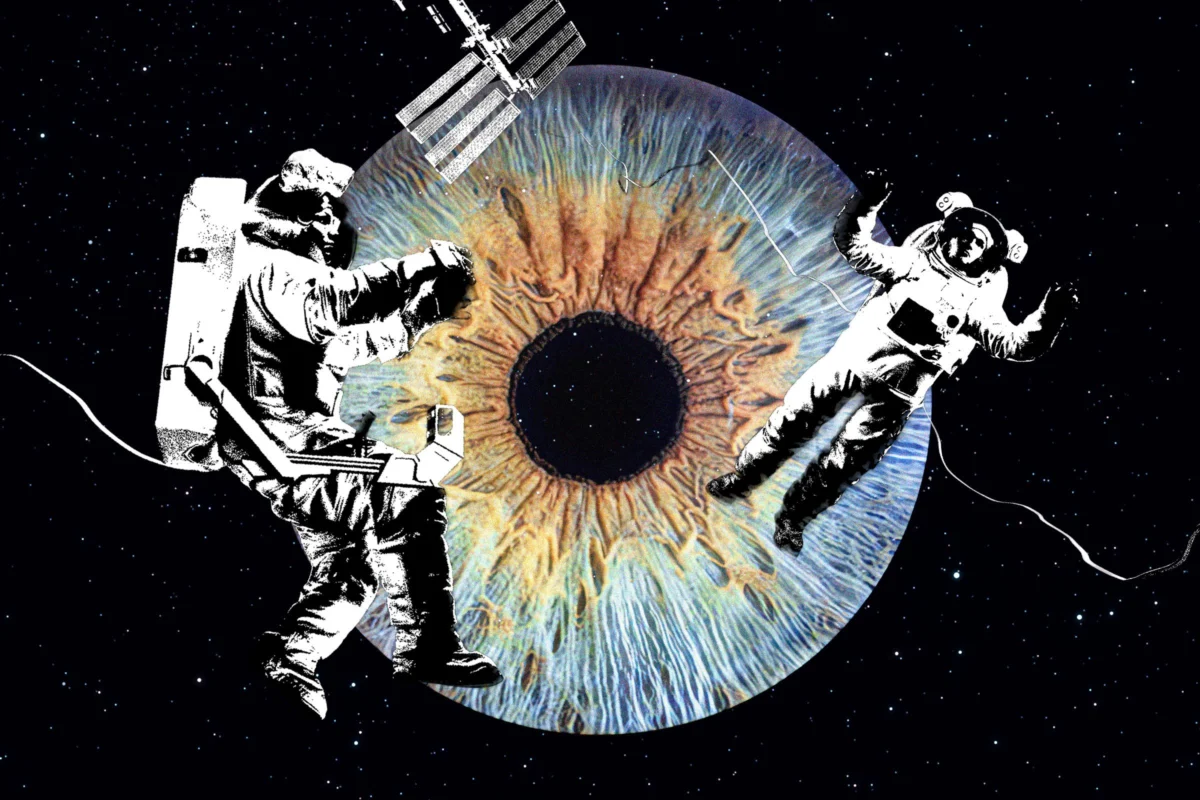
The European Space Agency has officially launched a strategic initiative to address one of the most persistent and debilitating hurdles of long-duration spaceflight: the progressive loss of eyesight experienced by astronauts. By commissioning Siloton, a pioneering British health-technology startup, the agency aims to deploy advanced quantum photonic technology to monitor and eventually mitigate Spaceflight-associated neuro-ocular syndrome. This condition, characterized by profound structural changes to the eye and brain, represents a significant operational risk as humanity prepares for the Artemis lunar missions and eventual crewed expeditions to Mars. The collaboration centers on the development of a diagnostic device that utilizes a photonic chip smaller than a coin, effectively shrinking the bulky, high-end optical equipment found in terrestrial ophthalmology clinics into a portable, space-ready format.
The Biological Toll of Microgravity: Understanding SANS
Spaceflight-associated neuro-ocular syndrome, commonly referred to as SANS, is a multifaceted medical condition that arises from prolonged exposure to microgravity. On Earth, gravity naturally pulls bodily fluids toward the lower extremities. In the weightless environment of the International Space Station (ISS) or deep-space transit vehicles, these fluids undergo a "cephalad shift," migrating toward the head. This redistribution causes a significant increase in intracranial pressure, which in turn exerts physical force on the posterior of the eye.
The clinical manifestations of SANS are severe and documented with increasing frequency. According to data from NASA, approximately 70 percent of astronauts serving on long-term missions exhibit symptoms of the syndrome. These include the flattening of the eyeball (globe flattening), swelling of the optic nerve (optic disc edema), and the development of choroidal folds—wrinkles in the vascular layer behind the retina. Perhaps the most famous case is that of NASA astronaut John Phillips. In 2005, Phillips arrived at the ISS with perfect 20/20 vision. After six months in orbit, his vision had deteriorated to 20/100, a level categorized as moderate visual impairment. While his eyesight partially recovered upon returning to Earth, the structural changes to his retinas remained permanent, highlighting the urgent need for real-time monitoring and intervention.
A Technological Leap: From Bulky Equipment to Photonic Chips
The current gold standard for diagnosing retinal conditions is Optical Coherence Tomography (OCT). In a traditional clinical setting, an OCT machine is a large, stationary piece of equipment that uses light waves to take cross-section pictures of the retina. This allows doctors to see each of the retina’s distinctive layers and measure their thickness. While a modified version of this technology currently exists on the ISS, it presents two major drawbacks for deep-space missions: size and complexity. The current space-bound OCT units are bulky and require a high degree of manual operation, often necessitating real-time, step-by-step guidance from medical experts on the ground.
Siloton, founded in 2020 by a team of physicists, has proposed a solution rooted in quantum technology and integrated photonics. By utilizing Photonic Integrated Circuits (PICs), Siloton has successfully condensed the complex optical pathways of an OCT scanner onto a single silicon-based chip. This "OCT-on-a-chip" technology allows for a device that is not only significantly smaller and lighter—critical factors in the mass-constrained environment of a spacecraft—but also more robust.

Euan Allen, cofounder and Chief Technology Officer at Siloton, noted that the requirements for space are remarkably similar to the requirements for decentralized healthcare on Earth. Siloton is simultaneously working with the United Kingdom’s National Health Service (NHS) to provide these chips for home-use devices, allowing patients with age-related macular degeneration or other retinal conditions to monitor their health without frequent hospital visits. The transition from a domestic setting to the vacuum of space involves adapting the technology to withstand radiation and the unique mechanical stresses of launch, but the core objective remains the same: high-fidelity imaging in a miniaturized, user-friendly package.
Chronology of Space Ocular Research and the Path to Artemis
The recognition of SANS as a primary risk factor for space exploration has evolved over several decades, mirroring the increasing duration of human missions.
- The Apollo Era (1960s-1970s): Short-duration missions meant that visual changes were rarely reported or were dismissed as temporary fatigue.
- The Shuttle and Early ISS Era (1990s-2005): As mission lengths extended to several months, anecdotal reports of "blurry vision" began to surface. The case of John Phillips in 2005 served as a watershed moment, forcing space agencies to formally categorize the condition as Visual Impairment and Intracranial Pressure (VIIP) syndrome, later renamed SANS.
- The 2010s Research Surge: NASA and the ESA began intensive monitoring of ocular health using ultrasound and modified OCT. Research on the ISS confirmed that the syndrome was not limited to a few individuals but was a systemic risk for the majority of the astronaut corps.
- 2020-Present: The shift toward the Artemis program, which aims to establish a sustainable human presence on the Moon, has accelerated the need for autonomous medical systems. In 2024, the ESA’s partnership with Siloton represents the latest phase in this timeline: moving from observation to high-frequency, autonomous diagnostic capability.
Technical Challenges and Engineering Constraints
Integrating a quantum photonic device into a spacecraft involves more than just miniaturization. Engineers face several idiosyncratic hurdles that do not exist in terrestrial clinics. One of the most significant concerns is power and safety. Standard lithium-ion batteries are often viewed with caution in pressurized space environments due to the risk of thermal runaway and fire. Consequently, Siloton’s device must be designed to interface with the spacecraft’s central power systems or utilize specialized, space-hardened energy storage.
Furthermore, the lack of gravity complicates the physical act of an eye exam. In a standard optometrist’s office, a patient rests their chin on a stable platform to keep their head still. In microgravity, the patient and the device would both be floating. Designers must develop a "binocular-style" interface that the astronaut can hold against their face, potentially using foot restraints or tethers to maintain a stable position during the scan.
The issue of communication latency is perhaps the most pressing driver for Siloton’s automated technology. For missions to the Moon, the delay in communication is only a few seconds, but for a Mars mission, the delay can reach up to 20 minutes each way. This makes the current model of "ground-guided" medical exams impossible. Siloton’s device is being designed to automate the alignment and scanning process, allowing the astronaut to perform a medical-grade retinal scan independently, with the data being processed locally or sent back to Earth asynchronously.
Strategic Responses and Global Implications
The initiative has garnered significant support from government bodies and space agencies. Rebecca Evernden, Director of the UK Space Agency, emphasized that SANS is a "serious health risk" that must be solved before long-distance travel becomes routine. The agency views the development of this technology as a dual-use victory: it secures the health of astronauts while simultaneously advancing the UK’s position in the global quantum technology market.

From a strategic perspective, the ESA’s investment in Siloton reflects a broader trend toward "sovereign capability" in space medicine. As international competition for lunar resources intensifies, the ability to keep a crew healthy and operational without constant reliance on ground-based support becomes a critical advantage.
Analysis: The Future of Remote Diagnostics and Earth-Bound Benefits
The implications of the Siloton-ESA partnership extend far beyond the confines of a spacecraft. The "bleeding through" of space technology into terrestrial medicine—a phenomenon often seen with NASA-led innovations like CMOS sensors or water purification systems—is a core part of Siloton’s business model.
For the NHS and other global healthcare providers, the successful deployment of a photonic-chip-based OCT scanner could revolutionize the treatment of retinal diseases. Currently, patients with conditions like wet age-related macular degeneration require regular, expensive injections to prevent blindness. Monitoring the effectiveness of these treatments requires frequent trips to specialized clinics. A low-cost, portable version of the Siloton device could allow these patients to monitor their condition from home, alerting their doctors only when an intervention is necessary. This would reduce the burden on healthcare infrastructure and improve patient outcomes through more frequent data collection.
In the context of space exploration, the ability to detect SANS in its earliest, sub-clinical stages—before an astronaut even notices a change in their vision—could allow for preventative measures. These might include the use of lower-body negative pressure (LBNP) suits to manually draw fluids back down to the legs or pharmacological interventions to reduce intracranial pressure.
As the Artemis program moves closer to its goal of landing the first woman and the next man on the Moon, the focus on "human factors" has never been higher. The European Space Agency’s move to miniaturize the "gold standard" of eye care is a testament to the fact that while the rockets provide the means to reach the stars, it is the mastery of human biology and quantum engineering that will allow us to stay there. The tiny photonic chip, no larger than a coin, may well be the key to ensuring that the explorers of tomorrow can see the worlds they are working so hard to reach.
