

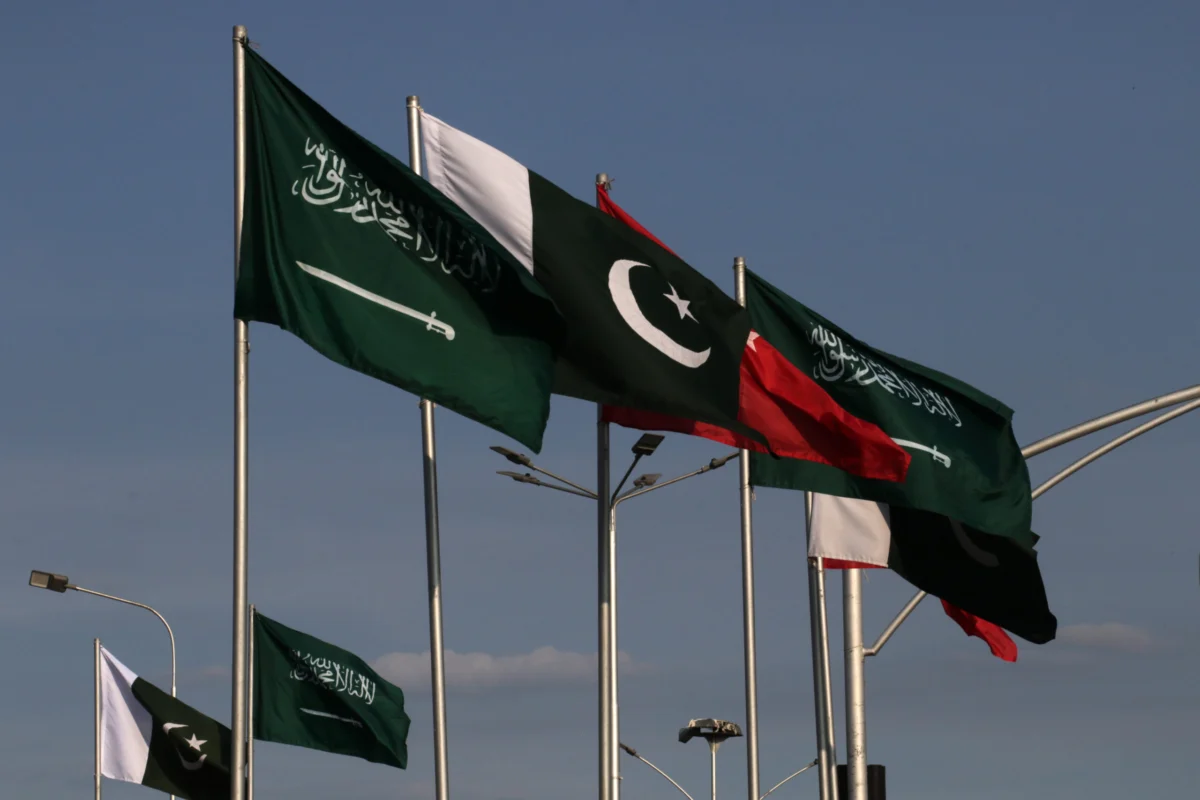
Ankara has signaled a transformative shift in the geopolitical landscape of the Middle East and South Asia, with Turkish Foreign Minister Hakan Fidan announcing a strategic ambition to expand the recently established Mecca Joint Deterrence Agreement. Citing the vision of President Recep Tayyip Erdogan, Fidan articulated a desire to move beyond the current trilateral framework involving Turkiye, Saudi Arabia, and Pakistan, suggesting that the alliance should eventually encompass a broader "umbrella" of regional nations to ensure collective security. The announcement follows the formal signing of the pact on Friday, an event that analysts believe marks the beginning of a significant departure from traditional Western-led security arrangements in the region.
The Mecca Joint Deterrence Agreement, signed amid a backdrop of heightening regional turmoil, establishes a mutual defense framework that draws comparisons to NATO’s Article 5. Under this provision, an attack on any one of the signatory states would be considered an attack on all. While the specific operational details and the exact threshold for military intervention remain to be finalized through high-level consultations, the pact represents the most formal defense integration between Ankara, Riyadh, and Islamabad to date. Speaking to the state-run Anadolu news agency, Fidan emphasized that the alliance is not intended as a threat to any non-member state—specifically mentioning Iran—provided that the sovereignty and security of the member nations are respected.
A Chronology of Strategic Convergence
The roots of the Mecca Joint Deterrence Agreement can be traced back to a series of bilateral and trilateral defense initiatives that have accelerated over the past three years. In 2023, Saudi Arabia and Pakistan reached a foundational defense cooperation agreement that focused on joint training, counter-terrorism, and intelligence sharing. This bilateral tie was further strengthened by Turkiye’s growing defense industry, which has seen Ankara become a major supplier of unmanned aerial vehicles (UAVs) and naval hardware to both Islamabad and Riyadh.
The formation of the "R4" consultative group—comprising Turkiye, Saudi Arabia, Pakistan, and Egypt—served as the diplomatic precursor to the current pact. Throughout 2024 and early 2025, these four nations increased the frequency of their high-level ministerial meetings, focusing on maritime security in the Red Sea and the stabilization of North Africa. The formalization of the Mecca pact on August 7, 2026, is viewed as the culmination of these efforts, transitioning from a consultative platform to a binding security architecture.
The timeline of the pact’s development is as follows:
- August 2023: Saudi Arabia and Pakistan sign a preliminary defense cooperation framework.
- April 2024: The R4 group holds its first major summit in Cairo to discuss regional security threats.
- September 2025: Regional tensions escalate following military strikes in the Gulf, prompting calls for an independent security bloc.
- August 7, 2026: Turkiye, Saudi Arabia, and Pakistan officially sign the Mecca Joint Deterrence Agreement.
- August 8, 2026: Foreign Minister Hakan Fidan announces the intent to expand the pact to include Egypt and other regional actors.
The Egyptian Question: A Natural Partner with Complex Obligations
The most immediate candidate for expansion is Egypt. Foreign Minister Fidan explicitly described Cairo as a "natural partner," stating that he expects Egypt to formally join the alliance once certain "technical issues" are resolved. The relationship between Ankara and Cairo has undergone a dramatic rapprochement since 2021, moving past a decade of diplomatic freezing following the 2013 change of government in Egypt. Recent years have seen the two nations synchronize their policies on the Libyan conflict and energy exploration in the Eastern Mediterranean.
However, Egypt’s path to full membership in a mutual defense pact is fraught with legal and diplomatic complexities. As a Major Non-NATO Ally of the United States and a recipient of significant American military aid, Cairo must navigate the potential conflict between the Mecca pact and its existing security commitments to Washington. Furthermore, the 1979 Peace Treaty with Israel imposes specific constraints on Egypt’s military movements and alliances.
Karim Elgendy, an associate fellow at Chatham House, noted that while Cairo shares the security concerns of the trilateral group, it remains wary of being drawn into "someone else’s war." The Egyptian leadership is likely to seek specific language in the pact that preserves its strategic autonomy and ensures that the agreement cannot be interpreted as a commitment against regional neighbors with whom it maintains delicate peace treaties. For Egypt, the "technical issues" mentioned by Fidan likely involve the precise legal definitions of "aggression" and "deterrence" to avoid unintended escalations.
Expanding the Umbrella: The Gulf and Beyond
Beyond Egypt, the vision for an expanded alliance extends to the Gulf Cooperation Council (GCC). High-ranking officials, including former Qatari Prime Minister Sheikh Hamad bin Jassim Al Thani, have publicly encouraged GCC members to join the initiative. Qatar and Kuwait are identified as the most likely next entrants. Both nations have maintained strong ties with Turkiye—with Qatar hosting a Turkish military base—and have sought to balance their security needs amidst the ongoing tensions between the United States, Israel, and Iran.
The strategic rationale for Qatar and Kuwait to seek "extra insurance" under the Mecca umbrella has been bolstered by recent events, including the September 2025 strike on Doha. Such incidents have highlighted the perceived gaps in traditional Western security guarantees, leading these states to look toward a localized, multilateral framework that combines Turkiye’s military-industrial capabilities with Saudi Arabia’s financial influence and Pakistan’s significant standing military force.
Other potential candidates mentioned by regional analysts include Azerbaijan, which shares a "One Nation, Two States" philosophy with Turkiye and has close ties with Pakistan. Jordan and Syria have also been floated as potential members in a long-term scenario where the pact matures into a broader Middle Eastern security organization. However, the inclusion of such diverse actors would require a highly flexible framework to manage the varying threat perceptions and geopolitical alignments of each state.
Supporting Data and Defense Capabilities
The strength of the Mecca Joint Deterrence Agreement lies in the complementary nature of its founding members’ military and economic assets.
- Turkiye: Brings a robust and rapidly expanding defense industry. Turkish exports of the Bayraktar TB2 and Akinci drones have changed the dynamics of modern warfare. Ankara’s role as a NATO member also provides a bridge between Western standards and regional autonomy.
- Saudi Arabia: Provides immense financial resources and is currently one of the world’s largest spenders on defense. Under Vision 2030, Riyadh is seeking to localize 50% of its military spending, a goal that aligns perfectly with Turkiye’s desire to export defense technology.
- Pakistan: Offers a battle-hardened military with extensive experience in counter-insurgency and mountain warfare. As a nuclear-armed state, Pakistan’s inclusion provides a level of strategic deterrence that is unique among regional alliances.
According to data from the Stockholm International Peace Research Institute (SIPRI), the combined defense budgets of Turkiye, Saudi Arabia, and Pakistan exceed $100 billion annually. If Egypt were to join, the alliance would represent the largest concentration of military manpower and hardware outside of the traditional Great Powers, potentially rivaling the operational capacity of several European NATO coalitions combined.
Implications for Regional and Global Security
The expansion of the Mecca pact carries profound implications for the global security architecture. For decades, the Middle East has relied on a hub-and-spoke model of security, with the United States acting as the central hub for various bilateral alliances. The Mecca Joint Deterrence Agreement suggests a move toward a "multipolar" regional order where local powers take primary responsibility for their own security.
From a diplomatic perspective, the pact’s insistence that it is "not aimed at Iran" is a calculated move to prevent the formation of a counter-bloc. By framing the alliance as a "deterrence" mechanism rather than an offensive coalition, the signatories hope to stabilize regional flashpoints without triggering a direct arms race with Tehran. However, the success of this approach depends on how the alliance handles the "NATO-like" mutual defense clause in practice.
The reaction from Western capitals has been one of cautious observation. While Turkiye remains a vital member of NATO, its leadership in a separate, potentially competing defense bloc raises questions about the future of the North Atlantic alliance’s influence in the Global South. Analysts suggest that Washington may view the pact as a double-edged sword: on one hand, it encourages regional states to take more responsibility for stability; on the other, it reduces the leverage the United States holds over its traditional allies.
Future Outlook and Structural Challenges
As the allies move forward with consultations to define the "degree, form, and format" of mutual support, several challenges remain. The most significant hurdle is the alignment of interests. While the current members share a common goal of regional stability, their individual priorities—ranging from Turkiye’s concerns in the Mediterranean to Pakistan’s focus on South Asian security and Saudi Arabia’s focus on the Gulf—could lead to friction if the pact is called into action.
Furthermore, the "Mecca Joint Deterrence Agreement" must prove that it can function as a cohesive unit. This will require standardized communication protocols, joint military exercises, and perhaps eventually, a unified command structure. The transition from a political agreement to an operational military alliance is a process that typically takes years, if not decades.
Despite these challenges, the momentum behind the expansion of the pact is undeniable. As Foreign Minister Hakan Fidan noted, the vision is to create a "growing umbrella" that adapts to the evolving threats of the 21st century. Whether this alliance becomes a permanent fixture of the international order or remains a flexible "coalition of the willing" will depend on the ability of its leaders to navigate the complex web of regional rivalries and global power shifts. For now, the Mecca pact stands as a bold assertion of regional agency, signaling that the future of Middle Eastern security may no longer be written in distant capitals, but in the halls of Ankara, Riyadh, and Islamabad.
