

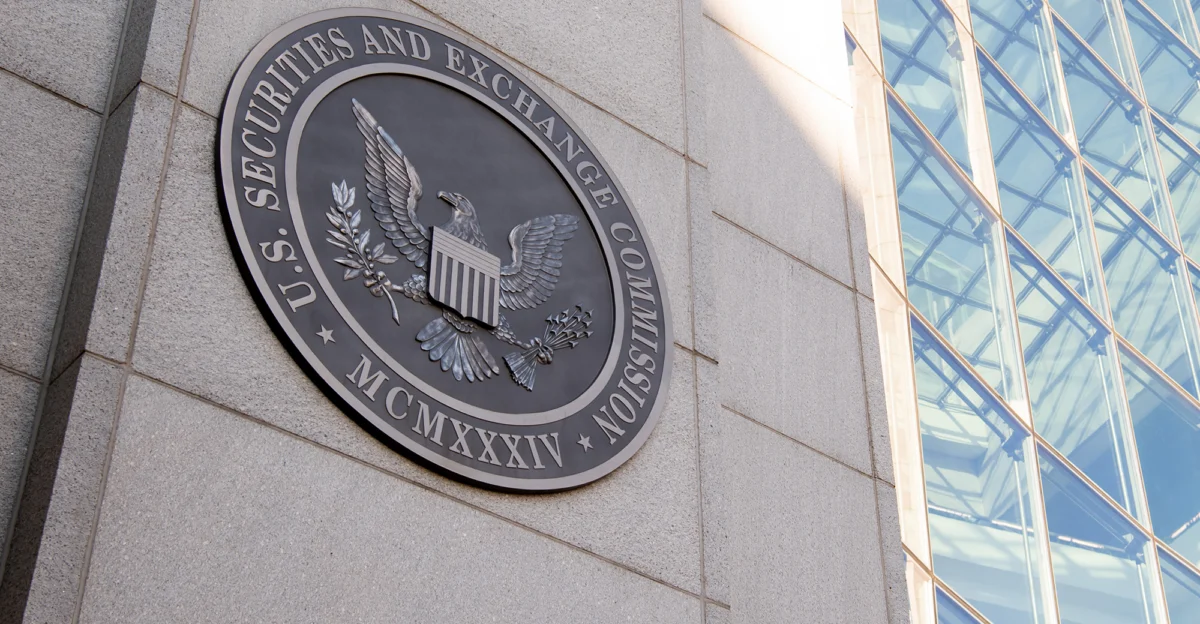
When the Supreme Court delivered a narrow ruling on June 28th, affirming the independence of the Federal Reserve, many in the financial world felt a sense of relief. However, this reprieve may have been short-lived. On the very same day, in a separate and less-publicized decision, the Court effectively dismantled the independence of every federal agency, including the Securities and Exchange Commission (SEC). While the immediate impact on capital markets might not be as palpable as a sudden market crash, the long-term consequences are equally profound and have, thus far, been significantly overlooked. The implications of this ruling fundamentally alter the landscape of financial regulation, potentially ushering in an era of increased corporate malfeasance and diminished investor confidence.
The Constitutional Shift: From Independent Agencies to Presidential Control
The cornerstone of the Supreme Court’s recent decision, the details of which are still being analyzed by legal scholars, hinges on a reinterpretation of executive power. By limiting the ability of Congress to insulate agency leaders from presidential removal, the Court has, in essence, placed every federal agency, from the Environmental Protection Agency to the Food and Drug Administration, under direct presidential authority. For the SEC, this means that the President of the United States now possesses the unfettered power to remove any SEC commissioner at any time, for any reason, or for no reason at all. Furthermore, the President could theoretically reduce the commission to a single member, the chair, thereby consolidating all decision-making power. This direct presidential control over the SEC’s traditionally independent enforcement mechanisms poses a significant threat to the integrity of U.S. capital markets.
The SEC’s Mandate: Guardian of Investor Trust
The fundamental purpose of the Securities and Exchange Commission is to ensure that market participants can be trusted. Investors rely on the honesty and accuracy of financial disclosures made by corporations and their executives. This trust is underpinned by the knowledge that individuals who engage in material misstatements or fraudulent activities can face severe criminal and civil penalties. In simpler terms, the SEC acts as the enforcer of accountability, ensuring that deception in the financial realm carries significant consequences. This bedrock principle allows for the smooth functioning of markets, facilitating investment and economic growth. The public fascination with cases like that of Elizabeth Holmes, who was convicted of fraud for making false claims about her company’s technology, highlights the public’s deep-seated desire for accountability and the belief that those who deceive investors will ultimately be brought to justice. The narratives surrounding such cases, often amplified through books, podcasts, and films, underscore the importance of the SEC’s role in upholding these standards.
The Erosion of Trust: A Slippery Slope for Markets
The potential consequences of diminished SEC independence are far-reaching. If corporate actors perceive that investigations can be dismissed or influenced by presidential intervention, the calculus of risk-taking will inevitably change. Instead of asking, "Will I get caught?", the question may morph into, "If I get caught, can I leverage presidential influence to escape consequences?" This shift could incentivize corporate lying, as well-favored individuals and companies might feel emboldened to take greater risks with the accuracy of their financial disclosures.
The impact of such a scenario would be a gradual but significant decline in investor confidence. As trust erodes, the perceived value of all equities and bonds could diminish. No private entity possesses the statutory authority, resources, or investigative and judicial power of the SEC. Therefore, the loss of its independent enforcement capacity cannot be replicated by any private sector alternative. This erosion of confidence could have a chilling effect on investment, hindering capital formation and potentially leading to a less dynamic and less prosperous economy.
Emerging Concerns and Precedents
While the Supreme Court’s ruling is recent, there are already concerning indications that the SEC’s independence may have been compromised even before this landmark decision. In March of the current year, Margaret Ryan, the head of enforcement at the SEC, resigned after a relatively short tenure of six months. Reports from Reuters suggested that her departure stemmed from disagreements with the commission’s leadership regarding investigations into individuals closely associated with the previous administration, including cryptocurrency entrepreneur Justin Sun. This situation, even if occurring under the guise of an independent agency, suggests that political considerations may have already begun to influence the SEC’s enforcement priorities.
Further evidence of a trend toward reduced agency independence can be observed at the Commodity Futures Trading Commission (CFTC). Under the leadership of its current chair, who is also the sole commissioner following the failure to fill other vacant seats, crypto firms have reportedly received exceptionally favorable treatment. This suggests a pattern where executive influence, whether direct or indirect, can shape regulatory outcomes, potentially to the detriment of robust oversight.
The Unforeseen Market Reaction and Long-Term Ramifications
The absence of an immediate, dramatic market reaction to the Supreme Court’s decision is understandable. Capital markets often struggle to price in gradual, structural changes, particularly those related to the quality of regulation and the rule of law. The current SEC Chair, Paul Atkins, a seasoned insider with prior experience as a staffer and commissioner, may be perceived by some as a stabilizing force, potentially mitigating immediate concerns. Additionally, there will undoubtedly be arguments that any presidential administration has a vested interest in maintaining a reasonably effective SEC to prevent systemic market instability.
However, the lack of an immediate shock does not negate the potential for significant long-term consequences. The fundamental transformation in how the federal government operates, driven by the Supreme Court’s ruling, cannot leave an institution as critical as the SEC unaffected. Unlike statutory changes that can be reversed by Congress or a future president, this constitutional ruling can only be overturned by the Supreme Court itself. This creates a long-term challenge for restoring agency independence.
A Temptation for Intervention and the Peril of Politicization
It is a widely acknowledged reality that any presidential administration, regardless of its political affiliation, will be tempted to intervene in SEC enforcement matters. The danger is not solely the potential for under-enforcement for those with political connections. There is also a credible risk that the commission could be used to target disfavored individuals or industries, weaponizing regulatory power for political ends. The very essence of agency independence was to insulate critical governmental functions from partisan politics, ensuring that decisions were based on expertise and experience rather than political expediency. For decades, the SEC has served as a prime example of how such independence can foster well-functioning markets. Its future, however, now risks becoming a cautionary tale of what happens when that independence is systematically eroded.
Navigating the Uncertain Future of Financial Regulation
The precise trajectory of the SEC’s future remains uncertain. It is true that some avenues for White House influence, such as direct communication and advocacy, were available even when the commission was formally independent. However, the Supreme Court’s decision has fundamentally altered the legal framework, removing the structural safeguards that once protected the agency from direct presidential control.
What is certain is that the time has come for heightened scrutiny of the SEC’s operations. Investors, market participants, and the public must begin to ask critical questions about the long-term costs associated with a world where the reliable, independent enforcement of securities laws can no longer be taken for granted. The stability and integrity of U.S. capital markets, and by extension, the broader economy, depend on the robustness of regulatory oversight. The Supreme Court’s recent decision has introduced a significant element of risk into this equation, and its full impact will likely unfold over years, if not decades. The journey from a bastion of independent regulation to a potentially politicized entity is a perilous one, with profound implications for financial fairness and economic prosperity. The global standing of U.S. financial markets, long admired for their transparency and reliability, now faces an unprecedented challenge, demanding vigilance and a renewed commitment to the principles of independent oversight.
