

Maintaining the interior of a vehicle has evolved from a labor-intensive chore involving cumbersome shop vacuums and extension cords into a streamlined process facilitated by significant advancements in lithium-ion battery technology and motor efficiency. For the modern driver, a vehicle is often an extension of the home, serving as a mobile office, a dining area for children, and a transport for pets. Consequently, the demand for specialized car vacuums has surged, driven by the need to reach the intricate crevices between seats, the deep recesses of floor mats, and the delicate surfaces of digital dashboards. Selecting the appropriate tool requires an understanding of the trade-offs between portability, suction power, and battery longevity.
The Evolution of the Portable Cleaning Market
The history of vehicle cleaning has transitioned through several distinct phases. In the mid-20th century, car owners were largely dependent on high-powered, stationary industrial vacuums found at service stations. These machines offered immense suction but lacked the precision required for modern vehicle interiors. The 1970s and 80s saw the rise of corded handheld units that plugged into 12V cigarette lighter sockets. While convenient, these early models were often criticized for weak suction and the tendency to drain vehicle batteries.
The current era is defined by the cordless revolution. The integration of high-density lithium-ion batteries and brushless DC motors has allowed manufacturers to produce handheld devices that rival the performance of full-sized upright vacuums. According to market analysis, the global car vacuum cleaner market is projected to see a compound annual growth rate (CAGR) of approximately 5% through 2030, fueled by the increasing popularity of ride-sharing services and a growing consumer preference for DIY automotive detailing.
Comparative Analysis: Handheld vs. Cordless Stick Vacuums
When navigating the market, consumers generally choose between two primary architectures: the dedicated handheld vacuum and the convertible cordless stick vacuum.
Dedicated handheld vacuums are engineered specifically for mobility. They are typically lightweight, ranging from 1.5 to 4 pounds, making them ideal for navigating the tight confines of a subcompact car or a crowded SUV. The primary advantages include lower cost and ease of storage. However, they are often limited by smaller dustbins and battery lives that typically span 10 to 20 minutes—sufficient for a "spot clean" but potentially inadequate for a deep detail of a three-row vehicle.
.jpg)
Conversely, cordless stick vacuums offer a versatile "two-in-one" solution. By removing the extension wand, these units transform into high-powered handhelds. While they represent a higher financial investment, they provide significantly more suction (measured in Air Watts) and extended runtimes, often exceeding 40 minutes. For households that require a primary vacuum for the home, the stick vacuum offers the best value-per-use, despite being heavier and more difficult to maneuver in extremely tight footwells.
Leading Performers in the Handheld Category
The current market features several standout models that have been vetted for their specific strengths in automotive applications.
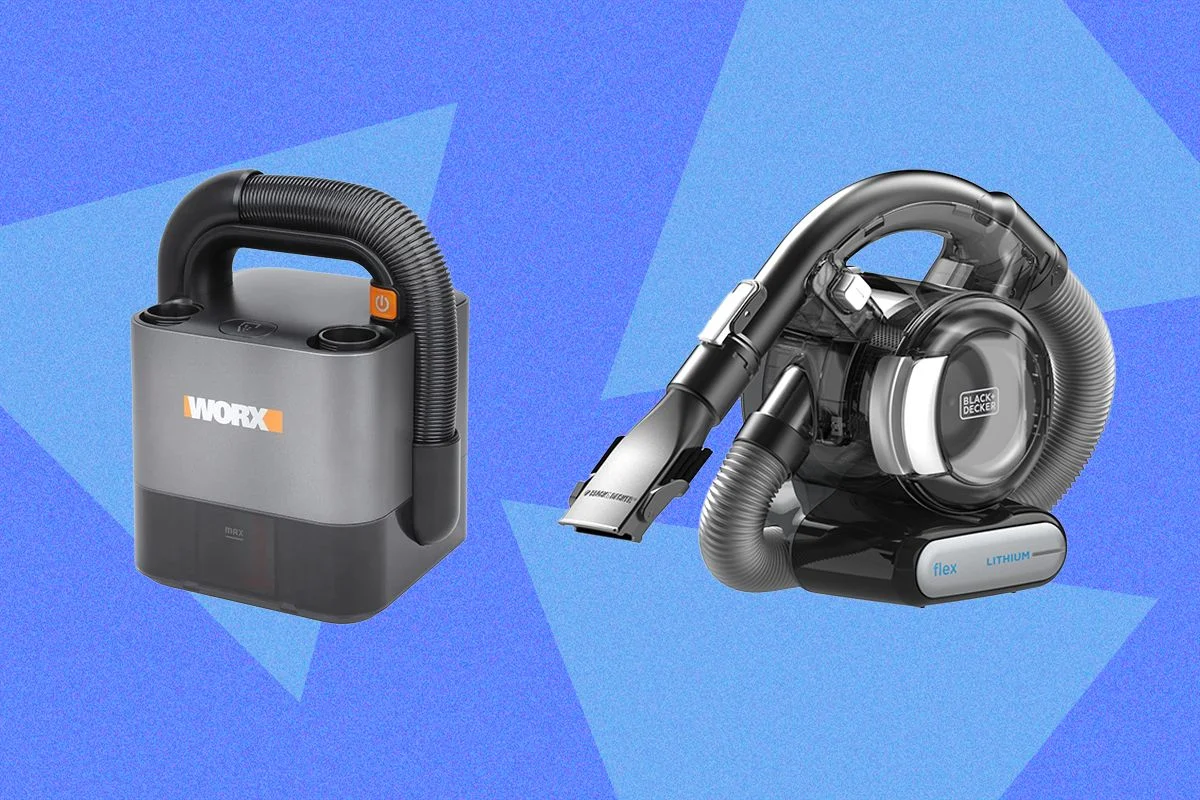
Best Overall: Worx 20V Cordless Cube Vac
The Worx 20V Cordless Cube Vac has emerged as a favorite among automotive enthusiasts due to its unique "cube" form factor. Unlike traditional "Dustbuster" styles, the Cube Vac features a balanced, square base and an integrated three-foot flexible hose. This design allows the user to set the unit on the car floor or seat while using the hose to reach deep under the pedals or between the console and the seats.
Technical specifications include a HEPA filter, which is essential for capturing fine allergens and dust that can circulate in a vehicle’s HVAC system. The unit operates on a 20V battery platform, which is interchangeable with other Worx power tools—a significant logistical advantage for DIYers already invested in the ecosystem.
Best for Easy Charging: Black & Decker Dustbuster Flex
For users who prioritize readiness, the Black & Decker Dustbuster Flex offers a specialized charging base that simplifies the storage-to-use pipeline. Its four-foot hose provides the longest reach in the handheld category, though this is offset by a shorter battery life of approximately 15 minutes. Its strength lies in its larger dust canister, which reduces the frequency of trips to the trash bin during a heavy cleaning session.
Best for Pet Owners: Bissell Pet Hair Eraser
Pet hair presents a unique challenge due to its ability to weave into the fabric of car carpets and upholstery. The Bissell Pet Hair Eraser addresses this through a motorized brush tool. Unlike static brushes, the motorized head uses mechanical agitation to lift embedded fur. This model is frequently cited by professional detailers as the benchmark for pet-centric cleaning, despite a slightly more difficult attachment-swapping mechanism.
.jpg)
Best for Detail Work: Scosche Scovac 4-in-1
The Scosche Scovac represents the "multitool" of the vacuum world. Beyond its vacuuming capabilities, it functions as an air duster and an inflator/deflator. For drivers who frequent the beach or go camping, the ability to blow sand out of door jambs or inflate an air mattress using the same battery-operated device adds significant utility. Its "Turbo" mode provides high-velocity suction for stubborn debris, while the "Eco" mode extends battery life to nearly 30 minutes.
Technical Standards: Suction Power and Filtration
When evaluating a vacuum’s performance, consumers should look beyond marketing jargon and focus on two key metrics: Air Watts and filtration efficiency.
Suction is often marketed in Volts (V), which refers to the battery’s potential, but Air Watts (AW) is the more accurate measure of the unit’s ability to move air and debris. A standard handheld typically offers 15–30 AW, whereas premium models like the Dyson Car+Boat can reach upwards of 100 AW. Higher Air Watts are particularly necessary for vehicles with high-pile floor mats, where dirt becomes deeply embedded.
Filtration is equally critical. Vehicles are enclosed spaces where dust and allergens can easily become trapped. Vacuums equipped with HEPA (High-Efficiency Particulate Air) filters are capable of trapping 99.97% of particles as small as 0.3 microns. This is a vital feature for drivers with respiratory sensitivities or those who frequently transport pets.
Chronology of a Cleaning Session: Best Practices
To maximize the efficiency of a car vacuum, professional detailers suggest a specific chronological approach:
- Preparation (Minutes 0-5): Remove all large debris, floor mats, and personal items. Shake out the mats outside the vehicle.
- Top-Down Dusting (Minutes 5-10): Use a brush attachment or an air duster (like the Scosche Scovac) to push dust from the dashboard, vents, and rear deck onto the floor.
- Crevice Cleaning (Minutes 10-15): Utilize the crevice tool to clean the "no-man’s-land" between the seats and the center console.
- Upholstery and Carpeting (Minutes 15-25): Switch to a motorized head or wide upholstery tool. Use overlapping strokes to ensure all embedded dirt is lifted.
- Final Pass (Minutes 25-30): Vacuum the floor mats before reinstalling them.
Safety and Maintenance Protocols
The longevity of a car vacuum is heavily dependent on battery care and storage environment. Most modern car vacuums utilize lithium-ion (Li-ion) batteries, which are sensitive to temperature extremes.

Industry experts strongly advise against storing vacuums inside a vehicle for extended periods. In the summer, interior car temperatures can exceed 140°F (60°C), which can lead to thermal degradation of the battery cells, significantly reducing their capacity and, in rare cases, posing a fire risk. Conversely, extreme cold can temporarily reduce power output. The recommended storage protocol is a climate-controlled environment, such as an insulated garage or a utility closet inside the home.
Maintenance should include regular filter cleanings. Most car vacuums use washable filters; however, they must be completely dry before reinsertion to prevent motor damage or the growth of mold.
Broader Implications and Future Outlook
The shift toward high-performance portable vacuums reflects a broader trend in "prosumer" car care. As vehicle prices continue to rise—with the average new car price in the United States hovering around $48,000—consumers are increasingly motivated to protect their investment. Regular interior maintenance not only improves the driving experience but also preserves resale value.
Looking forward, the industry is likely to see further integration with smart home ecosystems. We may soon see vacuums with sensors that can identify the type of debris (e.g., sand vs. pet hair) and adjust suction power automatically to conserve battery. Additionally, as the automotive industry shifts toward electric vehicles (EVs), some manufacturers are exploring built-in vacuum systems that draw power directly from the vehicle’s massive traction battery, potentially eliminating the need for standalone units for some luxury owners.
In the interim, the current generation of cordless handhelds and stick vacuums provides a level of power and convenience that was unimaginable a decade ago. By selecting a unit based on specific lifestyle needs—whether it be the pet-focused Bissell or the versatile Worx Cube—drivers can maintain a pristine environment with minimal effort.
