

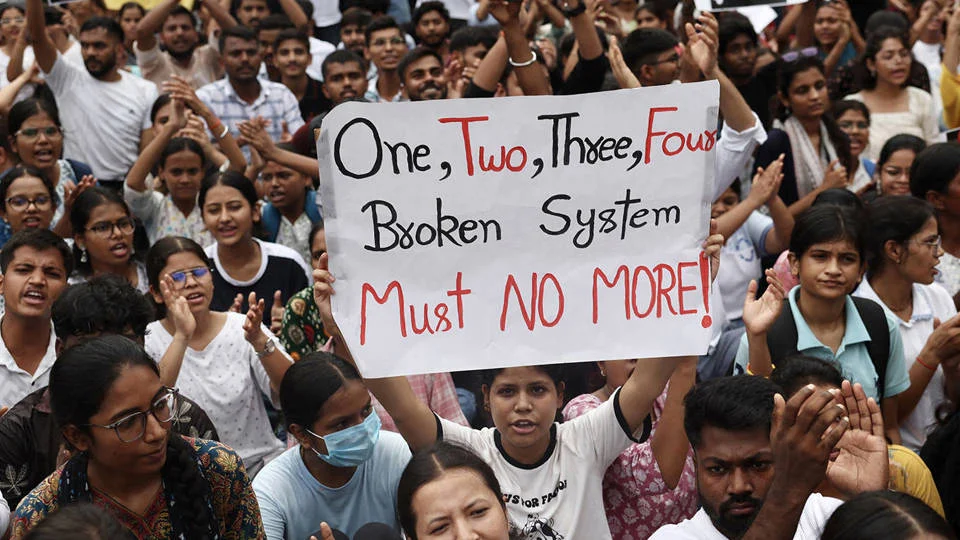
India’s education system, long criticized for its emphasis on rote learning and its function as a societal sorting mechanism, has been thrust into the national spotlight following widespread student protests that culminated in the resignation of Education Minister Dharmendra Pradhan. The demonstrations, which saw tens of thousands of young Indians take to the streets in New Delhi and other major cities, signal a profound breakdown in the socioeconomic contract between the nation’s youth and its political leadership. This upheaval is not merely a reaction to recent policy changes but a culmination of decades of systemic issues, including a rigid academic structure, insufficient job prospects, and growing disillusionment among a generation seeking meaningful engagement and future security.
The Spark of Discontent: A System Under Strain
The immediate catalyst for the recent wave of protests appears to be a series of perceived policy missteps and a general sense of academic stagnation. For generations, Indian students have navigated an educational landscape that often prioritizes memorization and adherence to prescribed curricula over critical thinking and creativity. This approach, while historically producing a large pool of technically skilled individuals, has increasingly been seen as inadequate in preparing graduates for the dynamic demands of the modern global economy.
The protests, which intensified over several weeks in July 2026, were characterized by a determined, yet largely peaceful, display of dissent. Students from diverse academic backgrounds, including those pursuing engineering, medicine, and humanities, united under a common banner of reform. Their grievances were multifaceted, encompassing issues such as the perceived irrelevance of standardized testing, the lack of vocational training integration, and the widening gap between educational outcomes and employment opportunities.
A Chronicle of Escalating Tensions
The unrest did not emerge overnight. It is the product of simmering discontent that has been building for years. While the specific triggers might have been recent policy announcements, the underlying structural flaws in India’s education system have been widely documented.
- Early 2020s: Reports from various think tanks and academic bodies highlight concerns about the employability of graduates, citing a mismatch between skills imparted in educational institutions and the requirements of the burgeoning Indian job market.
- Mid-2020s: Anecdotal evidence and surveys begin to show a rise in student dissatisfaction, with increasing numbers expressing a desire for more practical, skill-based education and greater transparency in assessment.
- Late 2025 – Early 2026: The Indian government initiates discussions around educational reforms, including proposals for a new national curriculum framework and changes to examination patterns. While some of these proposals are welcomed, others are met with skepticism, with critics arguing they do not address the fundamental issues of curriculum rigidity and job market integration.
- July 2026: A series of student-led demonstrations erupt across major Indian cities. Initially localized, these protests gain momentum through social media campaigns and student union mobilization, drawing national attention. The scale and intensity of the demonstrations become undeniable.
- Late July 2026: Following sustained pressure and escalating public discourse, Education Minister Dharmendra Pradhan tenders his resignation. This is widely interpreted as a significant concession by the government, acknowledging the gravity of the students’ concerns.
The Data Behind the Discontent: Statistics on Employability and Education
The concerns voiced by the protesting students are not without empirical backing. Various reports paint a stark picture of the challenges faced by Indian graduates.
According to a 2025 employability survey conducted by Aspiring Minds, only 40% of Indian engineering graduates were found to be employable in core engineering roles. This figure highlights a significant disconnect between the sheer volume of graduates produced annually and their preparedness for the workforce. The survey also pointed to deficiencies in critical thinking, problem-solving, and communication skills, areas often underdeveloped in a system focused on memorization.
Furthermore, the economic realities for many graduates are disheartening. While India has seen substantial economic growth, the creation of high-skill, well-paying jobs has not kept pace with the expanding graduate population. Data from the National Sample Survey Office (NSSO) has consistently indicated rising unemployment rates among educated youth, a trend that has fueled frustration and anxiety. For instance, NSSO data from 2024 indicated that the unemployment rate among individuals with a graduate degree or higher was approximately 7.8%, a figure that is concerning given the aspirational nature of higher education in India.
The disparity in rewards is also a significant factor. While a select few graduates from premier institutions secure lucrative positions, a vast majority face a highly competitive job market with limited opportunities, often forcing them to accept roles that do not align with their qualifications or aspirations. This creates a sense of being academically qualified but professionally sidelined, a core grievance of the protesting youth.
Official Responses and Broader Implications
The resignation of Minister Pradhan, while a symbolic victory for the students, represents a step rather than a resolution. The government has stated its commitment to addressing the concerns raised by the youth and has initiated consultations with education stakeholders. However, the path forward requires more than symbolic gestures; it demands fundamental structural reforms.
Potential Government Actions (Inferred):
- Establishment of a High-Level Task Force: It is plausible that the government will form a dedicated task force comprising educators, industry experts, and student representatives to conduct a comprehensive review of the education system.
- Curriculum Overhaul: Significant revisions to the national curriculum are likely to be considered, with a greater emphasis on critical thinking, creativity, digital literacy, and vocational skills.
- Assessment Reforms: The structure and methodology of examinations may be re-evaluated to move away from purely rote-based testing towards more holistic assessments that evaluate a wider range of competencies.
- Industry-Academia Collaboration: Increased efforts to foster stronger ties between educational institutions and the industry are expected, ensuring that curricula are aligned with market demands and that internship and apprenticeship opportunities are expanded.
- Investment in Teacher Training: Addressing the quality of instruction is paramount. Investments in professional development for teachers and faculty are likely to be prioritized.
The Socioeconomic Compact Under Scrutiny
The protests have underscored a critical disconnect between the aspirations of India’s youth and the opportunities provided by the existing system. For decades, the promise of education has been intrinsically linked to upward mobility and economic security. When this promise falters, the social contract begins to fray.
The youth of India, now more connected and informed than ever before, are no longer content with a system that merely sorts them into predetermined societal roles. They are demanding an education that empowers them, equips them with relevant skills, and offers genuine prospects for a fulfilling career. The breakdown of this socioeconomic compact has far-reaching implications, not only for the education sector but for India’s overall development and social stability. Addressing these deep-seated issues will require a sustained, collaborative effort that prioritizes the future of its young citizens. The recent events serve as a critical inflection point, demanding a serious and sustained commitment to educational reform that aligns with the aspirations of a rapidly evolving nation.
