

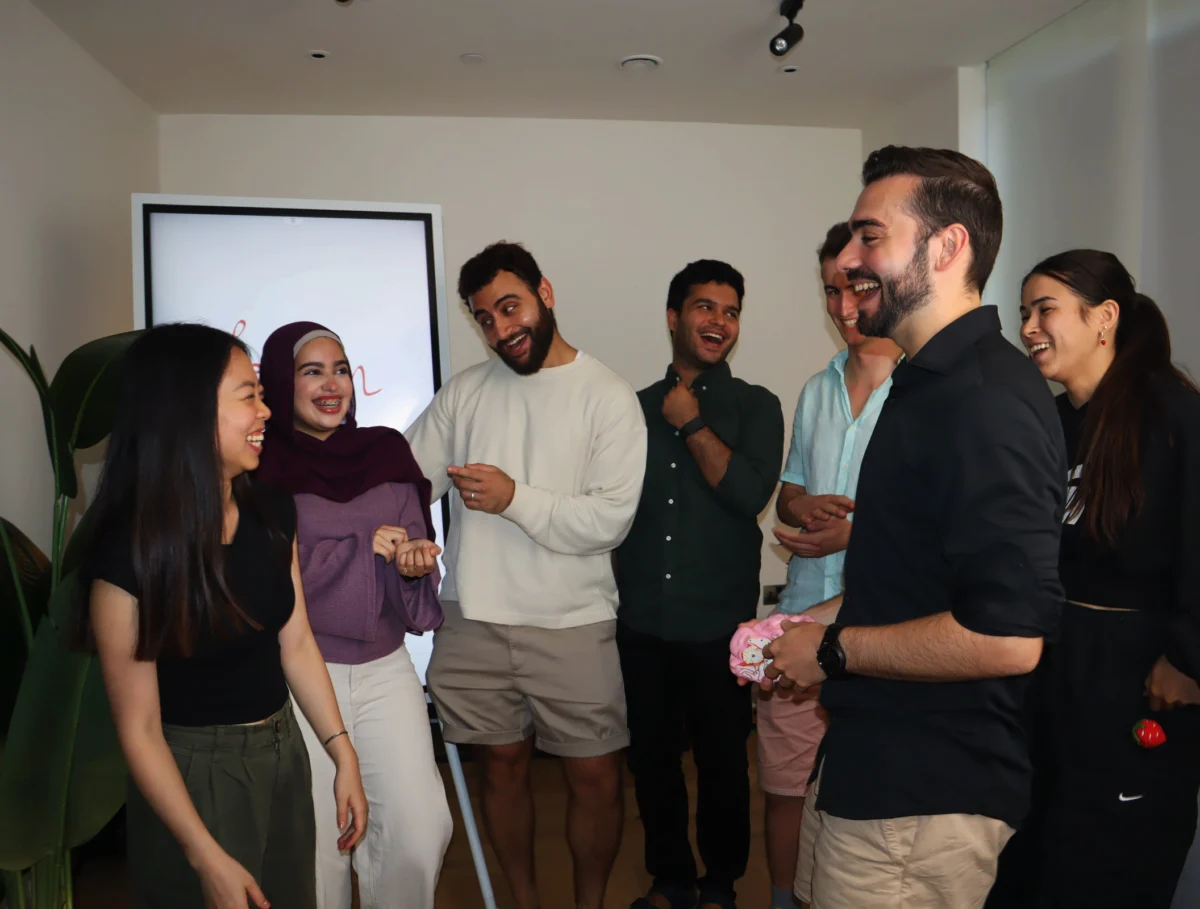
In the glass-fronted developments of East London, a group of six entrepreneurs is attempting to dismantle the traditional "hustle culture" associated with the global technology sector. Known as the London Island Founder House—or "Lift House"—this six-story residence facing the Thames serves as a direct rebuttal to the hyper-competitive, burnout-prone hacker houses of San Francisco. Founded on the principle of "holistic improvement" rather than the frantic sprint toward a "Demo Day," the initiative represents a growing movement among United Kingdom-based founders to prioritize mental well-being and sustainable growth over performative work habits.
Rowan Aldean, a 26-year-old entrepreneur who recently sold his previous venture for several million dollars, spearheads the community alongside his wife, Zahraa, an upcoming pharmaceutical research PhD candidate. Having previously lived in the high-pressure environments of Silicon Valley, Aldean’s vision for Lift House is rooted in a desire to decouple high-stakes innovation from the grueling "996" work culture—referring to the practice of working from 9:00 a.m. to 9:00 p.m., six days a week—that has become a hallmark of both the American and Chinese tech landscapes.
The Philosophy of Londonmaxxing
The emergence of Lift House coincides with a cultural trend known as "Londonmaxxing." This concept involves founders optimizing their lifestyle to leverage the specific advantages of the London ecosystem: a world-class talent pool, a more measured approach to public success, and a geographical position that bridges the gap between East and West. Unlike the "startup bro" culture often criticized in the Bay Area, Londonmaxxing emphasizes a blend of professional ambition and European quality of life.
The residents of Lift House argue that the San Francisco model, while successful in generating capital, often relies on "performative" events and unsustainable work cycles. They point to the success of London-based DeepMind, the artificial intelligence powerhouse that recently secured Nobel Prizes in Chemistry, as proof that "frontier innovation" can be achieved without the "song and dance" of Silicon Valley’s gala-heavy culture. For the residents of Lift House, the goal is to build companies that last, rather than those that simply burn bright and flame out.

A Chronology of the Lift House Initiative
The timeline of Lift House reflects the rapid maturation of the London AI scene:
- March 2026: Lift House officially launches in East London, positioning itself as one of the few dedicated co-living spaces for founders in the city.
- May 2026: Rowan and Zahraa Aldean move into the property, establishing the core community and setting the house rules centered on wellness and shared responsibility.
- June 2026: The house reaches its full capacity of six residents, including founders in AI marketing, brain coaching, and tech strategy.
- July 2026: The community establishes a formalized routine, including weekly "journaling Sundays" and participation in local volleyball leagues to ensure physical health remains a priority.
This structured approach to living is a departure from the "warehouse" style hacker houses of the past, which were often criticized for poor living conditions and lack of work-life boundaries.
The Residents and the Holistic Model
The house is currently home to a diverse group of specialists. David Amor, 28, runs a brain coaching and training company designed to help executives optimize cognitive performance through biological understanding. Amor has integrated his professional expertise into the household’s daily life, introducing a Sunday journaling practice. This ritual requires residents to track their time spent in nature, their nutritional intake, and their physical activity levels.
Other residents include Luke, 27, who operates an AI-driven marketing firm. Luke notes that the communal environment has forced a return to basic health habits, such as regular meal times and consistent sleep schedules—factors often neglected in solo founder environments. Presence Plumb, 25, a tech strategist, utilizes the house’s rooftop to host dinner parties that bring together investors, researchers, and operators. These gatherings are designed to be "authentic and balanced," avoiding the aggressive networking typical of Silicon Valley "mixer" events.
The daily schedules within the house remain rigorous but individualized. While Amor begins his day at 8:00 a.m. with a cold shower to stimulate dopamine production, Aldean rarely starts before 10:00 a.m., focusing his energy on high-leverage "angel calls" and strategic oversight. This flexibility is a core tenet of the house: the belief that peak productivity is not one-size-fits-all.

Economic Drivers: The $12 Billion AI Surge
The "Londonmaxxing" sentiment is backed by significant financial data. According to reports from Dealroom, London-based AI startups have raised approximately $12 billion in the first half of 2026 alone. This accounts for more than 80% of the total $14.7 billion raised by all London startups during this period.
Several "mega-rounds" have solidified London’s status as a global AI hub. Companies such as Wayve, Superintelligence, ElevenLabs, Recursive, Ineffable Intelligence, and Isomorphic Labs have each raised upwards of $500 million. Notably, several of these firms were founded by alumni of DeepMind, illustrating a "mafia" effect similar to that seen with PayPal in the early 2000s, where successful early employees spin off to create the next generation of industry leaders.
Furthermore, the UK government’s Seed Enterprise Investment Scheme (SEIS) and Enterprise Investment Scheme (EIS) play a crucial role in sustaining this ecosystem. These programs offer significant tax relief to investors, making early-stage capital more accessible for founders like Luke and his co-founder Varun. By utilizing these schemes, UK founders can often secure initial funding without the immediate need to seek venture capital from US-based firms, allowing them to maintain greater control over their company’s culture and trajectory.
Cultural Hurdles: The Tall Poppy Syndrome
Despite the economic optimism, UK founders face unique cultural challenges. Aldean and his peers frequently cite the "Tall Poppy Syndrome"—a social phenomenon where individuals who achieve notable success are resented or criticized. This cultural inclination toward humility can sometimes manifest as a fear of failure or a reluctance to "think big."
"In the US, failure is a badge of honor," one investor noted in a recent roundtable. "In the UK, it can still feel like a mark of shame." Lift House aims to provide a psychological safety net against this pressure, fostering an environment where founders can be ambitious without the fear of being "cut down" by social or media scrutiny.

The "Factory Line" to America
A persistent tension remains regarding the long-term location of UK startups. While London is praised for its talent from institutions like Oxford and Cambridge and its favorable time zone for global operations, the sheer scale of the US economy remains a powerful draw.
Many residents at Lift House admit to a "factory line" reality: startups often begin in London to take advantage of lower burn rates and high-quality engineering talent, but eventually feel the pull to relocate to the US for growth-stage capital. Luke and Varun, for instance, have already begun US expansion, driven by pressure from American investors who often mandate a move to hubs like San Francisco or Miami as a condition of funding.
"Everyone is bullish on the country until they get the opportunity to leave," Aldean remarked, highlighting the central dilemma of the European tech scene. The challenge for the UK government and local investors is to create a "growth-stage" environment that allows these "holistic" companies to scale without sacrificing the balanced lifestyle they have built.
Broader Implications and the Future of Co-living
The success of Lift House suggests a shift in the "hacker house" demographic. As the first generation of tech founders matures, the demand for high-quality, professionalized co-living spaces is increasing. This is no longer about living in a crowded warehouse to save on rent; it is a strategic choice to surround oneself with like-minded peers in a curated environment.
While previous iterations of London hacker houses, such as "The London Founder House," focused on a "no work-life balance" mantra and required residents to have raised at least $500,000, Lift House prioritizes character and external interests. Prospective residents are vetted based on their hobbies and commitment to fitness, ensuring the "anti-San Francisco" vibe is maintained.

As the lease on the East London property enters its final year, the residents are considering the long-term viability of the model. With the expansion of global co-living networks like The Residency and BaseJump into London, the "Lift House" experiment may serve as a blueprint for a new era of British entrepreneurship—one that seeks to dominate global markets while ensuring its leaders remain healthy enough to enjoy the fruits of their labor.
In conclusion, Lift House represents more than just a shared living space; it is a laboratory for a new philosophy of work. By rejecting the performative exhaustion of Silicon Valley and embracing the "Londonmaxxing" ideal, these six founders are betting that the next billion-dollar companies will be built not in a state of burnout, but in a state of balance.
