

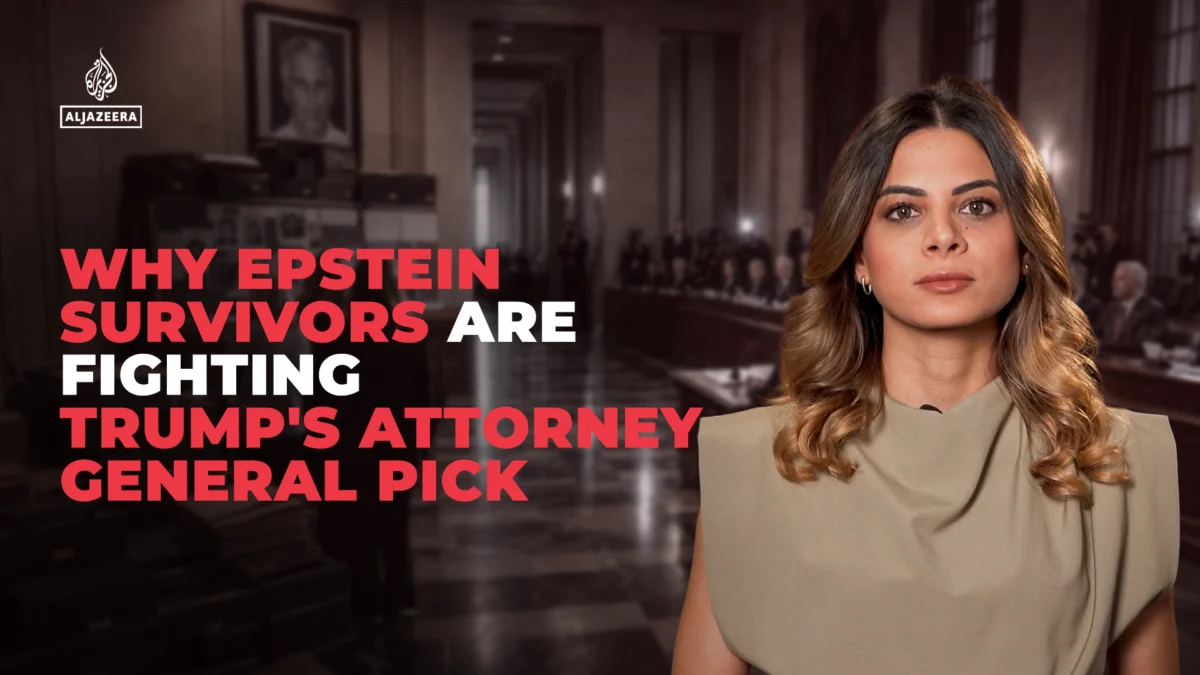
The Jeffrey Epstein case has long focused on powerful men, secret files, and political fallout, but years after his death, survivors are still leading the fight for accountability, and now they are trying to block Donald Trump’s attorney general nominee. This latest development underscores the profound and lasting impact of the Epstein scandal, demonstrating how the pursuit of justice by those harmed continues to shape political discourse and legal processes, even extending to the highest levels of government. The collective voice of survivors has proven to be a formidable force, meticulously scrutinizing individuals and institutions for any perceived connection or failure to uphold justice in cases of sexual abuse and human trafficking.
A Persistent Quest for Justice: Survivors’ Unwavering Resolve
The battle waged by Jeffrey Epstein’s survivors transcends the immediate legal proceedings against the deceased financier and his associates. It is a sustained campaign for systemic change, demanding transparency, holding enablers accountable, and ensuring that future victims are protected. This latest move to challenge a high-profile presidential nomination reflects the deep-seated mistrust many survivors harbor towards institutions and individuals they believe have historically failed to protect them or have even facilitated abuse. Their activism is not merely about retribution but about establishing a precedent that powerful individuals, regardless of their influence, are not above the law and that those who might impede justice should not hold positions of power. The proposed blocking of a potential Attorney General (AG) nominee is a direct manifestation of this unwavering commitment, signaling that the legacy of Epstein’s crimes will continue to cast a long shadow over political appointments and public service.
Jeffrey Epstein: A Nexus of Power, Abuse, and Secrecy
Jeffrey Epstein, a financier with an extensive network of influential friends in politics, business, and entertainment, became infamous for orchestrating a sophisticated sex trafficking operation involving underage girls. His wealth, estimated in the hundreds of millions, provided him with a shield of legal and social impunity for decades. Born in Brooklyn, New York, in 1953, Epstein initially worked as a mathematics teacher before venturing into finance, where he quickly amassed a fortune through shrewd, albeit often opaque, dealings. His Manhattan townhouse, his private island in the U.S. Virgin Islands (Little Saint James), and his Palm Beach mansion became known as venues for his illicit activities, where young girls were allegedly exploited and abused.
The first significant legal action against Epstein surfaced in 2005 when a mother reported that her 14-year-old daughter had been sexually abused at his Palm Beach home. This report led to a police investigation that uncovered a broader pattern of abuse involving numerous underage girls. Despite compelling evidence and multiple accusers, Epstein received a controversial "sweetheart deal" in 2008 from federal prosecutors, led by then-U.S. Attorney for the Southern District of Florida, Alexander Acosta. This non-prosecution agreement allowed Epstein to plead guilty to two state prostitution charges, serve just 13 months in a private wing of a county jail with extensive work-release privileges, and avoid federal charges that carried a much heavier sentence. The terms of this deal, which shielded Epstein’s co-conspirators and prevented federal charges against him, would later become a focal point of outrage and legal scrutiny.
A Chronology of Scandal and the Fight for Unsealing Documents
The timeline of the Epstein scandal is a protracted saga marked by periods of dormancy, renewed outrage, and relentless legal battles:
- 2005: First police reports of sexual abuse against underage girls in Palm Beach, Florida.
- 2007: Epstein indicted on state charges in Florida for soliciting prostitution from underage girls.
- 2008: Epstein accepts a non-prosecution agreement (NPA) with federal prosecutors, pleading guilty to state charges and serving 13 months in jail. This deal becomes highly controversial years later for its leniency and secrecy.
- 2015: The Miami Herald publishes a groundbreaking investigative series, "Perversion of Justice," detailing the full extent of Epstein’s abuses and the controversial 2008 plea deal, reigniting public and legal interest.
- 2018: A federal judge rules that prosecutors violated the Victims’ Rights Act by not informing Epstein’s victims about the 2008 NPA.
- July 2019: Epstein is arrested again, this time on federal charges of sex trafficking minors in New York and Florida. The arrest triggers a new wave of public scrutiny and demands for justice.
- August 2019: Jeffrey Epstein is found dead in his cell at the Metropolitan Correctional Center in New York City, ruled a suicide. His death sparks widespread conspiracy theories and intensifies calls for investigations into his powerful associates and the circumstances of his death.
- July 2020: Ghislaine Maxwell, Epstein’s longtime associate and alleged madam, is arrested by the FBI and charged with sex trafficking and conspiracy to commit sex trafficking.
- December 2021: Ghislaine Maxwell is convicted on five of six federal charges, including sex trafficking a minor.
- June 2022: Maxwell is sentenced to 20 years in prison.
- Ongoing (2023-2025): Numerous civil lawsuits are filed against Epstein’s estate and alleged enablers. Legal battles continue to unseal documents and identify individuals connected to Epstein’s network. Public pressure mounts for further accountability from those who allegedly facilitated or benefited from his crimes.
- July 2026: Survivors actively campaign to block Donald Trump’s Attorney General nominee, citing concerns related to the nominee’s past record or perceived stance on issues of sex trafficking and accountability for powerful individuals.
The constant push by survivors and journalists to unseal documents from various legal proceedings – including civil lawsuits against Epstein’s estate and Ghislaine Maxwell – has been crucial in revealing the extent of Epstein’s network and the complicity of some individuals. These documents often contain names, testimonies, and details that could shed further light on the operations and those who participated or benefited, fueling the ongoing demand for broader accountability.
The Nexus of Power and Political Fallout
The Epstein case is inherently political due to the alleged involvement of powerful figures. The revelations have implicated royalty, former presidents, prime ministers, and prominent businessmen. While many have denied wrongdoing or knowledge of Epstein’s crimes, the sheer breadth of his connections has fueled public suspicion and a demand for investigations into potential complicity or obstruction of justice. The political fallout has been significant, affecting reputations and careers, and contributing to a broader cynicism about the justice system’s ability to hold the elite accountable. The 2008 plea deal, in particular, remains a potent symbol of perceived injustice and the influence wielded by the wealthy. The public outcry over this deal led to the resignation of Alexander Acosta from his position as Secretary of Labor in 2019, highlighting the enduring impact of the scandal on political careers.
Survivor Advocacy: A Unified Front Against Injustice
The heart of the ongoing fight for accountability lies with the survivors. Organizations like Survivors for Justice and individual advocates have transformed their personal trauma into a powerful collective movement. Their advocacy includes:
- Lobbying for legislative change: Pushing for stronger laws against sex trafficking, better victim protection, and increased transparency in legal proceedings.
- Demanding unsealing of documents: Actively campaigning to make public the thousands of pages of court documents that could expose more individuals connected to Epstein.
- Challenging political appointments: Scrutinizing nominees for positions of power, especially those within the Department of Justice, to ensure they align with the principles of prosecuting sex crimes and holding the powerful accountable.
- Raising public awareness: Utilizing media and social platforms to keep the Epstein case in the public consciousness and to educate about the realities of sex trafficking and victim exploitation.
The psychological impact on survivors has been profound, marked by long-term trauma, trust issues, and a relentless fight for validation. Their courage in coming forward, often against immense societal pressure and personal risk, has been instrumental in keeping the case alive and pushing for justice. Their current effort to block an AG nominee is a testament to their belief that the integrity of the nation’s top law enforcement office is paramount in ensuring justice for victims of severe crimes.
The Attorney General Nominee Under Scrutiny
The specific reasons for the survivors’ opposition to Donald Trump’s Attorney General nominee would hinge on the nominee’s past actions, statements, or perceived allegiances. While the original snippet does not name the nominee or specific concerns, such opposition typically arises from:
- Perceived leniency towards powerful figures: If the nominee has a history of legal decisions or public statements that suggest a softer stance on white-collar crime or powerful defendants, survivors might view this as a threat to holding Epstein’s alleged enablers accountable.
- Ties to Epstein or his associates: Even indirect connections, professional or social, to individuals implicated in the Epstein scandal could raise red flags for survivor groups.
- Past record on sex crimes and human trafficking: A nominee’s track record in prosecuting or advocating for victims of sex crimes, or conversely, perceived shortcomings in this area, would be a major point of contention.
- Role in previous investigations: If the nominee held any position during the period of Epstein’s controversial 2008 plea deal, or subsequent investigations, their role or inaction would be meticulously examined.
- Commitment to transparency: Survivors would likely demand a nominee who demonstrates an unequivocal commitment to transparency, including the unsealing of relevant documents and a thorough pursuit of all leads, regardless of the individuals involved.
The Attorney General holds immense power over the Department of Justice, including decisions on prosecutions, investigations, and resource allocation. For survivors, ensuring this position is filled by someone unequivocally committed to justice for trafficking victims is not merely symbolic; it is seen as critical to the future trajectory of accountability in such high-profile cases.
Legal and Political Ramifications of the Challenge
The attempt to block an AG nominee introduces significant legal and political complexities. In the United States, the Attorney General is a cabinet-level position requiring Senate confirmation. A strong, organized opposition from survivor groups can exert considerable pressure on senators, particularly those in swing states or facing re-election.
- Senate Confirmation Hearings: The concerns raised by survivors would undoubtedly feature prominently in Senate Judiciary Committee hearings. Nominees would face intense questioning regarding their stance on sex trafficking, their commitment to investigating high-profile cases, and any perceived links to the Epstein network.
- Public Opinion and Media Scrutiny: The campaign by survivors would likely galvanize public opinion, leading to increased media attention and potentially influencing the votes of key senators. The emotional weight of survivors’ testimonies can be particularly impactful.
- Precedent for Future Appointments: A successful challenge or even a significant debate over an AG nominee due to concerns related to a specific case like Epstein’s could set a precedent for how future high-level appointments are scrutinized, emphasizing the importance of a nominee’s record on victim advocacy and accountability for powerful individuals.
- DOJ’s Credibility: The Department of Justice’s credibility has been challenged by the Epstein case, particularly concerning the 2008 plea deal. The selection of an AG is critical for restoring public trust and demonstrating a renewed commitment to justice.
Broader Societal Impact and the Future of Accountability
The ongoing saga of the Jeffrey Epstein case, years after his death, reflects a broader societal shift in how sex abuse and human trafficking are addressed. The #MeToo movement, which gained significant traction in the mid-2010s, empowered victims to come forward and demand accountability, fundamentally altering public discourse and legal landscapes. The Epstein case, with its themes of elite protection, systemic failure, and persistent survivor advocacy, stands as a stark example of this evolution.
The efforts of Epstein’s survivors are not just about their personal quest for justice; they are contributing to a larger movement for:
- Victim Empowerment: Shifting the narrative from blaming victims to holding perpetrators and enablers accountable.
- Systemic Reform: Advocating for changes in legal frameworks, law enforcement practices, and judicial processes to better address complex cases of abuse.
- Transparency and Accountability: Demanding greater openness from government and legal institutions, particularly when dealing with powerful individuals.
- Prevention: By highlighting the mechanisms that allowed Epstein to operate for so long, survivors are contributing to efforts to prevent similar abuses in the future.
The attempt to block an Attorney General nominee is a powerful assertion of this new reality. It signifies that the voices of survivors can no longer be ignored in the corridors of power. The legacy of Jeffrey Epstein continues to resonate, not just as a tale of depravity, but as a catalyst for enduring change, driven by the unwavering resolve of those who refuse to let justice be denied. The outcome of this challenge will send a clear message about the nation’s commitment to accountability, even years after the initial headlines fade, and will undoubtedly shape the future of justice for victims across the country.
