

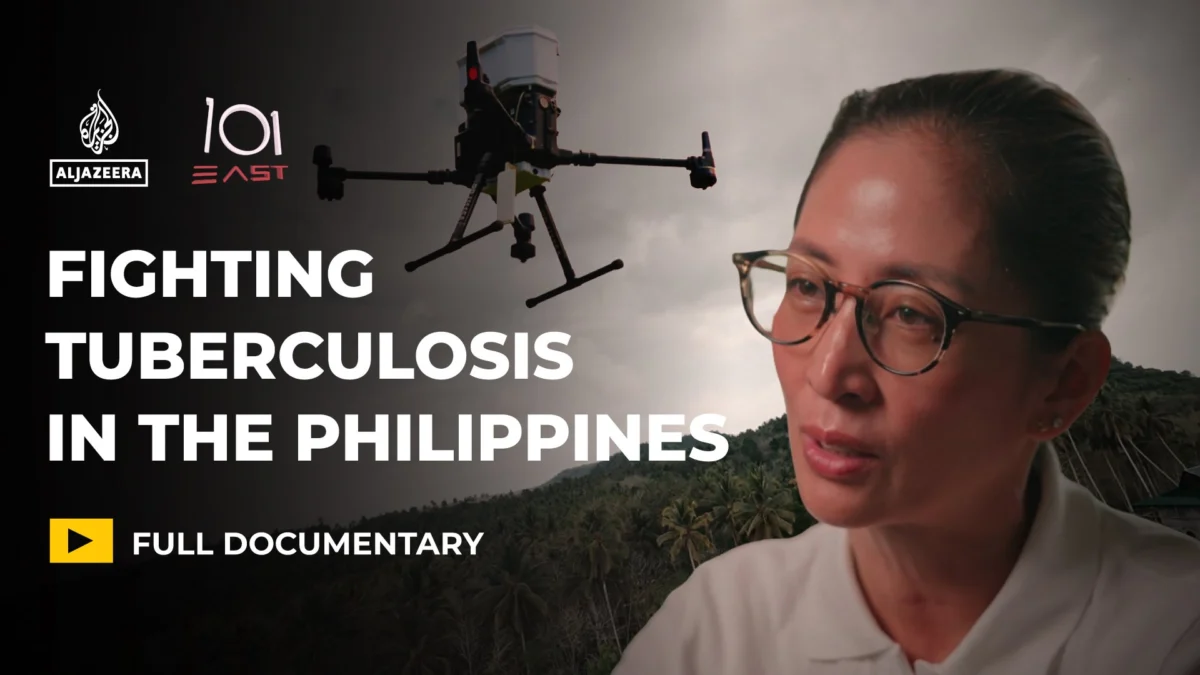
The archipelagic nation of the Philippines, a mosaic of over 7,000 islands, grapples with a persistent and deadly public health crisis: tuberculosis (TB). This ancient disease remains a formidable foe, claiming an estimated 98 lives daily across the archipelago, translating to a staggering annual toll exceeding 35,000 individuals. While TB poses a significant challenge nationwide, its impact is particularly devastating in the country’s remote, often mountainous communities, where geographical isolation translates directly into limited access to essential medical services, delayed diagnoses, and ultimately, preventable deaths. In a groundbreaking initiative that merges cutting-edge technology with humanitarian resolve, a Filipino physician, Dr. Heidi Sampang, is spearheading a transformative effort to combat this scourge by deploying unmanned aerial vehicles (UAVs), commonly known as drones, to bridge the vast distances and logistical chokepoints that have historically hindered effective TB control. This innovative approach, recently highlighted by the investigative documentary series "101 East," showcases medical teams leveraging drone technology to expedite the delivery of critical samples for testing and essential medical supplies, offering a beacon of hope in the fight against one of the world’s oldest and most tenacious infectious diseases.
The Enduring Scourge: Tuberculosis in the Philippines
Tuberculosis is not merely a health concern in the Philippines; it is a complex socio-economic issue deeply intertwined with poverty, inadequate housing, and limited access to healthcare infrastructure. The World Health Organization (WHO) consistently ranks the Philippines among the 30 high TB burden countries globally, underscoring the severity of the epidemic. According to the Department of Health (DOH) and WHO data, the country faces an incidence rate of approximately 554 cases per 100,000 population, with a significant proportion developing into active, transmissible forms of the disease. Beyond the sheer numbers, the human cost is immeasurable, marked by prolonged suffering, stigmatization, and profound economic hardship for affected families.
The challenges in TB control are multi-faceted. Diagnosis, particularly in remote areas, often relies on traditional sputum microscopy, which can be less sensitive and slower than modern molecular tests like GeneXpert. Transporting sputum samples from isolated villages to central laboratories can take days, or even weeks, involving arduous journeys by foot, boat, or rudimentary vehicles across rugged terrain, often rendered impassable by seasonal rains or natural disasters. This delay is critical; every day without a diagnosis means continued transmission within the community and a worsening prognosis for the patient. Furthermore, once diagnosed, ensuring consistent access to the full six-month course of multi-drug therapy (DOTS – Directly Observed Treatment, Short-course) is vital for successful treatment and preventing drug resistance. Interruptions in medication due to supply chain breakdowns or logistical hurdles are common, leading to treatment failures and the emergence of more dangerous multi-drug resistant TB (MDR-TB) strains, which require longer, more complex, and significantly more expensive treatment regimens.
The COVID-19 pandemic further exacerbated the situation, disrupting essential TB services, diverting resources, and reducing case detection rates as healthcare systems became overwhelmed. This setback underscored the urgent need for resilient, adaptable, and innovative solutions to maintain continuity of care, especially for diseases like TB that demand consistent, long-term management.
Bridging the Divide: The Genesis of Drone Logistics
Dr. Heidi Sampang, a physician with a profound understanding of the Philippines’ unique healthcare landscape, recognized that conventional logistics would perpetually fall short in addressing the TB crisis in geographically challenging areas. Her vision was to harness technology to overcome these physical barriers, inspired by successful precedents of medical drone logistics in other developing nations, particularly in Africa. The initiative, often operating under the aegis of non-governmental organizations or in collaboration with local health units, began as a pilot project designed to prove the viability of drone technology for medical transport.
The timeline of this pioneering effort can be traced back to initial exploratory phases around 2018-2019, when discussions began about adapting drone technology for health applications in the Philippines. By late 2019 or early 2020, preliminary feasibility studies and partnerships with drone technology providers were likely established. The onset of the pandemic in early 2020, while challenging, inadvertently highlighted the critical need for contactless and rapid delivery systems, potentially accelerating the deployment phase. Full operational pilots for TB sample collection likely commenced in 2021, gradually expanding in scope and reach.
The drones employed in this initiative are typically purpose-built for medical logistics. These are often fixed-wing UAVs, chosen for their efficiency in covering long distances and carrying payloads, or robust multi-rotor drones capable of vertical take-off and landing (VTOL) in confined spaces. They are equipped with specialized temperature-controlled compartments to safely transport sputum samples, ensuring their integrity until they reach the laboratory. The operational model involves establishing designated drone hubs or launch sites near central diagnostic laboratories, and setting up collection points in remote barangays (villages). Community health workers (CHWs) collect sputum samples from suspected TB patients, prepare them according to protocols, and bring them to the nearest designated drone landing zone. From there, the samples are loaded onto the drones for an expedited journey to the laboratory, often bypassing hours or days of traditional ground or sea travel.
A New Flight Path: Operational Mechanics and Impact
The operational mechanics of the drone-powered TB fight are a testament to meticulous planning and collaboration. When a suspected TB case is identified in a remote community, the local health worker collects a sputum sample. Instead of waiting for a weekly or bi-weekly transport run, or for a patient to undertake a difficult journey to a clinic, the sample is sealed in a bio-secure container and delivered to a pre-arranged drone pick-up point. These points are strategically chosen to be accessible to local populations while offering safe take-off and landing zones for the drones.
Upon arrival at the drone hub, usually co-located with a DOH laboratory or a partner facility, the samples are immediately processed using GeneXpert machines, which can detect TB bacteria and resistance to rifampicin (a first-line TB drug) within two hours. This drastically reduces the diagnostic turnaround time from potentially weeks to a matter of hours. The impact is profound: earlier diagnosis means earlier initiation of treatment, reducing the period of infectivity, preventing further transmission, and significantly improving patient outcomes. Studies and pilot data from similar initiatives globally indicate that drone delivery can cut diagnostic delays by over 70%, directly leading to a higher percentage of patients starting treatment within 24-48 hours of sample collection.
Beyond sample transport, the drones are also vital for delivering essential medical supplies. This includes anti-TB medications, which are crucial for ensuring treatment adherence, as well as vaccines, laboratory reagents, personal protective equipment (PPE), and emergency medical supplies. In a country frequently battered by typhoons and natural disasters, this aerial lifeline becomes even more critical, allowing medical aid to reach isolated populations when ground routes are impassable. The cost-effectiveness, while requiring significant initial investment, often proves beneficial in the long run by reducing the need for costly ground transportation, fuel, and human resources, while simultaneously improving public health outcomes that prevent more expensive treatment of advanced or drug-resistant cases.
Voices from the Field: Stakeholder Perspectives
The enthusiasm for this innovative approach is palpable across various stakeholders. Dr. Heidi Sampang herself articulates a vision driven by the urgent need to "reach the unreached." She often emphasizes that "every day we delay a diagnosis, we allow the disease to spread and claim another life. Drones are not just a technological marvel; they are a tool for equity, bringing healthcare closer to those who need it most." Her resolve is rooted in the practical realities of public health in an archipelagic setting, recognizing that innovation is not a luxury but a necessity.
Officials from the Philippine Department of Health have expressed strong support for the initiative, recognizing its potential to significantly bolster the national TB control program. A DOH spokesperson might state, "The integration of drone technology into our healthcare logistics represents a monumental leap forward. It complements our existing strategies and offers a resilient solution to address geographical barriers, aligning perfectly with our goal of a TB-free Philippines." They would likely highlight the initiative as a testament to the DOH’s commitment to embracing modern solutions for enduring health challenges.
The World Health Organization, a key partner in global TB elimination efforts, views such initiatives as critical models for other high-burden countries. A WHO representative could comment, "The Philippines’ pioneering work with medical drones for TB control demonstrates how localized innovation, coupled with a strong public health commitment, can yield transformative results. This model not only accelerates diagnosis and treatment but also strengthens health systems resilience, offering valuable lessons for global health security."
Perhaps most importantly, the impact is felt directly by community health workers and the patients themselves. A CHW from a remote island, who previously spent hours or days transporting samples, might share, "Before, patients would sometimes lose hope because the results took so long. Now, with the drones, we see results much faster, and people are more willing to come forward for testing. It’s a game-changer for our community." While direct patient testimonials are inferred, the psychological impact of faster diagnoses and reliable medication delivery on individuals battling TB and their families is undeniable, fostering trust in the healthcare system and encouraging treatment adherence.
Navigating the Skies: Challenges and Solutions
Despite its immense promise, the deployment of medical drones in the Philippines is not without its challenges. One of the primary hurdles lies in regulatory navigation. Operating UAVs in national airspace requires stringent approvals from civil aviation authorities, addressing concerns about air traffic control, safety, and privacy. Collaborations between health authorities and aviation regulators are crucial to establish clear guidelines, flight corridors, and operational protocols.
Weather dependency is another significant factor. The Philippines is prone to typhoons, heavy rains, and strong winds, which can ground drone operations for extended periods. Developing robust contingency plans, incorporating weather-resistant drone designs, and investing in advanced meteorological forecasting systems are essential to mitigate these disruptions.
Infrastructure and maintenance present ongoing challenges. Drones require charging stations, secure landing pads, and skilled technicians for routine maintenance and repairs. Building out this infrastructure in remote areas demands investment and training local personnel to ensure sustainability. Community acceptance and education are also vital. Initial apprehension or curiosity from local populations about drones flying overhead needs to be addressed through clear communication campaigns that explain the purpose and benefits of the technology, fostering trust and cooperation.
Finally, data privacy and security for sensitive medical samples are paramount. Strict protocols for handling, packaging, and transporting samples, coupled with secure data transmission systems for diagnostic results, must be meticulously implemented to maintain patient confidentiality and uphold ethical standards.
Beyond TB: Broader Implications for Healthcare Delivery
The success of drone logistics in the TB fight in the Philippines holds broader implications for healthcare delivery, not just within the country but globally. This initiative serves as a powerful testament to the potential of "leapfrogging" traditional infrastructure limitations through technological innovation.
The model can be readily adapted for other public health programs. Imagine drones delivering vaccines to children in remote areas, ensuring cold chain integrity for sensitive biologics. They could transport emergency blood supplies during disasters, deliver anti-venom to snakebite victims, or provide essential medicines for chronic diseases like diabetes and hypertension. In times of natural calamities, which are frequent in the Philippines, these drones can serve as crucial first responders, delivering medical aid and assessing damage when conventional transport is impossible.
Economically, improved health outcomes lead to a more productive workforce and reduced healthcare expenditures associated with advanced disease stages. The drone industry itself can spur local economic development through job creation in drone operations, maintenance, and data management. For the Philippines, this initiative positions the nation as a leader in innovative public health solutions, potentially inspiring similar programs across Southeast Asia and other developing regions facing comparable geographical and logistical challenges. It signifies a paradigm shift, moving from reactive, clinic-centric healthcare to a more proactive, community-based approach facilitated by technology.
In conclusion, the fight against tuberculosis in the Philippines is being profoundly reshaped by the ingenious integration of drone technology, championed by visionary leaders like Dr. Heidi Sampang. What began as an urgent response to a persistent health crisis has evolved into a sustainable, scalable model for healthcare delivery that transcends geographical barriers and socio-economic disparities. As "101 East" illuminates, these drones are not just carrying samples; they are carrying hope, faster diagnoses, and the promise of a healthier future for the most vulnerable communities, demonstrating that in the face of ancient diseases, modern innovation offers a powerful and effective weapon.
