

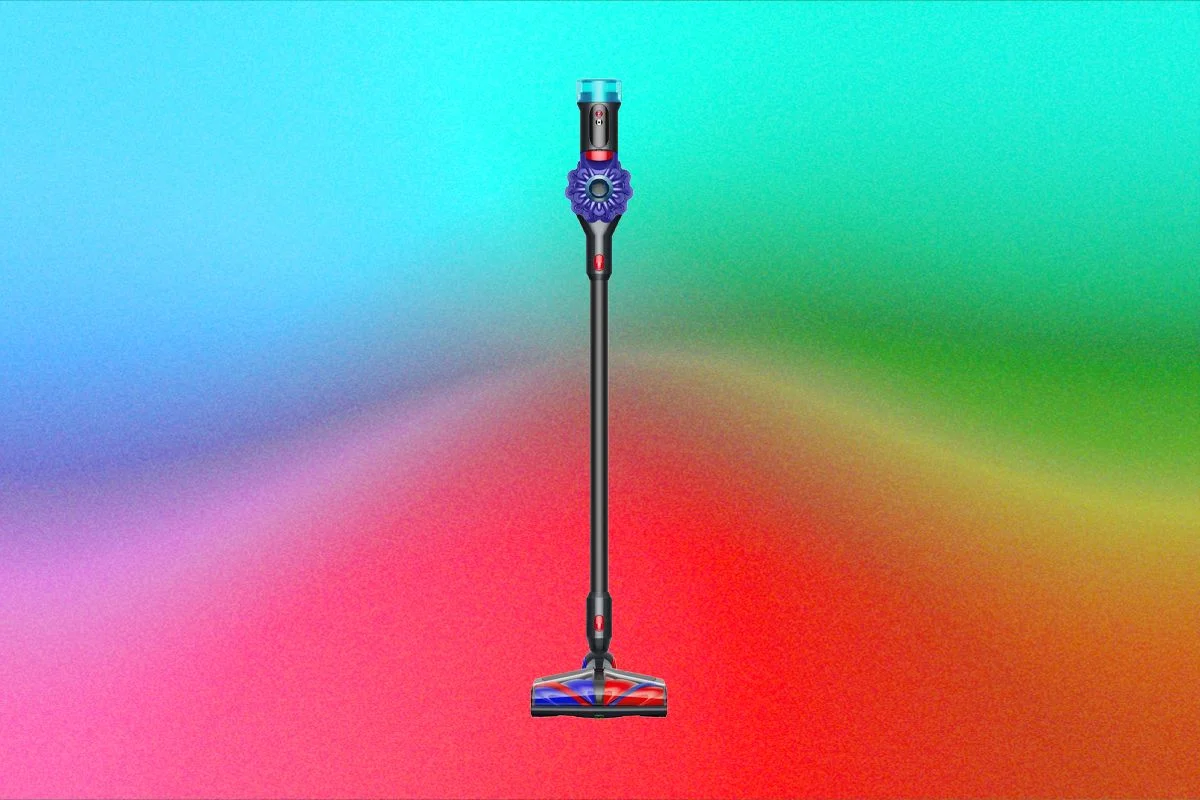
Dyson, the global technology firm synonymous with high-end floor care, has officially expanded its cordless vacuum portfolio with the introduction of the V10 Konical and the V16 Piston Animal. This release signals a significant shift in the company’s hardware strategy, as it prepares to launch its first integrated self-emptying solution, the Auto-empty Dok. While Dyson has long dominated the premium stick vacuum market through superior suction metrics and centrifugal separation technology, the brand is now pivoting toward automated maintenance, a category where competitors such as Samsung, LG, and Shark have recently gained significant ground.
The V10 Konical represents an evolution of the classic V10 architecture, optimized for a balance between price and performance, while the V16 Piston Animal—priced at approximately $980—positions itself as a flagship powerhouse. Central to this new product cycle is the Auto-empty Dok, a docking station designed to automatically suction debris from the vacuum’s bin into a larger, sealed reservoir. Currently, the V10 Konical and the V16 Piston Animal are the only two models slated for compatibility with this forthcoming accessory, suggesting a modular approach to Dyson’s future hardware ecosystem.
The Evolution of Dyson’s Cordless Strategy
To understand the significance of the V10 Konical, one must look at the trajectory of Dyson’s engineering since the 2018 debut of the original Cyclone V10. That model was a watershed moment for the company; it was the first time James Dyson announced that the firm would no longer invest in corded vacuum technology, betting the company’s future on battery-powered motors. The V10 introduced the "in-line" configuration, where the bin, motor, and cyclone assembly are aligned to create a linear airflow path, increasing suction efficiency.
The V10 Konical builds upon this legacy but targets a specific market segment: consumers who prioritize carpet cleaning and convenience over the high-tech "laser" illumination and particle-counting sensors found in the Gen5Detect or V15 models. By focusing on core suction mechanics and compatibility with the Auto-empty Dok, Dyson is attempting to recapture the "mid-premium" segment that often finds the $1,000 price point of flagship models prohibitive.
Comparative Performance Analysis
In recent standardized testing protocols, the V10 Konical has demonstrated surprising resilience when compared to more expensive siblings in the Dyson lineup. Performance was measured across five distinct categories: sand recovery, cat litter removal, large debris (Cheerios) pickup, general floor maintenance, and handheld versatility. Each category was scored on a scale of 1 to 4, with 4 representing peak efficiency.
The V10 Konical achieved a cumulative score of 14 out of 20. This performance metric is particularly notable when contrasted with the V15 Detect, which scored a 12 out of 20 in the same environment. Despite the V15’s more advanced "Piezo" sensor and higher peak air wattage, the V10 Konical’s streamlined design and Motorbar cleaner head proved more effective at consistent debris recovery on rugs and carpets.
Only the Gen5Detect, Dyson’s current pinnacle of engineering, surpassed the V10 Konical with a score of 17 out of 20. However, industry analysts point out that the V10 Konical may hold a strategic advantage for certain households. While the Gen5Detect offers superior raw power, it currently lacks compatibility with the upcoming Auto-empty Dok. For users who suffer from allergies or simply wish to avoid the "dust plume" associated with manual bin emptying, the V10 Konical’s integration with the new docking station may outweigh the Gen5Detect’s marginal suction lead.
Engineering Limitations and Surface Specialization
Despite its strong performance on soft surfaces, the V10 Konical exhibits specific limitations on hard flooring. Unlike the V15 or Gen5Detect, the V10 Konical does not ship with the "Fluffy Optic" cleaner head—a specialized attachment featuring a soft nylon roller and a precisely angled green light to reveal microscopic dust.

Testing revealed that on hardwood and tile, the V10 Konical required multiple passes to fully recover fine particles like cat litter. While it avoided the "snowplowing" effect seen in the entry-level V8 Cyclone—where the vacuum pushes debris forward rather than sucking it up—it lacked the one-pass efficiency of Dyson’s dedicated hard-floor tools. Consequently, the V10 Konical is being positioned primarily for homes with a high percentage of wall-to-wall carpeting or large area rugs, where its Digital Motorbar head can use its stiff nylon bristles to agitate deep-seated dirt.
The Shift Toward Automated Maintenance: The Auto-empty Dok
The announcement of the Auto-empty Dok marks a late but necessary entry for Dyson into the automated maintenance market. For years, the primary criticism of stick vacuums has been the small bin capacity and the unhygienic nature of manual emptying. Competitors like the Samsung Bespoke Jet and the LG CordZero have utilized "clean stations" to resolve this pain point.
The Dyson Auto-empty Dok is expected to function as both a charging stand and a high-velocity extraction system. When the vacuum is docked, a secondary motor within the base pulls the collected debris into a disposable bag or a larger cyclonic bin. This not only reduces the frequency of maintenance but also ensures that the vacuum’s HEPA filtration remains uncompromised by a full bin.
While official pricing for the Auto-empty Dok has yet to be finalized, its exclusivity to the V10 Konical and V16 Piston suggests that Dyson is using the accessory as a "hook" to drive sales of these specific models. This hardware-software lock-in is a common tactic in the consumer electronics industry, designed to build brand loyalty and increase the average revenue per user.
Competitive Landscape and Market Implications
The release of the V10 Konical comes at a time of heightened competition in the floor care sector. Brands like Shark have aggressively challenged Dyson’s dominance with models like the Shark PowerDetect, which often matches or exceeds Dyson’s suction power at a fraction of the cost. The Shark PowerDetect, in particular, has been cited by reviewers as a superior value proposition for users who are not strictly loyal to the Dyson brand.
However, Dyson’s brand equity remains a powerful force. The company’s investment in digital motors—some of which spin at speeds exceeding 125,000 RPM—and their commitment to whole-machine HEPA filtration continues to attract a premium clientele. The V10 Konical is Dyson’s answer to the "value" argument, providing high-end performance and future-proof compatibility with the Auto-empty Dok without reaching the $1,000 threshold of the V16 Piston.
Timeline of Dyson Cordless Innovations
The trajectory of Dyson’s cordless development highlights a consistent push toward replacing the traditional upright vacuum:
- 2011 (DC35): Dyson introduces its first digital motor in a cordless format, offering 15 minutes of run time.
- 2016 (V8): A major leap in battery chemistry and acoustics, making the cordless vacuum a viable primary cleaner for small homes.
- 2018 (V10): The introduction of the "in-line" format and a motor capable of 125,000 RPM, leading James Dyson to abandon corded development.
- 2021 (V15 Detect): The integration of laser dust detection and acoustic piezo sensors to provide "proof" of a deep clean.
- 2024 (V10 Konical/V16 Piston): The shift toward ecosystem-based cleaning with the introduction of the Auto-empty Dok.
Conclusion and Future Outlook
The Dyson V10 Konical represents a strategic recalibration for the company. By revisiting a proven chassis and enhancing it with modern motor technology and future docking compatibility, Dyson is addressing the needs of the "practical" premium consumer. While it may lack the flashy sensors of the V15 or the raw power of the Gen5Detect, its balanced score of 14 out of 20 in real-world testing suggests it is more than capable of handling the rigors of a standard household.
As the industry moves toward "hands-free" operation, the success of the V10 Konical will likely depend on the performance and price of the Auto-empty Dok. If the docking station delivers a seamless, hygienic experience, Dyson will have successfully modernized its mid-range offering to compete with the automated solutions offered by its rivals. For now, the V10 Konical stands as a robust option for those with carpet-heavy homes who seek the prestige and suction of a Dyson without the flagship price tag.
