

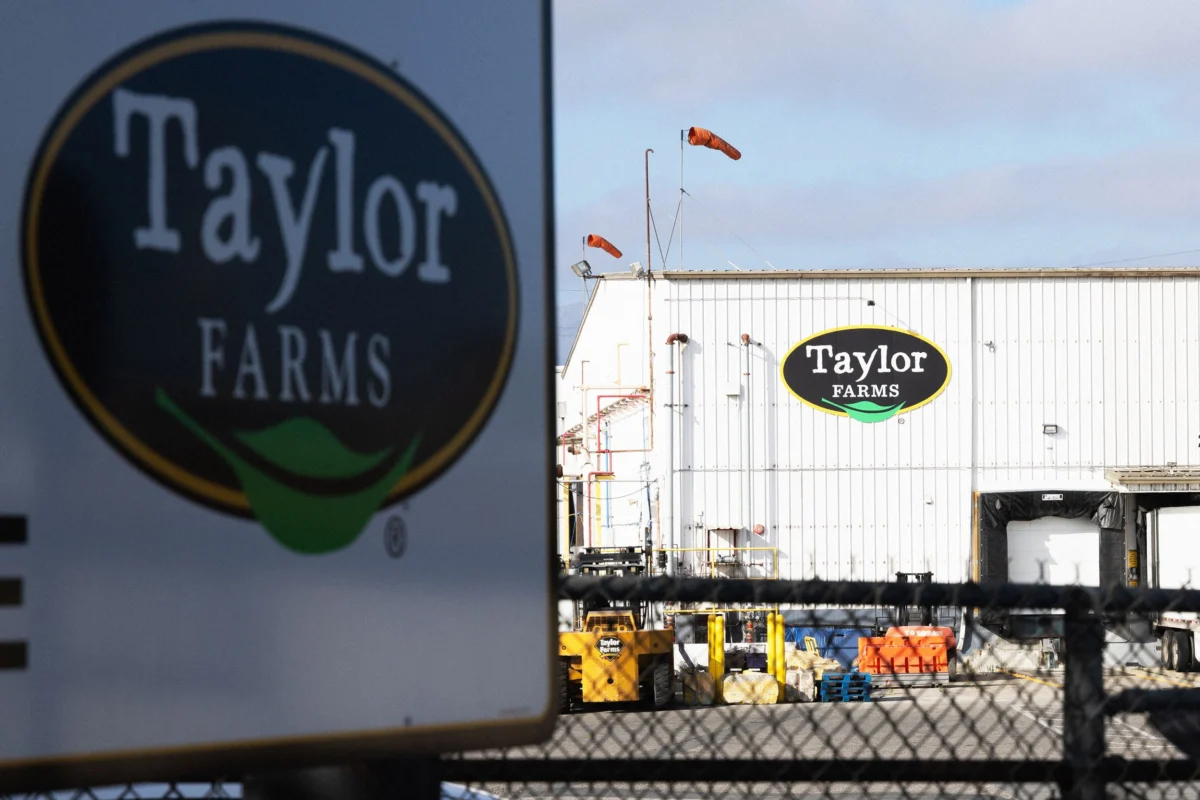
The relationship between federal food safety regulators and one of the nation’s largest produce suppliers has reached a point of public friction following a massive outbreak of cyclosporiasis linked to iceberg lettuce. The United States Food and Drug Administration (FDA) and California-based Taylor Farms are currently engaged in a high-stakes dispute over the methodology and communication of an ongoing investigation that has affected consumers across 27 states. At the heart of the conflict is a retracted laboratory result and a disagreement over whether the government owes the private sector an apology for its handling of the crisis.
The situation escalated on July 17, when Taylor Farms issued a voluntary recall of iceberg lettuce sourced from Central Mexico. The move was prompted by an alarming rise in parasitic infections caused by Cyclospora cayetanensis, a microscopic parasite that causes severe gastrointestinal distress, often characterized by prolonged and "explosive" diarrhea. While the recall was intended to mitigate public health risks, the subsequent days saw a breakdown in communication between the supplier and the regulatory agency, highlighting the complexities of modern food safety oversight.
The Chronology of a Public Health Crisis
The timeline of the dispute reveals a rapid succession of events that have strained the professional rapport between Taylor Farms and the FDA. The roots of the investigation trace back to May, when health officials first began noticing a spike in cyclosporiasis cases. However, the friction became public in mid-July.
On July 16, executives from Taylor Farms reportedly met with officials from the White House and the FDA. During this meeting, the company allegedly expressed significant concerns regarding the government’s investigative processes. According to reports, Taylor Farms sought to cast doubt on the conclusions reached by the FDA and the Centers for Disease Control and Prevention (CDC), arguing that the evidence linking their products to the outbreak was insufficient.
Despite these objections, Taylor Farms proceeded with a voluntary recall on July 17. The recall specifically targeted iceberg lettuce harvested from Central Mexico, which had been distributed to major retailers and food service providers, including Walmart and Taco Bell. The scope was vast, covering 27 states and impacting a significant portion of the domestic supply chain.
The conflict intensified on July 18, when the FDA announced it had detected the Cyclospora parasite in a sample of Taylor Farms lettuce that was not included in the original recall. This finding appeared to validate the agency’s broader concerns about the company’s output. However, the victory for the FDA was short-lived. By July 19, both the agency and Taylor Farms confirmed that the positive test result was, in fact, a "false positive" caused by laboratory error or cross-contamination issues.
Immediately following this revelation, Taylor Farms took to social media to claim a moral victory. In a post on X (formerly Twitter), the company stated, “Today, the FDA apologized to us.” This statement suggested a significant retreat by the federal government and implied that the investigation might be flawed.
The FDA’s Refusal to Grant an Official Apology
The FDA was quick to counter the narrative presented by Taylor Farms. On July 20, an agency official clarified to the press that while there was a discussion regarding the false positive, no "official apology" had been issued to the company. The agency characterized the interaction as a professional exchange of "factual information" regarding the inherent difficulties of testing for Cyclospora.
The FDA emphasized that the false positive in a single sample did not invalidate the mountain of evidence supporting the need for the recall. In a follow-up post on X, the agency stated that the error "DOES NOT change the basis for FDA’s ongoing outbreak investigation or the overwhelming epidemiological data."
This distinction highlights a fundamental tension in food safety: the difference between microbiological evidence (finding the pathogen in the food) and epidemiological evidence (tracing the patterns of who got sick and what they ate). The FDA maintains that while they may not have a "smoking gun" in the form of a perfect lab test, the patterns of illness among thousands of consumers point directly to the Taylor Farms supply chain.
Understanding Cyclosporiasis and the Difficulty of Detection
To understand why this dispute has become so technical and contentious, one must look at the nature of the pathogen involved. Cyclospora cayetanensis is a protozoan parasite that is typically transmitted through feces-contaminated food or water. Unlike bacteria such as E. coli or Salmonella, which can often be cultured and identified relatively quickly, Cyclospora is notoriously difficult to detect in a laboratory setting.
The parasite is often found in very low concentrations on produce. A single head of lettuce might contain only a few oocysts (the egg-like stage of the parasite), which is enough to make a human severely ill but can easily be missed by standard sampling protocols. Furthermore, the process of washing and preparing produce for retail can further dilute the presence of the parasite, making "positive" lab results rare even in the midst of a confirmed outbreak.
Because of these limitations, the CDC and FDA rely heavily on epidemiological "trace-back" investigations. This involves interviewing hundreds or thousands of patients to create a detailed map of their dietary habits prior to falling ill. When a statistically significant number of patients in disparate geographic locations all report eating the same product—such as iceberg lettuce from a specific supplier—the FDA considers the link established, even in the absence of a positive lab test.
Taylor Farms has leveraged this lack of microbiological proof to defend its reputation, noting that the FDA "has not identified a single positive product test result for Cyclospora" that has held up under scrutiny. While factually accurate, this argument ignores the standard operating procedures of modern public health surveillance.
The Magnitude of the Outbreak: Data and Impact
The scale of the current outbreak is staggering and suggests a major failure in the food safety net. Since the surge began in May, thousands of individuals have reported symptoms. Michigan has emerged as a primary hotspot for the infection, with state health authorities reporting 6,148 confirmed cases.
Experts warn that the official numbers likely represent only a fraction of the true total. Because cyclosporiasis requires a specific type of stool test that is not always included in standard GI panels, many cases go undiagnosed or are misidentified as general food poisoning. Furthermore, the incubation period for the parasite can be as long as two weeks, meaning that by the time a person feels sick, the contaminated food has often been discarded or consumed, making it impossible to test the specific item that caused the illness.
The economic impact of the recall is also substantial. Taylor Farms is a titan in the "fresh-cut" produce industry, supplying pre-washed and bagged salads to some of the largest corporations in the world. The involvement of Walmart and Taco Bell means that millions of consumers were potentially exposed. For retailers, a recall of this magnitude involves massive logistical hurdles, including pulling inventory from shelves, disinfecting storage areas, and managing consumer refunds and potential litigation.
Legal and Regulatory Implications
The public "face-off" between Taylor Farms and the FDA may have long-term implications for how food safety investigations are conducted in the United States. Under the Food Safety Modernization Act (FSMA), the FDA has the authority to mandate recalls if a company refuses to do so voluntarily. However, the agency prefers voluntary cooperation, as it is generally faster and less litigious.
The aggressive stance taken by Taylor Farms—challenging the FDA in the White House and publicly claiming an apology—suggests a shift in how large agricultural firms interact with regulators. By casting doubt on the "technicalities" of the investigation, companies can attempt to protect their brand equity and mitigate legal liability in the inevitable wave of personal injury lawsuits that follow such outbreaks.
From a regulatory perspective, the incident may lead to a push for more robust testing technologies. The "false positive" that fueled this dispute is a setback for the FDA’s credibility, even if it does not change the epidemiological reality of the outbreak. There is an urgent need for more sensitive and reliable field tests that can identify parasites like Cyclospora before they enter the distribution network.
Conclusion: A Precarious Path Forward
As the investigation continues, the priority remains the containment of the parasite and the protection of public health. The 27-state recall remains in effect, and consumers are urged to check their refrigerators for any Taylor Farms iceberg lettuce products sourced from Mexico.
The passive-aggressive battle of technicalities between the FDA and Taylor Farms serves as a reminder of the friction between corporate interests and public safety mandates. While Taylor Farms focuses on the lack of "positive product tests," the thousands of sickened Americans in Michigan and beyond are a testament to a system that remains vulnerable to contamination.
In the coming months, the FDA will likely release a final report on the outbreak. Whether that report provides the "smoking gun" Taylor Farms demands or relies on the "overwhelming epidemiological data" the FDA currently cites will determine not only the legal outcome of this crisis but also the future of consumer trust in the safety of the American food supply. For now, the "shitstorm" continues, leaving both the industry and the regulators to navigate a landscape where scientific uncertainty meets a public health emergency.
