

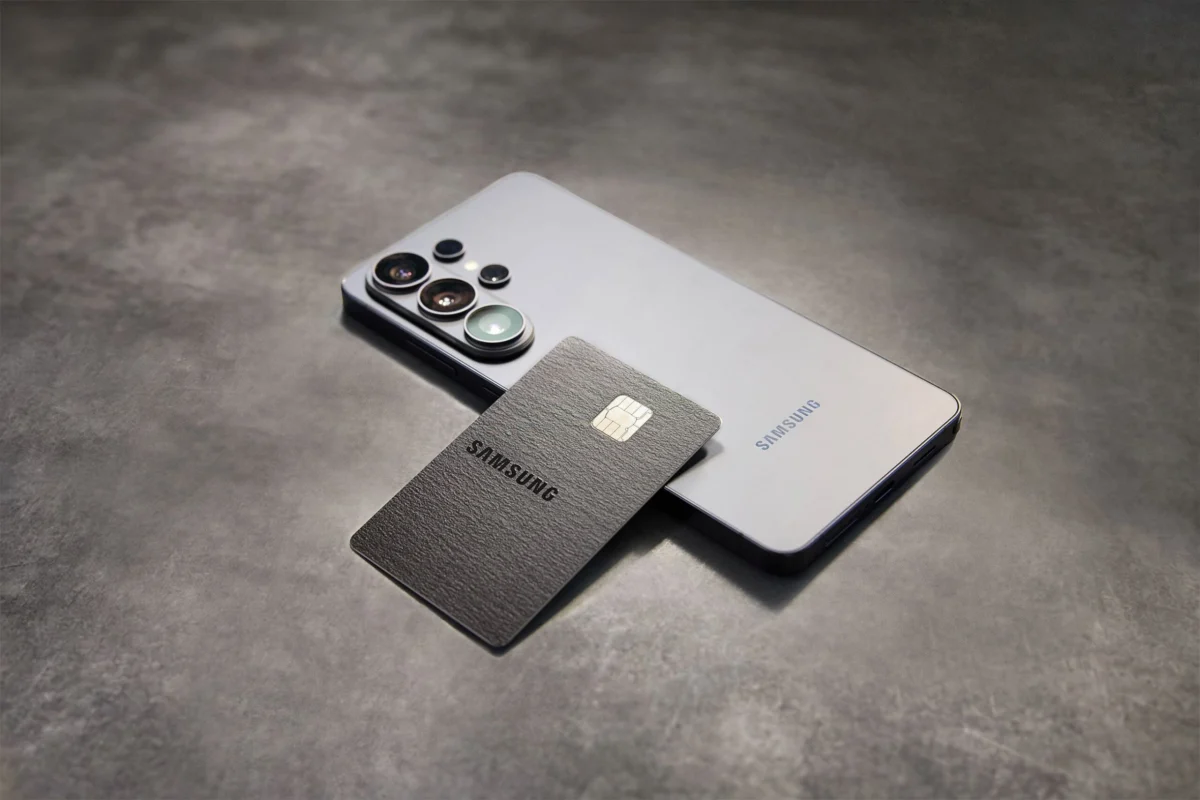
Samsung has officially announced the launch of the Galaxy Card, a co-branded credit card developed in partnership with Barclays and Visa, marking the tech giant’s most significant move into the consumer finance sector to date. The announcement comes just forty-eight hours before Samsung’s highly anticipated summer Galaxy Unpacked event, where the company is expected to unveil its latest generation of folding smartphones and wearable technology. By introducing a dedicated financial product, Samsung is positioning itself to compete directly with Apple, which pioneered the tech-integrated credit card space nearly seven years ago. The move signals a broader industry trend where hardware manufacturers seek to deepen ecosystem loyalty through integrated financial services and recurring reward structures.
The Galaxy Card is issued by Barclays on the Visa network, a strategic choice that distinguishes it from the Apple Card, which is currently transitioning its issuing partnership from Goldman Sachs to Chase and operates on the Mastercard network. While Apple opted for a minimalist titanium design for its physical card, Samsung has chosen a more environmentally conscious approach, utilizing recycled steel for its physical hardware. This choice aligns with the company’s broader sustainability initiatives, which have increasingly focused on using recycled materials in its flagship Galaxy S and Z series devices. For digital-first users, the card is provisioned directly into the Samsung Wallet, allowing for immediate use upon approval.
A Tiered Rewards Structure Tailored for Loyalists
The Galaxy Card’s value proposition is built around a tiered rewards system designed to incentivize spending within the Samsung ecosystem and through its proprietary mobile payment platform. The card carries no annual fee, a standard expectation for modern tech-branded credit products. Cardmembers are eligible to earn 5 percent cash rewards on all purchases made directly through Samsung’s official retail channels in the United States, including its online store and physical experience centers. This 5 percent tier is particularly aggressive, aimed at consumers who frequently upgrade to the latest flagship smartphones, tablets, and home appliances.
Beyond direct Samsung purchases, the card offers 3 percent cash rewards on any transaction made using the Galaxy Card via Samsung Wallet. This "tap-to-pay" incentive is designed to shift consumer behavior away from physical cards and toward mobile payments. Furthermore, the card provides 2 percent cash rewards on streaming service subscriptions, acknowledging the growing portion of household budgets dedicated to digital entertainment. All other purchases made using the physical recycled steel card earn a baseline 1 percent cash reward. Samsung has confirmed that these rewards are flexible; they can be redeemed as statement credits to lower the cardholder’s balance or transferred directly to a linked checking or savings account.
Integration with the Samsung Ecosystem and VIP Perks
To further distinguish the Galaxy Card from traditional cashback cards, Samsung is bundling it with exclusive service-oriented perks. Cardholders receive a 20 percent discount on Samsung’s VIP Advantage membership. This subscription program is a cornerstone of Samsung’s customer retention strategy, offering extended device protection, specialized technical support, and access to exclusive member-only deals. By linking the credit card to the VIP Advantage program, Samsung is creating a "sticky" ecosystem where the financial product enhances the ownership experience of the hardware.
The card also enters the market with a competitive sign-up bonus. New applicants who are approved can earn $200 in cash rewards after spending $2,000 on the card within the first 90 days of account opening. While the Annual Percentage Rate (APR) will vary based on an individual’s creditworthiness, the card follows the industry trend of eliminating foreign transaction fees, making it a viable option for international travelers. Applications for the Galaxy Card are scheduled to open on July 22, shortly after the conclusion of the Galaxy Unpacked event.
The Challenge of Ecosystem Lock-in
One of the most critical aspects of the Galaxy Card is its relationship with the Samsung Wallet app. Currently, Samsung Wallet is only available on Samsung-branded smartphones and smartwatches. This creates a potential hurdle for consumers who might consider switching to a different smartphone manufacturer in the future. Samsung has clarified that while the Galaxy Card is not strictly limited to Samsung device owners, the experience for non-Samsung users is significantly diminished.
If a consumer switches to a different brand, they can continue to use the physical recycled steel card and manage their account through the Barclays US online portal. However, they would lose access to the 3 percent rewards tier tied to Samsung Wallet and the seamless mobile management interface. This mirrors the limitations of the Apple Card; if an iPhone user migrates to Android, their physical Apple Card remains functional, but they lose the 3 percent "Daily Cash" perk on Apple purchases and the integrated Wallet app experience, having to rely instead on a web-based portal for account management.

Market Context and Expert Analysis
The entry of Samsung into the credit card market is seen by financial analysts as a move to commoditize brand loyalty. Brian Riley, Director of Credit Advisory Services at Javelin Strategy & Research, notes that the success of such products depends heavily on how they differentiate themselves in a saturated market. "Cards are basically a commodity at the end of the day; how you differentiate them is really what makes the difference," Riley stated. He noted that modern consumers often "card-max," or strategically use different cards for different categories—such as one for groceries and another for Amazon—to maximize point yields.
However, Riley also warned of the risks associated with rewards-focused products. "One of the big challenges here on rewards is that quite often, you go in well-intentioned and you don’t get the full benefit of the rewards because you start revolving on the product," he explained. This refers to the practice of carrying a balance from month to month, where high interest rates can quickly negate any value earned through cashback rewards.
Regarding the competitive landscape, analysts suggest that while the Apple Card was a pioneer, it did not necessarily disrupt the fundamental structure of the credit card industry. Sara Rathner, a credit card expert at NerdWallet, observed that the Apple Card has not had the same "world-changing" impact as the original iPhone. "It’s fine; it’s a cashback card," Rathner said, emphasizing that these products primarily exist to foster brand loyalty. She pointed out that the 3 percent reward for Samsung Wallet transactions is a particularly strong feature, noting that for commuters using tap-to-pay systems like New York City’s OMNY, a 3 percent return on every commute could be a compelling reason to adopt the card.
Comparison with Apple Card’s Innovation
While the Galaxy Card matches many of the Apple Card’s features, it also arrives at a time when the industry has already integrated many of Apple’s innovations. Apple was among the first to allow users to see their potential interest rate and credit limit before a "hard" credit pull occurred, a feature that has since been adopted by other issuers. Apple also simplified the activation process, allowing users to activate their physical card simply by tapping it against their iPhone.
Samsung’s choice of the Visa network provides it with a slight edge in global acceptance over Mastercard in certain regions, though both are widely accepted worldwide. The transition of the Apple Card from Goldman Sachs to Chase also introduces a period of uncertainty for Apple users, which Samsung may look to exploit by offering a stable, long-term partnership with Barclays.
Broader Implications for the Fintech Industry
The launch of the Galaxy Card is part of a broader "fintech-ization" of Big Tech. As hardware margins become thinner and the smartphone market reaches saturation in developed countries, tech giants are looking toward services—specifically financial services—to drive growth. By controlling the payment method, Samsung gains valuable data on consumer spending habits, which can be used to refine marketing strategies and hardware development.
Furthermore, the Galaxy Card represents a significant move for Barclays as it seeks to expand its footprint in the United States through high-profile co-branded partnerships. For Visa, the partnership ensures that it remains at the forefront of the mobile payment revolution, securing its place in the digital wallets of millions of Samsung users.
As the July 22 launch date approaches, the industry will be watching closely to see how many of Samsung’s 300 million plus active users worldwide will adopt the card. While the rewards are competitive, the ultimate success of the Galaxy Card will depend on whether it can convince consumers that another card in their wallet—physical or digital—is worth the benefit of staying within the Samsung ecosystem.
Chronology of Tech-Integrated Credit Cards
- August 2019: Apple launches the Apple Card in the U.S. in partnership with Goldman Sachs and Mastercard, featuring a titanium card and "Daily Cash" rewards.
- May 2020: Samsung launches Samsung Money by SoFi, a mobile-first money management experience, though it was a debit-based system rather than a credit card.
- January 2024: Reports emerge that Apple is ending its partnership with Goldman Sachs, with JPMorgan Chase later named as the likely successor for the Apple Card program.
- July 2024: Samsung announces the Galaxy Card with Barclays and Visa, set for a July 22 application opening.
- July 2024: Samsung Galaxy Unpacked event scheduled to showcase the hardware that will integrate with the new financial product.
The Galaxy Card enters a market where the average American household carries nearly four different credit cards. To become the "primary" card for consumers, Samsung must prove that its integration is not just a gimmick, but a tool that provides tangible financial value. With the 5 percent direct reward and 3 percent wallet reward, the company has set a high bar for its competitors, even as it navigates the complexities of the modern financial landscape.
