

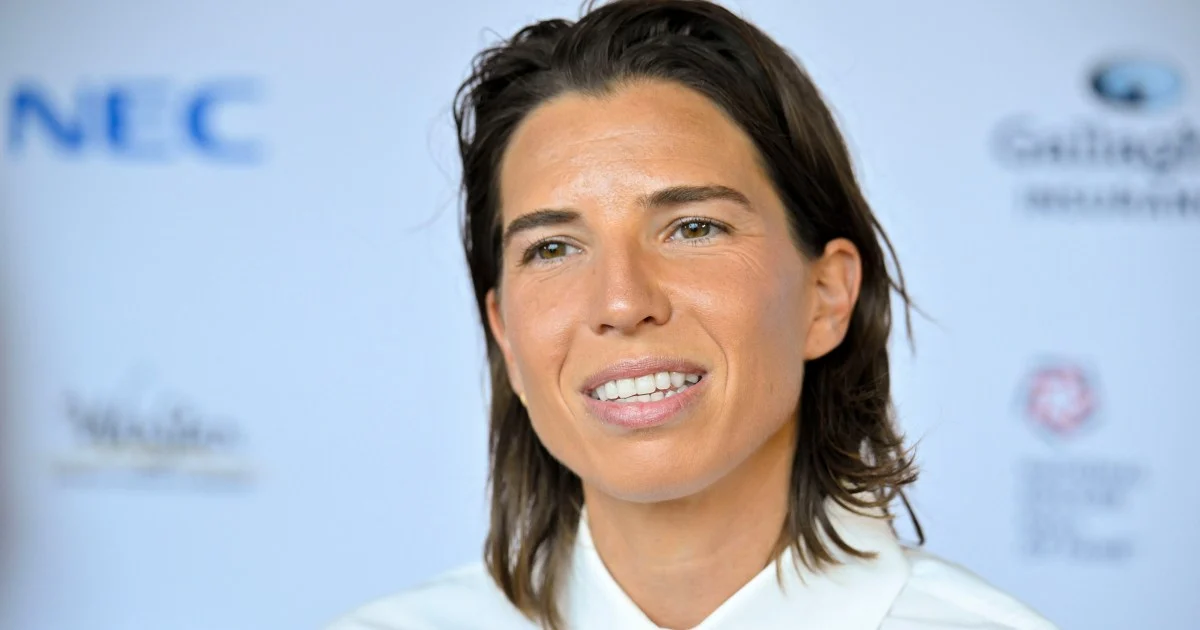
The 2026 FIFA World Cup has served as a transformative moment for international football, marked not only by its expanded format but by a significant shift in the tactical and technical execution of the game. Tobin Heath, a two-time FIFA Women’s World Cup winner and double Olympic gold medalist, has emerged as a pivotal voice in dissecting these changes. Serving as a member of FIFA’s Technical Study Group (TSG), Heath has transitioned from a legendary forward on the pitch to an elite analyst, offering a unique perspective on a tournament that has shattered scoring records and challenged traditional footballing hierarchies.
Heath’s involvement in the TSG comes at a critical juncture for the sport. After a storied career that saw her earn 181 international caps and score 36 goals for the United States, injuries forced her retirement in 2025. Her presence on the FIFA panel—as the only female member among an elite group of analysts for the men’s tournament—highlights the growing integration of expertise across the men’s and women’s games. Her analysis focuses on why the 2026 edition, hosted across the United States, Mexico, and Canada, has produced an unprecedented 307 goals across 103 matches, averaging nearly three goals per game.
The Technical Evolution: Why Scoring is Surging
The primary narrative of the 2026 World Cup has been the sheer volume of goals. While the expansion to a 48-team format naturally increased the number of fixtures, the goal-per-match average suggests a deeper tactical evolution. Heath attributes this surge to several specific technical factors identified by the TSG.
"This is the evolution of football that the fans are obviously enjoying," Heath noted during her analysis. She pointed to three primary drivers: the efficiency of the counter-press, the location of ball recovery, and the aggressive use of full-backs in offensive transitions. Unlike previous eras where full-backs were primarily defensive anchors, the 2026 tournament has seen them act as primary engines for width and chance creation. This shift forces defending teams to stretch their lines, creating pockets of space in the "half-spaces" that elite playmakers are now exploiting with higher frequency.

Furthermore, the diversity of the teams involved has created stylistic clashes that favor high-scoring outcomes. The group stages, in particular, featured matchups between "footballing giants" and emerging nations that refused to adhere to traditional defensive shells. Instead of the "park the bus" mentality often seen in David-vs-Goliath scenarios, many smaller nations opted for brave, high-transition styles that resulted in end-to-end spectacles.
The Rise of African Football and Global Parity
One of the most significant takeaways from Heath’s analysis is the narrowing gap in quality between traditional powerhouses and emerging regions, particularly Africa. The 2026 World Cup saw standout performances from Cape Verde, Egypt, DR Congo, and Ivory Coast.
Heath highlighted Cape Verde as a primary example of this shift. Their tactical discipline against Spain and their "thrilling" encounter with Argentina demonstrated a level of bravery that Heath describes as rare in international tournament play. "The bravery with which they played—with so many low blocks—is very rare," she observed. This suggests that while these teams utilized defensive structures, they did so with an intent to strike back immediately, rather than merely surviving.
Egypt’s performance against Argentina also drew praise, with Heath noting that the match could have swung in either direction. This level of competitiveness is a byproduct of the increasing globalization of club football, where African players are now staples in top-tier European leagues, bringing that tactical maturity back to their national sides. Heath expressed hope that this momentum would carry over into the Women’s World Cup, signaling a holistic rise in the quality of football on the African continent.
Individual Brilliance: The Next Generation and the Eternal Veteran
The 2026 tournament has been a showcase for both the future of the sport and the enduring class of its greatest legends. Heath singled out Spain’s Pau Cubarsi as the most impressive young talent of the tournament. At a remarkably young age, Cubarsi’s ability to manage high-pressure defensive situations while maintaining Spain’s signature possession-based style has been a cornerstone of their run to the final.

"To be so young, to play so many minutes and be so effective with this Spanish defense, it highlights an incredible way that Spain is generationally able to really connect ideas," Heath stated. She also pointed toward Lamine Yamal, another Spanish prodigy, noting that the world is waiting for his "supersonic" moment in the final.
Conversely, the tournament has been defined by the continued excellence of Lionel Messi. Despite his age, Messi’s influence on the pitch remains unparalleled. Heath joked about the need for a "veteran award," yet acknowledged that Messi remains a legitimate contender for Player of the Tournament. The juxtaposition of stars like Jude Bellingham, Kylian Mbappé, and Erling Haaland alongside Messi suggests that football is currently in a "golden age" where multiple generations of greatness are overlapping.
The American Context: Impact and Legacy
As the United States hosted the bulk of the tournament, the domestic impact of the event has been a point of intense scrutiny. Heath, an icon of American soccer, offered a nuanced view of the tournament’s legacy in the U.S. While the event captured the American public’s attention—filling massive stadiums from the Pacific Northwest to Miami—Heath expressed concern over whether this interest is a "flash in the pan" or a deep-seated cultural shift.
The U.S. Men’s National Team (USMNT) saw solid performances from players like Malik Tillman and Folarin Balogun, yet Heath noted a lack of "stardom" that typically drives American sports culture. "Our country has been captured by the moment of watching the World Cup, but no one knows if they’ve been captured with it in their soul," she remarked.
For the 2026 World Cup to be considered a true success in the U.S., Heath believes there must be a direct correlation to the next generation of players. The inspiration drawn from seeing the world’s best play on American soil must translate into a long-term commitment to the sport’s development, particularly in the men’s game, which has historically trailed the women’s game in terms of international dominance.

The "Winning Muscle" and the Final Outlook
Despite the parity seen in the early rounds, the 2026 World Cup has reinforced a historical truth in football: winning is a learned behavior. Heath refers to this as the "winning muscle." As the tournament progressed toward the final, the gap between the teams that could win and those that actually win became more apparent.
The final features teams with deep-rooted histories of international success. Heath argues that breaking into this elite circle requires more than just talent; it requires a psychological and organizational infrastructure that can withstand the unique pressures of a World Cup knockout stage. "It’s no surprise that we have two teams in the final that have enjoyed a lot of success in international football," she noted.
Implications for the Future of the Game
The findings of Heath and the FIFA Technical Study Group suggest that the 2026 World Cup will be remembered as the "Creativity World Cup." The tournament has proven that expansion does not necessarily lead to a dilution of quality. Instead, it provides a broader canvas for tactical innovation.
The shift toward high-scoring matches, driven by aggressive full-backs and sophisticated counter-pressing, is likely to influence coaching philosophies at the club level for the next four-year cycle. For the United States, the legacy of 2026 remains to be written. While the infrastructure and attendance figures were record-breaking, the true measure of success will be found in the youth academies and local pitches in the years to come.
As the final approaches, the footballing world looks to stars like Yamal and Messi to provide a closing chapter to a tournament that has already redefined the modern game. For Tobin Heath, her role as an analyst has provided a second act to a career defined by excellence, ensuring that her insights continue to shape the sport long after her final match as a player.
