

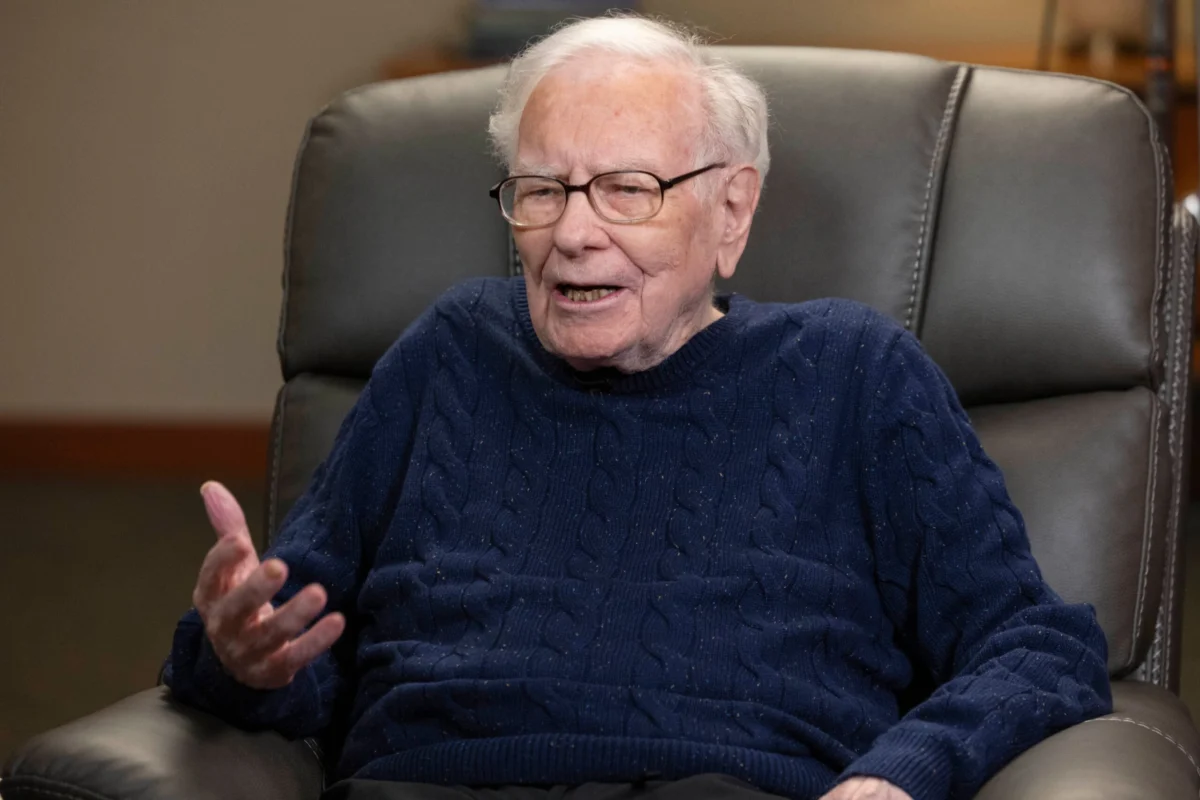
Omaha, Nebraska – In a monumental shift in his unparalleled philanthropic strategy, Warren Buffett, the venerable chairman and CEO of Berkshire Hathaway, has announced the redirection of his substantial annual charitable donations. The decision notably excludes the Bill & Melinda Gates Foundation, which has been the primary beneficiary of his giving for nearly two decades, in favor of four family-linked foundations. This strategic pivot, revealed in an interview with CNBC’s Becky Quick, comes as the 95-year-old "Oracle of Omaha" prepares his children for greater responsibility in managing his vast fortune’s philanthropic distribution, while also acknowledging his review of Bill Gates’ association with the late convicted sex offender Jeffrey Epstein.
A Decades-Long Philanthropic Partnership Reconfigured
For years, the partnership between Warren Buffett and Bill Gates represented a cornerstone of global philanthropy. Since 2006, Buffett has channeled an astonishing sum exceeding $47 billion worth of Berkshire Hathaway stock to the Bill & Melinda Gates Foundation, the philanthropic organization co-founded by the Microsoft luminary and his former wife, Melinda French Gates. This commitment was not merely financial; it symbolized a deep friendship and a shared vision for tackling some of the world’s most intractable problems, particularly in global health, poverty alleviation, and education. The Gates Foundation, with its monumental endowment (now exceeding $70 billion), has become a dominant force in international development, funding initiatives that have saved millions of lives, eradicated diseases, and improved educational outcomes across continents. Buffett’s contributions were instrumental in scaling these efforts, allowing the foundation to undertake ambitious, long-term projects that few other entities could support.
The recent announcement marks an end to this specific, high-profile funding stream from Buffett, signaling a new chapter in his philanthropic legacy. While the sheer scale of the Gates Foundation’s existing resources ensures its continued operation, the cessation of Buffett’s annual infusion of billions represents a significant recalibration of one of philanthropy’s most impactful alliances.
The Shadow of the Epstein Controversy and Buffett’s Review
Central to the narrative surrounding this shift is Bill Gates’ controversial association with Jeffrey Epstein. Buffett openly addressed this aspect, describing Gates’ ties to Epstein as "distasteful." He revealed that he undertook an extensive review of information concerning the relationship since the beginning of the year. "I read a great deal since Jan. 1 in terms of what happened, with Bill and Epstein," Buffett stated. Despite finding the situation "distasteful," he concluded, "While he made mistakes, I made mistakes, hiring all kinds of people, or choosing friends, and then finding out later that, one way or other, they weren’t what I thought they were. I found nothing in there that was beyond what I could picture myself doing."
This statement offers crucial insight into Buffett’s perspective. It suggests that while the Epstein saga was a factor in his reevaluation, it did not lead to a complete condemnation of Gates or their long-standing friendship. Instead, it appears to have contributed to a broader assessment of his philanthropic strategy, coinciding with his evolving plans for wealth transfer to his children. Buffett’s nuanced take underscores his personal philosophy of human fallibility and the complexities of judgment, even as he acknowledges the deeply troubling nature of Epstein’s crimes and the scrutiny it brought upon those associated with him.
The timeline of the Epstein controversy and its impact on Bill Gates is well-documented. Gates reportedly began meeting with Epstein in 2011, several years after Epstein’s 2008 conviction for soliciting prostitution from a minor. These meetings, which reportedly included gatherings at Epstein’s opulent New York townhouse and flights on his private jet, continued for several years. Public scrutiny intensified significantly following Epstein’s 2019 arrest on new sex trafficking charges and his subsequent death by suicide in jail. Reports in various media outlets detailed the extent of Gates’ association, raising questions about his judgment and priorities. The controversy is also widely believed to have been a contributing factor, among others, to the dissolution of Bill and Melinda French Gates’ marriage in 2021, with Melinda reportedly expressing discomfort with her husband’s ties to Epstein. Buffett’s deep dive into these events since the turn of the year indicates a thorough, if personal, due diligence process before solidifying his decision.

Empowering the Next Generation: A New Chapter for Family Philanthropy
While the Epstein controversy served as a backdrop to Buffett’s review, the primary catalyst for the shift, as articulated by Buffett himself, is a long-planned transfer of philanthropic responsibility to his three children. "I reevaluated my whole situation," Buffett explained. "What happened was that I gave the Gates Foundation a great deal of money. I thought that was a good decision. I think it was a decent decision, but I did not think my kids were in any way ready to give away vast sums of money." Now, he believes, the time is right. "I tell the three children that it is theirs, and it’s their responsibility to get it done well," he affirmed, marking a definitive step in his succession planning.
This year’s donations, totaling approximately $6 billion based on current market values, will be distributed among four family-linked foundations:
-
The Susan Thompson Buffett Foundation: Named after his late first wife, this foundation is a major philanthropic entity primarily focused on reproductive health and family planning, as well as education, particularly through scholarship programs. It will receive the largest share this year, with 9 million Class B shares of Berkshire Hathaway stock, currently valued at around $4.5 billion. The foundation has a long history of impactful giving, reflecting Susan Buffett’s own commitment to social causes.
-
The Sherwood Foundation: Led by his daughter, Susie Buffett, this foundation is dedicated to improving the quality of life in Nebraska, focusing on early childhood education, environmental conservation, and social justice initiatives. It will receive 1 million Class B shares, worth just under $500 million. Susie Buffett has been deeply involved in community development and social causes for decades, making her a seasoned philanthropic leader.
-
The Howard G. Buffett Foundation: Overseen by his son, Howard G. Buffett, this foundation is known for its work in global food security, conflict mitigation, and public safety. Its projects often address the root causes of hunger and poverty in vulnerable regions worldwide. It will also receive 1 million Class B shares, valued at just under $500 million. Howard has extensively traveled and worked in developing countries, bringing a hands-on approach to his philanthropic endeavors.
-
The NoVo Foundation: Co-founded by his son, Peter Buffett, and his wife, Jennifer Buffett, the NoVo Foundation focuses on initiatives that empower girls and women, end violence, and advance social and economic justice globally. It will receive 1 million Class B shares, worth just under $500 million. Peter Buffett is also a celebrated musician and composer, bringing a creative and advocacy-oriented perspective to his philanthropic work.
This strategic allocation empowers Buffett’s children to directly manage and distribute significant portions of his wealth, aligning with his long-held belief in equipping them for substantial philanthropic leadership. It represents not just a transfer of assets but a transfer of immense responsibility, underscoring Buffett’s methodical approach to legacy planning.
An Enduring Friendship Amidst Philanthropic Redirection

Despite the significant change in his charitable giving strategy, the personal bond between Warren Buffett and Bill Gates remains intact. Buffett confirmed that he and Gates continue to be in regular contact, demonstrating that the philanthropic shift is not indicative of a personal rift. "He came by Omaha three weeks ago. I kind of lose track of time, but certainly not three months, and we spent three hours talking together," Buffett recounted. He added, "He intends to call me… He already proposed another meeting."
Bill Gates himself affirmed the enduring nature of their relationship and expressed profound gratitude for Buffett’s past support. In a statement provided to CNBC, Gates said, "My gratitude to Warren is immeasurable, and I cherish the time we spend together. I hope we have much more of it ahead." He also lauded Buffett’s "unprecedented" support for the Gates Foundation, acknowledging its critical role in helping to save "millions of lives." This mutual respect and continued interaction underscore that the philanthropic decision, while impactful, is a strategic one rooted in Buffett’s long-term vision for his wealth, rather than a personal severance.
Broader Implications for Philanthropy and Wealth Transfer
This move by Warren Buffett carries significant implications for the world of philanthropy and the broader landscape of ultra-high-net-worth wealth transfer.
-
Diversification of Impact: While the Gates Foundation will no longer receive Buffett’s annual stock donations, the re-allocation ensures that his philanthropic capital continues to flow into critical areas through diversified channels. The combined efforts of his children’s foundations cover a broad spectrum of social issues, from local community development in Nebraska to global humanitarian efforts and women’s empowerment. This could lead to a more varied and perhaps more regionally focused impact for Buffett’s charitable giving.
-
Empowerment of Family Foundations: The infusion of billions of dollars will dramatically increase the capacity and reach of the Buffett family foundations. This provides them with unprecedented resources to scale existing programs, launch new initiatives, and solidify their long-term impact in their respective areas of focus. It positions them as even more significant players in their specific philanthropic niches.
-
Succession Planning Model: Buffett’s decision offers a powerful case study in intergenerational wealth transfer and philanthropic succession. It highlights a deliberate, phased approach to entrusting significant capital and responsibility to the next generation, preparing them over decades to manage and deploy vast sums effectively. This model contrasts with purely institutional giving or immediate large-scale trust distributions, emphasizing active family stewardship.
-
Buffett’s Legacy: This strategic shift further refines Warren Buffett’s already legendary philanthropic legacy. Having pledged the vast majority of his wealth, he is now actively orchestrating its distribution in his later years, ensuring that his vision for giving continues through his most trusted conduits – his family. His stated goal to dispose of all his Berkshire shares within approximately eight years, acknowledging that his children are "unfortunately growing older," underscores the urgency and intentionality behind these decisions. At 95, and having recently undergone surgery for a broken leg (from which he is reportedly recovering well), Buffett is meticulously planning the final chapters of his extraordinary life and his enduring impact on the world.
The decision by one of the world’s wealthiest individuals to recalibrate his philanthropic strategy sends ripples throughout the sector. It underscores the personal nature of large-scale giving, the evolving dynamics of ultra-wealthy families, and the intricate balance between established institutional philanthropy and the direct, family-led stewardship of immense fortunes. As the philanthropic landscape continues to evolve, Buffett’s latest move offers a compelling example of strategic adaptation and generational transition at the pinnacle of global wealth.
