

The shift toward non-visual security represents a return to fundamental principles of detection where the objective is to identify an intrusion rather than record it. By utilizing advanced motion sensors, radar systems, and even smart lighting fluctuations, residents can maintain a high level of situational awareness. These technologies provide the necessary alerts to trigger alarms or notify authorities while ensuring that private conversations and domestic activities remain unrecorded and off the cloud.
The Evolution of Non-Visual Security Technology
The history of home security has moved in cycles. In the late 20th century, home protection relied almost exclusively on contact sensors for doors and windows and Passive Infrared (PIR) sensors for motion. These systems were effective but often required professional installation and lacked the granular reporting found in modern apps. The 2010s marked the era of the "smart camera," led by brands like Ring and Nest, which promised peace of mind through visual verification.
However, as the "surveillance state" became a household topic, the 2020s have seen a technological pivot. The current generation of security hardware leverages "presence sensing" and radar, technologies that can detect the micro-movements of a human breath or the specific gait of an intruder without ever capturing a recognizable image. This chronology reflects a maturing market that prioritizes cybersecurity and personal autonomy alongside physical safety.
Radar Systems: High-Perimeter Protection Without Wi-Fi
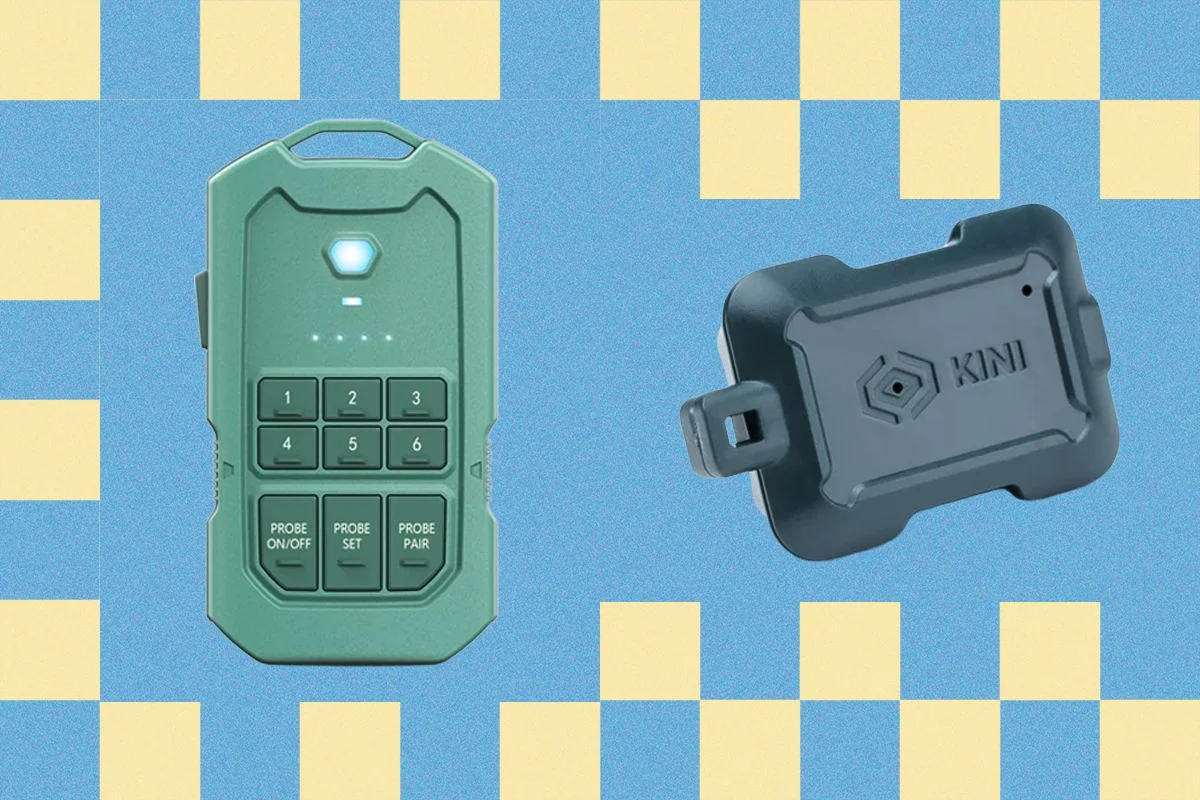
One of the most significant advancements in private security is the adaptation of radar technology for residential use. The Letwesaf Radar Motion Alarm System exemplifies this "old-school" but highly effective approach. Unlike standard smart home devices that require a constant connection to a central server, this system operates on a closed loop. It consists of a receiver and a detector that communicate over a long-range radio frequency, capable of covering distances up to half a mile.
The technical specifications of the Letwesaf system make it ideal for large properties or rural settings. The detectors are IP65-rated, meaning they are dust-tight and protected against water jets, allowing them to function in extreme weather conditions. The radar technology utilized in these units is superior to traditional PIR sensors because it can be calibrated to ignore environmental noise, such as wind-blown branches or small animals, while reliably flagging human-sized objects.
Supporting data suggests that false alarms are one of the primary reasons homeowners disable their security systems. Radar systems mitigate this by allowing users to define detection zones—typically a 20 x 17-foot rectangle that can be extended up to 50 feet. While the configuration process can be manual and requires physical presence in the detection zone to test, the result is a system that does not rely on a vulnerable Wi-Fi network or a privacy-compromising cloud subscription.
Micro-Monitoring and the Kinisium SafeAlert
While radar handles the perimeter, internal security often requires a more delicate touch. The Kinisium Kini SafeAlert represents a specialized category of "micro-monitoring." This device is designed not for rooms, but for specific points of interest: gun safes, medicine cabinets, or drawers containing sensitive documents.
The Kini SafeAlert is unique in its focus on multi-axis movement. Using internal accelerometers, it detects when a surface is moved in the x, y, or z-axis. This level of granularity allows for highly specific security protocols. For instance, a homeowner can receive a text message the moment a liquor cabinet is opened or if a jewelry box is shifted.
A critical feature of the Kini system is its "Stasis mode." This functionality flips the security premise on its head, alerting the user when motion fails to occur. In the context of "age tech"—technology designed to assist the elderly—this is invaluable. It allows family members to monitor the wellbeing of an older relative by ensuring they have opened their pill organizer or refrigerator by a certain time of day, providing care without the intrusive presence of a camera in the bedroom or kitchen.
Integrating Motion Sensors into Smart Home Ecosystems
For those already invested in smart home platforms like Apple Home, Google Home, or Amazon Alexa, dedicated motion sensors offer a seamless way to enhance security. The Eve Motion Sensor, for example, has gained popularity for its support of the Matter and Thread protocols. These networking standards allow for faster, more reliable communication between devices without requiring every sensor to have a direct path to the internet, thus reducing the "attack surface" for hackers.

Other notable entries in the presence-sensing market include:
- Aqara FP2 Presence Sensor: This device uses millimetre-wave (mmWave) radar to detect multiple people in a room simultaneously. It can even define "zones" within a single room, such as a couch or a bed, to trigger specific automations.
- Switchbot Presence Sensor: A more budget-friendly option, this sensor provides basic presence detection and is often used to trigger lighting, though it may experience slight latency when used for security alerts.
- Philips Hue Outdoor Sensor: Widely considered the gold standard for integrated lighting security, this sensor requires a Hue Bridge but offers near-instantaneous response times, turning on floodlights and sending mobile notifications the moment a person enters a backyard.
The Rise of Ambient Sensing: Wi-Fi and Zigbee Disturbances
An emerging frontier in privacy-first security is "ambient sensing," which utilizes the wireless signals already present in a home to detect movement. Signify, the parent company of Wiz and Philips Hue, has pioneered this through technologies like Wiz SpaceSense and Hue MotionAware.
The science behind this is fascinating: as a human body moves through a room, it physically disrupts the Wi-Fi or Zigbee signals bouncing between smart bulbs and routers. By measuring these disruptions, the system can determine where a person is located.
While Wiz SpaceSense is currently free to use for those with compatible hardware, it can suffer from lag depending on the density of the light bulbs in the home. Philips Hue’s MotionAware is more refined but often requires a subscription for advanced alerts. Despite these hurdles, ambient sensing represents the ultimate "invisible" security system—it requires no extra hardware, captures no images, and utilizes the existing infrastructure of the modern home.
Modular Security Systems and Professional Monitoring
For homeowners who want a comprehensive "set it and forget it" solution without cameras, modular systems like SimpliSafe offer a middle ground. These systems typically center around a base station and a keypad, using a variety of entry sensors and motion detectors to create a security "bubble."
Industry experts note that these systems are often more effective at deterring actual crime than cameras alone. A siren triggered by a door sensor is an immediate deterrent, whereas a camera might only provide a recording of a masked individual after the crime has been committed. Companies like ADT, Vivint, and Arlo have all expanded their offerings to include non-video components, recognizing that a significant portion of their customer base is moving away from internal video recording.
Broader Impact and Privacy Implications
The move toward motion-based security has significant implications for the future of the "Surveillance State." When security data is limited to "motion detected at 3:00 AM" rather than a 1080p video of a person’s living room, the value of that data to third parties—including advertisers and government agencies—is drastically reduced.
Furthermore, these systems address the growing issue of "alarm fatigue." Video-based systems often trigger dozens of notifications a day due to shadows, insects, or changing light conditions. Advanced presence sensors and radar are far more discerning, ensuring that when a homeowner receives an alert, it is likely a matter of genuine concern.
From a legal and insurance perspective, the adoption of reliable motion sensors is also gaining traction. Many insurance providers now offer discounts for homes equipped with monitored sensor systems, regardless of whether they include video components. This validates the effectiveness of non-visual detection as a legitimate form of risk mitigation.
Conclusion
The Best Motion Sensors and Privacy Alternatives to Security Cameras provide a roadmap for the future of domestic tranquility. By choosing radar, presence sensing, and micro-monitoring gadgets, homeowners can reclaim their privacy without leaving their property vulnerable. As cybersecurity threats evolve and the debate over digital privacy intensifies, the reliance on "smart" but non-intrusive sensors is likely to become the new standard for the modern, secure home. Whether it is protecting a remote campsite with a radar alarm or ensuring the safety of an elderly loved one through stasis monitoring, the technology of today proves that you don’t need to see everything to protect what matters most.
