

As Europe grapples with an escalating frequency and intensity of dangerous heatwaves, the fundamental question is no longer whether affluent nations require robust climate adaptation measures. Instead, it has become a pressing inquiry into their willingness to engage with and learn from regions that have been navigating chronic climate instability for generations. The continent, accustomed to temperate climates, now finds itself confronting unprecedented temperatures that are overwhelming its public services, disrupting critical infrastructure, and transforming everyday public spaces into serious health hazards. Countries like the United Kingdom, France, Spain, Italy, Germany, and those in the Balkans are only now integrating extreme heat into the intricate tapestry of their social, economic, and political realities concerning climate change.
However, on the African continent, communities have been living intimately with the multifaceted impacts of a warming planet for decades, often centuries. Rising temperatures, increasingly erratic rainfall patterns, prolonged droughts, acute water stress, and the challenges of fragile public infrastructure are not new phenomena but rather ingrained aspects of daily life. These communities have been compelled to innovate and adapt under severely constrained conditions, frequently lacking the substantial financing, comprehensive insurance coverage, or sophisticated recovery systems routinely available to their wealthier counterparts in the Global North. This crucible of necessity has fostered the development of a diverse array of behavioural, architectural, technological, and institutional approaches that now offer invaluable, tangible lessons for a rapidly warming Europe.
The Unavoidable Reality: Europe’s Heatwave Crisis
The summer of 2022 served as a stark, undeniable harbinger of Europe’s climate future, with record-breaking temperatures sweeping across the continent. London surpassed 40°C for the first time ever, while Spain and Portugal battled widespread wildfires. The European Union’s Copernicus Climate Change Service reported that the summer of 2022 was the hottest on record, leading to an estimated 60,000 excess deaths across Europe, according to a study published in Nature Medicine. This tragic toll underscored the vulnerability of European populations and infrastructure to extreme heat. In 2023, similar patterns emerged, with Greece experiencing devastating fires and Italy enduring "Charon" and "Cerberus" heatwaves pushing temperatures well above 45°C in some regions. These events have not only caused immense human suffering but have also exacted a significant economic cost, impacting agriculture, tourism, energy grids strained by air conditioning demand, and public health systems. Transport networks, from railways buckling under heat to airports facing runway melting, have been repeatedly disrupted. The "urban heat island effect," where densely populated, paved cities become significantly hotter than surrounding rural areas due to heat absorption by concrete and lack of green spaces, exacerbates these challenges in major European metropolitan centres.
A Continent Forged in Climate Instability: Africa’s Decades of Adaptation
While Europe grapples with what it perceives as new challenges, Africa has long been on the front lines of climate change. The continent is warming faster than the global average, with projected temperature increases leading to more frequent and intense heatwaves, prolonged droughts, and shifts in rainfall patterns. According to the World Meteorological Organization (WMO), extreme weather events in Africa have increased five-fold over the past few decades. Yet, despite its disproportionate vulnerability, Africa receives only a fraction of global climate finance, with adaptation funding consistently falling short of estimated needs. The African Development Bank estimates that the continent requires up to $50 billion annually for climate adaptation by 2030, a figure vastly exceeding current inflows. This chronic underinvestment has, paradoxically, forced communities to become pioneers in low-cost, high-impact adaptation strategies. Their experiences offer a powerful counter-narrative to the prevailing discourse that often frames Africa solely through the lens of vulnerability, instead highlighting its profound capacity for invention and resilience.
Architectural Ingenuity: Passive Cooling for a Warming World
One of the most compelling areas where African expertise can inform European practice is in architecture and urban planning. Architects across West Africa, exemplified by the Pritzker Prize-winning Francis Kéré from Burkina Faso, have championed climate-smart building designs deeply rooted in Indigenous techniques and local materials. Kéré’s work, for instance, often features thick, earth-based walls that provide excellent thermal mass, keeping interiors cool during the day and releasing heat slowly at night. His designs integrate reflective roofing materials, elevated roofs for ventilation, and strategically placed window and ventilation systems that facilitate passive air circulation, effectively cooling buildings without heavy reliance on mechanical air conditioning. These principles are not merely aesthetic choices but sophisticated engineering solutions honed over centuries to suit hot, arid, or humid environments.
As European cities confront their extensive ageing housing stock, much of which is poorly insulated and ill-suited to sustained periods of extreme heat, and as their energy grids struggle to meet the escalating demand for mechanical cooling, these low-tech, low-energy design principles deserve rigorous attention. European policymakers and urban planners are increasingly acknowledging the need for a paradigm shift. "The energy demands of widespread air conditioning are simply unsustainable for our existing grids, let alone our climate goals," remarked a spokesperson for the European Commission’s Directorate-General for Energy. "We need to explore every avenue for passive cooling, and traditional knowledge, particularly from regions like West Africa, offers incredibly intelligent and resource-efficient solutions." Architects associations in Europe have begun hosting workshops exploring bioclimatic design, drawing inspiration from these long-established practices, recognizing that a return to fundamental principles of thermal comfort, adapted for modern contexts, is essential.
Greening Cities: Freetown’s Blueprint for Urban Resilience
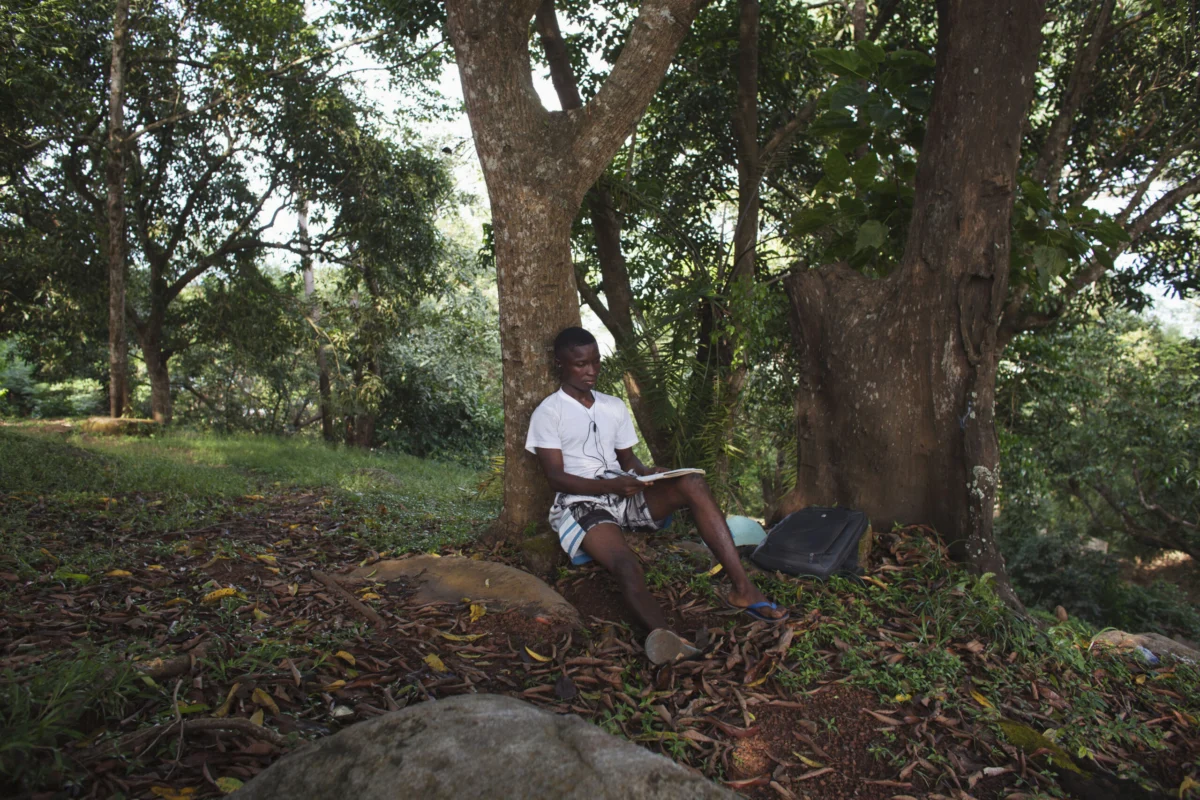
The challenge of the urban heat island effect is not unique to Europe. Many African cities, characterized by rapid urbanization, dense construction, and often limited green spaces, face this problem acutely. Sierra Leone’s capital, Freetown, has emerged as a global leader in urban greening through its ambitious "Freetown the Tree Town" initiative. Launched in 2020, this large-scale tree-planting programme aims to plant one million trees across the city to specifically combat the urban heat island effect, improve air quality, and enhance biodiversity. The initiative leverages a unique financing model, primarily funded through the voluntary carbon credit market, where corporations purchase credits to offset their emissions, thereby supporting Freetown’s reforestation efforts.
Freetown’s experience in organizing, financing, and sustaining mass tree-planting at a city-wide scale offers directly relevant insights for European cities, many of which are similarly dense, extensively paved, and often lacking adequate green cover. Data from Freetown’s initial phases suggest a measurable reduction in localized temperatures in areas with significant new tree cover, alongside improved community engagement and job creation. "Our ambition was not just to plant trees, but to create a sustainable model for urban resilience that empowers our communities," stated Yvonne Aki-Sawyerr, the Mayor of Freetown. "The lessons we’ve learned in community mobilization, data tracking, and innovative financing through carbon credits are invaluable, and we are eager to share them." European cities, from Paris’s "green walls" initiatives to Milan’s efforts to increase urban forestry, could benefit immensely from understanding Freetown’s practical strategies for large-scale implementation, long-term maintenance, and effective public participation.
Community-Centric Health: Proactive Care in Extreme Heat
The human toll of heatwaves highlights the critical need for robust public health responses. Across Africa, community health programmes have demonstrated how heat adaptation initiatives can be designed to effectively reach the most vulnerable populations. These programmes often operate through established primary health centres and leverage public health officers to address extreme heat risks directly within informal settlements, where residents typically possess the least protection and the fewest resources to cope. Burkina Faso, for instance, operates a sophisticated national heatwave alert system that extends far beyond merely issuing weather warnings. This system actively promotes hydration strategies, educates citizens on managing exposure during peak heat hours, and is backed by a proactive network of community health workers who conduct door-to-door check-ins on vulnerable residents, particularly the elderly and those with pre-existing health conditions.
This proactive, targeted, and community-embedded approach stands in contrast to the often more generic public advisories issued in many European contexts. Europe’s own most exposed populations – including older people living alone, outdoor workers in agriculture or construction, and residents of poorly insulated, often low-income housing – would derive significant benefits from health systems organized around similar principles. The World Health Organization (WHO) has consistently advocated for such community-based interventions, noting that "effective heat action plans must go beyond mere warnings and incorporate specific, localized interventions to protect the most susceptible." Learning from Burkina Faso’s model could enable European public health bodies to develop more granular, empathetic, and ultimately more effective strategies for mitigating the health impacts of extreme heat, shifting from a reactive emergency response to a preventative, community-led care model.
The Global Adaptation Finance Gap: A Call for Equitable Investment
The larger, overarching point that emerges from Africa’s experience is the imperative to reframe adaptation not as a charitable handout or a mere crisis response, but as a crucial pillar of climate innovation and a wise investment in future resilience. Had adaptation finance been treated as a central, indispensable component of global climate action, rather than a secondary concern often relegated to the periphery of mitigation efforts, many of these ingenious solutions from the Global South would already be better funded, meticulously documented, and more effectively positioned for widespread learning and replication. Instead, the prevailing global financial architecture has repeatedly prioritized funding for emergency relief and disaster recovery, while consistently underinvesting in the systemic measures that proactively reduce risk before disaster strikes.
The recent European heatwaves serve as a stark reminder that underinvestment in adaptation anywhere on the planet ultimately weakens the world’s collective capacity to respond everywhere. As the Intergovernmental Panel on Climate Change (IPCC) has repeatedly highlighted, there is a significant and growing "adaptation finance gap." The more African cities, researchers, public health institutions, and community organizations are adequately supported to test, refine, and scale their innovative solutions, the more robust and diverse the global knowledge base on climate resilience becomes, benefiting all nations.
Bridging the Divide: Towards a Two-Way Street of Knowledge Exchange
The era of North-South cooperation, particularly concerning climate action, must unequivocally evolve into a genuinely two-way street. Europe, with its advanced scientific institutions, technological capabilities, and substantial financial resources, should continue to share climate science, cutting-edge technologies, and much-needed finance. However, it is equally imperative that Europe cultivates a deep sense of humility and actively seeks to listen to, learn from, and integrate African adaptation practices into its own strategies.
This exchange must occur at multiple levels. Municipalities in Europe should be actively exchanging notes, best practices, and lessons learned with their counterparts in African cities. Public health officials across continents should be engaging in structured dialogues and collaborative research to share insights on managing heat-related illnesses and protecting vulnerable populations. Architects, urban planners, and engineers must move beyond viewing African innovations as mere curiosities; instead, they should study what works effectively in hot, resource-constrained environments as invaluable sources of design intelligence and practical solutions. Organizations like the C40 Cities network and various UN agencies are increasingly facilitating these exchanges, but the scale and depth of collaboration need to dramatically increase.
Beyond Vulnerability: Africa as a Hub of Climate Innovation
Africa’s narrative concerning heat and climate stress has predominantly been framed as a story of acute vulnerability. While this narrative holds a profound truth, it is undeniably incomplete and often overlooks a critical dimension. It is also, profoundly, a story of relentless invention, pragmatic adaptation, and deeply embedded expertise. As Europe embarks on its urgent quest for viable pathways to live sustainably with a hotter future, its gaze should not be confined solely to inward reflections or upward to novel, often energy-intensive technologies. Crucially, it must also turn southward, towards the vibrant communities, dynamic cities, and resilient institutions across Africa that have been learning, innovating, and adapting in real-time for generations.
The continent’s rich tapestry of traditional ecological knowledge, combined with modern ingenuity born of necessity, presents a powerful blueprint for future resilience. This shift in perspective is not merely altruistic; it is a pragmatic necessity for Europe’s own survival and prosperity in an increasingly volatile climate.
The Path Forward: Humility, Collaboration, and Shared Solutions
The world is unequivocally entering a period where extreme heat will rigorously test the fundamental functioning of societies across the globe. It will strain educational systems, overwhelm hospitals, disrupt transport networks, challenge existing housing standards, necessitate re-evaluations of labour laws, compromise food systems, and ultimately, erode public trust. No single region possesses all the definitive answers to these multifaceted challenges. However, some regions, particularly in Africa, have been compelled by circumstance to confront these existential questions for a significantly longer duration, developing a wealth of practical solutions in the process. What is urgently needed now is the profound humility to actively seek out solutions where they have already been conceived, built, and rigorously tested, coupled with an unwavering commitment to genuine collaboration to effectively deploy them wherever they are needed next. The future of climate adaptation hinges on this shared learning and collective action, transforming a global threat into an opportunity for unprecedented cross-continental innovation and solidarity.
