

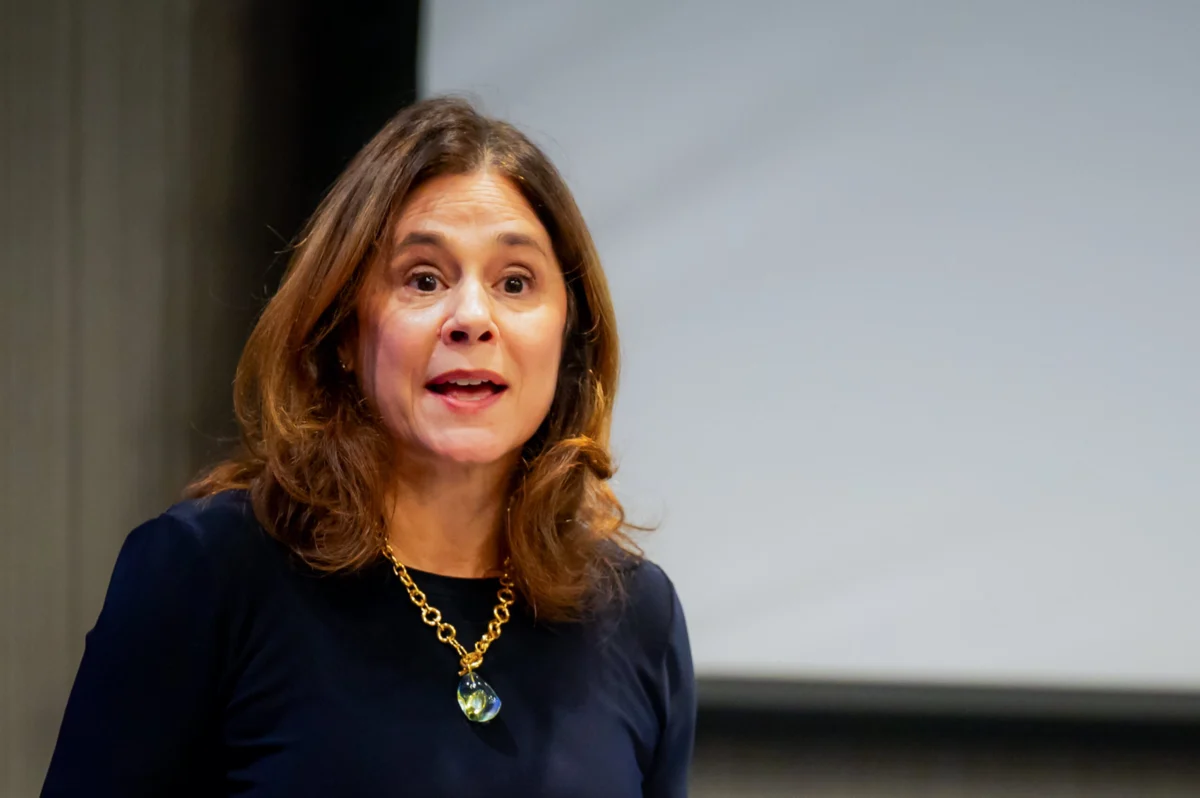
Dallas Federal Reserve President Lorie Logan, a voting member of the Federal Open Market Committee (FOMC) this year, delivered a stark message on Thursday, advocating for "modestly higher" interest rates to decisively combat what she described as a persistent inflation challenge. Her remarks, made in prepared comments for a speech in Houston, underscored a conviction that despite recent positive economic data indicating a deceleration in consumer and wholesale prices, the battle for price stability remains far from won. Logan’s assertive stance positions her among the more hawkish voices within the central bank, emphasizing the need for proactive monetary policy to safeguard household budgets and achieve the Fed’s mandated 2% inflation target, a goal that has remained elusive for the better part of five years.
The Federal Reserve’s Dual Mandate and the Inflationary Struggle
The Federal Reserve operates under a dual mandate set by Congress: to achieve maximum employment and maintain price stability. For much of the 2010s, the primary challenge for the Fed was stimulating economic growth and pushing inflation towards its 2% target, often struggling to consistently meet this objective. However, the economic landscape dramatically shifted in the wake of the COVID-19 pandemic. Unprecedented fiscal and monetary stimulus, coupled with severe supply chain disruptions, a surge in consumer demand, and later, geopolitical events impacting energy and food prices, ignited an inflationary spiral not seen in decades.
Beginning in early 2021, inflation metrics began to climb, quickly surpassing the Fed’s 2% target. Initially, central bank officials, including then-Chair Jerome Powell, characterized this surge as "transitory," attributing it primarily to pandemic-related bottlenecks that were expected to resolve themselves. This view, however, proved to be an underestimation of the inflationary pressures. As inflation broadened beyond goods to services and wage growth accelerated, the Fed was compelled to pivot sharply. In March 2022, the FOMC initiated its most aggressive rate-hiking cycle in over 40 years, raising the federal funds rate from near zero to a range between 5.25% and 5.50% over a span of 18 months, alongside commencing quantitative tightening to shrink its balance sheet. This aggressive tightening aimed to cool demand and bring inflation back under control, often at the risk of slowing economic growth and potentially impacting the labor market.
Recent Economic Data and Divergent Interpretations
Logan’s call for further rate hikes comes on the heels of several economic reports that, on the surface, offered some relief to policymakers and consumers alike. Earlier in the week, the Bureau of Labor Statistics reported that the Consumer Price Index (CPI) for June registered a monthly decline of 0.4%, marking the largest monthly decrease since April 2020. This was followed by a 0.3% slip in the Producer Price Index (PPI), indicating a moderation in wholesale costs. Both gauges benefited significantly from a notable decline in global oil prices, which had surged in previous months due to geopolitical tensions and supply concerns. Furthermore, the reports suggested a softening in costs across several other key categories, including, importantly, housing – a component that has proven particularly sticky and a significant driver of overall inflation.
Despite these encouraging headline figures, Logan emphasized that "one month of relief is not enough." Her assessment highlights a critical distinction between short-term fluctuations and the sustained trend required to achieve the Fed’s long-term price stability goals. While monthly declines are welcome, the year-over-year figures still paint a picture of elevated inflation. Consumer prices, even after the monthly drop, remained up 3.5% from a year ago, while wholesale costs had increased by a more substantial 5.5% over the same period. These numbers firmly remain above the central bank’s 2% target, suggesting that underlying inflationary pressures persist.
Logan further elaborated on her concerns by pointing to a range of widely cited inflation gauges, as well as alternative measures, such as "core prices less housing." This category is often scrutinized by economists because it strips out volatile energy and food prices and the lagged effects of housing, providing a clearer signal of underlying inflationary trends. Even with the recent slide in energy prices and the waning impact of previous tariff adjustments, Logan argued that these measures still show inflation "mired well ahead of the Fed’s target." This comprehensive view suggests that while some components of inflation are decelerating, the broad inflationary impulse has not yet been fully extinguished.
Logan’s Argument for "Modestly Higher" Rates
In her remarks, Logan articulated a proactive philosophy, famously quoting hockey legend Wayne Gretzky: "In monetary policy as in hockey, you have to skate where the puck is going." She contended that simply reacting to current data is insufficient; policymakers must anticipate future economic trajectories. "Unfortunately," she noted, "inflation does not appear to be headed sustainably back all the way to 2 percent on its own." This forward-looking perspective underpins her argument for additional policy tightening.
Logan’s rationale for "modestly higher interest rates" is rooted in a belief that a pre-emptive strike against entrenched inflation is preferable to a more aggressive intervention later. She warned, "If higher inflation becomes entrenched, we’d need sharper rate increases to bring it back to target, with a larger cost for the labor market. Better modest restriction now than severe restriction later." This statement encapsulates the central banker’s dilemma: balancing the need to quell inflation without triggering an unnecessary recession or significantly impacting employment. The risk of waiting too long, in Logan’s view, is that inflation expectations could become de-anchored, making the job of restoration significantly more difficult and potentially more painful for the economy.
Her emphasis on the "strain on Americans’ budgets" from "every month of above-target inflation" highlights the real-world impact of persistent price increases. High inflation erodes purchasing power, disproportionately affecting lower-income households and those on fixed incomes. By advocating for further tightening, Logan implicitly argues that the immediate cost of slightly higher borrowing rates is outweighed by the long-term benefit of restoring price stability and protecting the economic well-being of households. While she did not specify the exact magnitude or timing of a potential hike, her statements clearly signal her inclination to support further increases at upcoming FOMC meetings.
The FOMC’s Decision-Making Process and Market Expectations
The Federal Open Market Committee, composed of 12 members (seven governors of the Federal Reserve System, the president of the Federal Reserve Bank of New York, and presidents of four other Federal Reserve Banks on a rotating basis), is responsible for setting the federal funds rate. Decisions are made by majority vote, often after robust debate reflecting diverse economic perspectives. While Logan’s call for higher rates is among the most explicit from a current voting member, other Fed officials have also expressed a preference for higher rates if inflation metrics do not show sustained improvement. This indicates a potential division within the committee, with some members perhaps leaning towards a pause to assess the impact of previous hikes, while others, like Logan, see the need for further action.
Financial markets are keenly attuned to these signals, attempting to price in future policy moves. According to CME Group’s FedWatch Tool, which tracks fed funds futures pricing, markets already largely expect the FOMC to raise its key overnight borrowing rate by a quarter percentage point later this year. The most likely timeline, as per current pricing, points to a hike either in September or, more probable, October. For the upcoming FOMC meeting scheduled for July 28-29, however, traders are pricing in significantly lower odds of an immediate hike, with only a 12.3% probability. This suggests that while markets acknowledge the possibility of further tightening, they anticipate a more cautious approach in the immediate term, perhaps waiting for more data or a broader consensus among policymakers. The divergence between Logan’s immediate call for "modestly higher" rates and market expectations for the very next meeting highlights the ongoing uncertainty and the nuanced interpretations of economic signals.
Broader Economic Implications
A decision by the FOMC to raise interest rates further would carry significant implications across the economy. For consumers, it would mean higher borrowing costs for mortgages, auto loans, credit cards, and other forms of debt, potentially dampening consumer spending and investment in housing. For businesses, higher rates increase the cost of capital, which could lead to reduced investment, slower hiring, and potentially a contraction in economic activity. The ultimate goal is to cool aggregate demand to align it with supply, thereby reducing inflationary pressures.
However, there is a delicate balance to strike. Over-tightening monetary policy risks pushing the economy into a recession, leading to job losses and economic hardship. The debate within the Fed and among economists often revolves around the concept of a "soft landing" – successfully bringing inflation down without triggering a severe downturn – versus a "hard landing," which implies a recession. Logan’s argument suggests a belief that the risk of inflation becoming entrenched outweighs the immediate risk of a slight economic slowdown from modest rate increases.
Furthermore, higher U.S. interest rates can have global repercussions. They can attract capital flows into the U.S., strengthening the dollar, which in turn makes U.S. exports more expensive and imports cheaper. This can create challenges for other central banks and economies, particularly those with dollar-denominated debt.
The Path Forward and Remaining Uncertainties
As the Federal Reserve approaches its next policy meetings, the path forward remains complex and fraught with uncertainties. Policymakers will continue to scrutinize a wide array of economic data, including not only inflation metrics but also labor market indicators, consumer spending, and business investment. The resilience of the U.S. labor market, which has remained robust despite the aggressive tightening cycle, presents a unique challenge, as strong wage growth can contribute to persistent services inflation.
Logan’s clear and direct statement underscores a conviction that the central bank cannot afford complacency in its fight against inflation. Her perspective, rooted in the long-term objective of price stability, signals a readiness to continue the tightening cycle even as some indicators show nascent signs of improvement. The coming months will reveal whether her call for "modestly higher" interest rates garners sufficient support within the FOMC to translate into concrete policy action, ultimately shaping the trajectory of the U.S. economy and the financial well-being of millions of Americans. The central bank’s commitment to "finish the job of restoring price stability" is clear, but the precise measures and the ultimate cost of achieving this goal are still subjects of intense debate and evolving economic realities.
