

The shift toward remote and hybrid work environments has fundamentally altered the physical habits of the global workforce, leading to a surge in sedentary behavior that health experts warn could have long-term physiological consequences. As traditional office commutes are replaced by mere steps from the bedroom to the desk, the demand for integrated home fitness solutions has reached an all-time high. Among the most significant innovations in this space is the walking pad—a slim, often portable iteration of the traditional treadmill designed specifically to fit under standing desks or in compact living spaces. Unlike their bulky, high-decibel counterparts found in commercial gyms, these machines are engineered for low-impact movement, allowing users to maintain productivity while mitigating the risks associated with prolonged sitting.
The Health Implications of the Sedentary Workspace
The rise of the "keyboard gargoyle"—a term used to describe the hunched posture and physical toll of all-day desk work—has prompted a reevaluation of workplace ergonomics. Clinical studies have consistently shown that prolonged sitting is linked to increased risks of cardiovascular disease, Type 2 diabetes, and musculoskeletal issues, particularly in the lower back and neck. Physical therapists note that even regular gym sessions may not fully offset the damage caused by eight hours of total inactivity.
Walking pads address this by facilitating "Non-Exercise Activity Thermogenesis" (NEAT). By maintaining a slow, consistent pace of 1.0 to 2.5 miles per hour, users can significantly increase their daily caloric expenditure, improve circulation, and enhance cognitive function through increased blood flow to the brain. Furthermore, the psychological benefits of movement during the workday include reduced stress levels and improved mood, which are critical for maintaining long-term mental health in isolated remote-work settings.

Leading Models in the 2026 Market
As of July 2026, the market for under-desk treadmills has matured, offering a variety of specialized features ranging from high-incline capabilities to near-silent motors. Rigorous testing by remote-work experts has identified several standout models that balance durability, space efficiency, and technological integration.
Urevo CyberPad: High-Incline Performance
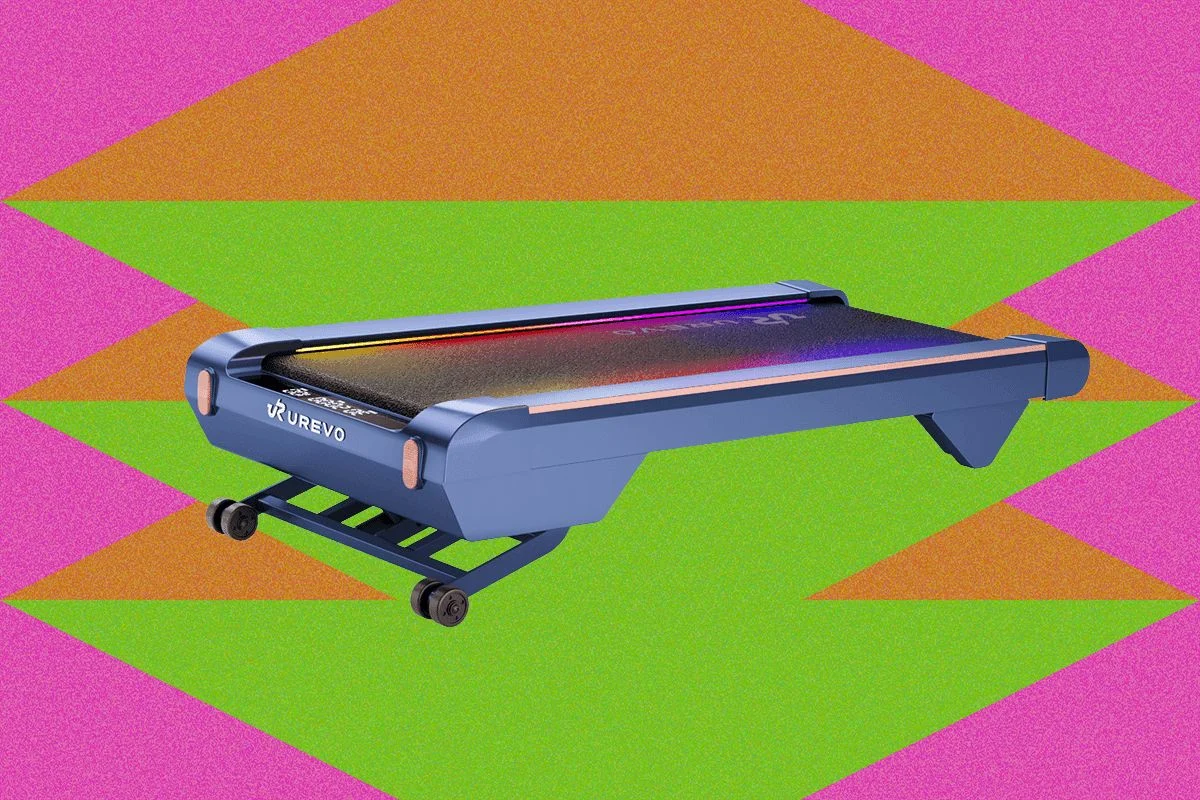
The Urevo CyberPad has emerged as a top-tier choice for those seeking to maximize the intensity of their indoor walks. Its defining feature is a 14-percent incline capability, which is significantly higher than the industry standard for walking pads. This allows for a more rigorous cardiovascular workout and increased activation of the posterior chain muscles—specifically the glutes and hamstrings—without requiring the user to increase their walking speed to a level that might interfere with typing or video conferencing. Weighing approximately 71 pounds, the unit is stable and durable, though its height due to the incline mechanism makes it less suitable for storage under low-profile furniture.
WalkingPad C2: The Foldable Solution
For users in urban environments where square footage is at a premium, the WalkingPad C2 offers a unique dual-fold design. When folded, the machine’s footprint is reduced by nearly half, measuring 32.5 inches in length. This model is particularly well-suited for taller individuals, as its 57-inch deck accommodates longer strides that might feel cramped on shorter budget models. However, testing indicates that the KS Fit companion app remains a point of friction, with inconsistent Bluetooth connectivity and a "lock" feature that requires users to complete a series of slow-speed sessions before accessing the machine’s full speed range.

Urevo Strol 2S Pro: Versatility and Speed
Bridging the gap between a walking pad and a traditional treadmill, the Urevo Strol 2S Pro features a foldable handrail that allows for speeds up to 7.6 mph. When the rail is down, the machine functions as a standard under-desk pad with a 4 mph limit. This versatility makes it an ideal investment for users who want to transition from a casual work-walk to a light jog after hours. Despite its relatively lightweight construction, it remains stable at higher speeds, a common failing point for affordable hybrid models.
Flexispot Auto Incline: The Silent Operator
Noise pollution is a significant concern for those living in apartments or participating in frequent calls. The Flexispot Auto Incline has been noted as the quietest model in its class. In addition to its acoustic performance, it offers a 12-percent incline and an intuitive setup that bypasses the need for complex app integration. While it lacks a step-tracking feature, its simplicity and reliability make it a preferred choice for users who prioritize a "plug-and-play" experience.
Safety Recalls and Regulatory Oversight
The rapid expansion of the home fitness market has not been without regulatory challenges. In 2026, the U.S. Consumer Product Safety Commission (CPSC) issued a high-priority warning regarding several models manufactured by Sperax. The alert specifically named the Pro, Q1, RM-01, and RM-02 models, citing significant fall and fire hazards.
-Front-Full-Reviewer-Photo-SOURCE-Adrienne-So.png)
According to the CPSC report, these machines were prone to unexpected speed changes and sudden stops, which could lead to serious injury. Furthermore, reports of motor overheating led to concerns regarding fire safety in residential settings. Following these findings, industry analysts have urged consumers to prioritize brands with established safety records and transparent manufacturing processes. The recall serves as a critical reminder that while affordability is a factor, the structural integrity and electronic safety of a motorized belt are paramount.
Technical Specifications and Comparative Data
When evaluating walking pads, technical data points serve as the most objective measure of quality. Below is a summary of the critical metrics used by professional testers to rank these devices:
- Motor Type: Most high-quality walking pads now utilize brushless DC motors, which offer longer lifespans and quieter operation than older brushed models.
- Weight Capacity: Standard models typically support between 220 and 265 pounds. Heavy-duty options, such as the Urevo SpaceWalk 5L, have increased this threshold to 300 pounds to accommodate a broader range of users.
- Track Dimensions: A width of at least 16 inches is recommended for comfort, while track lengths over 40 inches are necessary for those over six feet tall to prevent "clipping" the front or back of the machine.
- Incline Impact: Data suggests that walking at a 10-percent incline at 2 mph burns approximately double the calories of walking on a flat surface at the same speed.
Official Responses and Industry Trends
Manufacturers have responded to the increasing demand for integration by developing more robust software ecosystems. Companies like Urevo and Flexispot are increasingly focusing on app synchronization with wearable devices like the Apple Watch and Garmin fitness trackers.
-Reviewer-Photo-SOURCE-Adrienne-So.jpg)
In a statement regarding the future of the industry, wellness tech analysts suggest that the next generation of walking pads will likely incorporate AI-driven pace adjustment. This technology uses sensors to detect a user’s position on the belt; if the user moves toward the front, the machine speeds up, and if they drift toward the back, it slows down. This "hands-free" operation is intended to make the transition between walking and working even more seamless.
Broader Impact on Corporate Wellness
The proliferation of walking pads is also beginning to influence corporate policy. Some forward-thinking companies have started offering stipends for home office fitness equipment, recognizing that a healthier employee is more productive and less likely to take medical leave for chronic strain issues.
However, the transition to an active workspace requires a learning curve. Ergonomists suggest that users should start with 15-to-30-minute sessions to build up endurance in the smaller stabilizing muscles of the feet and ankles. Additionally, the use of a high-quality standing desk is mandatory; placing a walking pad on a standard-height desk is impossible, and using one with a non-adjustable setup can lead to severe neck strain.

Conclusion: A Shift in the WFH Paradigm
The integration of walking pads into the home office is more than a passing trend; it represents a significant shift in how we perceive the relationship between labor and physical health. By decoupling movement from the gym and integrating it into the workday, these machines offer a practical solution to the modern epidemic of inactivity. As technology continues to improve—making these devices thinner, quieter, and safer—the "treadmill desk" may soon become as standard in the home office as the ergonomic chair or the dual-monitor setup. For the remote worker, the ability to "rack up steps" while clearing an inbox is not just a matter of convenience; it is a vital strategy for long-term health in a digital age.
