

Canada stands at a critical economic and environmental crossroads as global energy markets undergo a rapid and irreversible transformation. While the federal government, under the leadership of Prime Minister Mark Carney, has expressed a commitment to large-scale infrastructure projects to stabilize the national economy, a growing chorus of policy experts and environmental advocates argues that the current focus remains too heavily tethered to the industries of the past. The debate centers on whether Canada should continue to subsidize fossil fuel expansion and traditional nuclear projects or pivot toward what many describe as "distributed energy megaprojects." These clean energy initiatives are proposed not only as a means of meeting climate targets but as a strategic roadmap for job creation, economic sovereignty, and long-term affordability.
The organization Adamant, led by chair Jason Mogus and researcher Tyee Bridge, has recently released a comprehensive framework titled "Build Canada Better." This vision challenges the current fast-tracking of energy-related projects of national interest that may entrench the Canadian economy in inefficient, declining platforms. Instead, the proposal outlines five transformative clean megaprojects designed to align Canada with global technological advances and market demands.
The Chronology of Canada’s Energy Transition Policy
To understand the urgency of this policy pivot, it is necessary to examine the timeline of Canada’s recent economic and environmental commitments. Following the 2015 Paris Agreement, Canada committed to reducing greenhouse gas emissions by 40 to 45 percent below 2005 levels by 2030. In 2021, the enactment of the Canadian Net-Zero Emissions Accountability Act legally bound the government to achieve net-zero emissions by 2050.
By early 2024, the discourse shifted toward infrastructure as a tool for economic resilience in a "volatile new world." Prime Minister Mark Carney’s administration has emphasized "projects of national interest" to bolster productivity. However, critics argue that the definition of these projects has remained too narrow, often favoring capital-intensive fossil fuel infrastructure that risks becoming stranded assets as global buyers shift toward renewable alternatives. The Adamant proposal, released in the spring of 2024, serves as a direct response to this strategy, advocating for a "hard pivot" toward clean, distributed energy systems.
Project One: Tripling Clean-Energy Capacity
The foundational pillar of the proposed economic transformation is the massive expansion of Canada’s clean electricity grid. According to data from the Public Policy Forum, Canada’s power output must increase by two to three times its current capacity by 2050 to support the electrification of transport and heating. This requires building more electricity infrastructure in the next 25 years than was constructed in the previous century.
The economic implications of this expansion are significant. By transitioning to a grid powered by low-cost renewables, the average Canadian consumer could see drastic reductions in energy costs. Proponents suggest that the cost of powering an electric vehicle would be equivalent to paying 25 cents per litre for gasoline, while heat pumps could reduce residential heating bills by 50 percent.
Indigenous leadership is already proving the viability of this model. The Athabasca Chipewyan First Nation in Alberta currently operates three solar farms, while the Henvey Inlet Wind project on Georgian Bay provides power to 250,000 Ontarians. Furthermore, B.C. Hydro has reported that nearly all of its recent clean-power proponents are Indigenous co-owned, suggesting that clean energy expansion can also serve as a vehicle for economic reconciliation.
Project Two: National Energy Efficiency and the Productivity Multiplier
Energy efficiency is often overlooked in traditional infrastructure debates, yet it remains one of the most cost-effective economic levers available to the federal government. With approximately two-thirds of Canadian buildings constructed before the year 2000, the "renovation wave" required to modernize heating, ventilation, and air-conditioning (HVAC) systems is immense.
Data from Efficiency Canada indicates that every dollar invested in energy efficiency generates between $4 and $7 in gross domestic product (GDP) growth. This productivity multiplier exceeds that of almost any other infrastructure category. A national commitment to building efficiency could cut energy costs for residents and businesses by more than 60 percent while creating an estimated 200,000 jobs. These roles—ranging from specialized trades to high-tech manufacturing—are viewed as "tariff-proof" and "AI-proof," providing stable, local employment across all regions of the country.
Project Three: Wiring the Federation
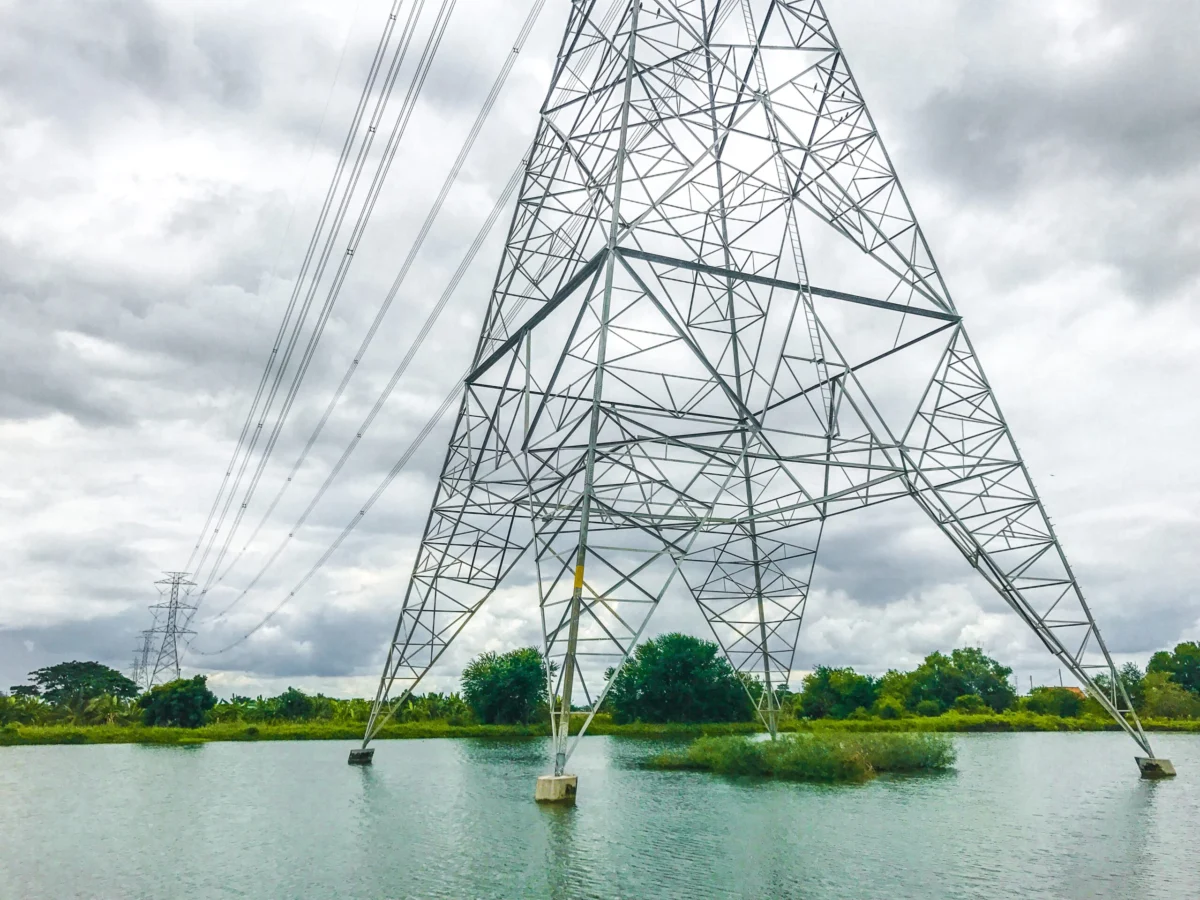
Canada’s geographical distribution of natural resources presents a unique challenge: the country possesses world-class wind, solar, hydro, and geothermal potential, but these resources are often isolated within provincial borders. Currently, more than 80 percent of Canada’s electricity trade is directed toward the United States, while interprovincial trade remains negligible. This lack of internal connectivity weakens grid reliability and prevents provinces from supporting one another during peak demand or climate-related outages.
The "Build Canada Better" plan advocates for the construction of high-voltage interprovincial transmission lines. The economic return on such investments is documented; for instance, doubling the transmission connection between British Columbia and Alberta is projected to return nearly $6 for every $1 spent.
Previous projects provide a blueprint for success. The Ontario East-West Tie, a 450-kilometre transmission line, generated 2,600 person-years of work and more than $200 million in economic benefits. Notably, Indigenous workers comprised more than half of the workforce on that project, highlighting the potential for inclusive economic growth through national grid integration.
Project Four: The Industrialization of Modular Housing
Canada is currently facing a housing affordability crisis of historic proportions. The Canada Mortgage and Housing Corporation (CMHC) estimates that the country needs to build approximately 500,000 homes annually to restore affordability. Current federal initiatives, such as the Build Canada Homes program, are projected to deliver only 26,000 units over five years—a figure critics describe as "tinkering around the edges."
The proposed solution is the creation of a massive, smart-modular-housing industry. By 2050, regional factories could produce 150,000 energy-efficient modular homes per year. This industrial approach to homebuilding is not without precedent. Sweden revolutionized its housing sector in the 1960s through the "Million Programme," building one million homes in a decade and establishing a prefabrication industry that remains a global leader today. Similarly, Japan has produced an average of 150,000 modular units annually since 1995.
For Canada, this would mean creating 100,000 high-tech manufacturing jobs while providing residents with high-quality, low-utility-cost housing. By manufacturing these homes domestically, Canada could bypass global supply chain volatility and address the housing shortage with unprecedented speed.
Project Five: Unlocking Geothermal Potential
Geothermal energy represents a significant untapped resource in the Canadian landscape. While Europe currently operates over 150 geothermal power plants supplying electricity to 11 million people, Canada’s geothermal output remains minimal. However, the International Energy Agency (IEA) predicts that geothermal will evolve into a $3.5-trillion global industry.
One of the primary advantages of geothermal development in Canada is the transferability of skills. The drilling techniques and equipment used in the oil and gas sector are virtually identical to those required for geothermal extraction. This provides a clear transition pathway for workers in traditional energy sectors, allowing them to apply their expertise to a low-emissions, "always-on" energy source. Actively pursuing geothermal energy would not only secure domestic power but also position Canada as a leading exporter of geothermal technology and services.
Analysis of Implications and Global Context
The shift toward clean megaprojects reflects a broader global trend where economic security is increasingly tied to energy independence and technological innovation. The United States’ Inflation Reduction Act (IRA) has already signaled a massive capital flight toward clean energy, creating a competitive environment where Canada must act decisively to retain investment.
By focusing on distributed energy—where power is generated and managed closer to the point of use—Canada can reduce the risks associated with large, centralized fossil fuel projects that are vulnerable to market fluctuations and international carbon tariffs. The Adamant proposal suggests that the "market risk" of these clean projects is significantly lower because they align with the procurement preferences of global buyers and the technological trajectory of the 21st century.
Furthermore, the emphasis on Indigenous co-ownership and regional manufacturing suggests a shift toward a more equitable economic model. By distributing these megaprojects across the country—from solar farms in the Prairies to modular home factories in Atlantic Canada—the government can ensure that the benefits of the energy transition are felt in every community, rather than being concentrated in traditional industrial hubs.
As Prime Minister Carney’s government weighs its infrastructure priorities, the "Build Canada Better" framework serves as a reminder that "normal times" have passed. The volatility of the current global order demands an economic strategy that is both bold and forward-looking. Whether Canada chooses to double down on sunsetting industries or embrace the potential of these five clean megaprojects will likely determine the nation’s prosperity for decades to come.
