

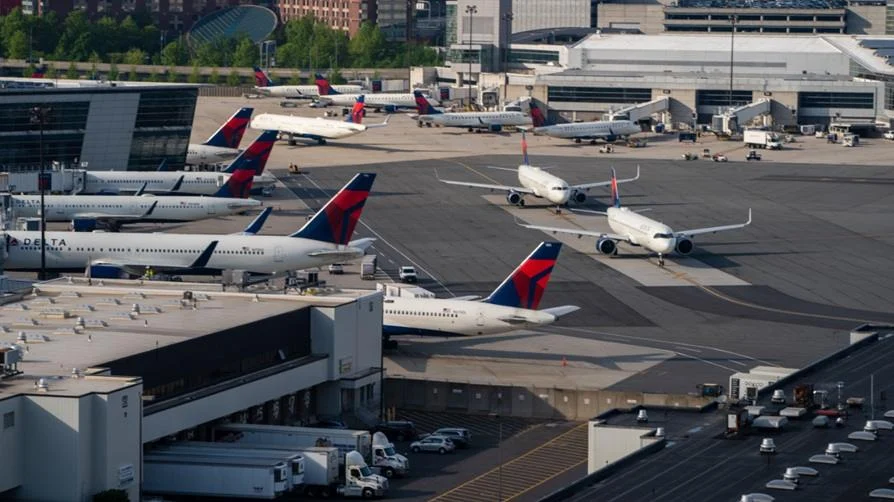
Under the terms of the agreement, Delta Air Lines and Shell Aviation will focus their efforts on five major U.S. transportation hubs: Los Angeles International Airport (LAX), Portland International Airport (PDX), John F. Kennedy International Airport (JFK) in New York, Logan International Airport (BOS) in Boston, and Minneapolis-St. Paul International Airport (MSP). By targeting these specific "priority cities," the partnership aims to create a reliable corridor of SAF availability, ensuring that sustainable fuel moves from theoretical production into the wings of commercial aircraft on a daily operational basis.
A Strategic Response to Supply Chain Volatility
The partnership arrives at a pivotal moment for the global aviation industry, which is currently grappling with fluctuating fuel prices and a fragmented transition toward green energy. Amelia DeLuca, Delta’s Chief Sustainability Officer, emphasized that the deal is a direct response to the "instability and uncertainty" currently defining the energy market. By diversifying its fuel sources and locking in a long-term supply with Shell, Delta is attempting to insulate its operations from the volatility of the traditional petroleum market while simultaneously meeting its environmental mandates.
"Current instability and uncertainty have made one thing very clear to consumers and businesses alike—supply diversity matters," DeLuca stated during the announcement. She further noted that the collaboration is intended to prove that scaling SAF is an "achievable" goal rather than a distant aspiration. The focus of the deal extends beyond the mere purchase of fuel; it is designed to activate "real supply chains at scale," creating a blueprint for how airlines can integrate renewable fuels into complex, high-volume hub operations.
The Infrastructure Challenge: Beyond Production
One of the most significant aspects of the Delta-Shell agreement is its focus on infrastructure and logistics. While many SAF deals focus solely on "offtake"—the promise to buy a certain amount of fuel—this partnership acknowledges that the physical movement of SAF remains a primary hurdle. SAF is often produced in locations far from the major airports where it is needed, and the existing pipeline and storage infrastructure in the United States is largely optimized for conventional Jet A fuel.
The agreement specifies that Shell will support the delivery of both "blended" and "neat" SAF. Neat SAF refers to the pure, unblended biofuel, which currently must be mixed with conventional jet fuel (usually up to a 50% blend) to meet international safety and engine performance standards. By working on the logistics of neat SAF delivery, Delta and Shell are preparing for a future where engine technology and regulatory frameworks may allow for higher blending ratios or even 100% SAF flights.
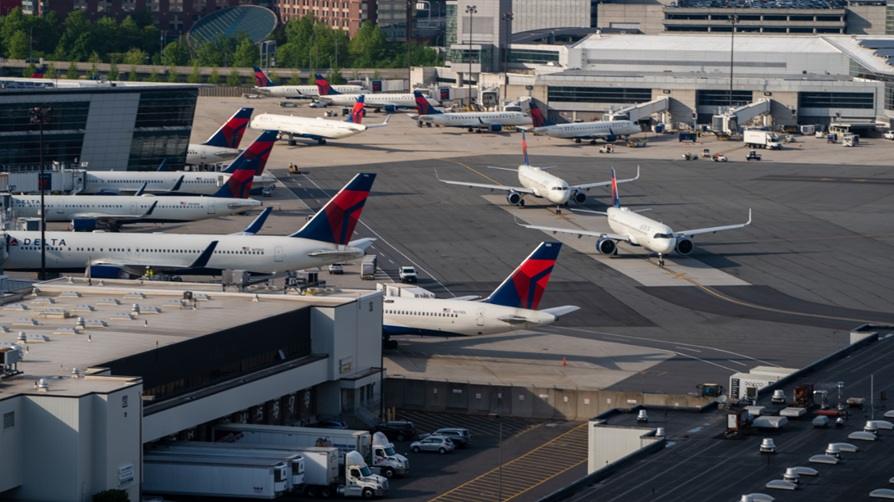
The collaboration will specifically address the "middle-mile" and "last-mile" challenges of fuel delivery. This includes establishing the necessary blending facilities near airport hubs and ensuring that the distribution networks—ranging from barges and pipelines to fuel trucks—are equipped to handle the specific requirements of sustainable fuels without contamination or loss of integrity.
Aligning with Delta’s 2030 and 2050 Climate Goals
This agreement is a cornerstone of Delta’s broader "Flight to Net Zero" strategy. The airline has committed to a goal of using SAF for 10% of its total fuel consumption by the end of 2030. However, achieving this is no small feat. Currently, SAF accounts for less than 0.1% of global aviation fuel supply. To reach 10%, Delta must navigate a market where demand far outstrips supply and production costs remain significantly higher than those of fossil-based fuels.
Delta recently reaffirmed its 10% goal despite acknowledging that the technology and production capacity required to meet this target have not advanced as rapidly as the industry initially projected. In 2023, the airline outlined a comprehensive decarbonization roadmap that prioritizes three main pillars: fleet renewal (replacing older aircraft with more fuel-efficient models), operational efficiencies (such as optimized flight paths), and the aggressive scaling of SAF.
The deal with Shell provides the necessary volume to keep Delta on its projected trajectory toward net-zero emissions by 2050. It also serves as a critical bridge while the industry waits for the next generation of hydrogen-powered or electric aircraft, which are not expected to be viable for long-haul commercial flight for several decades.
Investing in Next-Generation Fuel Pathways
Beyond the immediate supply of current-generation SAF—which is primarily derived from hydroprocessed esters and fatty acids (HEFA) like used cooking oil and animal fats—the Delta-Shell agreement includes a commitment to research and development. The companies have pledged to evaluate and advance "next-generation" SAF technologies.
Two specific pathways mentioned in the agreement are "Alcohol-to-Jet" (AtJ) and "Power-to-Liquid" (PtL).

- Alcohol-to-Jet (AtJ): This process converts ethanol or other alcohols—derived from non-food crops, agricultural residues, or industrial waste gases—into synthetic jet fuel. AtJ is seen as a vital pathway because it can utilize a wider variety of feedstocks than the HEFA process, which is limited by the global supply of waste fats and oils.
- Power-to-Liquid (PtL): Often referred to as "e-fuels," PtL involves using renewable electricity to split water into hydrogen and then combining that hydrogen with captured carbon dioxide to create a synthetic hydrocarbon fuel. While currently expensive and energy-intensive, PtL is considered the "holy grail" of sustainable aviation because it offers a nearly circular carbon footprint and is not limited by biological feedstock availability.
Reema Bari, Head of Aviation Americas at Shell, noted that the collaboration "delivers on today’s fuel needs and tomorrow’s aviation solutions." By investing in these advanced pathways, Shell and Delta are attempting to future-proof the aviation industry against the eventual "feedstock wall" that will occur as the supply of waste oils becomes exhausted.
Industry Context and the U.S. SAF Grand Challenge
The Delta-Shell agreement does not exist in a vacuum; it is part of a broader national and international push to green the skies. In the United States, the Biden-Harris administration launched the "SAF Grand Challenge," which sets a goal for the U.S. to produce 3 billion gallons of SAF per year by 2030 and to meet 100% of aviation fuel demand with SAF by 2050.
The federal government has supported these goals through the Inflation Reduction Act (IRA), which provides significant tax credits for SAF production, such as the 40B and 45Z credits. These incentives are designed to close the price gap between SAF and conventional jet fuel, making it more economically viable for airlines like Delta to sign long-term purchase agreements.
Furthermore, the International Air Transport Association (IATA) has called on all member airlines to reach net-zero carbon emissions by 2050. To achieve this, IATA estimates that SAF will need to contribute approximately 65% of the total emissions reductions required. Deals like the one between Delta and Shell are essential to moving the industry from the "pilot phase" of SAF usage into the "commercial scale" phase.
Economic and Environmental Implications
The environmental impact of this deal is substantial. SAF can reduce lifecycle greenhouse gas emissions by up to 80% compared to conventional jet fuel. By securing supply at five major hubs, Delta is effectively lowering the carbon intensity of thousands of flights per year. For corporate travelers and cargo clients, this provides a tangible way to reduce their "Scope 3" emissions, which are often the most difficult part of a company’s carbon footprint to manage.
Economically, the deal signals to the market that there is a long-term, stable demand for SAF. This is a crucial signal for investors and fuel producers who are hesitant to build multi-billion dollar refineries without guaranteed buyers. By committing to a five-year term, Delta provides Shell and its partners with the "bankability" needed to expand production facilities.

However, challenges remain. The "green premium"—the extra cost of SAF—remains a burden. While the Delta-Shell deal helps stabilize supply, the industry as a whole continues to advocate for more robust policy support to ensure that the cost of decarbonization does not lead to a significant increase in ticket prices for consumers.
Conclusion: A Model for Industry Collaboration
The five-year agreement between Delta Air Lines and Shell Aviation is more than a simple commodity purchase; it is a strategic alignment of two industry leaders to solve the structural problems of the energy transition. By focusing on the five key hubs of LAX, PDX, JFK, BOS, and MSP, the partnership creates a localized density of SAF use that can serve as a proof-of-concept for other regions.
As the aviation industry moves closer to its 2030 milestones, the success of such collaborations will be measured by their ability to move the needle on global production volumes. For Delta, this deal secures a piece of the puzzle in its quest for 10% SAF usage. For Shell, it solidifies its position as a primary energy partner in the low-carbon economy. Together, they are laying the groundwork for a more resilient, diversified, and sustainable future for global air travel.
