

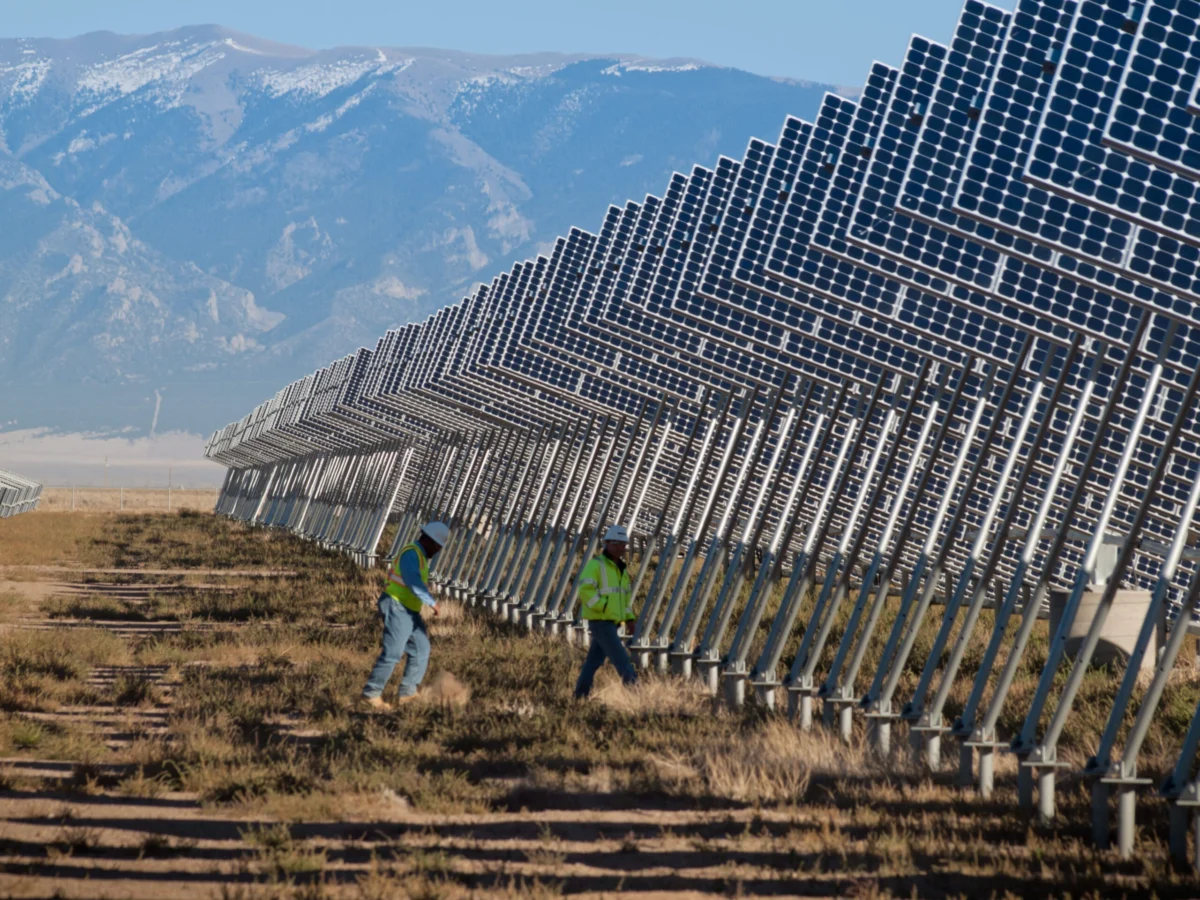
In an announcement set against the behatted pageantry of the Calgary Stampede last week, federal Minister of Energy and Natural Resources Tim Hodgson used a phrase that has become a hallmark of the Mark Carney government: “We need to build to be a clean and conventional energy superpower.” This specific framing—the "clean and conventional energy superpower" construct—has become a recurring theme in recent federal communications, serving as the cornerstone for the Prime Minister’s "Forward Guidance: Canada’s Energy Future" policy video released just prior to Canada Day. The strategy attempts to balance the immediate economic benefits of fossil fuel extraction with the long-term necessity of a decarbonized electrical grid, yet the massive disparity in funding between these two pillars has sparked intense debate among economists, environmentalists, and provincial leaders.
The Carney administration’s argument is a double-barrelled one, predicated on the idea that Canada can simultaneously lead in traditional oil and gas while preparing for an inevitable global transition to electricity. On the "clean" side of the equation, the government posits that the future global economy will be powered by electrons rather than hydrocarbons. Proponents of this view argue that electricity is inherently more efficient and eventually cheaper for consumers. By producing power domestically at decreasing costs, Canada aims to insulate its economy from the volatility and unpredictability of foreign-caused oil price spikes, such as those seen during geopolitical conflicts in Eastern Europe and the Middle East.
However, the "conventional" side of the strategy suggests that the path to this cleaner future must be paved with the profits from expanded oil and gas production. The government argues that by maximizing these profits today—while curbing the industry’s greenhouse gas emissions through technology like carbon capture—Canadian oil and gas can remain the "greenest" option in a shrinking global market. This narrative aligns with long-standing claims from the Canadian energy sector but faces new scrutiny as the federal government prepares to commit unprecedented levels of public capital to traditional infrastructure.
The Financial Disparity: Billions for Pipelines, Millions for Renewables
The central tension in the Carney government’s strategy is the scale of financial commitment. While the rhetoric surrounding electrification is categorical, the actual capital allocation tells a different story. Last week, the contrast was laid bare by two competing announcements. Minister Hodgson’s press conference in Calgary highlighted a federal contribution of $26 million for 17 clean-energy projects across Alberta and Saskatchewan. While significant for the specific communities involved, this figure was dwarfed by an announcement made just days prior.
Prime Minister Carney and Alberta Premier Danielle Smith revealed that the federal and provincial governments are contemplating up to 90% public ownership of a new major pipeline project. With a price tag estimated between $35 billion and $43 billion, the potential liability for Canadian taxpayers is immense. This move marks a significant shift in policy, as the recently signed Alberta–federal memorandum of understanding (MOU) originally emphasized the necessity of a private-sector proponent.
The lack of private interest in the project was forecasted by Peter Nicholson, board chair of the Canadian Climate Institute, who noted in a recent analysis that private capital is increasingly wary of long-term fossil fuel infrastructure that may become "stranded assets" as the world moves toward net-zero. The government’s willingness to step in with public funds suggests that Ottawa is prepared to ignore market signals to ensure the "conventional" part of its energy superpower dream remains viable.
The Vision of Sir Adam Beck and the Path to Electrification
Despite the heavy focus on pipeline funding, Prime Minister Carney has used his platform to champion the "Electric Age" with historical fervor. Invoking the name of Sir Adam Beck—the visionary founder of Ontario Hydro who pioneered the public ownership of hydroelectric power in the early 20th century—Carney stated, “Our new plan will help build clean energy on a scale that would astound even Sir Adam Beck.”
The Prime Minister’s "Forward Guidance" video outlines a three-pronged justification for rapid electrification: affordability, competitiveness, and sustainability. This stance is supported by research from the Canadian Climate Institute, which suggests that a decarbonized grid is the most cost-effective way to meet Canada’s 2050 climate goals. The report, "Power Play," emphasizes that as the costs of wind, solar, and battery storage continue to plummet, the economic case for fossil-fuel-based power generation weakens.
However, critics point out that the $26 million allocated last week for clean energy projects is insufficient to catalyze the "Beck-scale" revolution the Prime Minister describes. For Canada to truly become a clean energy superpower, analysts suggest that the scale of investment in grid modernization, inter-provincial transmission lines, and renewable capacity must eventually match or exceed the billions currently earmarked for the oil and gas sector.
Regional Friction and the National Grid
The success of the federal energy strategy depends heavily on cooperation from the provinces, which hold primary jurisdiction over electricity and natural resources. This has led to a complex web of regional disputes and varying degrees of alignment with the federal net-zero goal.
In Saskatchewan, the provincial government continues to challenge federal mandates, particularly regarding the phase-out of coal-fired power plants. The province has signaled it may keep burning coal in violation of policies originally established during the Harper era, citing concerns over reliability and the cost of transition. This sets the stage for a potential constitutional or legal showdown between Regina and Ottawa.
Meanwhile, in Atlantic Canada, a long-standing dispute between Newfoundland and Labrador and Quebec over hydro development on the lower Churchill River remains unresolved. The federal government has expressed interest in facilitating a deal that would allow more clean hydroelectricity to flow into the North American market, but historical grievances over the lopsided 1969 Churchill Falls contract continue to stall progress.
In Alberta, the situation is even more paradoxical. While Premier Smith has partnered with the federal government on pipeline infrastructure, the province has maintained a de facto moratorium on certain low-cost renewable projects. At the same time, Alberta is seeing a surge in demand for new natural gas-fired power plants to fuel the burgeoning artificial intelligence and data center industry. These plants, if built without carbon capture and storage (CCS) technology, could lock in significant emissions for decades, complicating the federal government’s net-zero trajectory.
The Carbon Capture Litmus Test
A critical component of the "greenest oil" argument is the successful deployment of carbon capture, utilization, and storage (CCS). The Pathways Alliance—a consortium of Canada’s largest oil sands companies—has proposed a massive CCS project intended to help the industry reach net-zero production emissions. However, the project remains in a state of uncertainty.
Recent changes to the industrial carbon price have created confusion regarding the long-term financial viability of these capital-intensive projects. The Carney government’s revised MOU with Alberta was intended to provide "certainty" for investors, but the Canadian Climate Institute recently warned that the current framework might put Canada’s commitment to net-zero emissions by 2050 out of reach. Without the Pathways project, the "conventional" side of the energy superpower equation loses its environmental legitimacy, leaving the government with the high cost of a pipeline and no clear way to mitigate its climate impact.
Analysis of Implications: A Strategic Pivot or a Costly Delay?
The Carney government is attempting a high-stakes pivot that seeks to reconcile Canada’s identity as a resource-rich nation with the global imperative of climate action. By positioning Canada as a "clean and conventional energy superpower," Carney is trying to build a broad political coalition that includes both the energy workers of the West and the climate-conscious voters of urban centers.
However, the "billions for conventional, millions for clean" funding model presents several risks:
- Economic Risk: Committing billions in public funds to oil infrastructure at a time when global demand is projected to peak could result in significant financial losses for Canadian taxpayers.
- Environmental Risk: If the "conventional" expansion is not matched by an equally aggressive "clean" expansion, Canada will likely miss its 2030 and 2050 emissions targets.
- Opportunity Cost: The capital used to backstop pipelines is capital that cannot be used to build the high-voltage transmission lines and energy storage systems required for a modern economy.
Achieving the goal of becoming an energy superpower requires more than just rhetorical flourishes at the Calgary Stampede. It requires deliberate policy choices and a sustained, balanced effort. Net-zero is not a switch that can be flipped in 2045; it is the result of infrastructure decisions made today.
The coming months will be a defining period for the Carney administration. As the federal government moves to finalize its clean growth plan, observers will be watching to see if the "clean" side of the ledger begins to see the same level of fiscal ambition currently reserved for "conventional" projects. The Prime Minister has stated that his commitment to fighting the climate crisis is "absolute." Whether that commitment is reflected in the federal budget—and whether it can survive the complex realities of Canadian provincial politics—remains the most significant question for the country’s economic and environmental future.
