

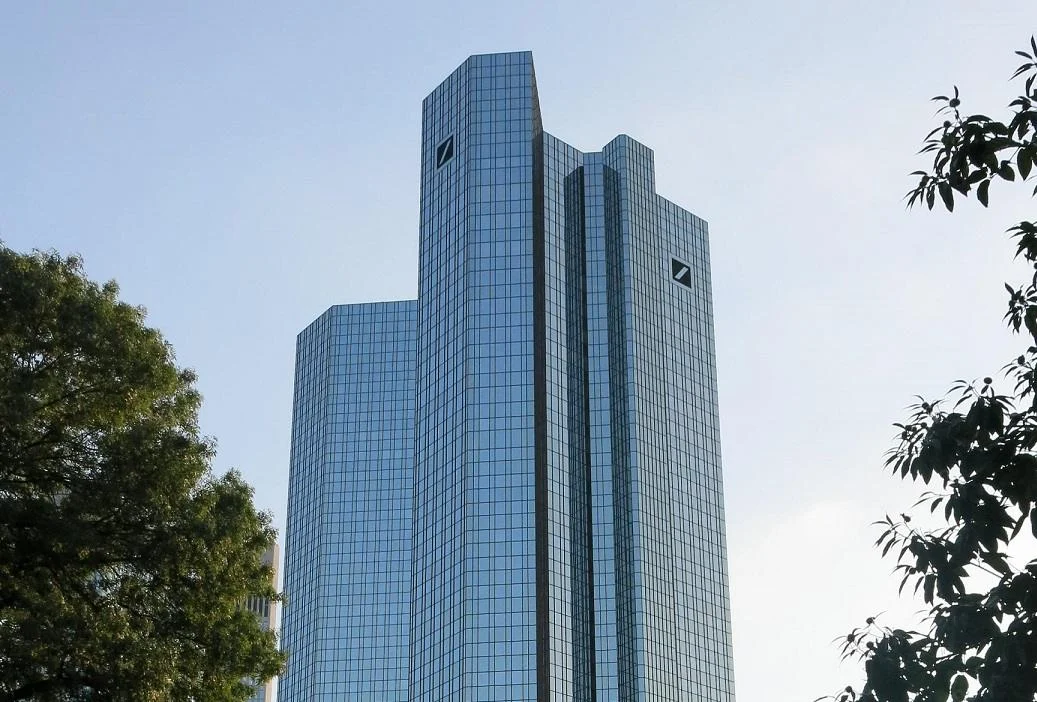
The Mechanics of the $1 Billion Partnership
The new platform operates on a risk-sharing model where MIGA provides guarantees to Deutsche Bank, protecting the financial institution against the risk of non-payment by eligible state-owned banks and public authorities. In many emerging markets, state-owned banks serve as the primary conduits for trade, facilitating the import of vital commodities such as food, medicine, and industrial equipment. However, when global economic conditions tighten, commercial banks often reduce their exposure to these entities to avoid potential defaults.
Under this agreement, MIGA’s guarantees act as a form of credit enhancement. If a sovereign or state-owned bank fails to meet its unconditional financial obligations related to a trade finance transaction, MIGA covers the loss. This protection allows Deutsche Bank to maintain and even expand its credit lines to these markets, ensuring that local businesses and government agencies can continue to access the foreign currency and credit required for international trade. This is the first time MIGA has entered into a standalone, programmatic trade finance portfolio guarantee with a global commercial bank, marking a departure from previous project-by-project approaches and moving toward a more scalable, systemic solution.
Addressing the Global Trade Finance Deficit
The launch of this platform comes at a precarious time for the global economy. According to recent data from the Asian Development Bank (ADB) and the International Chamber of Commerce (ICC), the global trade finance gap—the difference between requests for trade financing and approvals—has surged to an estimated $2.5 trillion. This gap disproportionately affects Small and Medium Enterprises (SMEs) and businesses in developing nations.
High interest rates, inflationary pressures, and geopolitical instability have caused many private lenders to adopt a "risk-off" stance. In frontier markets, where legal frameworks may be less robust and political stability can be a concern, the cost of trade finance often becomes prohibitively expensive or entirely unavailable. By leveraging MIGA’s AAA-rated balance sheet, Deutsche Bank can offer more competitive terms and higher volumes of financing than would be possible on a purely commercial basis.
Junaid Kamal Ahmad, MIGA Vice President of Operations, emphasized the importance of this liquidity, referring to trade finance as the "working capital of nations." Without it, countries struggle to export their products or import the machinery needed for industrial growth, leading to a cycle of economic stagnation. The partnership is specifically designed to break this cycle by mobilizing private capital as a multiplier for development finance.
A Chronology of MIGA’s Guarantee Evolution
The establishment of the $1 billion platform is the latest step in a multi-year effort by the World Bank Group to streamline its guarantee offerings. Historically, the various arms of the World Bank—including the International Bank for Reconstruction and Development (IBRD) and the International Finance Corporation (IFC)—offered separate and sometimes overlapping guarantee products.
In 2024, the World Bank Group launched the "Guarantee Platform," a consolidated and simplified menu of solutions housed within MIGA. This move was intended to make it easier for private sector partners to navigate the World Bank’s offerings. The platform introduced a "one-stop-shop" for political risk insurance, credit enhancement, and trade finance guarantees.
Following the 2024 consolidation, MIGA began seeking out strategic partners capable of implementing these tools at scale. Deutsche Bank, with its extensive global footprint and deep expertise in trade finance structuring, emerged as the primary candidate for this inaugural programmatic partnership. The negotiations culminated in the July 2026 announcement, signaling a new era where multilateral development banks (MDBs) and commercial giants work in tandem to address systemic market failures.
Targeting Priority Sectors and Underserved Economies
A key component of the Deutsche Bank-MIGA platform is its targeted approach to capital allocation. The partners have committed to directing a meaningful portion of the $1 billion capacity toward specific priority areas that align with the United Nations Sustainable Development Goals (SDGs). These include:

- IDA Countries: Nations eligible for assistance from the International Development Association, which focuses on the world’s 75 poorest countries.
- Fragile and Conflict-affected Situations (FCS): Regions where the risk of political instability is highest, and where traditional commercial financing is almost non-existent.
- Small and Medium Enterprises (SMEs): Providing the liquidity necessary for local entrepreneurs to scale their operations and create jobs.
- Critical Infrastructure and Resources: Specifically focusing on agriculture (food security), health (medical supplies), and water (sanitation and infrastructure).
By focusing on these sectors, the platform does more than just facilitate trade; it actively supports human development. For instance, in the agricultural sector, trade finance guarantees can ensure that fertilizers and seeds are imported on time for planting seasons, directly impacting local food prices and availability.
Official Responses and Strategic Vision
The leadership of both organizations has framed the partnership as a necessary evolution in international finance. Gerald Podobnik, Global Co-Head of Deutsche Bank’s Corporate Bank, highlighted the bank’s commitment to expanding partnerships with multilateral development banks. He noted that targeted risk-sharing structures are the most effective way to expand trade finance capacity in markets where it is most needed. For Deutsche Bank, the platform allows the bank to fulfill its ESG (Environmental, Social, and Governance) commitments while maintaining a prudent risk profile.
From the World Bank’s perspective, the partnership serves as a proof of concept for the "Private Capital Lab" initiative, which seeks to find new ways to entice institutional investors and commercial banks into emerging market projects. By providing a "first-loss" or "guarantee" layer, MIGA effectively changes the risk-reward calculation for Deutsche Bank’s credit committees, allowing them to approve transactions that would have previously been rejected.
Industry analysts suggest that if successful, this $1 billion platform could serve as a blueprint for similar agreements with other global systemic banks. The goal is to create a network of "de-risked" corridors for trade, where capital can flow freely despite local volatility.
Broader Impact and Long-term Implications
The implications of this platform extend far beyond the immediate $1 billion in liquidity. First, it represents a shift toward "blended finance," where public or multilateral funds are used to mobilize much larger sums of private capital. This is essential because the funding required to meet the SDGs in emerging markets is measured in the trillions, far exceeding the budgets of all the world’s development banks combined.

Second, the platform helps to build the capacity of local financial institutions. By working with Deutsche Bank under the umbrella of a MIGA guarantee, state-owned banks in emerging markets are held to international standards of reporting, transparency, and due diligence. Over time, this "institutional seasoning" can help these local banks improve their own credit ratings, eventually allowing them to access international markets without the need for external guarantees.
Finally, the focus on "Fragile and Conflict-affected Situations" provides a stabilizing force in volatile regions. Economic participation is often cited as a key factor in reducing social unrest. By ensuring that basic goods continue to flow and that local businesses can remain operational even during periods of stress, the platform contributes to the broader goal of regional stability.
As the program rolls out through the remainder of 2026 and into 2027, the financial community will be closely watching the performance of the portfolio. The success of this initiative will be measured not just by the volume of trade facilitated, but by the number of jobs sustained and the degree to which it encourages other commercial banks to re-enter the emerging market space. Through this partnership, Deutsche Bank and the World Bank are sending a clear signal: while the risks in frontier markets are real, they are manageable through innovation, cooperation, and a shared commitment to global economic inclusion.
