

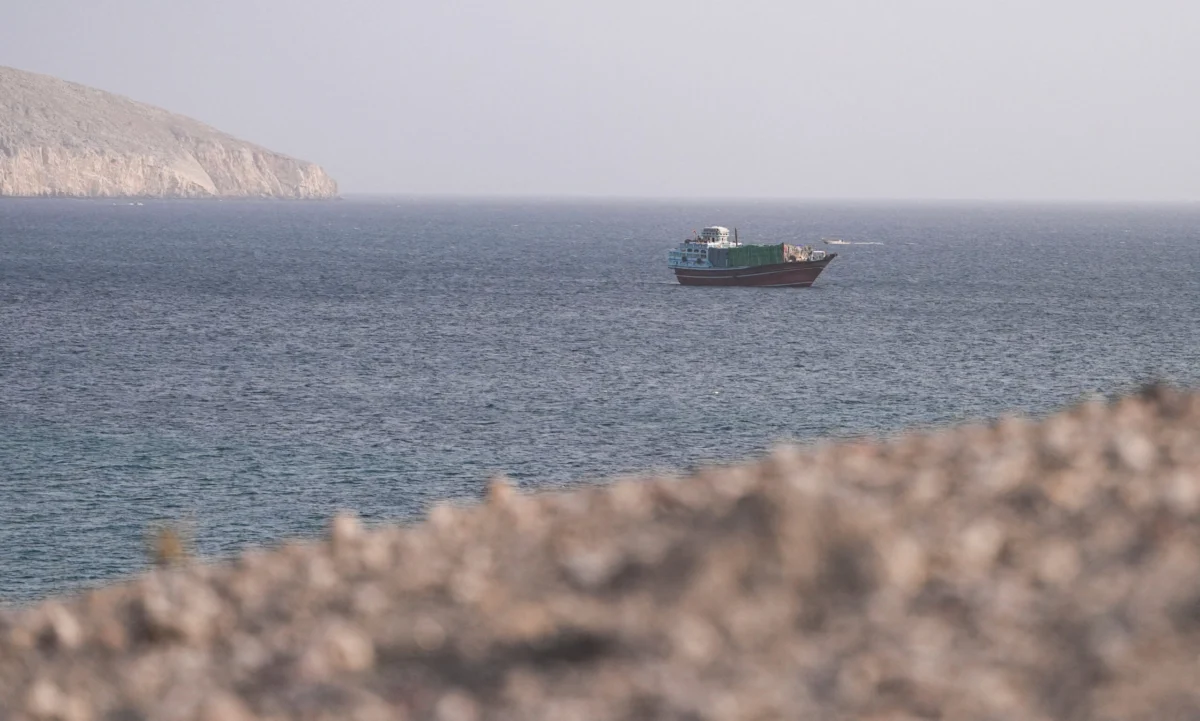
Iranian authorities on Thursday, July 16, 2026, reported significant disruptions, including widespread power outages and a targeted attack on a train station, in the strategically vital port city of Bandar Abbas. These incidents occurred as tensions across the Middle East reached a critical new phase, with the United States confirming its sixth consecutive night of military strikes against targets in Iran. Simultaneously, Tehran issued a stern declaration, asserting that the Strait of Hormuz, a crucial global oil chokepoint, would not revert to its "pre-war status," signaling a potentially permanent shift in the regional maritime security landscape.
The reported events in Bandar Abbas underscore the escalating impact of the ongoing confrontation. Located on the southern coast of Iran, Bandar Abbas serves as the nation’s largest port and a key naval base, making any disruption there profoundly significant for both Iran’s domestic infrastructure and its strategic posture. Details regarding the extent of the power outages remained scarce, but local reports suggested widespread disruption to essential services and industrial operations. The attack on the train station, while not immediately detailed in terms of casualties or structural damage, points to a deliberate targeting of critical logistical infrastructure, potentially aimed at hindering military or economic operations. Iranian state media and officials were quick to attribute these incidents to external aggression, linking them to the broader pattern of US military actions.
Escalating Tensions: Six Nights of US Strikes
The reported incidents in Bandar Abbas unfolded against a backdrop of intensifying military engagement, marking the sixth consecutive night of US strikes on Iranian territory. These operations signify a dramatic escalation from previous tit-for-tat exchanges, indicating a sustained and targeted campaign by Washington. While the precise targets of all six nights of strikes have not been fully disclosed by US officials, statements from the Pentagon have consistently framed these actions as responses to alleged Iranian aggression, including attacks on US assets, personnel, or regional allies.
Analysts suggest the US campaign likely targets Iranian military infrastructure, including missile launch sites, drone manufacturing facilities, naval assets, and command-and-control centers, particularly those associated with the Islamic Revolutionary Guard Corps (IRGC) and its expeditionary Quds Force. The objective, according to US defense strategists, is to degrade Iran’s capacity to project power and deter further actions that destabilize the region, particularly maritime security in the Persian Gulf and Red Sea. However, the sustained nature of the strikes risks pushing the region closer to a full-scale conflict, with unpredictable global ramifications.
The Strategic Importance of Bandar Abbas
Bandar Abbas is more than just a port city; it is the economic and military lifeline of southern Iran. Situated on the Strait of Hormuz, it hosts Iran’s largest naval base and is the primary hub for the country’s commercial shipping and oil exports. The city’s port, Shahid Rajaee, handles the vast majority of Iran’s maritime trade, making it indispensable for both imports and exports. Any disruption to its power grid or transportation network, such as a train station attack, has immediate and severe consequences for the national economy and military logistics.
From a military perspective, Bandar Abbas is crucial for the IRGC Navy and the regular Iranian Navy, providing a strategic staging ground for operations in the Persian Gulf and the Strait of Hormuz. The base is home to a significant portion of Iran’s naval fleet, including frigates, submarines, and fast-attack craft. Targeting its infrastructure could impede Iran’s ability to respond to maritime threats or project naval power, which is particularly relevant given Tehran’s recent declaration regarding the Strait of Hormuz.
Hormuz: A New Status Quo?
Perhaps the most significant development of July 16, 2026, was Tehran’s unequivocal statement that the Strait of Hormuz would "not return to pre-war status." This declaration carries immense weight, given the strait’s unparalleled importance to global energy markets. Approximately one-fifth of the world’s total oil consumption and a substantial portion of liquefied natural gas (LNG) pass through this narrow waterway, connecting the Persian Gulf to the open ocean. Any change to its operational status or security framework sends immediate shockwaves through international markets and geopolitical capitals.
The "pre-war status" likely refers to the period before the current escalation, characterized by established international maritime norms, albeit with underlying tensions. Iran’s statement could imply several scenarios:
- Enhanced Iranian Control: Tehran might be asserting a more direct, perhaps even unilateral, role in regulating passage through the strait, potentially introducing new tariffs, inspection regimes, or restrictions on certain vessels.
- Increased Military Presence: A permanent increase in Iranian naval and air force deployments, aimed at deterring perceived threats and enforcing its declared new status.
- Rejection of External Intervention: A strong signal that Iran will resist any international efforts to impose a different security architecture or to diminish its sovereign claims over parts of the strait.
- A "New Normal" of Confrontation: An acknowledgment that the ongoing conflict has fundamentally altered the security environment, and a return to previous levels of stability and predictability is no longer feasible under current conditions.
Such a declaration, particularly amidst active hostilities, raises profound concerns for global shipping and energy security. The potential for miscalculation or accidental confrontation in this constricted waterway is extremely high, threatening to disrupt global supply chains and trigger massive spikes in oil prices.
Chronology of Escalation (Inferred Timeline)
The events of July 16, 2026, are the culmination of a rapidly intensifying crisis. While a precise, day-by-day public chronology of the "six nights of strikes" is not yet available, a broader timeline can be inferred:
- Months Prior (Early 2026): Heightened regional tensions following renewed proxy conflicts, possibly involving Iranian-backed groups in Iraq, Syria, or Yemen, and increased maritime incidents in the Persian Gulf or Red Sea. Reports of enhanced Iranian missile or drone capabilities could have also contributed.
- Late June/Early July 2026: Specific triggers for the US response. This could include a significant attack on US forces or interests in the region, a major cyberattack, or a particularly provocative Iranian military exercise or action in international waters. US intelligence likely identified clear Iranian culpability.
- Night 1 (Approx. July 10-11, 2026): First retaliatory US strike, likely targeting a specific Iranian military asset or facility directly linked to the preceding provocative act. US officials would have issued statements justifying the action as defensive.
- Nights 2-5 (Approx. July 11-15, 2026): Subsequent US strikes, possibly in response to further Iranian actions or to systematically degrade identified capabilities. Each strike would be carefully calibrated to avoid immediate, all-out war while still sending a strong deterrent message. Iran would likely respond with condemnations, threats, and possibly covert or proxy actions.
- July 16, 2026: The "sixth night of strikes." This sustained campaign leads to the reported incidents in Bandar Abbas – power outages and the train station attack – and Iran’s declaration regarding the Strait of Hormuz. This suggests that the strikes have now reached a level impacting critical Iranian infrastructure, and Tehran is responding with both rhetorical escalation and potentially defensive measures or counter-threats regarding Hormuz.
This timeline indicates a deliberate, albeit dangerous, escalation ladder, where each action and reaction pushes the boundaries of the conflict further.
Official Responses and International Reactions
United States: While specific statements for July 16, 2026, are pending, the consistent US position has been one of self-defense and deterrence. The Pentagon and State Department would likely reiterate that US actions are a proportionate response to Iranian aggression and are aimed at protecting US personnel, allies, and freedom of navigation. They would likely call for Iran to de-escalate and adhere to international norms, while maintaining readiness for further action. The lack of detailed public disclosure on specific targets might also be a strategic move to maintain ambiguity and pressure on Iran.
Iran: Beyond the declaration on Hormuz and the reports from Bandar Abbas, Iranian officials would undoubtedly condemn the US strikes as acts of state terrorism and violations of national sovereignty. The Supreme National Security Council and the IRGC leadership would likely vow "decisive and crushing responses" to any further aggression, emphasizing Iran’s right to self-defense and its capacity to retaliate. Calls for international bodies to condemn US actions and uphold international law would also be expected. The Hormuz declaration serves as a potent warning of potential retaliatory leverage.
International Community: The unfolding crisis would trigger widespread alarm.
- United Nations: The UN Secretary-General would issue urgent calls for de-escalation, dialogue, and restraint from all parties, warning of the catastrophic consequences of a regional war. The Security Council might convene emergency sessions, though consensus on action would be difficult given geopolitical divisions.
- European Union: EU foreign policy chief would likely express grave concern, urging both Washington and Tehran to pull back from the brink. European nations, heavily reliant on Middle Eastern oil and gas, would be particularly worried about economic fallout and the potential for a refugee crisis.
- Regional Actors (Oman, UAE, Saudi Arabia): Neighboring Gulf states, particularly Oman which shares a maritime border with Iran across Hormuz, would be deeply concerned. They would likely call for calm and diplomatic solutions, fearing direct involvement or severe economic disruption. Saudi Arabia and the UAE, traditional rivals of Iran and allies of the US, would likely support the US’s stated objectives of deterring Iranian aggression but also express concern over the potential for an uncontrolled escalation.
- China and Russia: These powers would likely criticize the US actions, calling them destabilizing and contrary to international law, aligning with Iran’s narrative to some extent, while also likely urging restraint from all sides to protect their own economic interests and regional stability.
Broader Implications and Analysis
The current escalation carries profound implications across several domains:
Geopolitical Stability: The immediate and most pressing concern is the risk of a full-blown regional war. A sustained US-Iran conflict would dwarf previous proxy confrontations, drawing in multiple actors and potentially destabilizing the entire Middle East. This could lead to a humanitarian catastrophe, mass displacement, and the resurgence of extremist groups in power vacuums.
Global Economy and Energy Markets: The declaration on Hormuz alone is enough to send shivers through global markets. Any disruption to oil and gas shipments through the strait would trigger massive price spikes, potentially pushing the global economy into recession. Shipping insurance premiums would skyrocket, making trade more expensive and uncertain. The interconnectedness of global supply chains means the economic fallout would be felt worldwide.
International Law and Sovereignty: The targeting of critical infrastructure within Iran, whether directly by the US or indirectly through cyber warfare, raises complex questions about international law, sovereignty, and the permissible scope of retaliatory actions. Iran’s response regarding Hormuz also challenges established norms of freedom of navigation, potentially setting a dangerous precedent.
Military Doctrine and Strategy: The "six nights of strikes" demonstrate a US strategy of sustained, targeted pressure. This approach aims to degrade capabilities without necessarily committing to a full-scale invasion, but it walks a fine line. Iran’s response, emphasizing its control over Hormuz, highlights its asymmetric warfare capabilities and its willingness to leverage strategic chokepoints.
Domestic Impact in Iran: The power outages and infrastructure attacks in Bandar Abbas will undoubtedly fuel anti-American sentiment within Iran, potentially strengthening hardline factions and consolidating public support for the regime’s defiant stance. The economic strain from sanctions, now compounded by direct military action, could also exacerbate internal challenges.
The situation remains highly fluid and dangerous. The US and Iran are locked in a perilous dance of escalation, with the Strait of Hormuz now explicitly part of Tehran’s declared red lines. The coming days will be crucial in determining whether diplomacy can avert a wider conflict or if the region is indeed entering a new, more volatile era defined by direct confrontation and altered geopolitical realities.
