

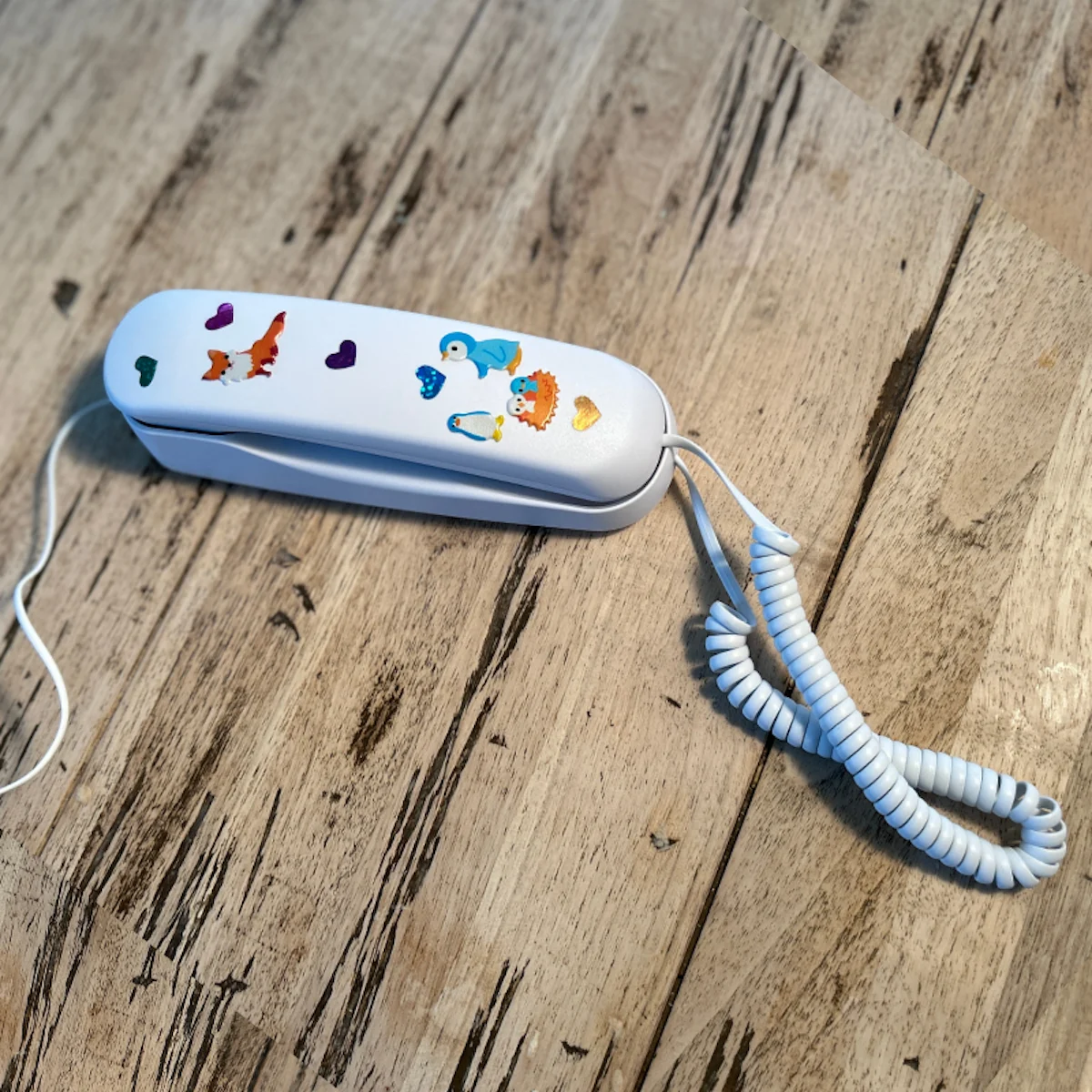
The kid-focused technology company Pinwheel announced on Tuesday the official launch of Pinwheel Home, a contemporary reimagining of the classic household landline. Designed specifically for children aged 5 to 10, the device aims to provide a safe, distraction-free communication hub that allows young users to connect with friends and family without the developmental risks associated with early smartphone adoption. By stripping away the internet browsers, social media apps, and gaming platforms that define modern mobile devices, Pinwheel is positioning the Pinwheel Home as a developmental bridge—a way for children to practice digital literacy and social etiquette through voice-only communication.
The launch marks a significant expansion of Pinwheel’s product ecosystem. Having already established a presence in the market with kid-friendly smartphones and the 2024 release of a dedicated smartwatch, the company is now targeting the domestic environment. The Pinwheel Home operates not through a traditional copper-wire phone jack, but via Wi-Fi, allowing it to be placed anywhere in a modern home while maintaining the functionality of a fixed-line telephone.
A Return to Purpose-Built Communication
For parents who grew up in the late 20th century, the family landline was a cornerstone of social development. It was the primary tool for coordinating playdates, checking in with grandparents, and learning the nuances of verbal conversation. Pinwheel Home seeks to replicate this experience for a generation that has largely been raised on asynchronous communication, such as texting and emojis.
The device is available in two distinct models to cater to different aesthetic and functional preferences. The "Spark" model, priced at $68, offers a minimalist, modern design and is available in white, black, blue, and purple. The "Classic" model, retailing for $79, leans into the retro appeal of the mid-century telephone, featuring a traditional handset and a set of customizable stickers that allow children to personalize their device.
Unlike a smartphone, which is a personal, portable, and often private portal to the internet, the Pinwheel Home is intended to be a shared or semi-public household fixture. This encourages "meaningful, one-on-one conversations," according to the company, and allows parents to supervise their child’s communication habits more naturally within the home environment.
Comprehensive Parental Oversight and Safety Features
Central to the Pinwheel Home experience is the Caregiver Portal, a proprietary management system that gives parents total control over the device’s functionality. In an era where robocalls and digital solicitation are rampant, the portal acts as a sophisticated gatekeeper. Parents can use the app to:

- Approve Contacts: Only numbers manually entered and approved by a parent can call the device or be called from it.
- Block Unknown Callers: All unverified numbers are automatically blocked, eliminating the risk of spam or interactions with strangers.
- Set Usage Schedules: Parents can designate "quiet hours" during school time or late at night to ensure the phone does not become a distraction from homework or sleep.
- Monitor Logs: A transparent record of all incoming and outgoing calls is available to the caregiver at any time.
The device also includes standard features such as speed dial for emergency or frequent contacts and a voicemail system, allowing children to learn how to leave and retrieve messages—a skill that has become increasingly rare among younger demographics.
The Developmental Context: Combatting the "Screen Time Crisis"
The timing of Pinwheel’s launch coincides with a period of intense public and scientific scrutiny regarding children’s relationship with technology. Recent data from the American Psychological Association (APA) and other major health organizations have highlighted a correlation between excessive screen time and a variety of developmental challenges.
According to a 2025 APA report, high levels of engagement with interactive screens—particularly those hosting social media—are linked to increased rates of emotional instability, behavioral issues, and social anxiety in prepubescent children. Furthermore, a study from the University of Georgia recently found that children who prioritize social media and texting over verbal communication often exhibit weaker vocabulary development. The study noted that these children struggle more with word recognition and pronunciation compared to peers who engage in more frequent voice-to-voice or face-to-face interactions.
By focusing exclusively on voice, Pinwheel Home addresses these concerns. It removes the visual stimuli that trigger "doomscrolling" and the dopamine-driven feedback loops of social media likes and notifications. Instead, it prioritizes auditory processing and the development of conversational "turn-taking," which are critical components of linguistic and social intelligence.
Technical Specifications and Integration
While the Pinwheel Home looks like a relic of the past, its internal architecture is modern. The reliance on Wi-Fi rather than a physical phone line reflects the reality of modern housing, where many homes no longer have active copper wiring. This portability allows the device to be moved from a child’s bedroom to a kitchen counter or a playroom as needed.
Pinwheel has also outlined a roadmap for future software updates. The company plans to introduce three-way calling features to allow for group family chats. More importantly, Pinwheel Home is designed to integrate into the broader Pinwheel ecosystem. Future updates will allow the device to sync with Pinwheel’s smartwatches and smartphones. This integration will enable a child to use the same phone number across multiple devices, providing a seamless communication experience while still allowing parents to enforce different rules for different environments (e.g., "voice-only" at home and "GPS-tracking" while at school).
Pricing and Market Competition
Pinwheel enters a niche but growing market of "screen-free" communication tools. Its primary competitor is Tin Can, a $100 Wi-Fi-enabled landline that offers similar parental controls through a companion app.

To remain competitive, Pinwheel has structured its service plans to accommodate varying family needs. Calls between Pinwheel Home devices are free via the "Pinwheel Circle" service, creating a closed-loop network for families who own multiple Pinwheel products. For those who wish to call external numbers, such as traditional landlines or standard smartphones, Pinwheel offers two subscription tiers:
- Basic Plan ($6.99/month): Allows for up to five approved external contacts.
- Unlimited Plan ($9.99/month): Provides unlimited calling to an unrestricted number of parent-approved contacts.
This subscription model is becoming standard in the "kid-tech" industry, as it funds the ongoing maintenance of secure servers and the development of safety software. For comparison, Tin Can also offers a "Friends and Family" plan at a similar $9.99 monthly price point.
Global Regulatory Trends and Industry Implications
The launch of Pinwheel Home occurs against a backdrop of increasing government intervention in children’s digital lives. In mid-2024, Australia moved to restrict social media access for children under the age of 16, citing mental health concerns. The United Kingdom has signaled similar intentions, exploring legislation that would hold tech companies more accountable for the content served to minors.
In the United States, several states have introduced "Age-Appropriate Design Codes" that require tech companies to prioritize the best interests of children when designing products. This regulatory environment is creating a vacuum that "dumb" or "limited" devices are beginning to fill. Hardware like the Pinwheel Home represents a shift in market philosophy: moving away from "safety via software filters" on adult devices and toward "safety by design" in dedicated hardware.
Industry analysts suggest that the rise of the "Phone-Free Childhood" movement—championed by figures such as social psychologist Jonathan Haidt—is driving a resurgence in single-purpose devices. Parents are increasingly looking for ways to provide the utility of communication without the "Pandora’s box" of the open internet.
Availability and Future Outlook
Pinwheel Home is currently available for purchase through the company’s official website. Pinwheel has also confirmed that the product will expand its reach to Amazon this fall, likely in time for the holiday shopping season.
As Pinwheel continues to expand its product line, the success of the Pinwheel Home will serve as a bellwether for the broader tech industry. If successful, it could signal a permanent shift in how parents introduce technology to their children—favoring a gradual, tiered approach where the "family phone" once again serves as the training wheels for the digital age. By reviving the landline, Pinwheel isn’t just selling a phone; it is selling a return to a more focused, less cluttered form of human connection for the next generation.
