

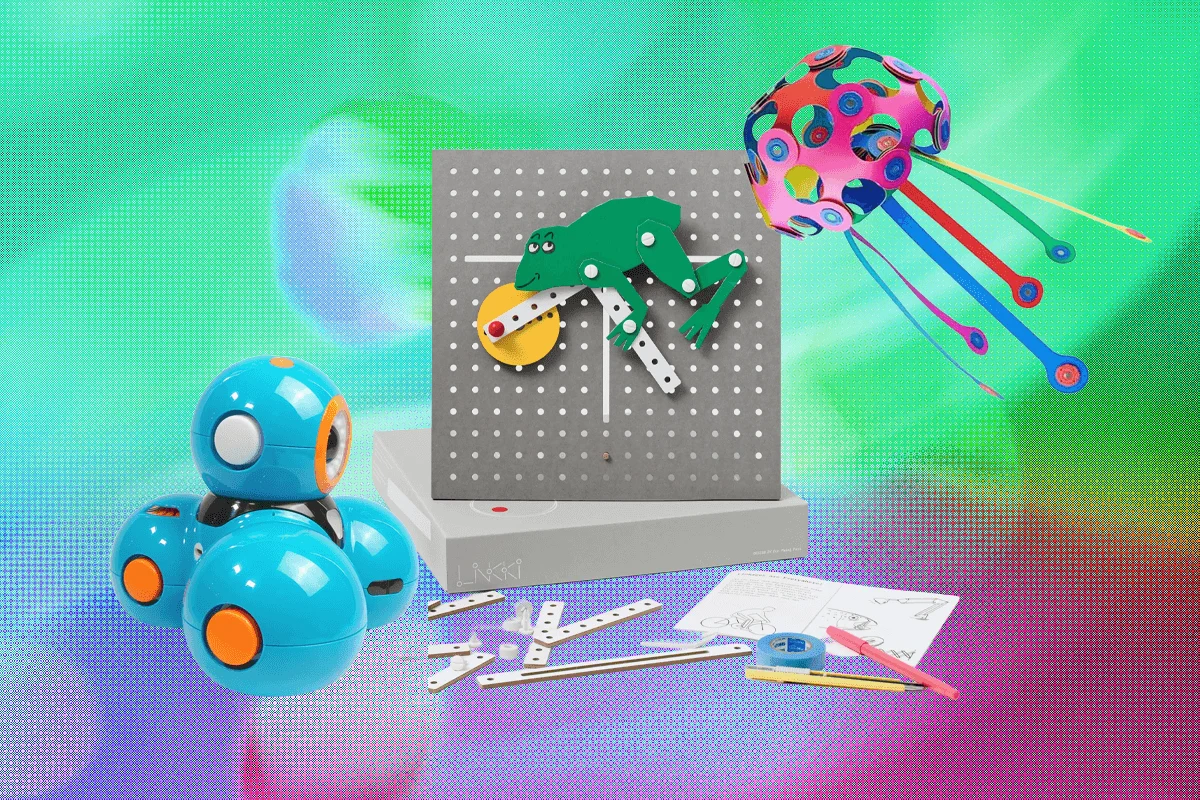
The global educational landscape is undergoing a significant transformation as the integration of Science, Technology, Engineering, and Mathematics (STEM) moves from the classroom into the home. In an era defined by rapid technological advancement, parents and educators are increasingly looking toward "edutainment"—a hybrid of education and entertainment—to prepare the next generation for a digital-centric workforce. The latest curation of high-performance STEM toys highlights a shift toward tactile, screen-free learning experiences that challenge cognitive boundaries while maintaining the engagement levels of traditional play.

As children naturally exhibit the traits of engineers—curiosity, a tendency to deconstruct objects, and a drive to understand "how things work"—the toy industry has responded with sophisticated tools designed to nurture these instincts. These products, ranging from kinetic energy kits to AI-integrated board games, represent a multi-billion dollar market that serves as a bridge between foundational play and complex scientific principles.

The Evolution and Growth of the STEM Toy Market
The demand for STEM-focused products is not merely a passing trend but a reflection of broader economic and educational shifts. According to market research data, the global STEM toys market was valued at approximately $7.1 billion in 2023 and is projected to reach over $12 billion by 2030, growing at a compound annual growth rate (CAGR) of 7.5%. This growth is driven by several factors, including the increasing emphasis on coding literacy, the rise of "maker culture," and parental concerns regarding excessive screen time.

Historically, educational toys were often relegated to simple blocks or basic chemistry sets. However, the current "golden age" of STEM toys features an interdisciplinary approach often referred to as STEAM, which incorporates the Arts. This inclusion acknowledges that creative thinking is essential to scientific innovation. The products currently leading the market are those that offer open-ended play, allowing children to fail, iterate, and eventually succeed in building functional systems.

Analysis of Featured STEM Innovations
Several standout products demonstrate the current trends in the industry, focusing on different pillars of the STEM curriculum.

Plus Plus Mini Interlocking Building Blocks
At the foundational level of engineering lies the concept of modularity. The Plus Plus Mini Interlocking Building Blocks, often referred to as a "Creative Kit," utilize a single, simple shape to create infinitely complex 2D and 3D structures. Unlike traditional bricks that rely on studs and tubes, these Danish-designed pieces use a unique interlocking system that encourages spatial reasoning and fine motor skills. With sets ranging from 600 to 1,200 pieces, this toy exemplifies the "low floor, high ceiling" philosophy of education: it is easy for a toddler to start but complex enough to challenge an adult.

Qubs Qubitunes: The Sound Stage of Coding
The Qubs Qubitunes platform represents a sophisticated leap in screen-free digital literacy. By using physical blocks to represent different musical elements and sequences, children learn the fundamentals of algorithmic thinking and "if-then" logic without the need for a tablet or smartphone. Priced at approximately $130, this "Sound Stage" allows users to compose music through physical manipulation, grounding abstract coding concepts in the tangible world of sound and rhythm.

Ambessa DIY Kinetic Flashlight
Physics and sustainability intersect in the Ambessa DIY Kinetic Flashlight. This kit moves away from the "black box" nature of modern electronics, where the inner workings are hidden from the user. By assembling a wind-up flashlight, children explore the principles of electromagnetism and energy conversion. The act of generating light through physical motion provides an immediate, rewarding feedback loop that reinforces the law of conservation of energy.

Particula GoChess Mini
The integration of Artificial Intelligence (AI) into traditional gameplay is perhaps best exemplified by the Particula GoChess Mini. As chess experiences a global resurgence in popularity, this electronic board serves as a "Knight School," using light-up indicators to suggest moves and analyze strategies in real-time. By connecting to global platforms, it allows for physical play against opponents worldwide, blending the tactical depth of ancient strategy with modern data analytics.

Methodology: Testing and Evaluation Standards
The selection of these 28 toys is the result of rigorous, multi-year testing protocols. Led by veteran technology journalist Simon Hill, the evaluation process involves real-world application in both domestic and academic environments. Hill, who has two decades of experience covering the tech sector for publications such as WIRED, Business Insider, and TechRadar, utilizes a "dual-track" testing method.

- The Child Perspective: Toys are placed in the hands of children to measure "stickiness"—the ability of a toy to hold a child’s attention over weeks rather than hours. This phase identifies whether the educational components are intuitive or if they create a barrier to enjoyment.
- The Educator Perspective: Through collaboration with professional teachers, the toys are assessed for their pedagogical value. Educators look for "scaffolding" opportunities—where a toy helps a child reach a higher level of understanding through guided discovery.
The most recent update to this guide, finalized in July 2026, saw the removal of several legacy products that no longer met modern safety or software standards, replaced by newer innovations like the Science Can Solar System.
-Reviewer-Photo-SOURCE-Adrienne-So.png)
Chronology of STEM Toy Development
The trajectory of the STEM toy movement can be categorized into four distinct phases:

- 1920s–1960s (The Mechanical Era): Focused on structural engineering and chemistry (e.g., Erector Sets, early chemistry kits).
- 1970s–1990s (The Electronic Era): The introduction of basic robotics and electronic circuit kits (e.g., Snap Circuits).
- 2000s–2015 (The Digital/App Era): A heavy reliance on tablets and companion apps to drive physical toys.
- 2016–Present (The Integrated Era): A return to tactile, "screen-free" smart toys that use embedded technology to enhance physical play rather than replace it.
Stakeholder Reactions and Educational Implications
The rise of high-tech STEM toys has elicited various responses from the educational community. Dr. Aris Winger, an advocate for mathematics education, has frequently noted that the most effective toys are those that remove the "fear of being wrong." By framing complex subjects like physics or coding as a series of puzzles to be solved through play, these toys reduce the anxiety often associated with STEM subjects in formal schooling.

Industry analysts suggest that the move toward DIY kits, such as the Ambessa flashlight, reflects a growing "right to repair" sentiment among parents. There is a concerted effort to ensure children understand the hardware they use daily, rather than viewing technology as "magic."

Furthermore, the economic implications are significant. Governments in the United States, the UK, and the EU have increasingly tied educational grants to STEM proficiency. Toys that can be used in "Maker Spaces" or school libraries are seeing higher adoption rates, as they provide a cost-effective way to introduce high-level concepts to diverse groups of students.

Future Outlook: The Next Frontier of Play
Looking forward, the STEM toy industry is expected to pivot toward greater sustainability and even deeper AI integration. As concerns over plastic waste grow, manufacturers like Plus Plus are emphasizing the longevity and recyclability of their products. Simultaneously, the next generation of toys will likely utilize "Generative AI" to create personalized learning paths for children, adapting the difficulty of a puzzle or a coding challenge to the individual user’s progress.

The 28 toys selected for this guide represent more than just holiday gifts; they are tools for cognitive development. In an increasingly complex world, the ability to assemble, bake, squish, or even tear apart and rebuild a machine is a fundamental literacy. As these toys continue to evolve, they will remain essential in transforming "tiny nerds" into the innovators, engineers, and scientists of tomorrow.

By prioritizing quality over quantity and pedagogical depth over flashy marketing, the current market for STEM toys is successfully proving that the best way to learn the secrets of the universe is through the simple, profound act of play.
