

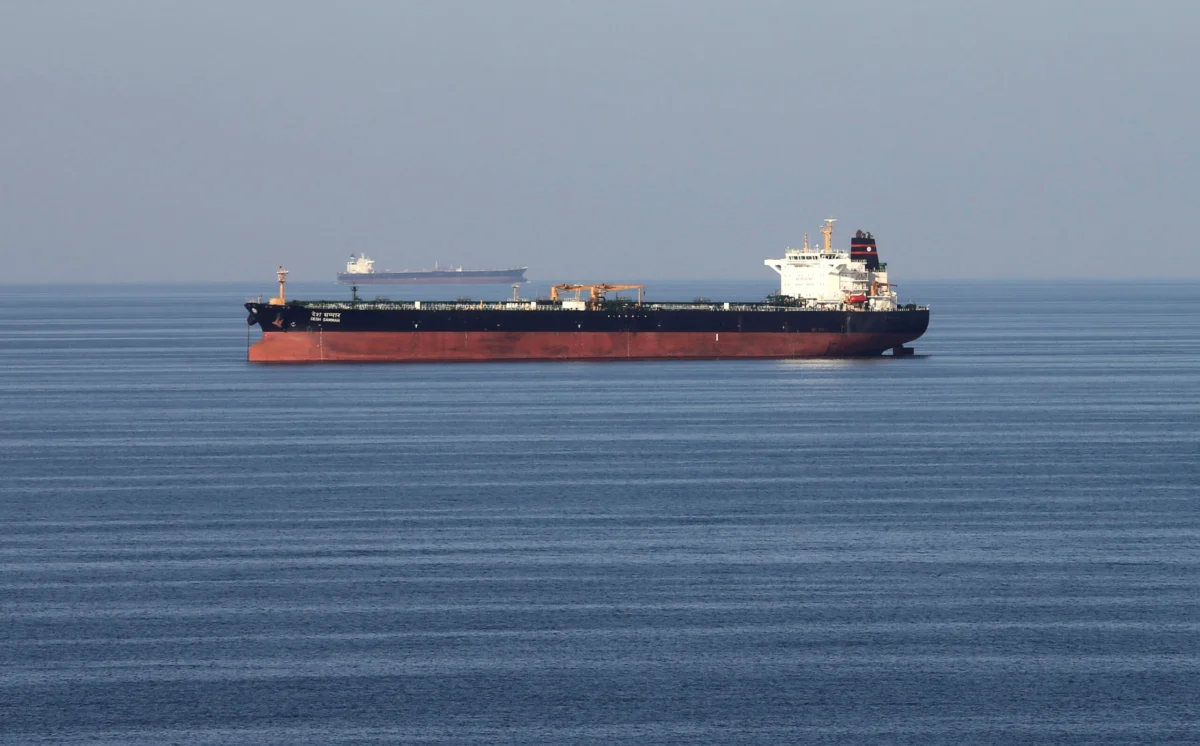
Tensions in the strategically vital Strait of Hormuz escalated dramatically on July 11, 2026, following reports of a significant maritime incident involving an internationally flagged oil tanker and naval forces in the region, prompting urgent calls for de-escalation from global powers. While details remain fluid, initial reports from maritime security agencies indicate that the MV Pacific Voyager, a Liberian-flagged crude oil tanker en route from the Persian Gulf to Asian markets, was reportedly intercepted and briefly detained by vessels believed to belong to Iran’s Islamic Revolutionary Guard Corps Navy (IRGCN) near the vicinity of the Qeshm Island. The incident, which occurred in international waters but within the contested buffer zone, has immediately sent shockwaves through global energy markets and reignited long-standing geopolitical anxieties surrounding the world’s most critical oil chokepoint. As live updates continue to pour in, the international community watches closely, emphasizing the paramount importance of freedom of navigation and the peaceful resolution of disputes in a waterway indispensable to global commerce.
Escalating Tensions in a Vital Waterway
The Strait of Hormuz, a narrow passage connecting the Persian Gulf to the Arabian Sea and beyond, is an undisputed linchpin of global energy security. At its narrowest point, it is only 21 nautical miles (39 kilometers) wide, with the shipping lane itself just two miles wide in either direction. Through this critical chokepoint, approximately one-fifth of the world’s total petroleum liquids consumption, roughly 20-21 million barrels per day (bpd) of crude oil and refined products, passes. This includes nearly all oil exports from Saudi Arabia, Iran, Iraq, Kuwait, Qatar, and the United Arab Emirates. The economic implications of any disruption are profound, capable of sending oil prices skyrocketing, destabilizing economies, and triggering widespread logistical challenges.
The region has a long history of geopolitical friction, particularly between Iran and Western powers, especially the United States. This dates back decades, punctuated by periods of heightened tension, naval confrontations, and accusations of maritime harassment. The image of oil tankers traversing the Strait, often under the watchful eyes of naval patrols, has become an enduring symbol of this delicate balance. Incidents such as the current one recall previous periods of intense friction, notably between 2018 and 2019, following the U.S. withdrawal from the Joint Comprehensive Plan of Action (JCPOA), commonly known as the Iran nuclear deal. During that period, multiple tanker attacks, seizures, and accusations of sabotage led to a significant build-up of international naval presence and a sharp increase in shipping insurance premiums, underscoring the Strait’s inherent volatility.
The Strait’s Strategic Significance
Beyond oil, the Strait of Hormuz is also crucial for the global liquefied natural gas (LNG) trade, with a significant portion of Qatar’s LNG exports, a major global supplier, transiting through it. The geopolitical stakes are thus multi-faceted, encompassing energy, trade, and national security interests of numerous nations. Iran views the Strait as part of its strategic depth and asserts its sovereign right to ensure security in its territorial waters and the broader Persian Gulf region. Conversely, the United States and its allies emphasize the principle of freedom of navigation, maintaining a robust military presence, including the U.S. Fifth Fleet headquartered in Bahrain, to protect international shipping lanes.
A Chronology of Recent Events
The current incident on July 11, 2026, did not occur in a vacuum but is the culmination of a period of renewed tensions and diplomatic stalemates.
July 11, 2026: The Incident
At approximately 08:30 UTC, maritime tracking data indicated that the MV Pacific Voyager, a 300,000-deadweight-ton (DWT) very large crude carrier (VLCC), deviated from its established shipping lane after reportedly being approached by several fast-attack craft. These vessels, described as typical of IRGCN patrols, allegedly issued warnings to the tanker before a brief boarding party reportedly conducted an inspection. While the vessel was released after approximately three hours and resumed its course, the nature of the detention and the justification provided by the IRGCN remain highly contentious. The tanker’s operator, Pacific Maritime Group, confirmed the incident but declined to provide further details, stating the crew and vessel were safe.
Preceding Developments (2025-2026)
The lead-up to this incident has been marked by several key developments:
- Late 2025: Negotiations to revive the JCPOA reached another impasse, leading to increased rhetoric from both Tehran and Washington. Iran accelerated aspects of its nuclear program, drawing condemnation from Western capitals.
- Early 2026: A series of minor skirmishes and close encounters between IRGCN vessels and international naval forces were reported in the Persian Gulf, though none escalated to significant incidents. These were widely seen as tests of resolve.
- March 2026: Iran conducted large-scale naval exercises in the Strait of Hormuz, showcasing its missile capabilities and swarm boat tactics, which were criticized by the U.S. and its regional allies as provocative.
- May 2026: The U.S. announced enhanced rotational deployments of naval assets to the region, including additional destroyers and patrol craft, explicitly citing the need to deter "malign maritime activities."
- June 2026: Reports surfaced of increased scrutiny by Iranian authorities on commercial shipping, with several vessels reportedly subjected to lengthy administrative checks or temporary detentions for alleged environmental or technical infringements, though none as high-profile as the Pacific Voyager.
International Reactions and Diplomatic Efforts
The immediate aftermath of the MV Pacific Voyager incident has seen a flurry of condemnations, calls for restraint, and urgent diplomatic consultations.
Tehran’s Stance
Iranian state media, citing unnamed IRGCN sources, initially reported that a "foreign vessel" was briefly questioned regarding "alleged navigational irregularities" and was released after "necessary warnings." Later, Iran’s Foreign Ministry spokesperson, Saeed Khatibzadeh, issued a statement asserting Iran’s "inherent right to uphold maritime law and ensure security within its territorial waters and the broader Persian Gulf region." He added, "Iran will not tolerate any threats to its national security or any violation of international maritime regulations within its jurisdiction. Our actions are purely defensive and aimed at maintaining regional stability against external provocations." Some analysts interpret this as a calibrated response, asserting sovereignty without provoking a full-scale crisis, while others view it as a deliberate act of brinkmanship.
Washington’s Response
The U.S. State Department swiftly condemned the incident, with Secretary of State Eleanor Vance stating, "The United States strongly condemns the unlawful and provocative actions by Iran’s Islamic Revolutionary Guard Corps Navy in the Strait of Hormuz. These actions constitute a direct threat to the freedom of navigation, international commerce, and the stability of global energy markets. We call on Iran to immediately cease all actions that endanger innocent seafarers and destabilize a vital international waterway. The U.S. stands ready to defend its interests, its partners, and the principles of international law." The Pentagon confirmed that U.S. naval assets in the region were monitoring the situation closely and were prepared to respond to any further threats to commercial shipping.
Global Calls for De-escalation
Major international bodies and key global players have also weighed in:
- United Nations: UN Secretary-General António Guterres expressed deep concern over the incident and called on all parties to exercise maximum restraint, de-escalate tensions, and resolve disputes through dialogue and in accordance with international law.
- International Maritime Organization (IMO): The IMO issued a statement reiterating the importance of freedom of navigation and the safety of seafarers, urging all member states to respect international conventions governing maritime activities.
- European Union: The EU High Representative for Foreign Affairs and Security Policy, Josep Borrell, called for a "comprehensive de-escalation" and stressed the need to preserve stability in a region critical to Europe’s energy supply.
- China and Japan: Both major oil importers from the Persian Gulf, China and Japan, issued statements emphasizing the need for peace and stability in the region and the uninterrupted flow of global energy resources. They urged all parties to avoid actions that could further exacerbate the situation.
Economic Repercussions and Energy Market Volatility
The incident immediately triggered significant volatility in global energy markets. Crude oil prices, which had already been trending upwards due to broader supply concerns, surged by over 4% in early trading following the news. Brent crude futures jumped to over $95 per barrel, while West Texas Intermediate (WTI) futures also saw a substantial increase.
The Lifeline of Global Oil
The Strait of Hormuz is not merely a transit point; it is a critical artery for global oil supply. Approximately 17 million barrels per day of crude oil, condensate, and refined petroleum products pass through it, representing about 30% of global seaborne oil trade and roughly 20% of total global oil consumption. Any sustained disruption would have catastrophic effects on global energy prices, potentially pushing them well into triple digits and triggering a global economic recession. Insurance premiums for shipping through the Strait are expected to spike, adding significant costs to oil transportation and ultimately to consumers.
Impact on Shipping and Insurance
Beyond oil prices, the incident has immediate implications for the global shipping industry. Shipping companies may consider re-routing vessels, a costly and time-consuming endeavor that would further strain global supply chains. War risk insurance premiums, already elevated due to lingering regional instability, are anticipated to soar. This directly impacts the profitability of transporting goods through the region and could deter some operators from using the Strait, even temporarily. The safety of seafarers, often caught in the crossfire of geopolitical disputes, is also a paramount concern for maritime labor organizations.
Broader Geopolitical Implications
The MV Pacific Voyager incident underscores the persistent fragility of regional security and carries significant geopolitical ramifications.
Regional Stability and International Relations
The incident could further strain relations between Iran and Western powers, complicating any future attempts at diplomatic engagement over Iran’s nuclear program or regional conduct. It also tests the resolve of the U.S. and its allies to uphold freedom of navigation in a region where Iran increasingly asserts its authority. Regional states, particularly Gulf Cooperation Council (GCC) members, will likely view this as a direct threat to their economic lifelines and may seek stronger security assurances from their international partners. The incident could also exacerbate proxy conflicts in the broader Middle East, as regional actors interpret the shifting power dynamics.
The Future of Maritime Security
This event highlights the ongoing challenge of maintaining maritime security in contested waterways. It prompts questions about the effectiveness of existing international protocols and the need for enhanced surveillance and rapid response capabilities. The incident serves as a stark reminder that even seemingly minor provocations can quickly escalate into major international crises, especially in areas of such strategic importance. The long-term implications could include increased militarization of the Strait, more frequent naval exercises, and a persistent state of heightened alert for commercial shipping.
As live updates continue to unfold, the international community remains on edge, hopeful for a swift de-escalation but acutely aware of the potentially far-reaching consequences should tensions continue to mount in the Strait of Hormuz. The incident serves as a critical test of diplomatic resolve and the commitment to uphold international maritime law in a volatile and indispensable global artery.
