

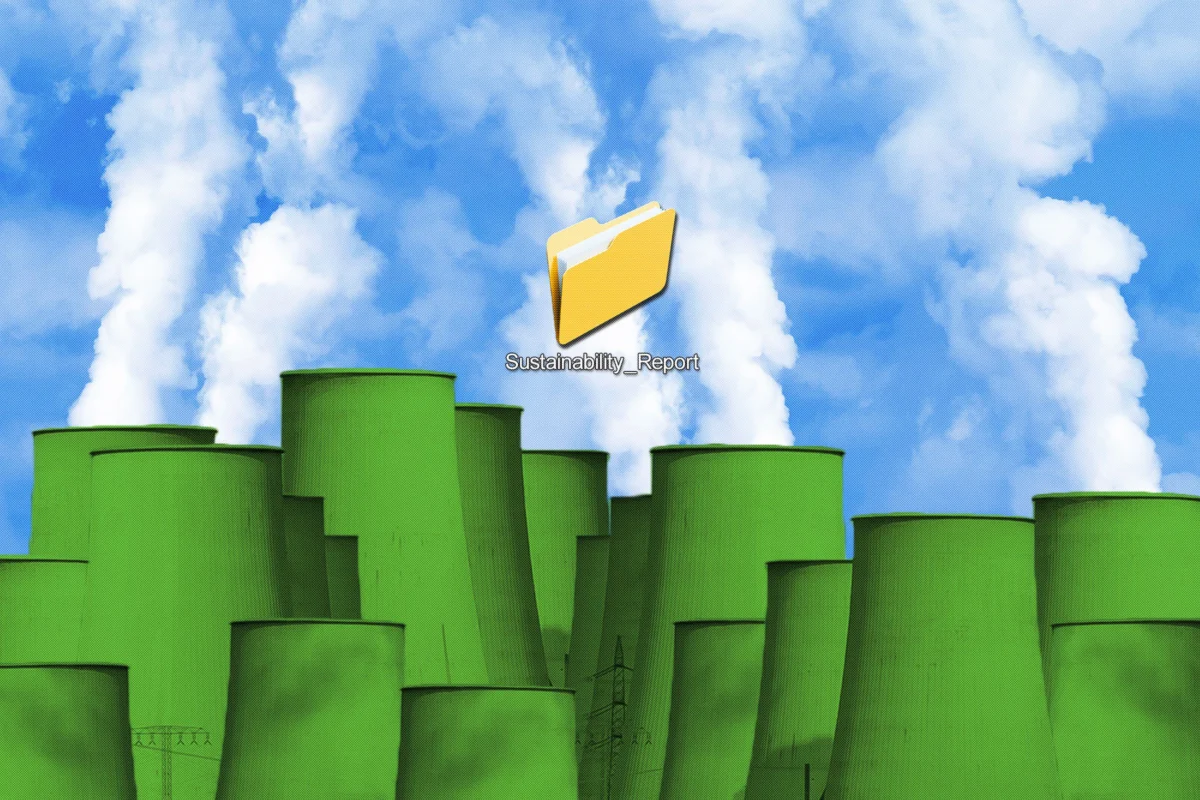
Microsoft Corporation’s greenhouse gas emissions increased by approximately 25 percent over the last fiscal year, according to the company’s 2025 sustainability report released this Thursday. The findings underscore a growing tension between the technology industry’s aggressive pursuit of artificial intelligence (AI) and its ambitious environmental commitments. This surge in pollution is largely attributed to the construction and operation of massive, energy-intensive data centers required to house the specialized hardware that powers modern AI models.
The report highlights a broader industry-wide trend, following similar disclosures from Amazon and Google earlier this month. Together, these reports indicate that the "AI gold rush" is significantly hampering the tech sector’s progress toward net-zero emissions. As companies race to build out the infrastructure for generative AI, the sheer volume of electricity required is outstripping the current growth of renewable energy sources, forcing a renewed reliance on fossil fuels in several key regions.
The Drivers of Growth: Infrastructure and Scope 2 Emissions
In a joint blog post accompanying the report’s release, Microsoft Vice Chair and President Brad Smith and Chief Sustainability Officer Melanie Nakagawa acknowledged the challenge, stating that the emissions increase is driven “primarily by the expansion of our datacenter infrastructure.” The report, which covers the 2025 fiscal year ending in June, reveals that a substantial portion of the carbon spike is tied to Scope 2 emissions—greenhouse gas pollution resulting from the generation of electricity that a company purchases to run its operations.
Scope 2 emissions accounted for roughly 13 percent of Microsoft’s total carbon footprint during the reporting period. While Microsoft has historically been a leader in purchasing renewable energy credits to offset its usage, the sheer scale of new data center demand has made it increasingly difficult to keep pace with clean energy procurement. Furthermore, the company’s decision to move away from certain types of accounting mechanisms has brought more of its physical energy impact into the spotlight.
The expansion is not merely a matter of building more warehouses; it is a matter of density. Artificial intelligence chips, such as those manufactured by NVIDIA, require significantly more power than traditional cloud computing processors. A single AI-ready server rack can consume as much electricity as several dozen standard server racks, necessitating more robust cooling systems and a constant, high-capacity power supply.
A Growing Trend Across the Tech Sector
Microsoft is not alone in facing these headwinds. The tech industry as a whole is grappling with the environmental cost of the AI boom. Amazon recently disclosed a 16 percent increase in its carbon dioxide emissions, while Google reported an 18 percent rise in annual greenhouse gas emissions compared to the previous year. For Google, this represented the largest single-year increase in the company’s history.
The common denominator across these three giants is the rapid deployment of data centers. While all three companies have made record-breaking investments in wind and solar power, the intermittent nature of renewable energy often conflicts with the 24/7 "always-on" requirements of AI training and inference. To ensure reliability, many of these companies are turning back to natural gas and other fossil fuels to supplement the grid, particularly in regions where clean energy infrastructure is lagging.
Chronology of Infrastructure Expansion and Fossil Fuel Integration
The rise in emissions coincides with a period of unprecedented capital expenditure. Since the explosion of interest in generative AI in late 2022, Microsoft has accelerated its global footprint. However, the 2025 report does not yet fully reflect several high-profile deals made in recent months that involve gas-powered facilities, suggesting that emissions figures could climb even higher in the next reporting cycle.
In mid-2024, Microsoft announced a strategic partnership with Chevron to facilitate a new power plant in West Texas. This facility is designed to supply a future data center hub in the Permian Basin. Environmental permits for the project indicate that the power plant could emit more than 11.5 million tons of CO2 equivalent annually—a figure that exceeds the total annual carbon emissions of the state of Rhode Island.
Similarly, Microsoft has secured leases on the Stargate campus in Abilene, Texas. This site is slated to be powered by an onsite natural gas plant with the potential to emit over 7.8 million tons of CO2 equivalent per year. In the Eastern United States, the company has signed a nonbinding letter of intent for a data center project in West Virginia that would utilize off-grid natural gas power, potentially adding another 11 million tons of greenhouse gases to the company’s ledger.
These moves represent a shift in strategy. While Microsoft continues to invest in long-term renewable energy contracts, the immediate need for "dispatchable" power—energy that can be turned on or off to meet demand—has led the company to embrace natural gas as a bridge fuel, despite its carbon impact.
The Shift in Carbon Accounting and REC Criticism
A notable technical detail in the 2025 report is Microsoft’s changing approach to carbon offsets and Renewable Energy Certificates (RECs). The company confirmed it has stopped purchasing "unbundled" RECs—a move that contributed to the apparent rise in Scope 2 emissions.
Unbundled RECs allow companies to buy the "green" attributes of renewable energy generated in one location to offset fossil fuel electricity used in another, without the company actually receiving the clean power. This practice has faced intense scrutiny from environmental scientists and climate advocates, who label it as "greenwashing" because it does not necessarily result in new clean energy being added to the grid.
Danny Cullenward, a climate policy researcher at the University of Pennsylvania, described unbundled RECs as a “paper transaction that is physically disconnected from real-world consequences.” He praised Microsoft’s decision to move away from them, noting that while it makes their emissions numbers look worse on paper in the short term, it reflects a more honest and impactful approach to decarbonization. By prioritizing Power Purchase Agreements (PPAs) and direct investments in new clean electricity, Microsoft is ensuring that its capital actually drives the construction of new wind and solar farms.
Official Responses and the 2030 "Carbon Negative" Goal
Despite the 25 percent surge in pollution, Microsoft remains publicly committed to its goal of becoming "carbon negative" by 2030. This ambitious target requires the company to remove more carbon from the atmosphere than it emits.
In a statement to media outlets, Melanie Nakagawa emphasized that the company is exploring diverse avenues for mitigation. “Microsoft’s strategy includes exploring a variety of options for mitigating the emissions from its electricity consumption, consistent with our sustainability ambitions,” she said.
Brad Smith and Nakagawa’s blog post also addressed the systemic strain caused by AI. They noted that the global race for AI is “increasing demand for energy, water, land, and materials,” and acknowledged that the company “has a responsibility to help ensure that technology strengthens, rather than strains, the systems and communities on which it depends.”
To bridge the gap between current emissions and the 2030 goal, Microsoft is betting heavily on carbon removal technologies, such as Direct Air Capture (DAC) and bioenergy with carbon capture and storage (BECCS). However, these technologies are still in their infancy and have yet to be scaled to the level required to offset millions of tons of data center emissions.
Broader Impact and Industry Implications
The data released by Microsoft serves as a wake-up call for both the tech industry and climate policymakers. It highlights a fundamental paradox: the very technology being touted as a tool to solve climate change—through optimized energy grids and new material discoveries—is currently a major contributor to the problem.
The reliance on natural gas in states like Texas and West Virginia suggests that the tech industry’s demand is outstripping the pace of grid modernization. If Big Tech continues to build gas-fired plants to power its AI ambitions, it could lock in fossil fuel infrastructure for decades, making national and international climate goals much harder to achieve.
Furthermore, the environmental impact extends beyond carbon. Data centers are massive consumers of water for cooling, often in water-stressed regions. While Microsoft’s 2025 report focused heavily on greenhouse gases, the cumulative "resource footprint" of AI is becoming a central point of contention for local communities and environmental regulators.
As Microsoft moves into the second half of the decade, the pressure to reconcile its "AI-first" business strategy with its "Planet-first" sustainability pledge will only intensify. The 25 percent increase in emissions serves as a stark reminder that in the current technological landscape, progress in intelligence is coming at a significant cost to the climate. The coming years will determine whether Microsoft can pioneer a path toward "green AI" or if the 2030 carbon-negative goal will remain an aspiration rather than a reality.
